
Mount Nemrut
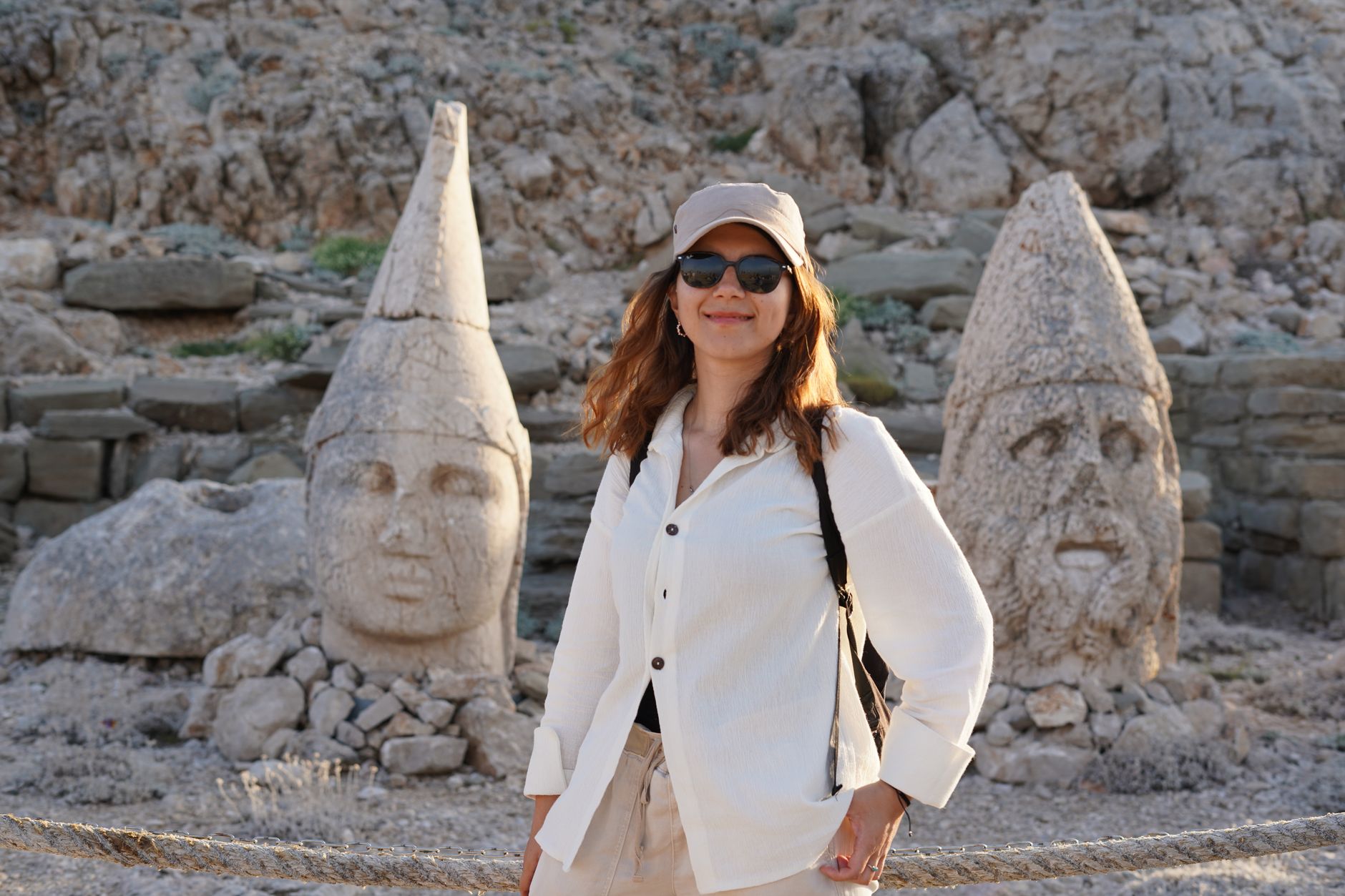
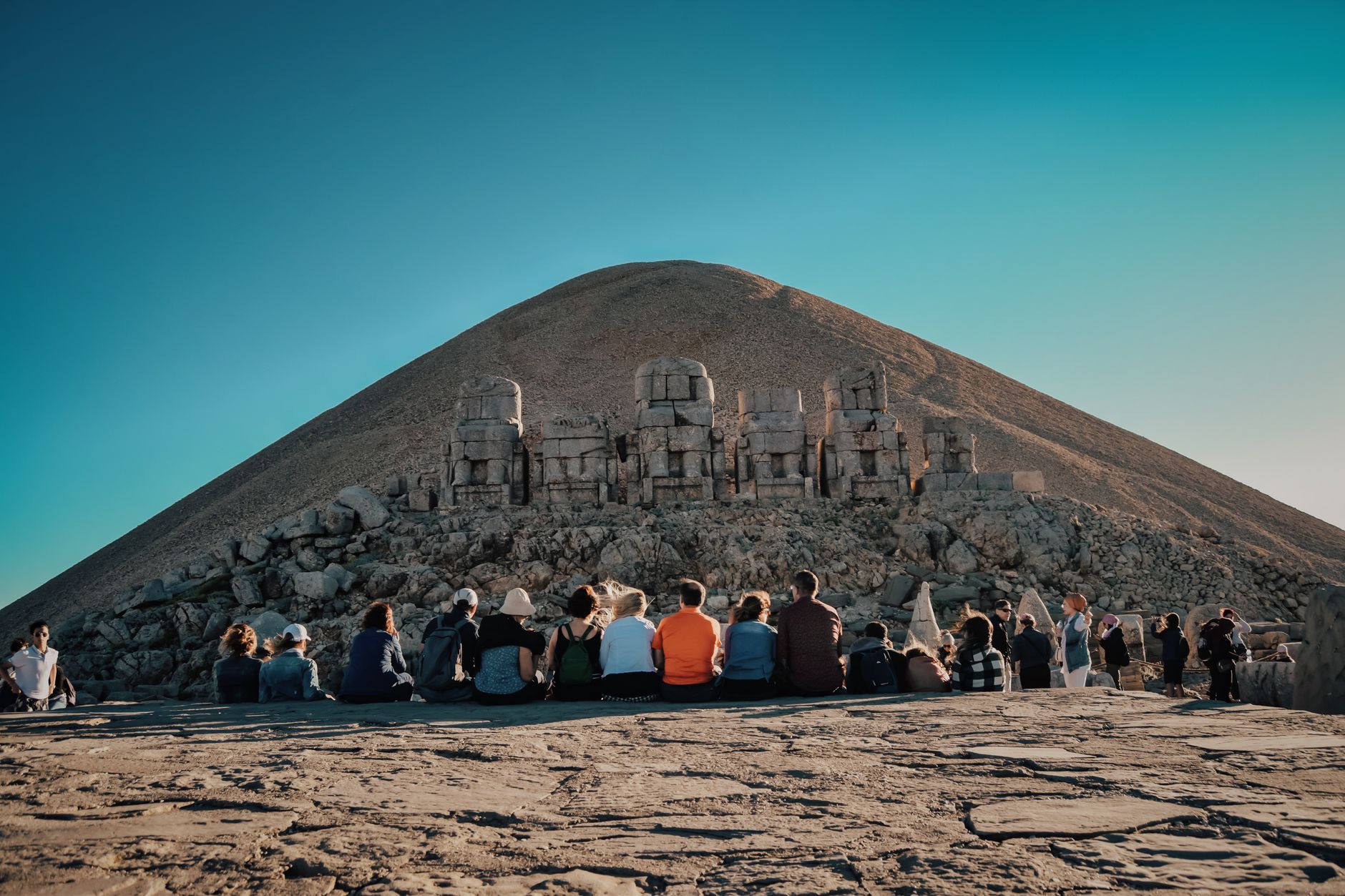
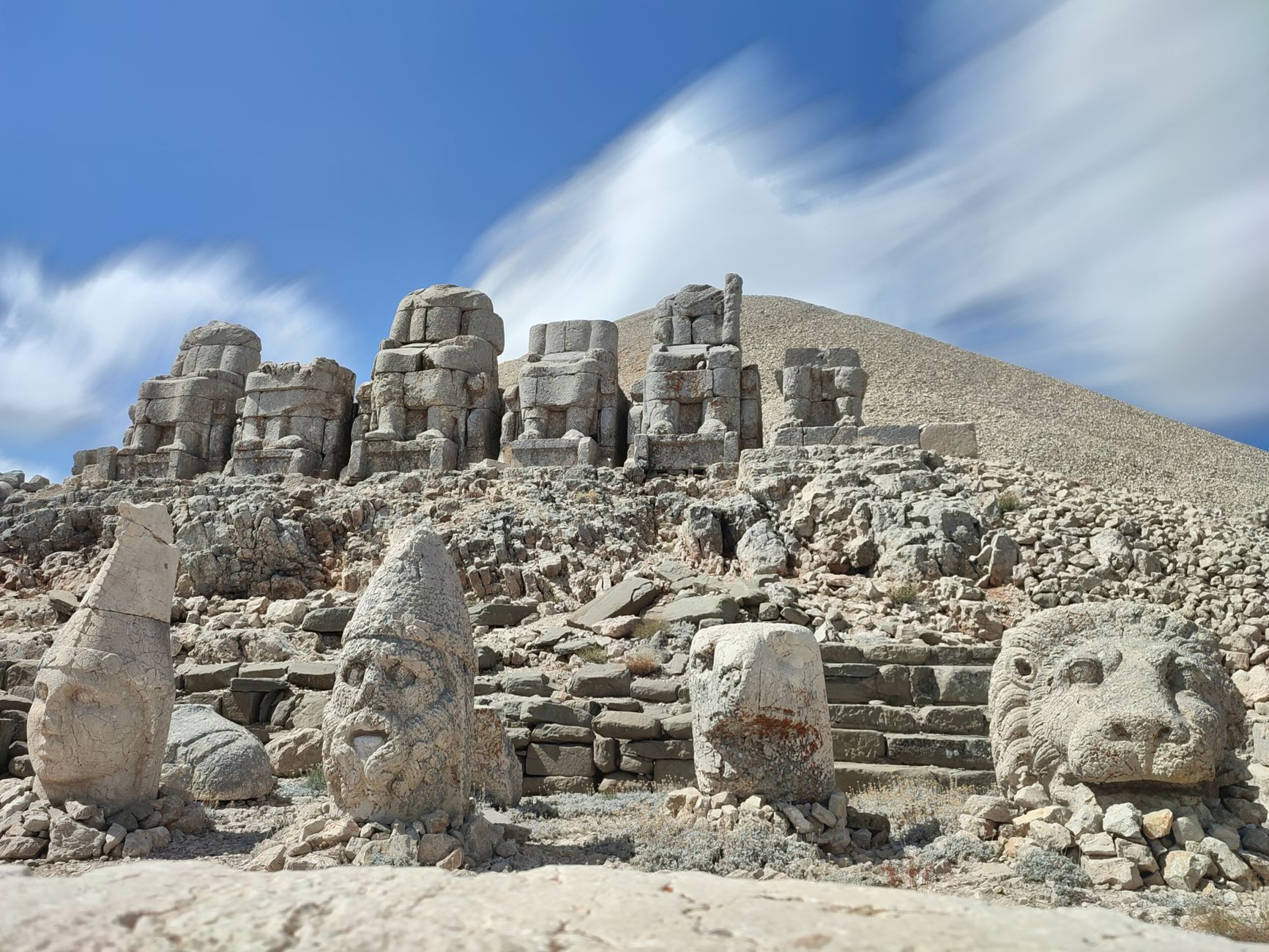
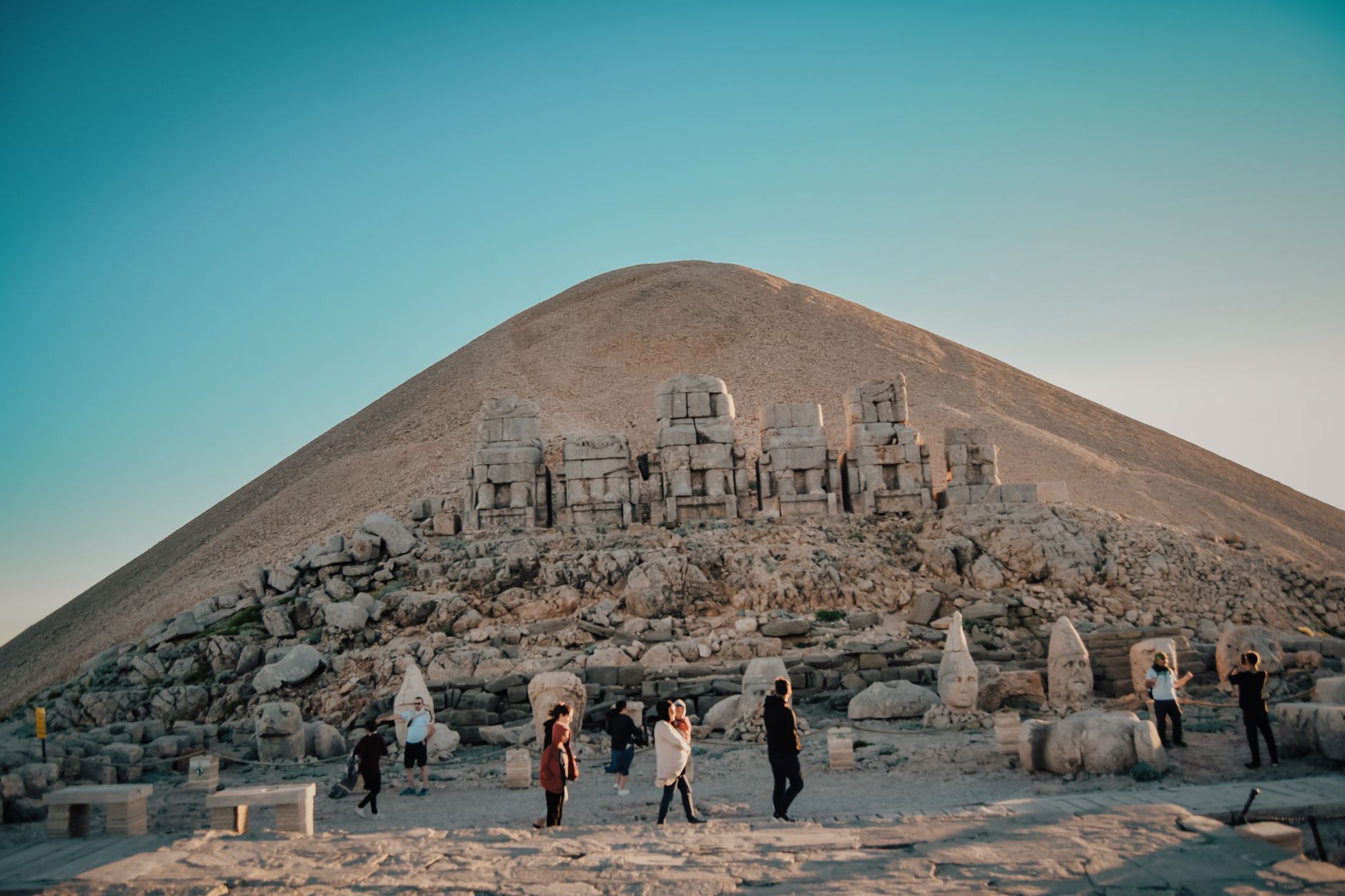
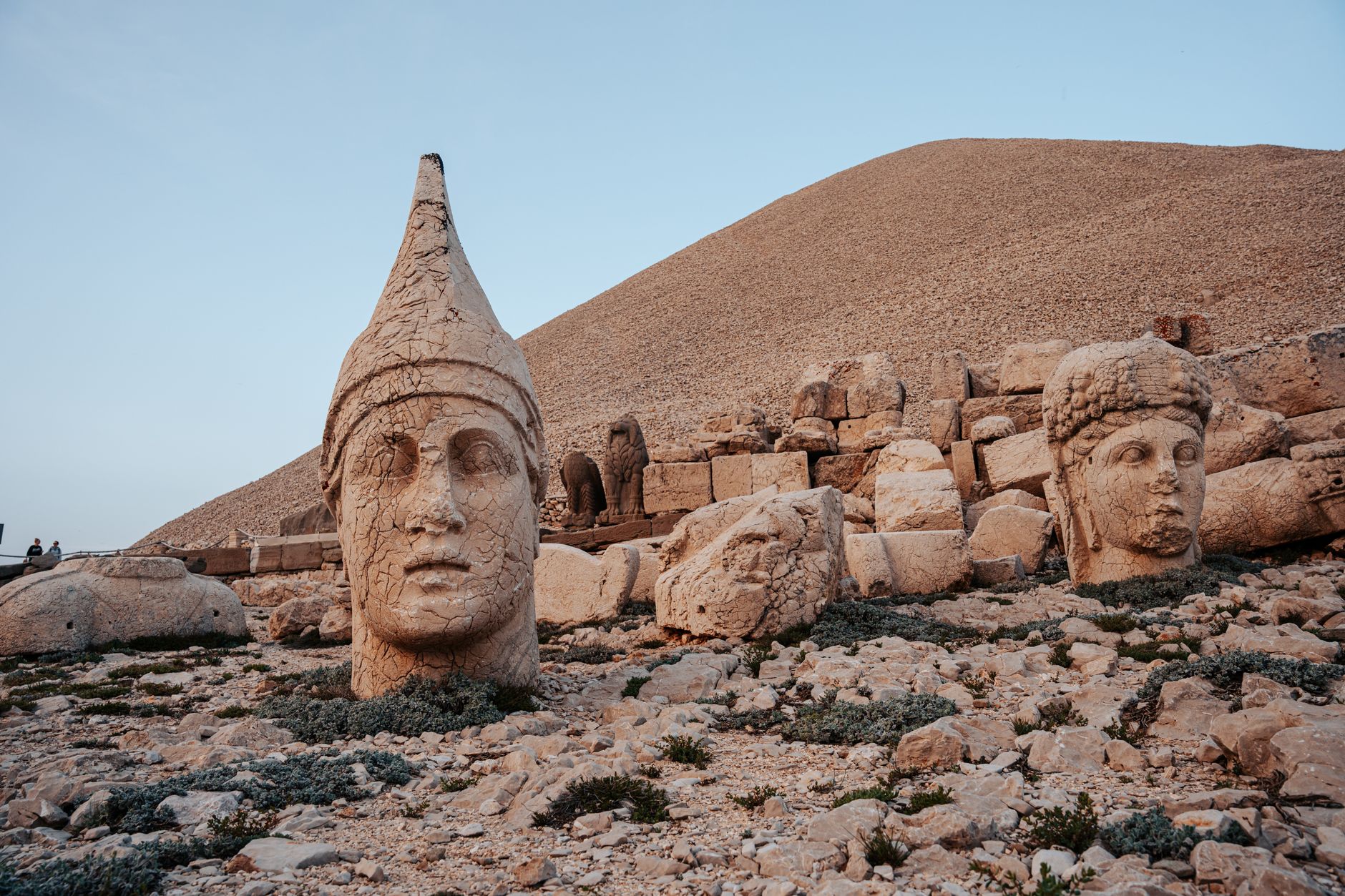
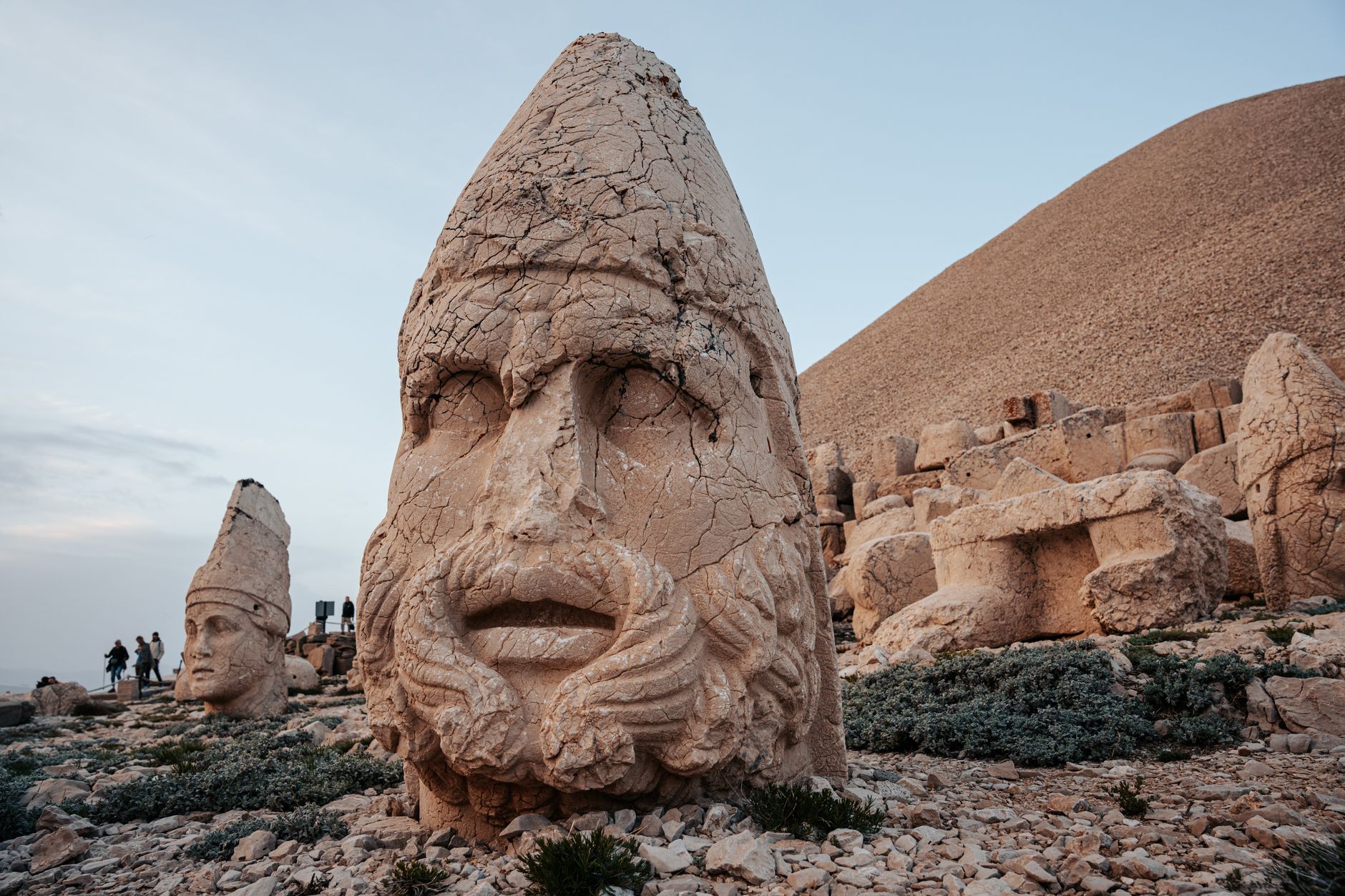
At 2,134 metres above the Taurus foothills in southeastern Turkey, a king built himself a mountain. The summit of Mount Nemrut is crowned by a 50-metre tumulus of crushed stone — the burial mound of Antiochus I of Commagene — and ringed by colossal limestone heads, each two or three metres tall, that have tumbled from their seated bodies over two millennia and now rest at odd angles in the gravel, staring outward at a landscape that runs all the way to Syria.
People come at sunrise or sunset, when the low light cuts across the stone faces and the valley below disappears into haze. The statues are the point, but so is the altitude — the wind at the top is cold even in July, and the walk from the car park to the summit takes about twenty minutes on a rocky incline.
How Mount Nemrut came to be
In 62 BC, Antiochus I — king of Commagene, a small Greco-Iranian kingdom that emerged from the fragmentation of Alexander's empire — commissioned this summit sanctuary as his own tomb and a site for his posthumous worship. His mother was a Seleucid Greek princess; his father's line ran back to Persian royalty. The statues reflect that dual inheritance: the gods seated beside Antiochus on the east and west terraces carry hyphenated names — Zeus-Oromasdes, Apollo-Mithras-Helios-Hermes, Heracles-Artagnes-Ares — fusing Greek and Iranian pantheons into a single royal cult.
The site vanished from Western knowledge until 1881, when Karl Sester, a German engineer surveying Ottoman transport routes, came across the tumulus. Serious archaeological work began only in 1954, led by American archaeologist Theresa Goell, who had first visited in 1947 and returned year after year. UNESCO added Nemrut to its World Heritage list in 1987.
Who and what shaped it
People who shaped it
Landmark buildings
See Mount Nemrut in motion
Plan your visit
On the map
When to go
Summers are hot in the surrounding lowlands, but the summit stays cool and windy — bring a layer regardless of the season. Snow closes the roads through winter, and the statues can be buried entirely; plan any visit between April and October, favouring the shoulder months on either side of the July–August peak.
Right now
Background & history adapted from Wikipedia (CC BY-SA) · specs from Wikidata (CC0) · weather from Open-Meteo · map data © OpenStreetMap contributors · photos from Wikimedia Commons / Unsplash with per-image credit. No third-party reviews or social posts reproduced.