
Region

Montreux

Montreux
Photo by Jean-Paul Wettstein on Pexels
Montreux
Photo by ILOVESwitzerland on Pexels
Montreux
Photo by Moby Sultan on Pexels
Montreux
Photo by Miraze Dewan on Pexels
Montreux
Photo by Amaury Michaux on Pexels
Montreux
Photo by Jose Rodriguez Ortega on Pexels

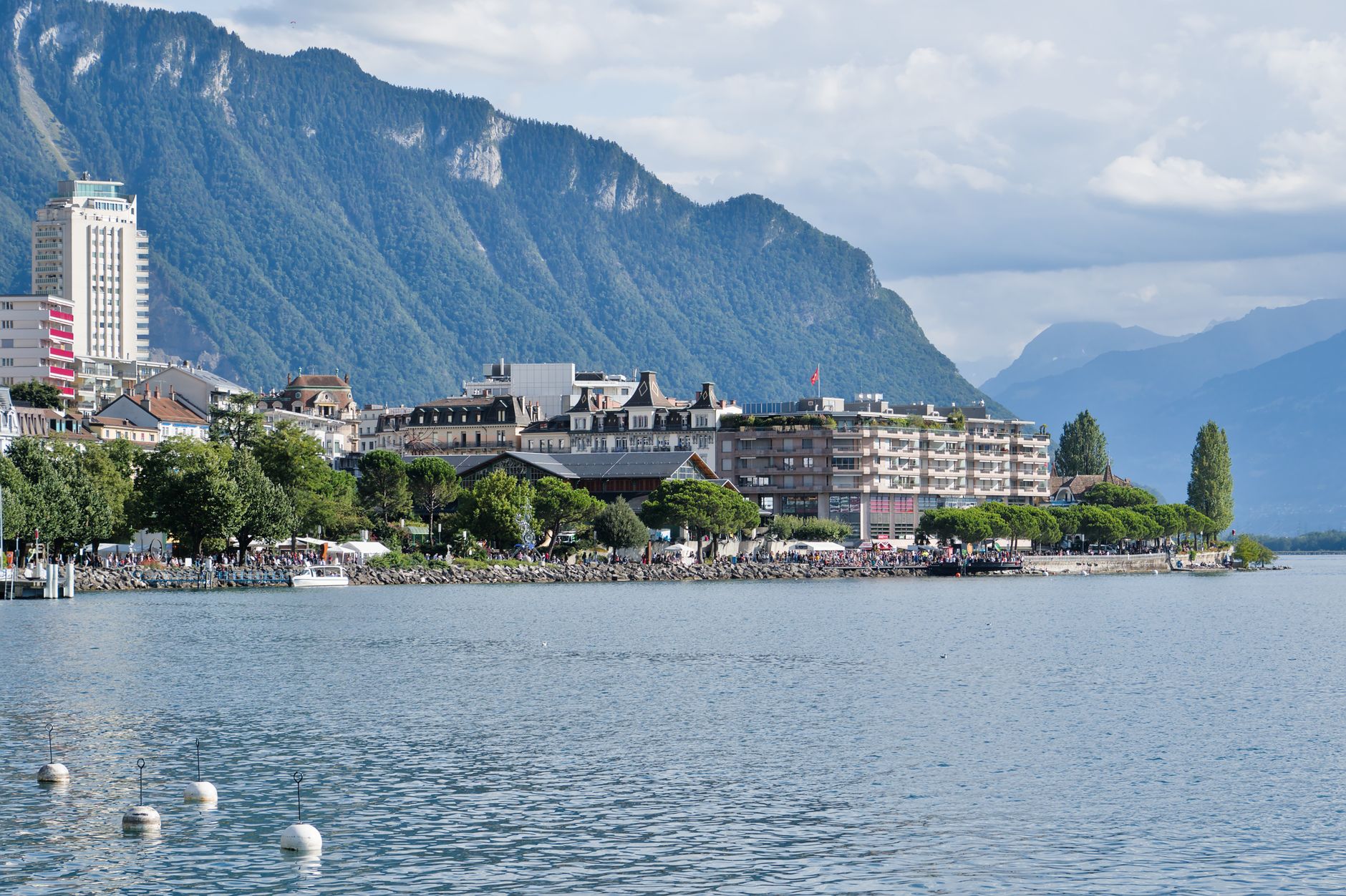
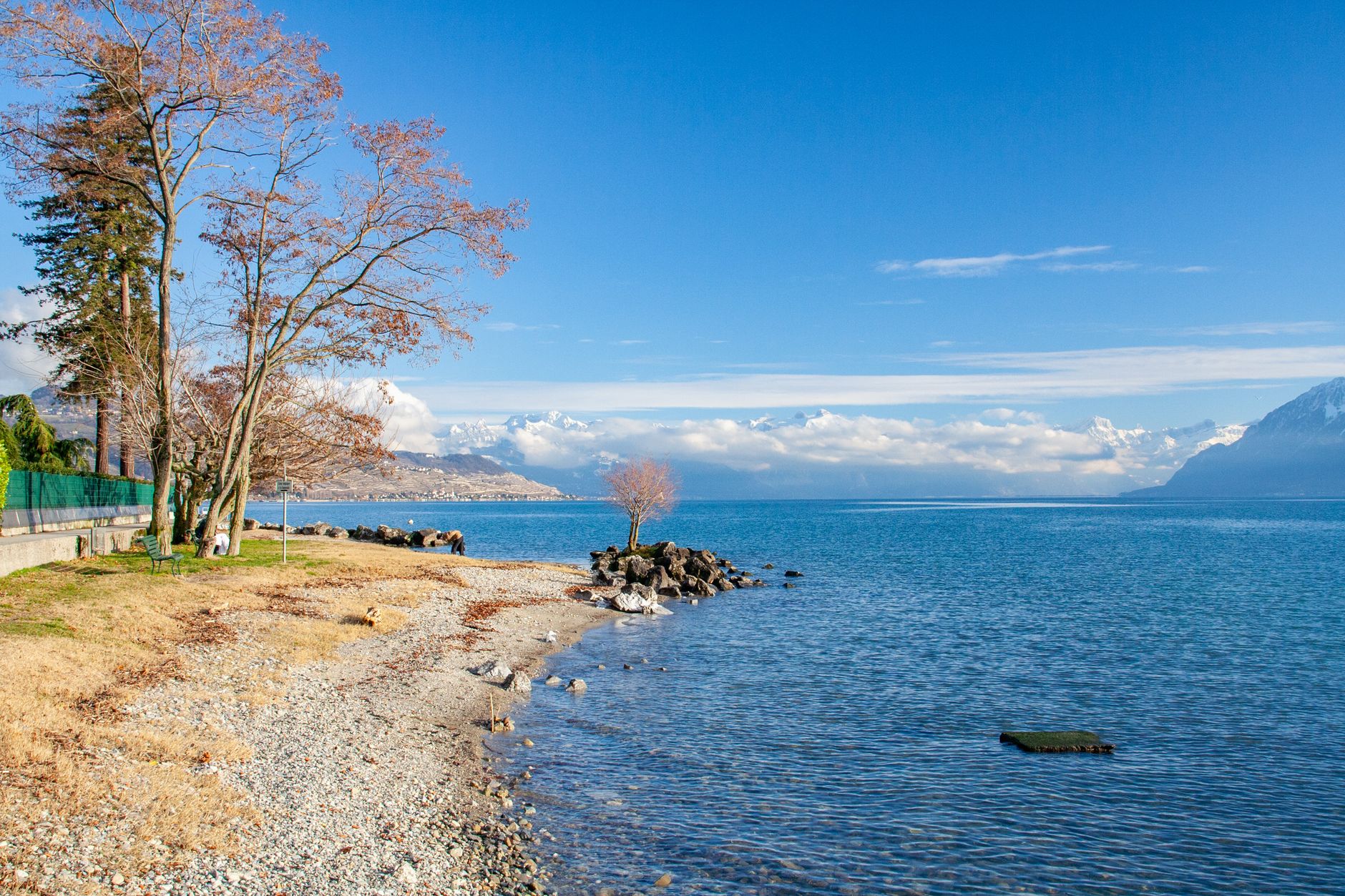
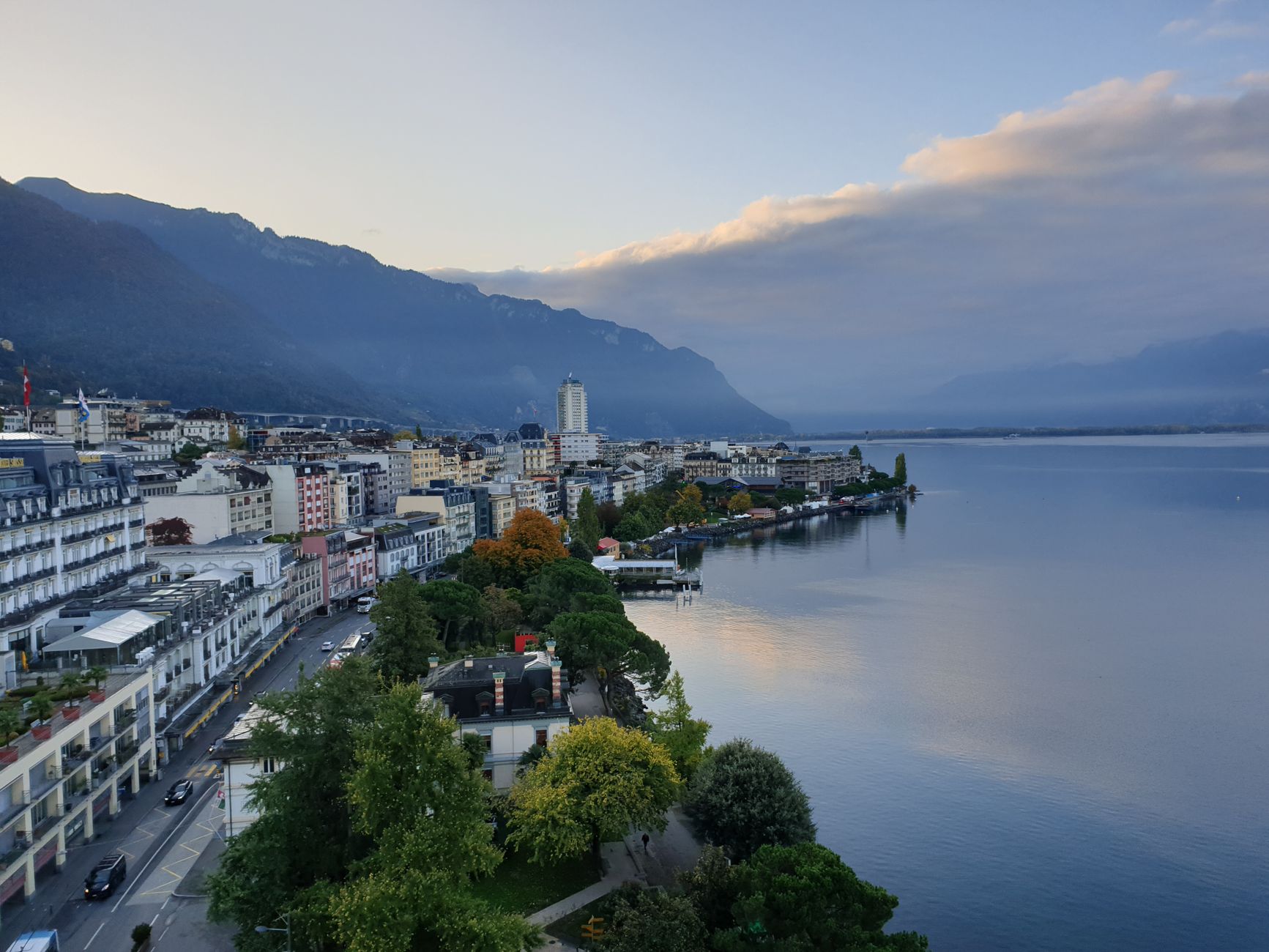
Montreux sits at the point where the Alps crowd down to the northeastern shore of Lake Geneva, close enough that the water reflects the mountains on a still morning. The old resort hotels — their Belle Époque facades intact, their long balconies facing the water — give the town a particular quality of suspended time, as though it has been receiving travellers for so long that it has simply learned to do it well.

The promenade runs along the lake for several kilometres, past a bronze Freddie Mercury, past the Château de Chillon rising straight from the water, past palm trees that survive here in the mild microclimate. The Jazz Festival, the casino fire that inspired a rock song, the recording studio where Queen and David Bowie made 'Under Pressure' — Montreux carries its own mythology quietly.

Good to know
Montreux railway station is the western terminus of the GoldenPass Line — a useful anchor for wider Swiss travel. Spring and early autumn offer the most comfortable walking weather and fewer crowds than the July Jazz Festival period. The promenade is the natural spine; orient yourself here first.
The story

How Montreux came to be

The site has been inhabited since the late Bronze Age, and the Romans settled its northeastern shore as a staging point on the road from Italy over the Simplon Pass. The modern town took shape from the 13th century onward, spent centuries under Bernese rule, and passed to French control in 1798. Its transformation into a resort came in the 19th century, when grand hotels began drawing wealthy visitors from across Europe and America.

The pace accelerated sharply between 1890 and 1914, when fifty new hotels and boarding houses opened in fifteen years. Architect Eugène Jost shaped much of what remains: the Fairmont Le Montreux Palace (1906) and the Caux Palace (1902), the latter sheltering Jewish refugees during the Second World War. In December 1971, a flare fired during a Frank Zappa concert ignited the casino's rattan ceiling and burned it to the ground — the fire that Deep Purple turned into 'Smoke on the Water'. The rebuilt casino reopened in 1975, and Queen bought the Mountain Studios inside it in 1979.

People & landmarks

Who and what shaped it

People who shaped it

Claude Nobs
Swiss founder of Montreux Jazz Festival; resident 1939–2013.
Freddie Mercury
Queen lead singer; resident; bronze statue on the promenade.
David Bowie
British musician; resident; recorded 'Under Pressure' with Queen at Mountain Studios in 1981.
Vladimir Nabokov
Russian-born novelist; resident 1899–1977.
Oskar Kokoschka
Austrian expressionist artist, poet, playwright; resident 1886–1980.
Noël Coward
English playwright and actor; resident 1899–1973.
Dame Joan Sutherland
Australian opera singer; resident 1926–2010.
Zelda Fitzgerald
Wife of F. Scott Fitzgerald; resident 1900–1948.
A. J. Cronin
Scottish novelist; resident 1896–1981.
Claude Abravanel
Pianist and composer; resident 1924–2012.
Pyotr Iliych Tchaikovsky
Russian composer; resident 1840–1893.
Douglas Jardine
English cricketer, 22 Test matches, captain 15 times; resident 1900–1958.

Landmark buildings

Fairmont Le Montreux Palace
Grand hotel built 1906 by architect Eugène Jost; connected to Hôtel du Cygne (1881) via Salon de Musique with ballrooms.
Caux Palace
Belle Époque hotel opened 1902, designed by Eugène Jost; housed Jewish refugees during WWII.
Château de Chillon
13th-century castle on Lake Geneva shore; made famous by Lord Byron's poem 'Prisoner of Chillon'.
Mountain Studios
Recording studio opened 1975 in Montreux Casino; Queen acquired it July 15, 1979; recorded 'Under Pressure' with David Bowie in 1981; now Queen: The Studio Experience exhibition.
Montreux Casino
Burned December 1971 during Frank Zappa concert when flare gun ignited rattan ceiling; inspired Deep Purple's 'Smoke on the Water'; reopened 1975.
St John's Anglican Church (Territet)
Dating to 1877; served large community of British tourists and expatriates.
Église du Sacré-Cœur
Catholic church constructed end of 18th century; initially served Italian workers.
Villa 'Le Lac'
Modernist villa designed by architect Le Corbusier.
Montreux railway station
Opened 1861 on Simplon line; western terminus of GoldenPass Line narrow gauge railways.
Marché couvert
Covered market in main square with views of Lake Geneva.
Practical

Plan your visit

On the map

When to go

Montreux enjoys one of the mildest climates in Switzerland, sheltered by the Alps to the north and east. Summers are warm and often humid beside the lake; winters are cool but rarely severe, and snow on the promenade itself is uncommon.

Right now

22°C
Partly cloudy
Sat
28°
21°
Sun
28°
20°
Mon
25°
16°
Tue
23°
16°
Weather data: Open-Meteo

Background & history adapted from Wikipedia (CC BY-SA) · specs from Wikidata (CC0) · weather from Open-Meteo · map data © OpenStreetMap contributors · photos from Wikimedia Commons / Unsplash with per-image credit. No third-party reviews or social posts reproduced.

Top