
Mirissa
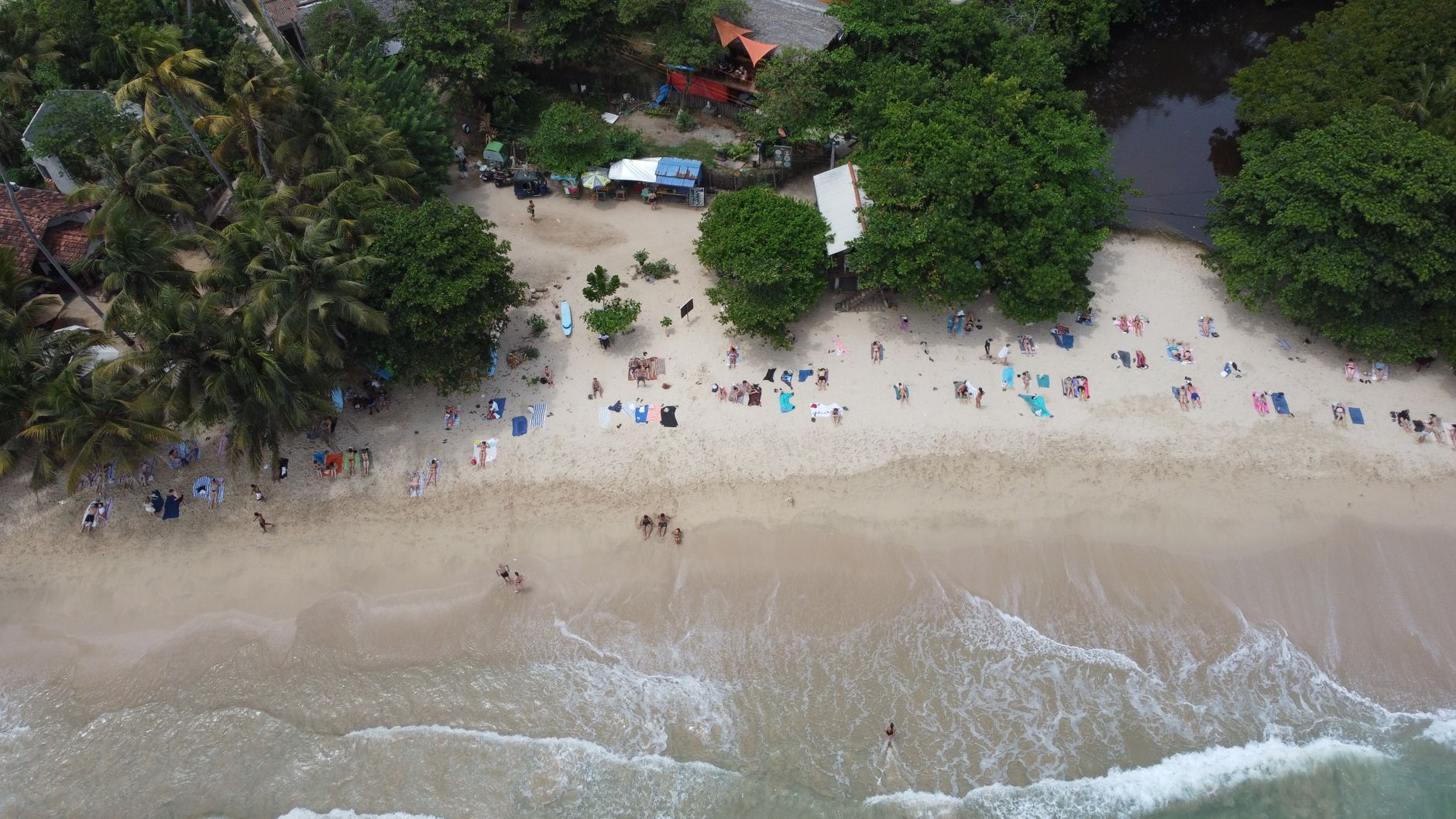
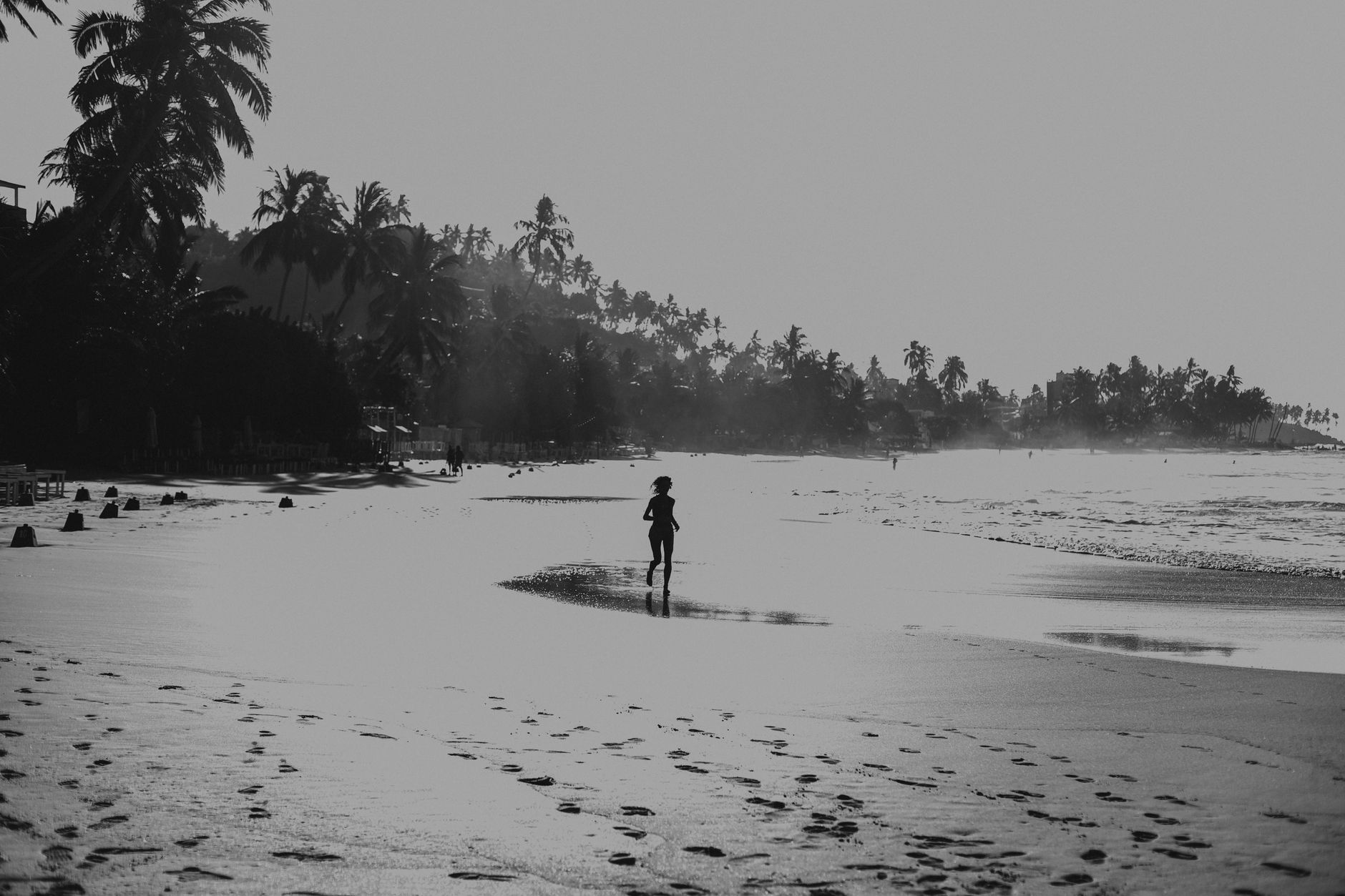
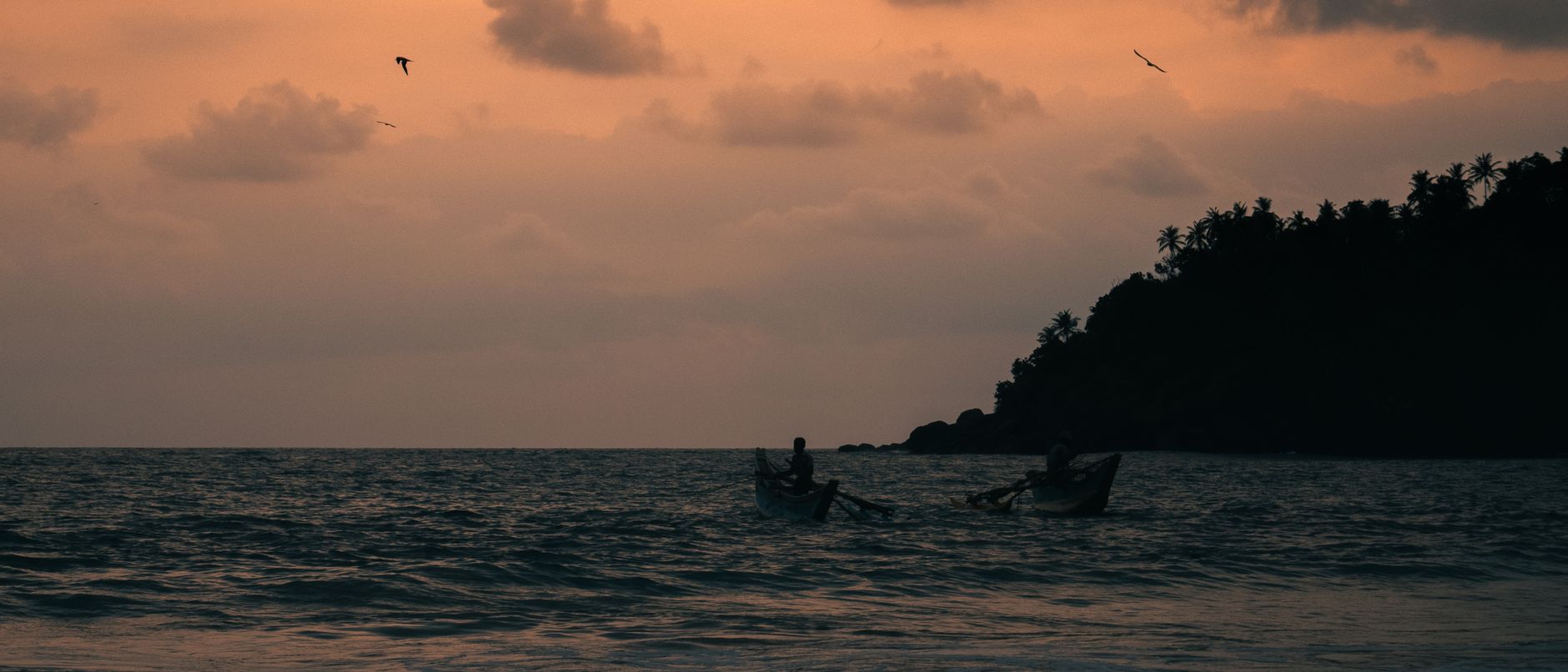
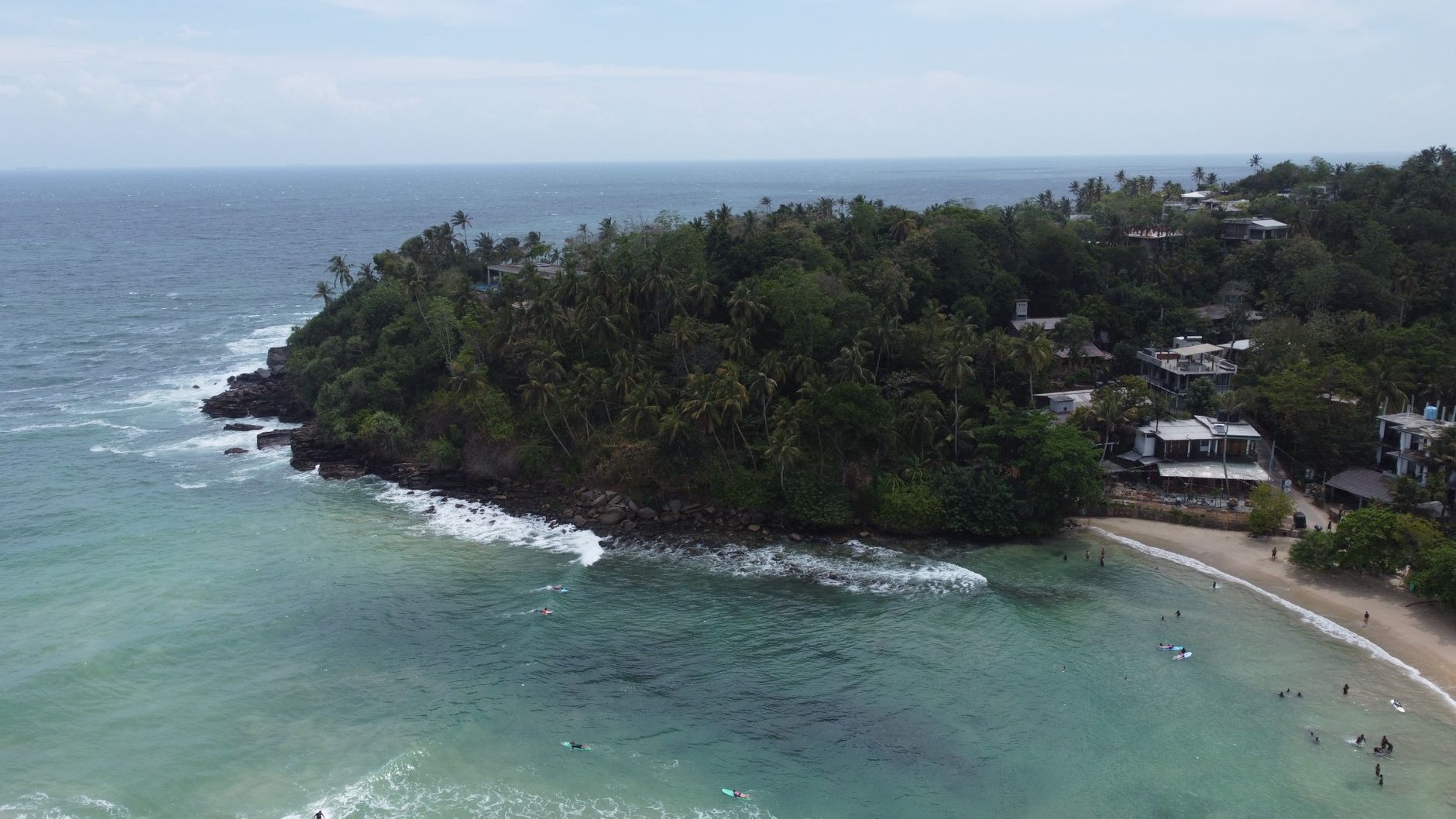
At the western end of Mirissa Beach, a sandbar reaches into the Indian Ocean toward a small island you can walk to at low tide — bare feet, warm shallows, the fishing harbour visible on the headland behind you. That image, more than anything, captures what this stretch of Sri Lanka's southern coast actually is: a working shoreline that became a beach town, still not entirely sure which one it wants to be.
Walk two streets back from the bar-and-surf-shop strip and you're in a neighbourhood of coconut smallholdings and small temples. The same ocean that delivers backpackers to guesthouses also delivers tuna and snapper to the fisheries harbour built in 1966, where boats still depart before dawn.
💛 What travellers fall for
People who come back tend to do two things differently: they eat breakfast off the main beach road — hoppers, string hoppers, pol sambol at a local cafe from around 07:00 for a fraction of the beachfront price — and they time arrival for April or November, when the crowds thin, rates drop and the sea stays swimmable.
How Mirissa came to be
Mirissa grew as a fishing village on the sheltered curve of Weligama Bay, its economy shaped by the sea long before anyone arrived with a backpack. The fisheries harbour was constructed in 1966 and can berth up to 300 small vessels; it still operates daily. The first tourist accommodation appeared in 1980, and by the mid-1990s the beach strip had begun its transformation.
In December 2004, the Indian Ocean tsunami struck the southern coast with particular force. Mirissa lost homes, guesthouses, schools and temples; fourteen people died here. The town rebuilt, and within a few years whale-watching — pioneered by a local family-run operation called Raja and the Whales — had given the harbour a second economic life.
Who and what shaped it
People who shaped it
Landmark buildings
See Mirissa in motion
Plan your visit
On the map
When to go
Temperatures sit between 29 and 31°C year-round, with sea water rarely below 27°C. January through March is the driest window and coincides with peak whale-watching season; October brings the heaviest rains. April and November offer a quieter, cheaper middle ground with good beach conditions.
Right now
Background & history adapted from Wikipedia (CC BY-SA) · specs from Wikidata (CC0) · weather from Open-Meteo · map data © OpenStreetMap contributors · photos from Wikimedia Commons / Unsplash with per-image credit. No third-party reviews or social posts reproduced.