
Melekeok
Ngerulmud is, by most counts, the smallest national capital on earth — population 318 at last census, a domed neoclassical building rising from the jungle of Babeldaob island, and almost no one else around. The name translates roughly as 'place of fermented angelfish,' a nod to the women who once climbed this hill to make offerings to the gods. That history and this present sit side by side without irony.
The actual village of Melekeok faces east, across a long curve of bay, where evenings go quiet early and the sound of surf competes with family televisions drifting through open windows. The capitol complex sits two kilometres northwest, a set of Greco-Roman concrete buildings that would look at home in Washington D.C., planted instead among palms and red-soil roads.
💛 What travellers fall for
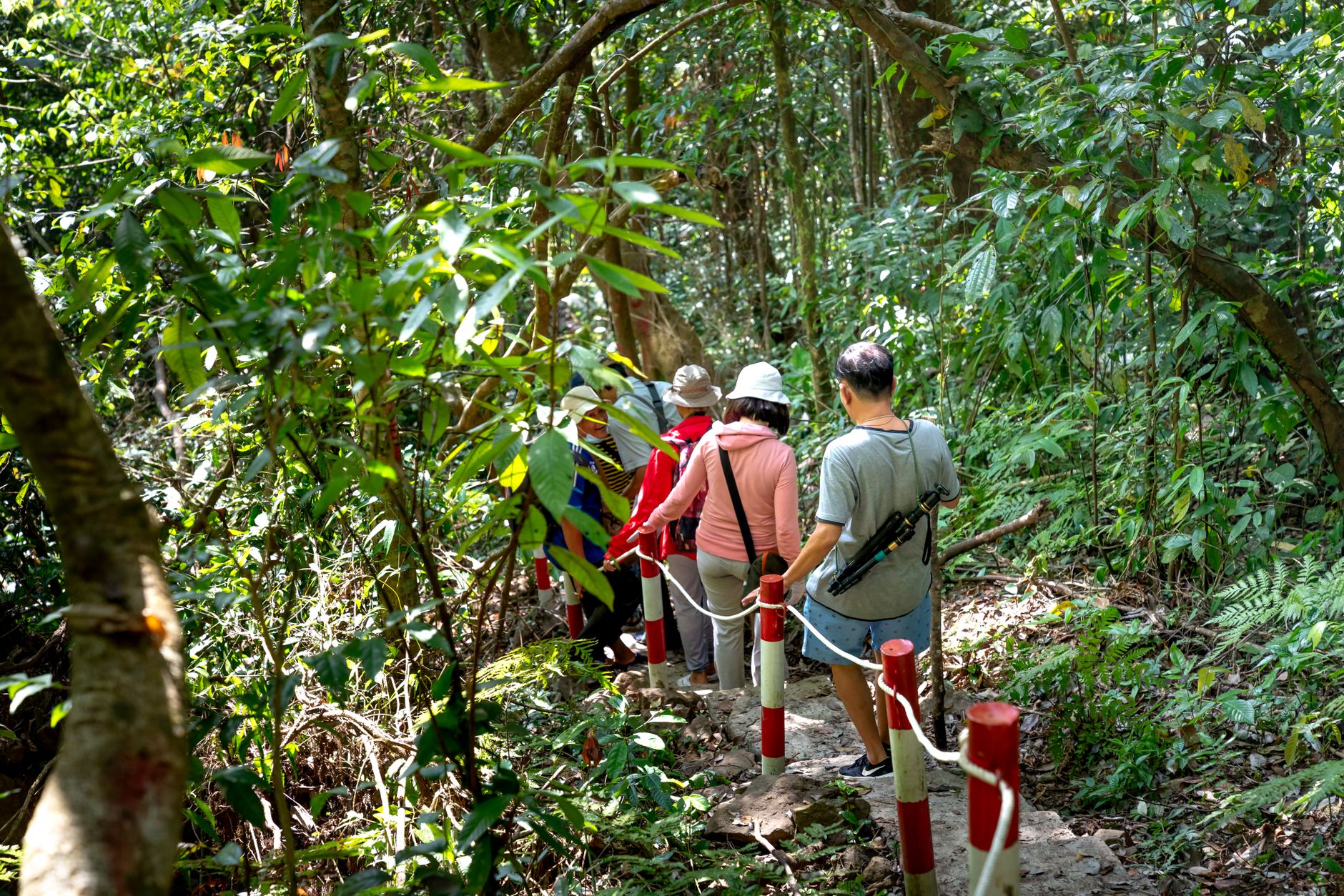
People who make it out here tend to mention the same thing: the stillness at the capitol on a weekday morning, when you can walk the grounds almost alone and the dome throws a clean shadow across the lawn. Pair it with Lake Ngardok — Micronesia's only natural freshwater lake — and you have a half-day that feels genuinely unlike anything else in Palau.
Deals in Melekeok
Book directly at the provider

How Melekeok came to be
Before contact, Melekeok State belonged to the Ngatĕlngál political group within Palau's loose confederation of ten districts, and the title of Reklai — traditional high chief — has been held here for generations. The state adopted its own constitution in 1983, with formal government following in 1984.
The bigger shift came in 2006. Planning had begun back in 1986, when Architects Hawaii Ltd. was contracted to design a new national capitol; Taiwan provided a $20 million loan in the early 2000s to push construction forward. The Palau National Capitol Complex opened on 7 October 2006, attended by over 5,000 people, at a final cost exceeding $45 million — and Palau's capital moved from Koror to Ngerulmud. The Compact Road connecting the two arrived the following year, funded by the United States for $150 million.
Who and what shaped it
Landmark buildings
See Melekeok in motion
Plan your visit
On the map
When to go
Temperatures hold between 25°C and 31°C year-round with high humidity; expect short, heavy rain bursts especially from May through November, when July alone can bring nearly 40 centimetres. December to April is drier and slightly more comfortable for walking the grounds and forest trails.
Right now
Background & history adapted from Wikipedia (CC BY-SA) · specs from Wikidata (CC0) · weather from Open-Meteo · map data © OpenStreetMap contributors · photos from Wikimedia Commons / Unsplash with per-image credit. No third-party reviews or social posts reproduced.