
Marsa Alam
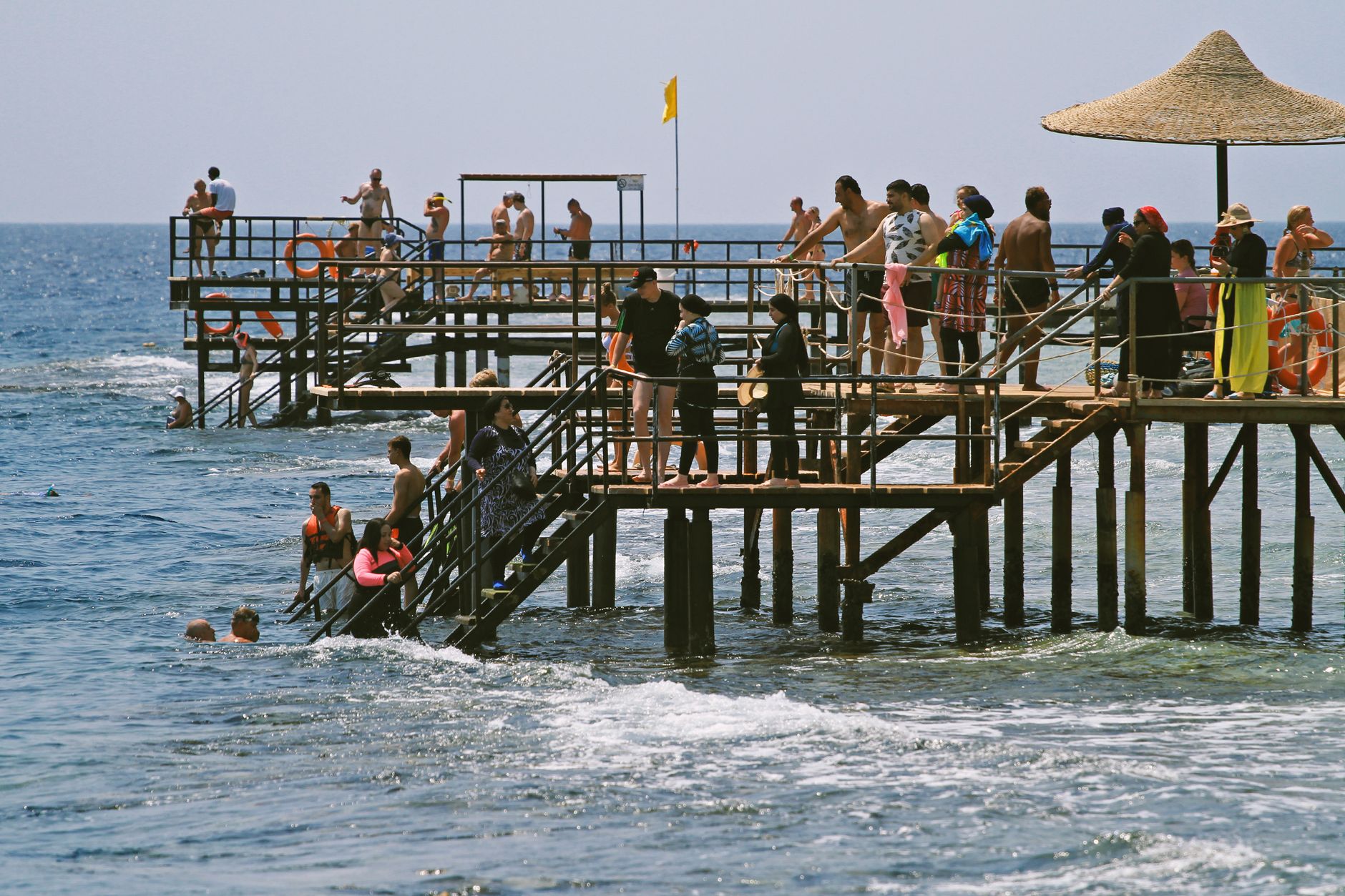
Most of the Red Sea's reputation was built further north, around Hurghada and Sharm el-Sheikh. Marsa Alam, roughly 200 kilometres south, runs on a different clock. The town itself is small and functional — a marina, a scattering of resorts, a road that runs parallel to a coast where green sea turtles surface at Abu Dabba beach and dugongs move through the seagrass like slow grey shadows.
This is a region defined by water and desert in close company. Inland, Wadi El Gemal National Park covers more than 7,000 square kilometres of land and reef. The dive operators here cap groups at twelve, which keeps the reefs quieter than the north — a practical decision that shapes the whole character of the place.
💛 What travellers fall for
People who return tend to rotate between the same handful of things: early dives before the heat builds, afternoons in the shade of a resort, and at least one trip into Wadi El Gemal. Hossam Helmy's Red Sea Diving Safari — the outfit he started in 1990 after years camping this coastline — still has a loyal following among divers who've tried the rest.
How Marsa Alam came to be
Before the resorts, Marsa Alam was a quiet fishing port, home to Ababda Bedouins in the north and Bedscha Bedouins in the south — communities that early Egyptian rulers relied on to patrol and defend the desert borders. The area's deeper history runs through the hills inland, where emerald mines in what is now Wadi El Gemal were likely worked during the Ptolemaic period and possibly as far back as the second millennium BC. These were the sole source of emeralds for the Roman Empire, and the ancients knew the route well: Ptolemy II ordered a road built between Marsa Alam and Edfu during his reign (281–246 BC).
The modern town is a recent creation. Kuwait's Al-Kharafi Group broke ground in 1995, building the first hotel — sixty rooms — and the basic infrastructure. The opening of Marsa Alam International Airport in 2003 turned a remote stretch of coast into an accessible one, and the region has been growing steadily since.
Who and what shaped it
People who shaped it
Landmark buildings
See Marsa Alam in motion
Plan your visit
On the map
When to go
The sun is reliable year-round and rain is rare to the point of being an event. Summer (July–August) pushes daytime highs to 38–39°C; winters are mild, averaging 20–25°C, which makes December through March the better window for desert trips. The Red Sea stays between 22–29°C throughout the year — snorkelling is comfortable in any season, though April–June and September–November are considered the clearest months underwater.
Right now
Background & history adapted from Wikipedia (CC BY-SA) · specs from Wikidata (CC0) · weather from Open-Meteo · map data © OpenStreetMap contributors · photos from Wikimedia Commons / Unsplash with per-image credit. No third-party reviews or social posts reproduced.