
Marrakesh
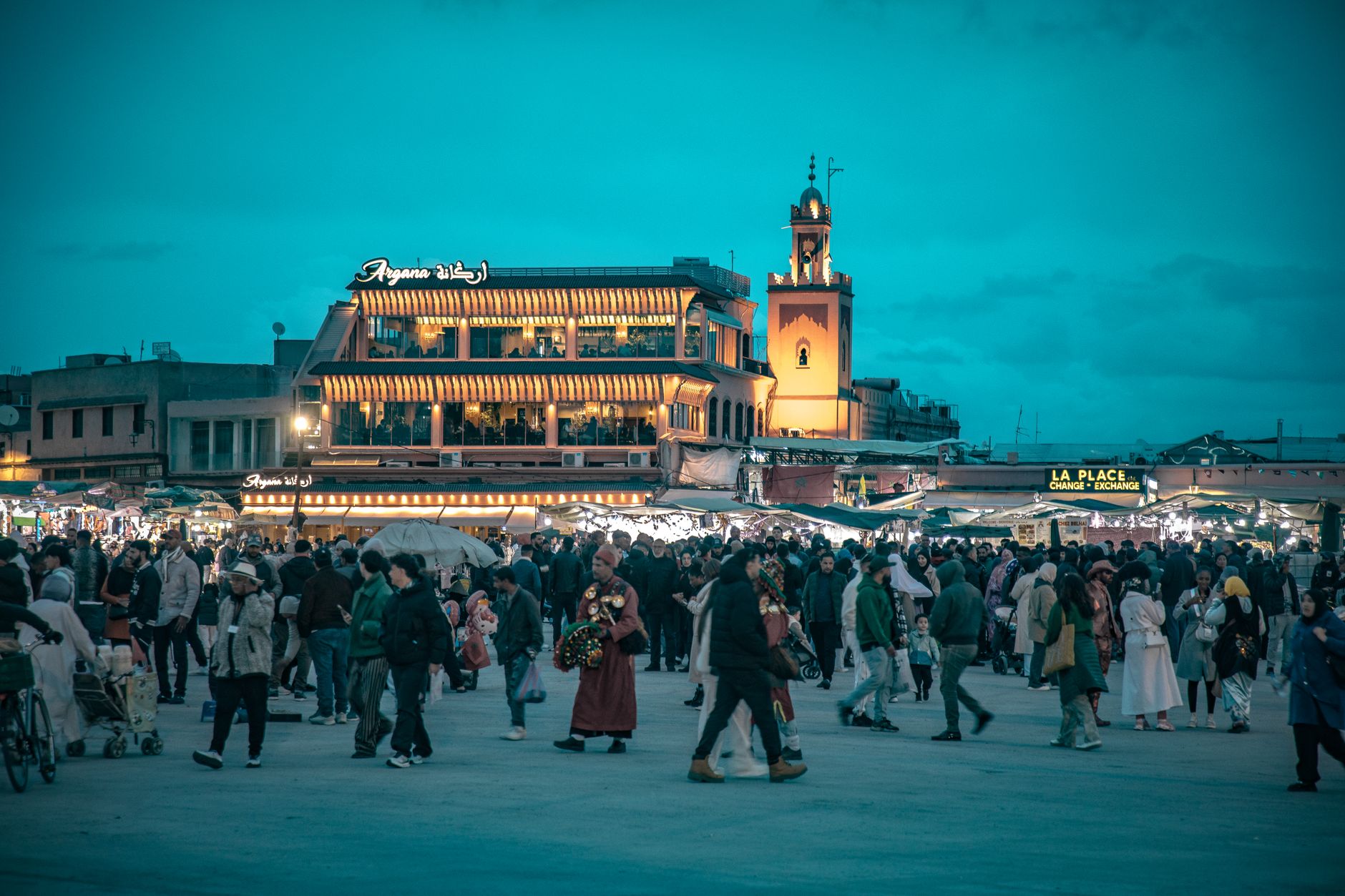
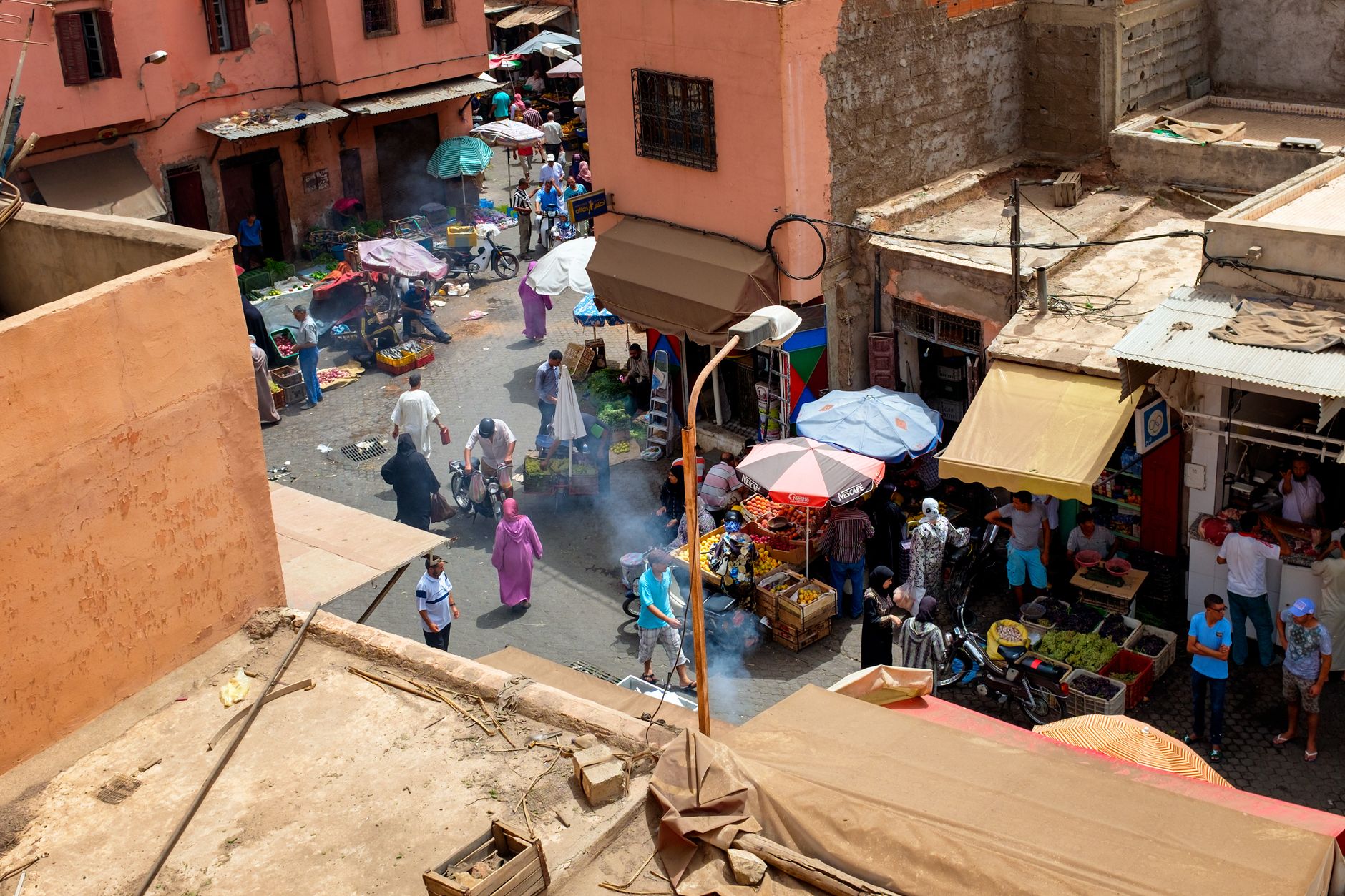
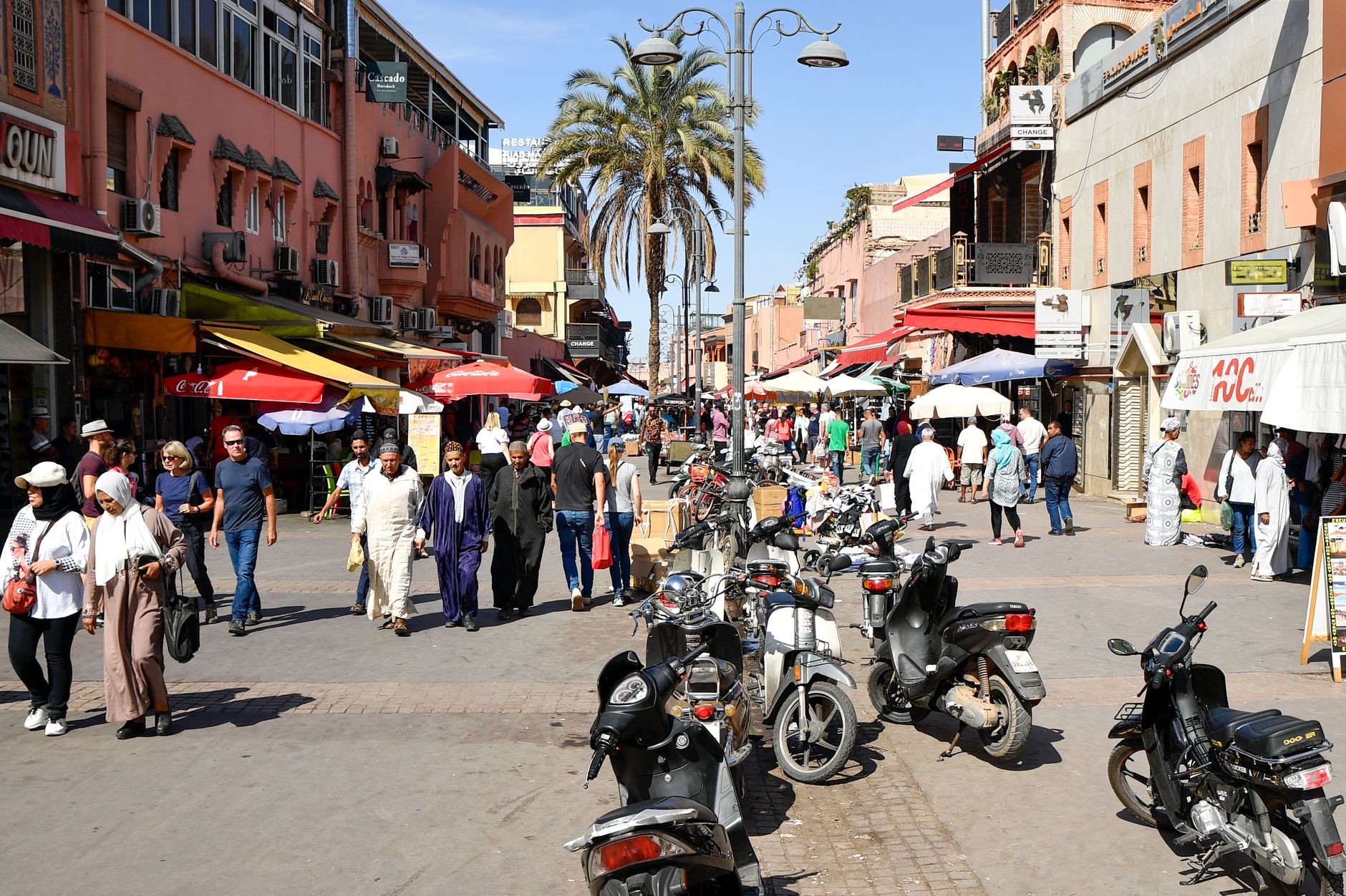
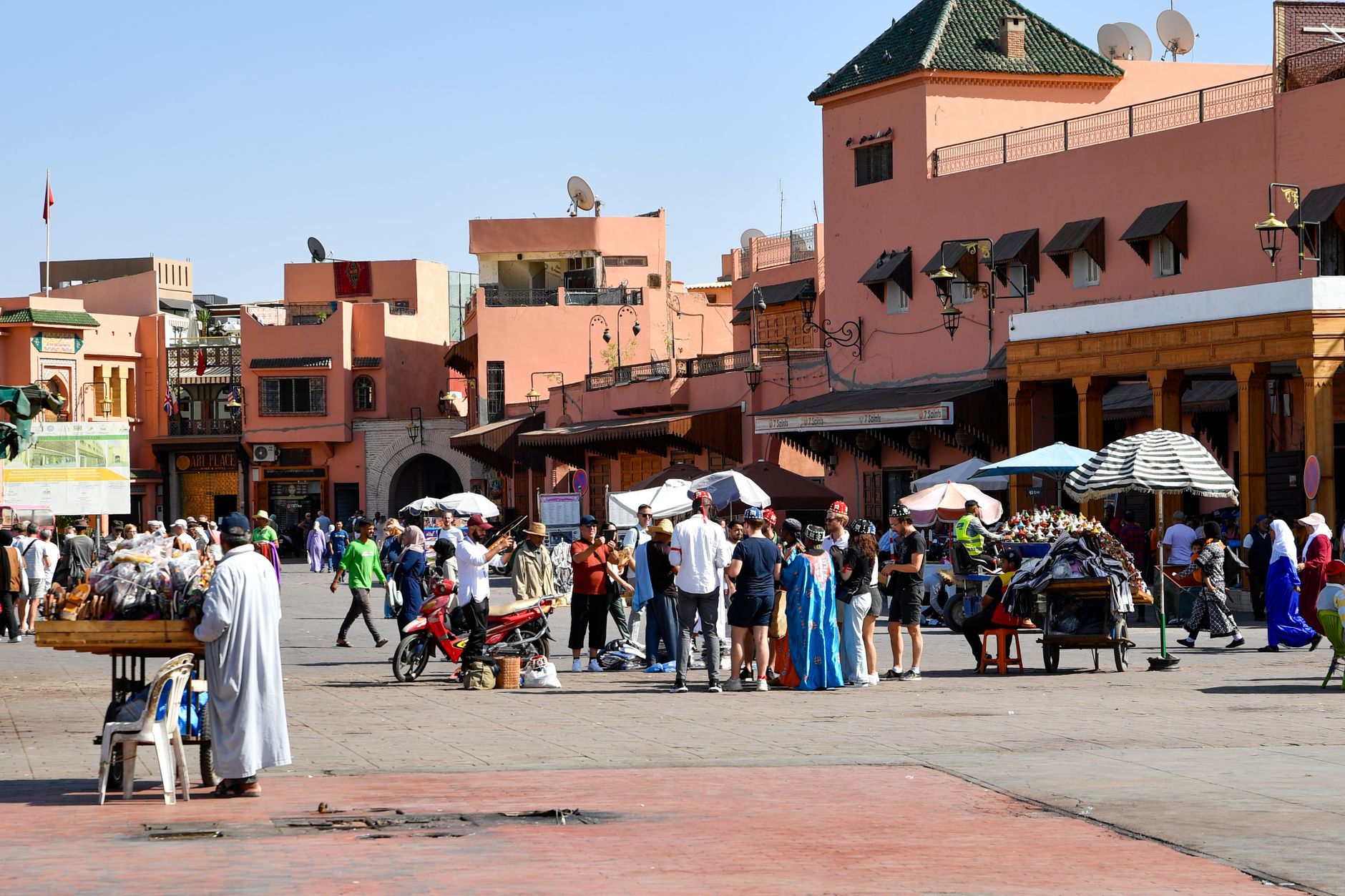
The walls tell you where you are before anything else. Marrakesh's medina ramparts — nearly 19 kilometres of orange-red clay and chalk, up to six metres high — circle the old city in a colour that gave Marrakesh its Arabic name: al-Hamra, the Red. That earth pigment comes from the soil itself, and it bleeds into the buildings, the dust, the light at dusk.
Inside those walls, the medina moves on foot. Streets narrow until two people can barely pass, then open without warning onto a courtyard or a square. Jemaa el-Fnaa — whose name likely translates as 'mosque of annihilation,' a reference to a ruined mosque that once stood there — anchors it all, a UNESCO-listed public space that has been the city's social centre for centuries.
💛 What travellers fall for
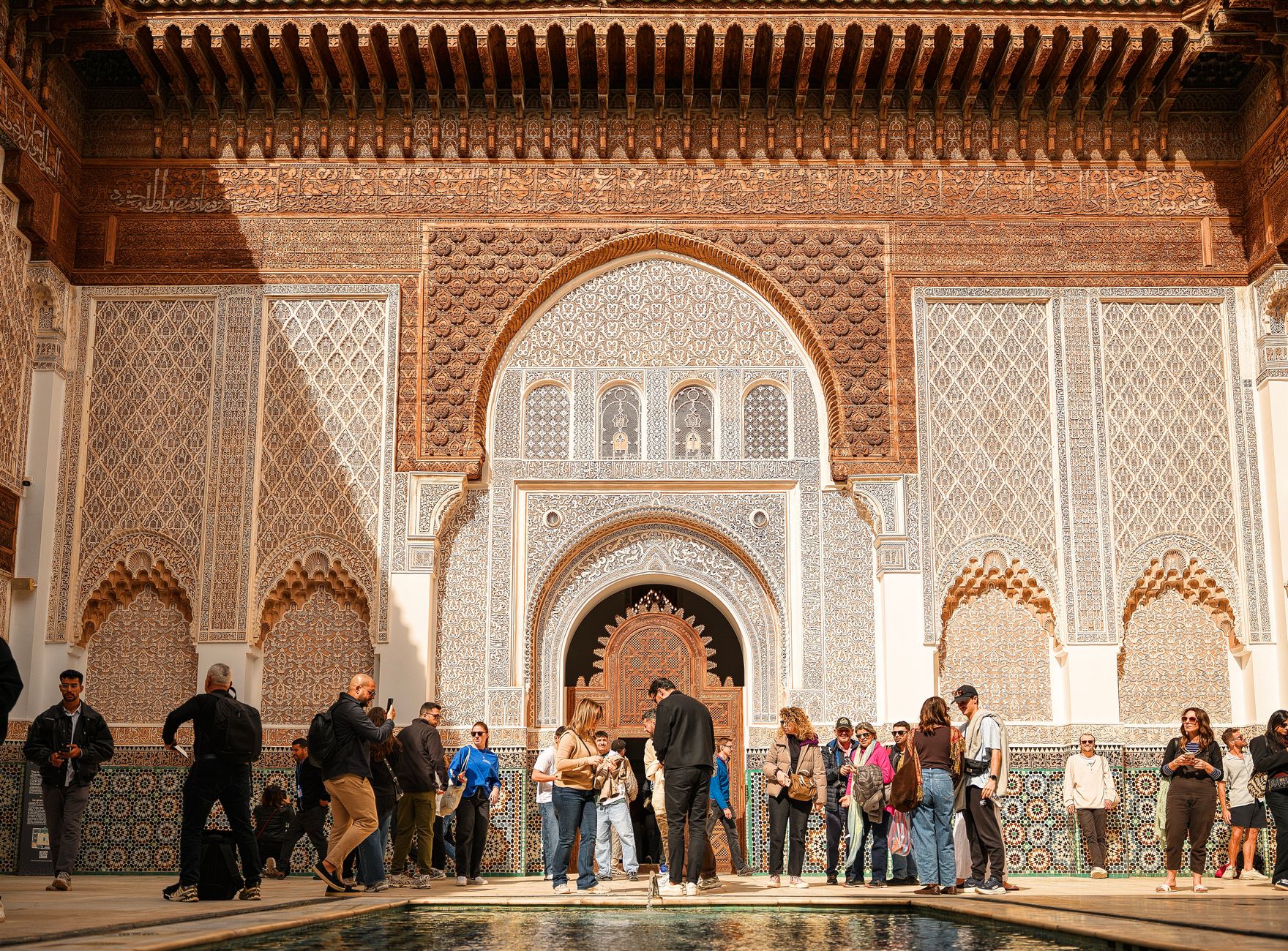
People who return tend to say the same thing: go to Jemaa el-Fnaa in the early morning, before the square fills. Walk to the Koutoubia Mosque when the light is low and the 77-metre minaret casts a long shadow. The Ben Youssef Madrasa is best on a weekday. The Majorelle Gardens reward a second visit once you stop rushing through.
Deals in Marrakesh
Book directly at the provider

How Marrakesh came to be
Marrakesh began as an Almoravid military encampment in the 1060s. The first permanent stone structure, Qasr al-Hajar, went up in May 1070; the first brick mosque followed in 1071 under Yusuf ibn Tashfin. The city was founded by his second cousin Abu Bakr ibn Umar, and within a century it had become the imperial capital of the Almohad Caliphate, which added the Koutoubia Mosque in 1147 — though the original was misaligned toward Mecca, so a second was built beside it. The ruins of both remain.
Control passed through the Marinids, who moved the capital north to Fez in 1269, and the Saadians, who restored Marrakesh to imperial status after 1549 and left behind the Ben Youssef Madrasa and the El Badi Palace. The Alawi dynasty took the city in 1669. Under the French protectorate (1912–56), the Glaoui family administered it, with T'hami El Glaoui serving as Pasha for 44 years.
Who and what shaped it
People who shaped it
Landmark buildings
See Marrakesh in motion
Plan your visit
On the map
When to go
Spring and autumn are the practical sweet spots — warm days, cool evenings, and manageable crowds. Summer temperatures regularly exceed 38°C in the medina, which has little shade in open areas. Winter is mild by day but can drop sharply after dark.
Right now
Background & history adapted from Wikipedia (CC BY-SA) · specs from Wikidata (CC0) · weather from Open-Meteo · map data © OpenStreetMap contributors · photos from Wikimedia Commons / Unsplash with per-image credit. No third-party reviews or social posts reproduced.