
Liverpool
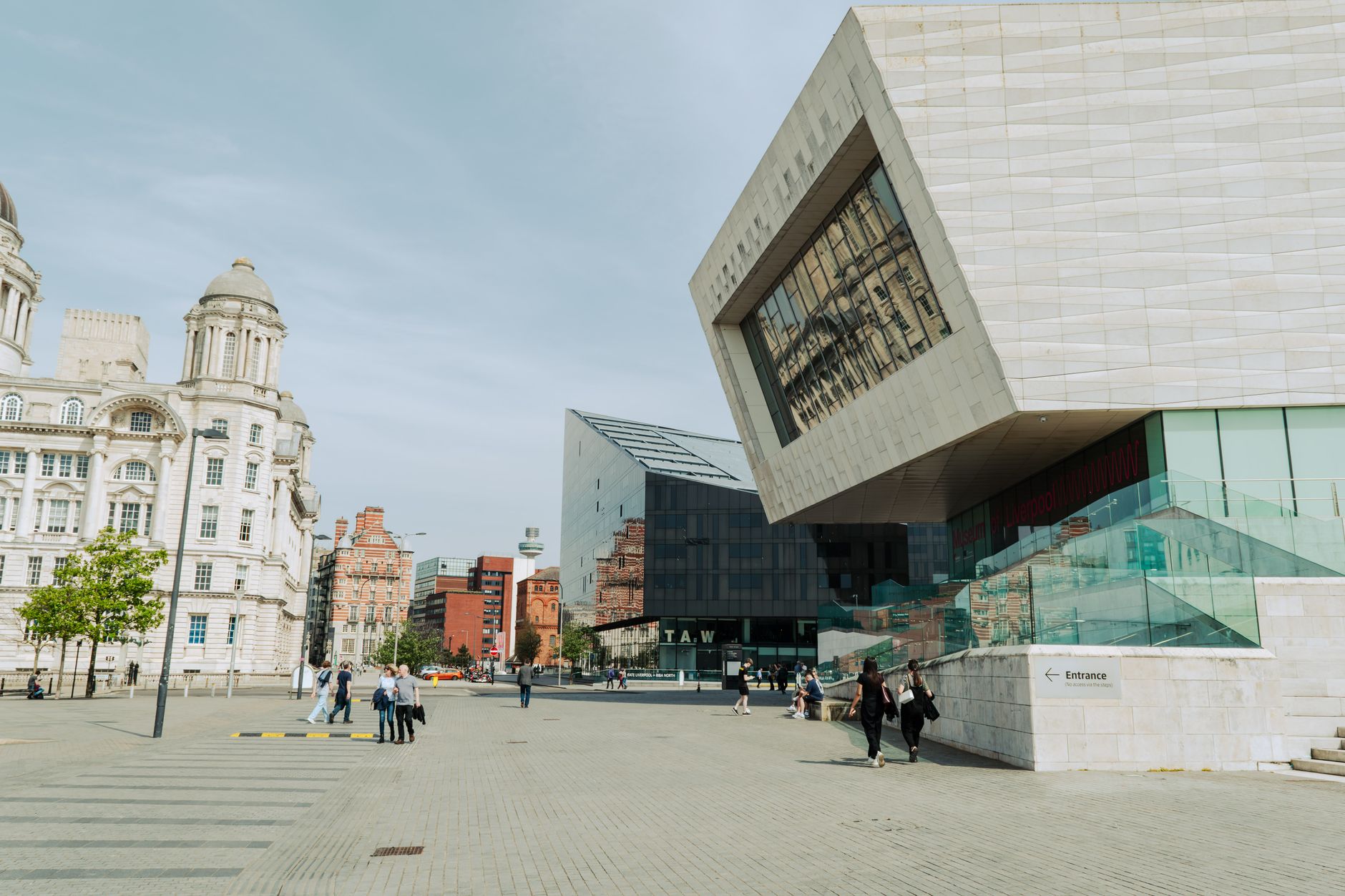
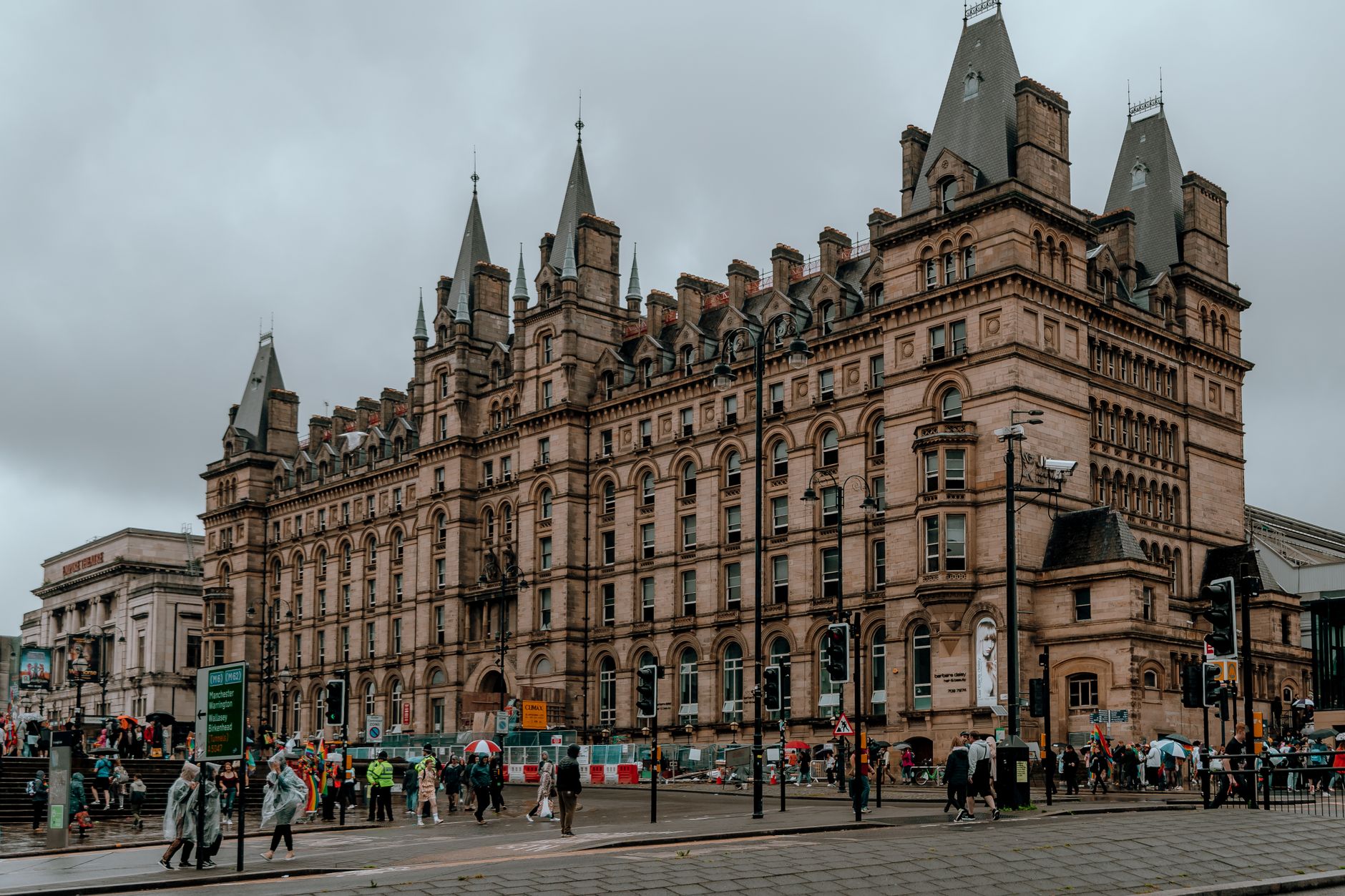
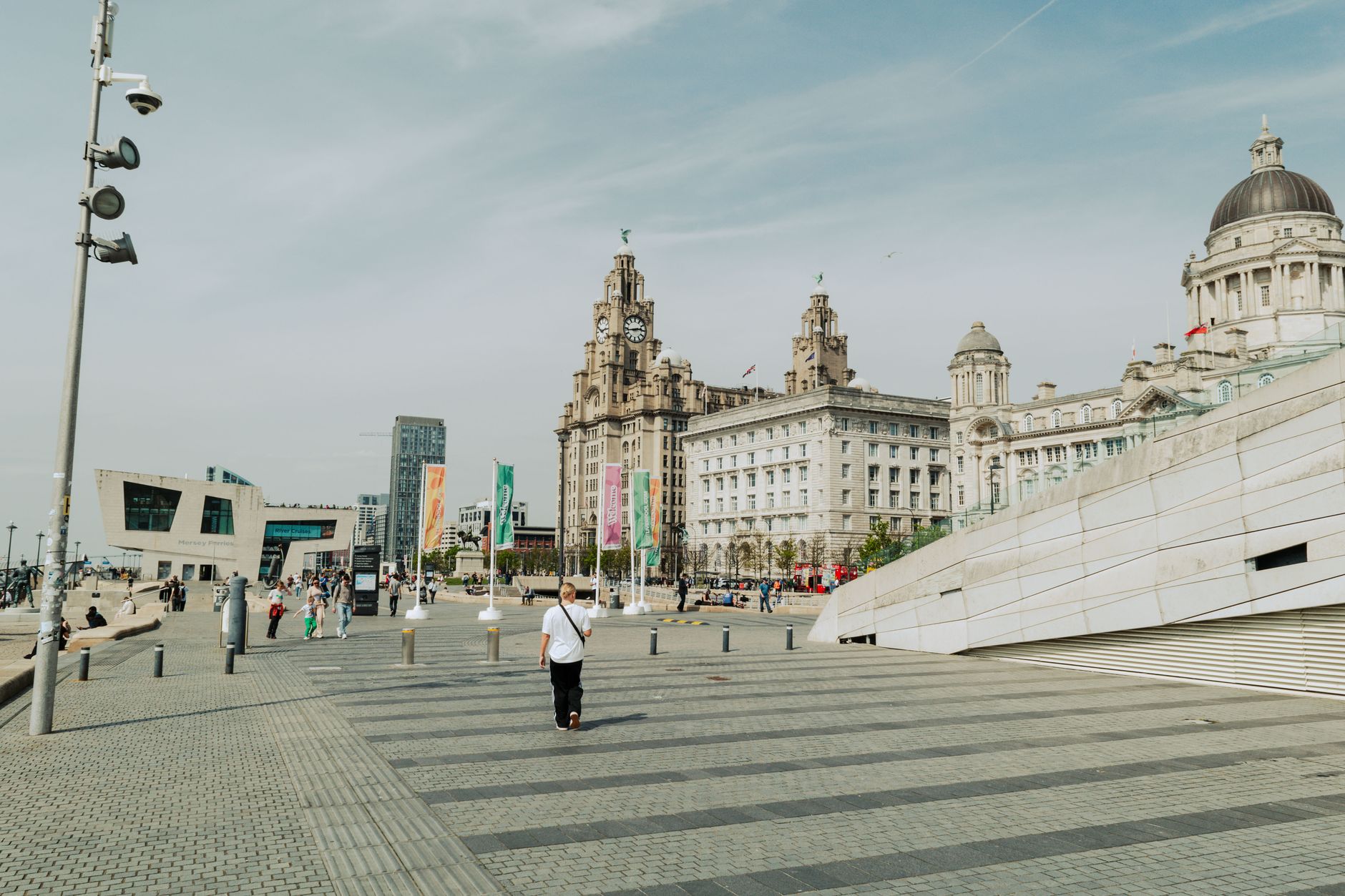
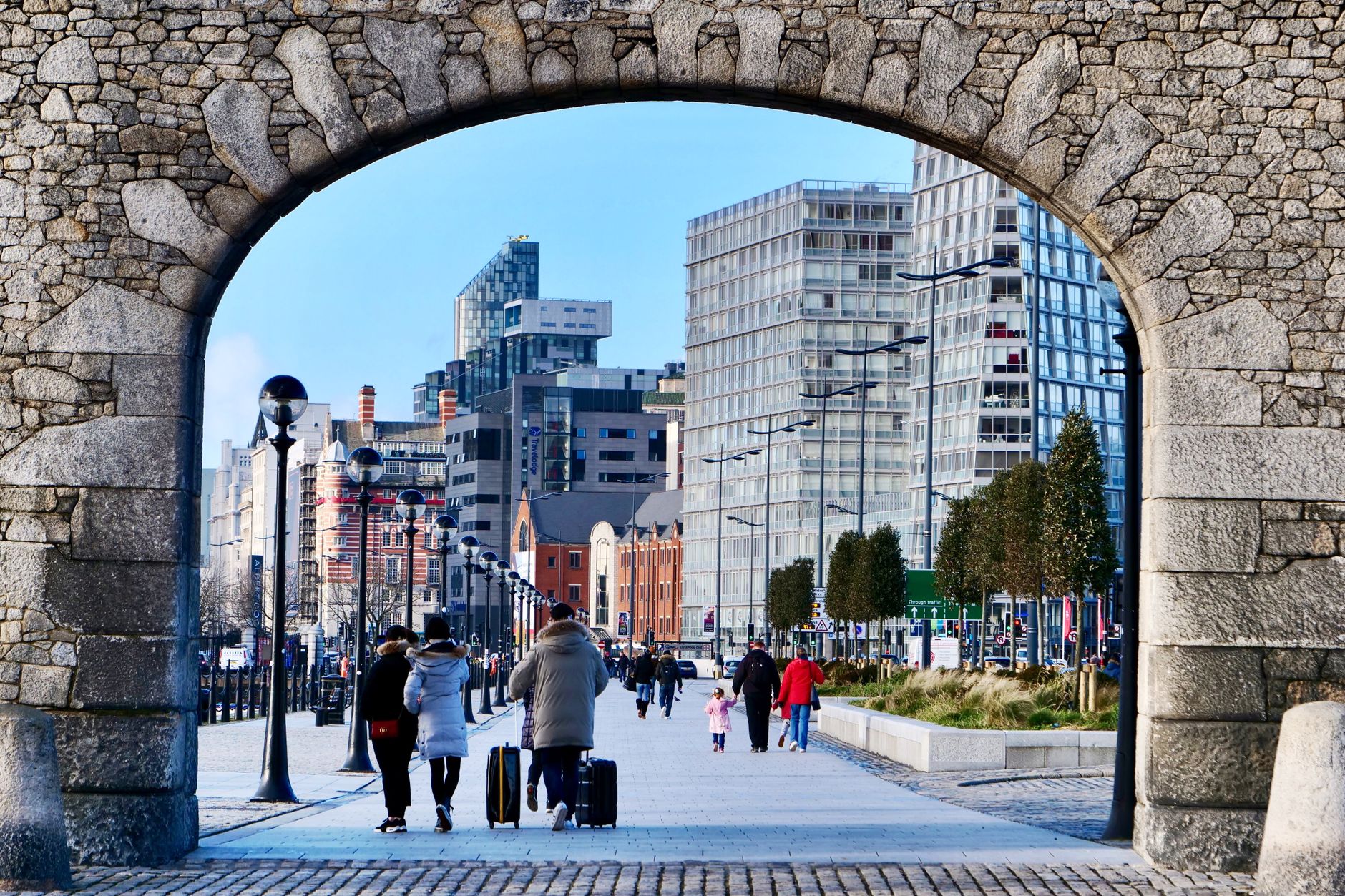
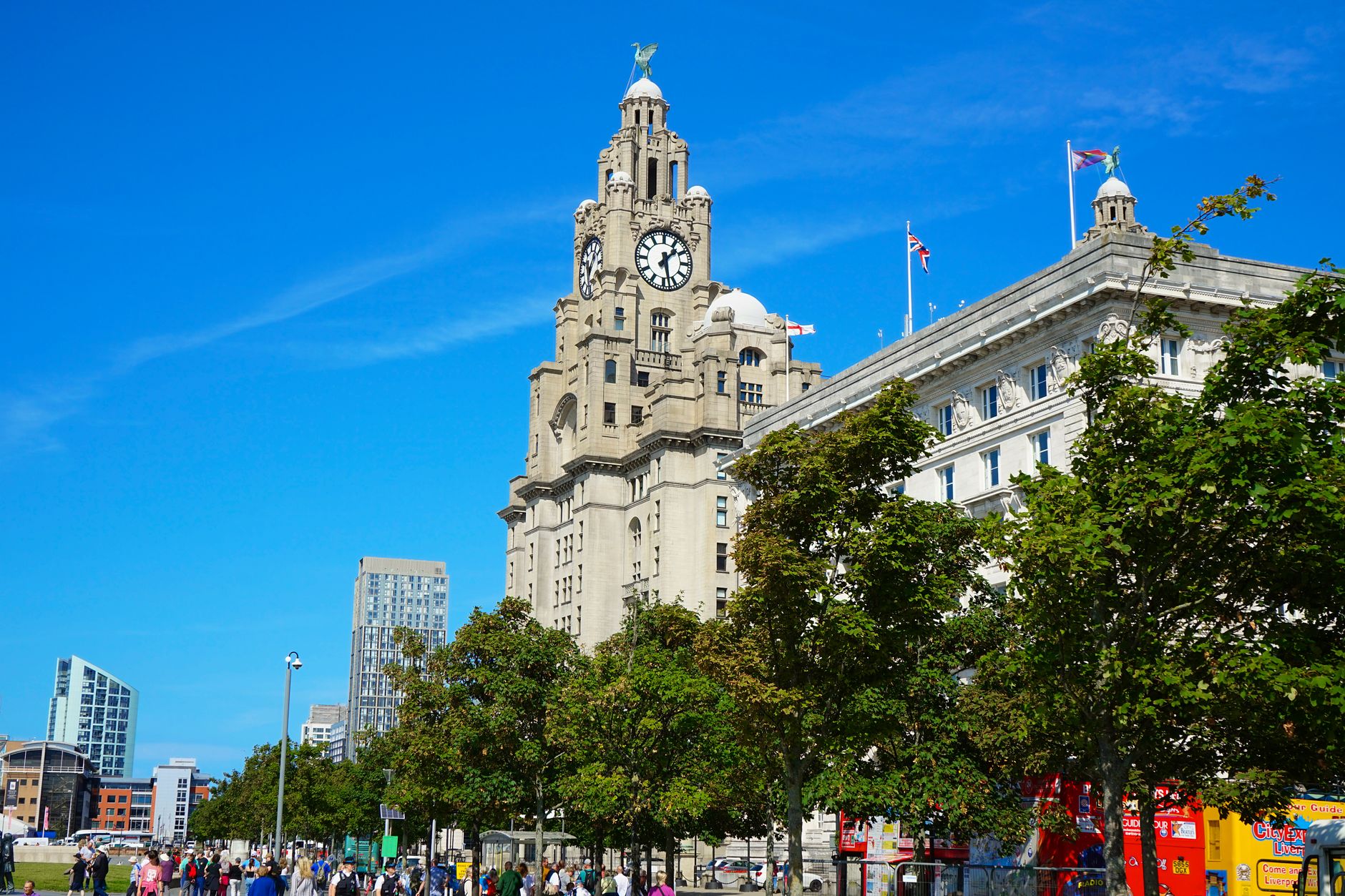
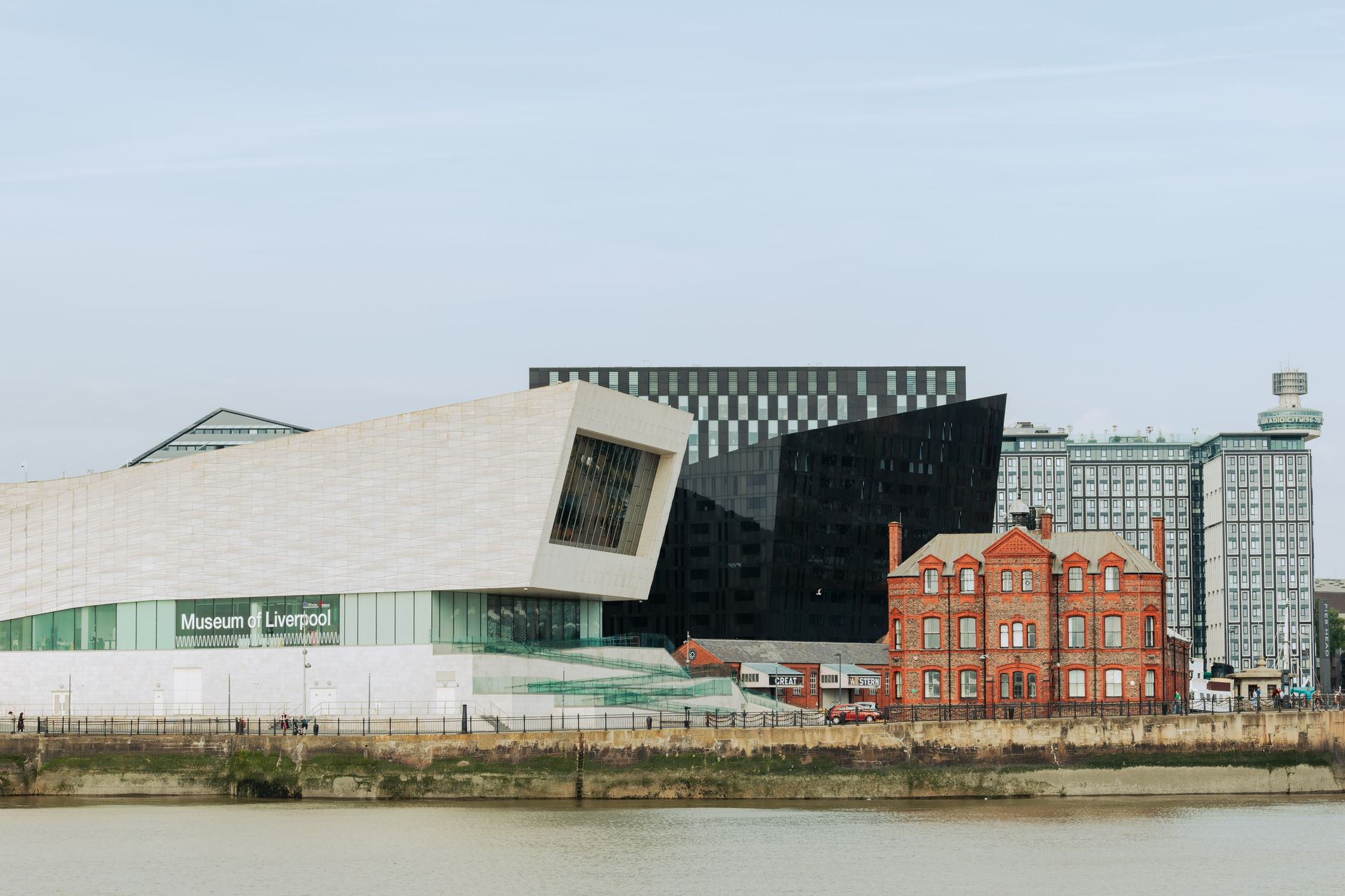
Liverpool's waterfront tells you something immediately: this is a city that moved things. The Royal Liver Building rises at the water's edge, its two Liver Birds keeping watch from the clock towers since 1911, and behind it the city fans out in Victorian confidence — more than 2,500 listed buildings, the density of a place that once handled a significant share of the world's trade.
The music is real, not just marketed. The Beatles formed here in 1957, and the city hasn't entirely moved on from that fact, nor should it. But Liverpool earns attention beyond the mythology — in its architecture, its football, its complicated history with the Atlantic world.
💛 What travellers fall for
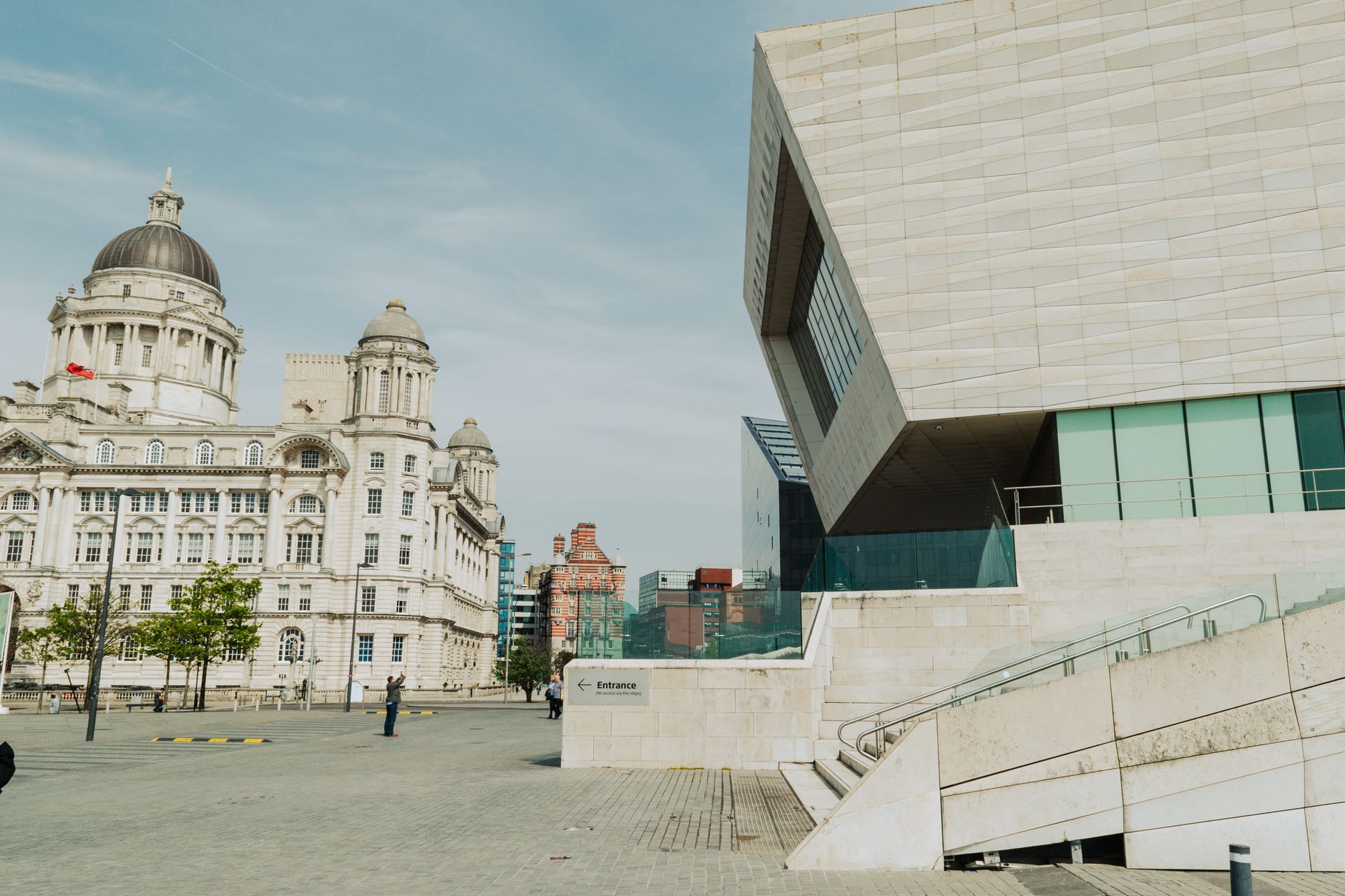
People who come back tend to spend longer on the waterfront than planned, and make time for St. George's Hall — the neoclassical pile completed in 1854, designed by Harvey Lonsdale Elmes, whose interiors were finished by C.R. Cockerell after Elmes died young. The building rewards a slow look. The city centre is compact enough that you can cover a lot on foot without a plan.
Deals in Liverpool
Book directly at the provider

How Liverpool came to be
The name appears in records as early as 1190 — 'Liuerpul', likely referring to a muddy tidal creek. King John formalized things on 28 August 1207, issuing a charter that established Liverpool as a borough. It grew slowly at first, then dramatically: the world's first commercial wet dock opened here in 1715, and by the 18th century the city was deep in the Atlantic trade, including the slave trade — a history that figures like the abolitionist William Roscoe, banker and MP, worked actively against.
The Liverpool and Manchester Railway opened in 1830, the city gained city status in 1880, and its university followed a year later. The May Blitz of 1941 killed around 2,500 people and destroyed 11,000 homes. UNESCO designated much of the waterfront a World Heritage Site in 2004, then removed that status in 2023 over concerns about new waterfront development.
Who and what shaped it
People who shaped it
Landmark buildings
See Liverpool in motion
Plan your visit
On the map
When to go
Liverpool runs cool and damp year-round — January averages 5.3°C, July a mild 16.8°C, with around 835mm of rain spread across all twelve months. Summer is the most comfortable window for walking the city, but a waterproof layer is sensible in any season.
Right now
Background & history adapted from Wikipedia (CC BY-SA) · specs from Wikidata (CC0) · weather from Open-Meteo · map data © OpenStreetMap contributors · photos from Wikimedia Commons / Unsplash with per-image credit. No third-party reviews or social posts reproduced.