
Le Tampon
Le Tampon sits high on the southern flank of Réunion, where the air is noticeably cooler than the coast and the neighborhoods are named not for saints or landowners but for distances — le Onzième, le Quatorzième, le Vingt-Troisième — each a kilometer marker from the sea turned into an address, a community, an identity. It is Réunion's second-largest commune by population, yet it carries itself like a working highland town rather than a city.
The volcanic plateau of Plaine des Cafres stretches through its upper reaches, and the active crater of Piton de la Fournaise lies within its expanded boundaries. Down in the center, a covered market runs daily and a palm plantation grows toward an eventual thousand species. The place earns attention through accumulation — geology, history, scent, altitude.
💛 What travellers fall for
People who come back tend to time the Saturday outdoor market early, before the clouds settle in from the east. The Belvédère de Bois Court rewards a clear morning — stand at 1,400 metres and Grand Bassin village appears far below, as if someone dropped it into a fold in the earth. The loop hike down and back takes half a day and most of your knees.
Deals in Le Tampon
Book directly at the provider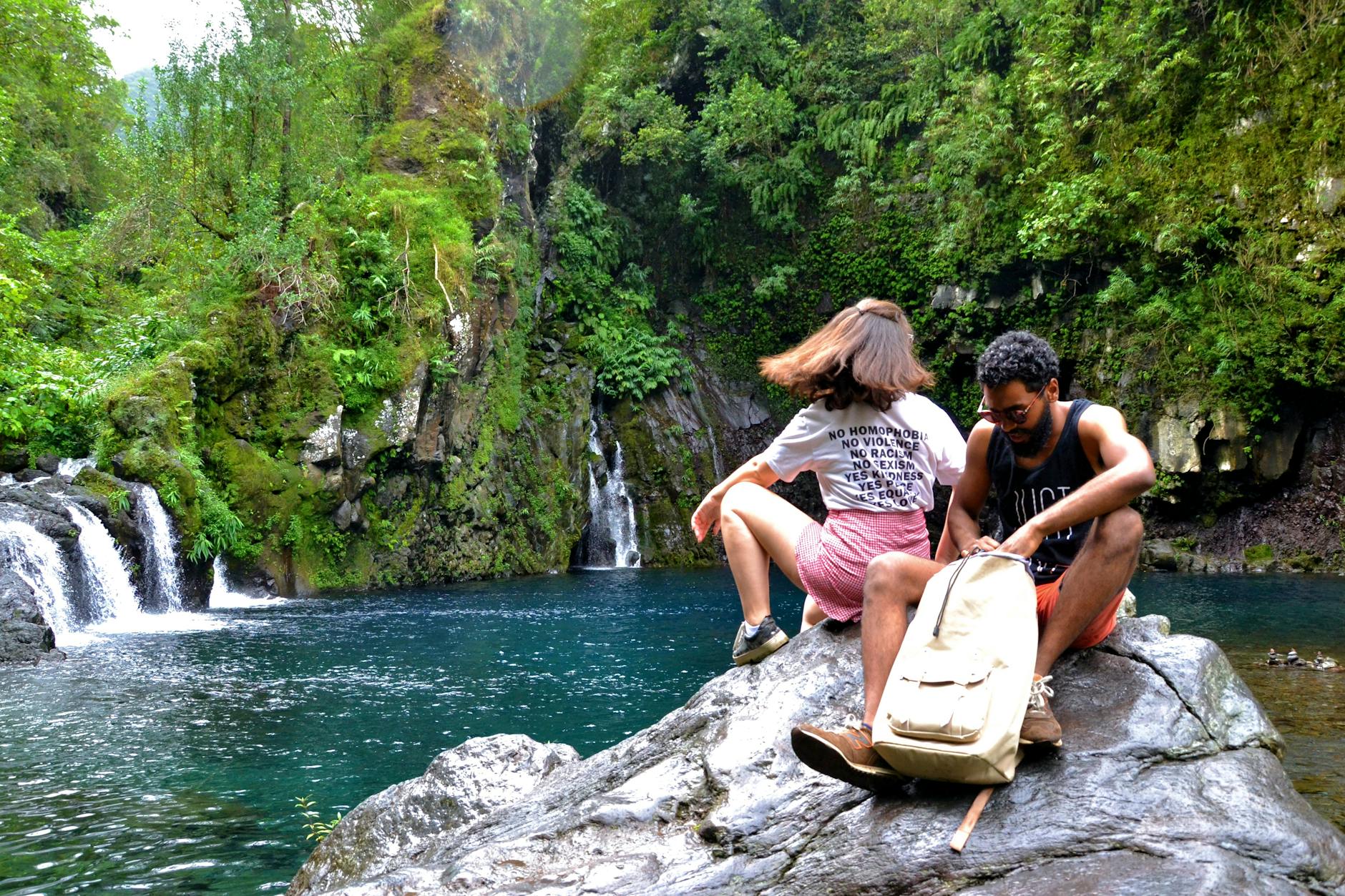

How Le Tampon came to be
In 1830, Count Gabriel Le Coat de Kerveguen arrived and methodically acquired nearly all the land concessions in the south of Réunion, building an agricultural empire large enough that by 1859 he was minting his own currency — the kreutzer — to pay Indian laborers. The coins circulated for twenty years before being declared illegal. Distillation of ylang-ylang and vetiver began from 1870, and when an economic crisis hit, farmers turned to rose geranium; for a period, Réunion was the world's only producer of the essential oil, supplying Chanel, Hermès, and Fabergé.
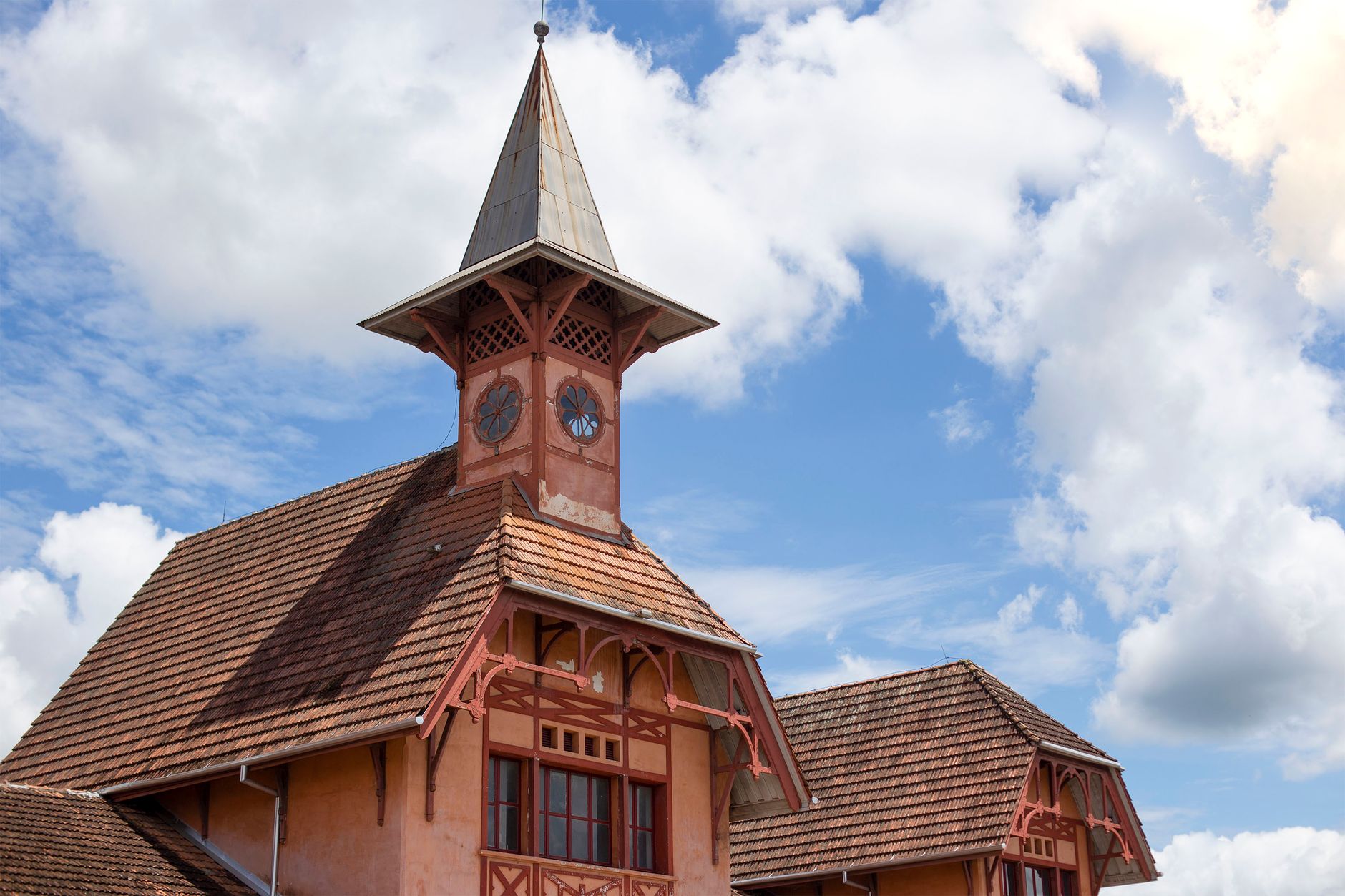
The commune separated from Saint-Pierre in July 1882 and became fully independent on 25 July 1925, with Edgar Avril as its first mayor. Its first church had been built in 1911 under Father Eugène Rognard. In 1979, Le Tampon absorbed the Piton de la Fournaise region, tying the city's fate permanently to the most active volcano in the Indian Ocean.
Who and what shaped it
People who shaped it
Landmark buildings
See Le Tampon in motion
Plan your visit
On the map
When to go
At the higher elevations where most of Le Tampon sits, temperatures average around 14°C annually — cooler than you might expect from a tropical island — dropping to around 10°C in July and rarely climbing above 17°C even in February. The wet season runs November through April; if you want clear skies and crisp walking conditions, May through October is the more reliable window.
Right now
Background & history adapted from Wikipedia (CC BY-SA) · specs from Wikidata (CC0) · weather from Open-Meteo · map data © OpenStreetMap contributors · photos from Wikimedia Commons / Unsplash with per-image credit. No third-party reviews or social posts reproduced.