
Krka National Park
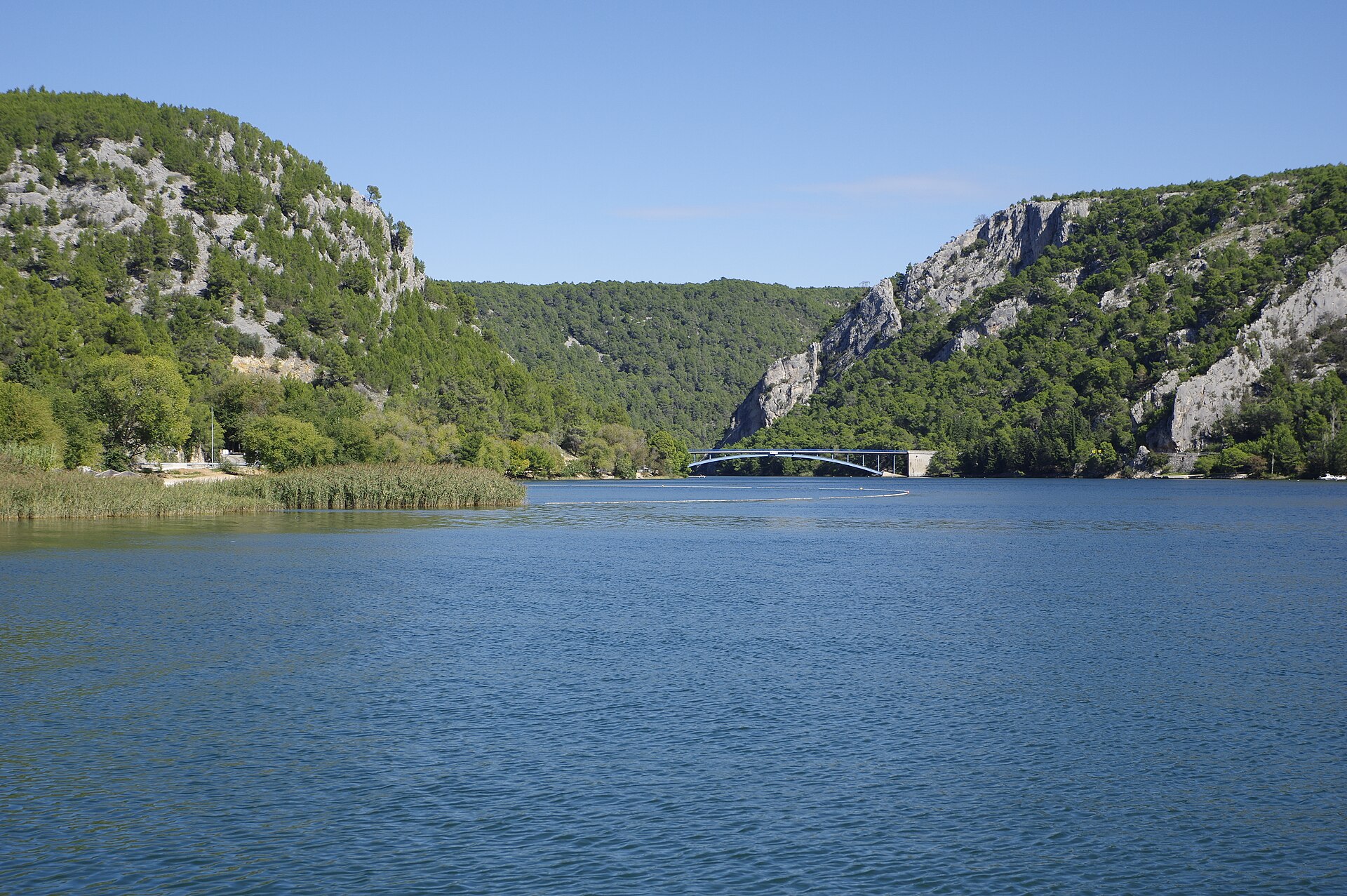
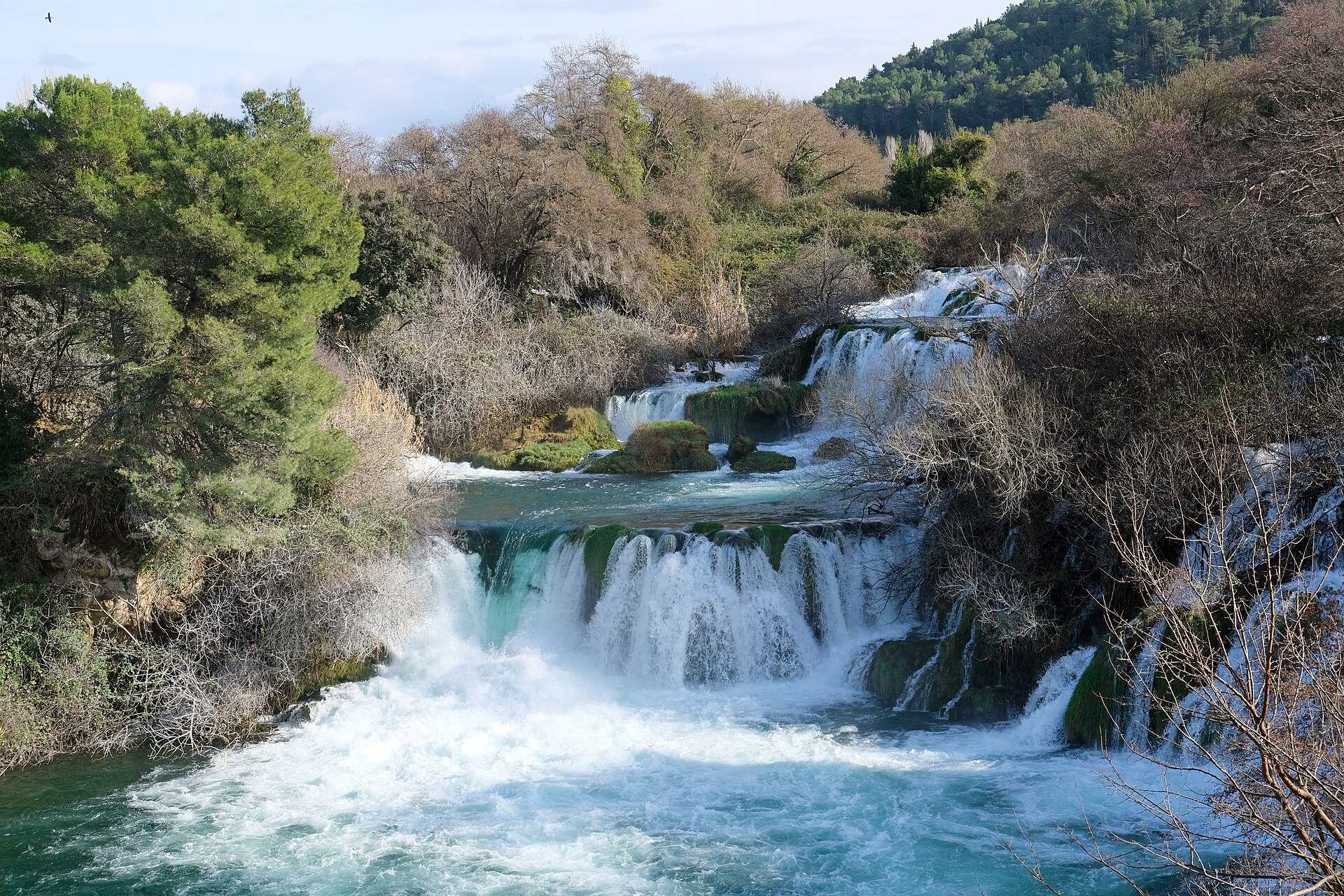
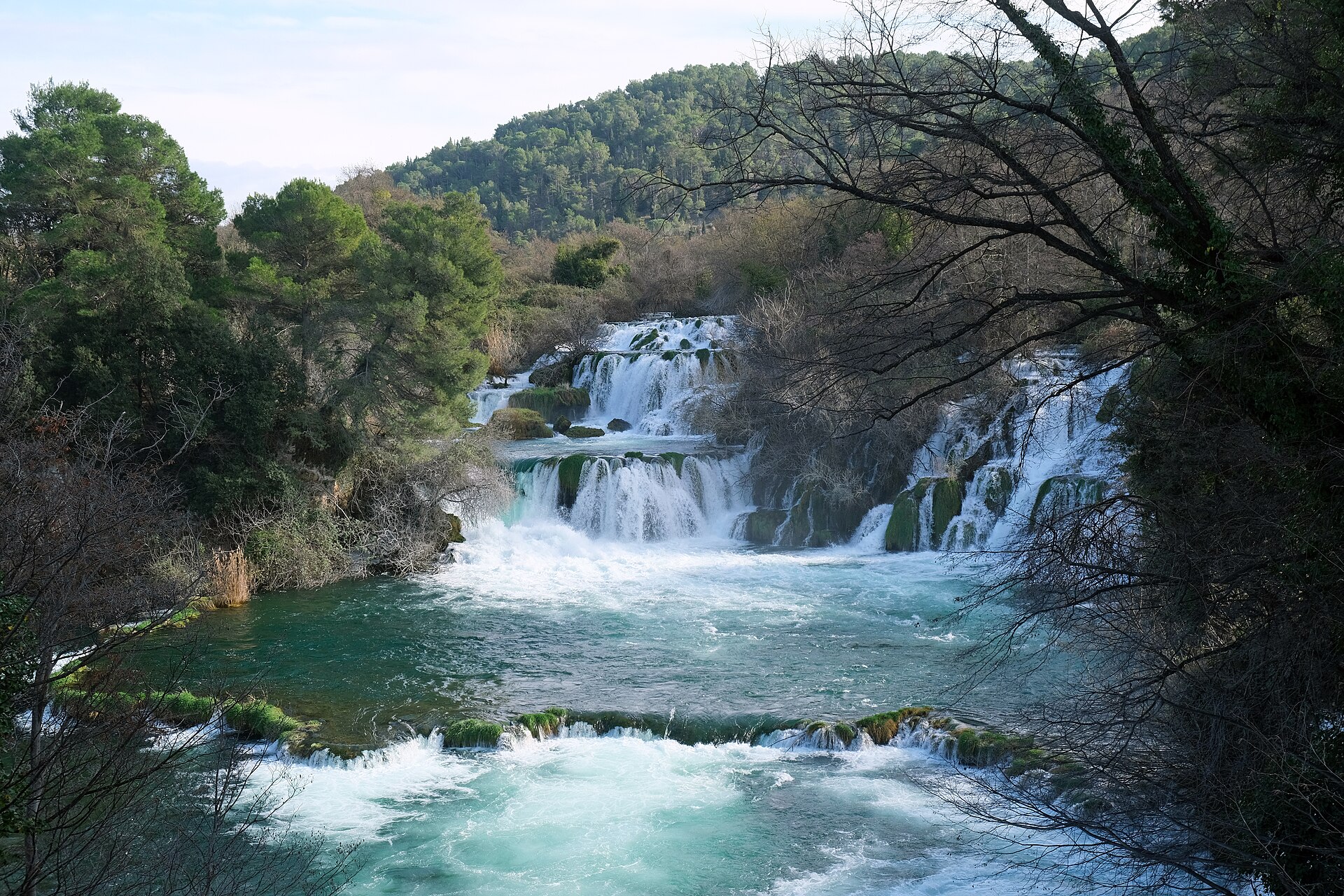
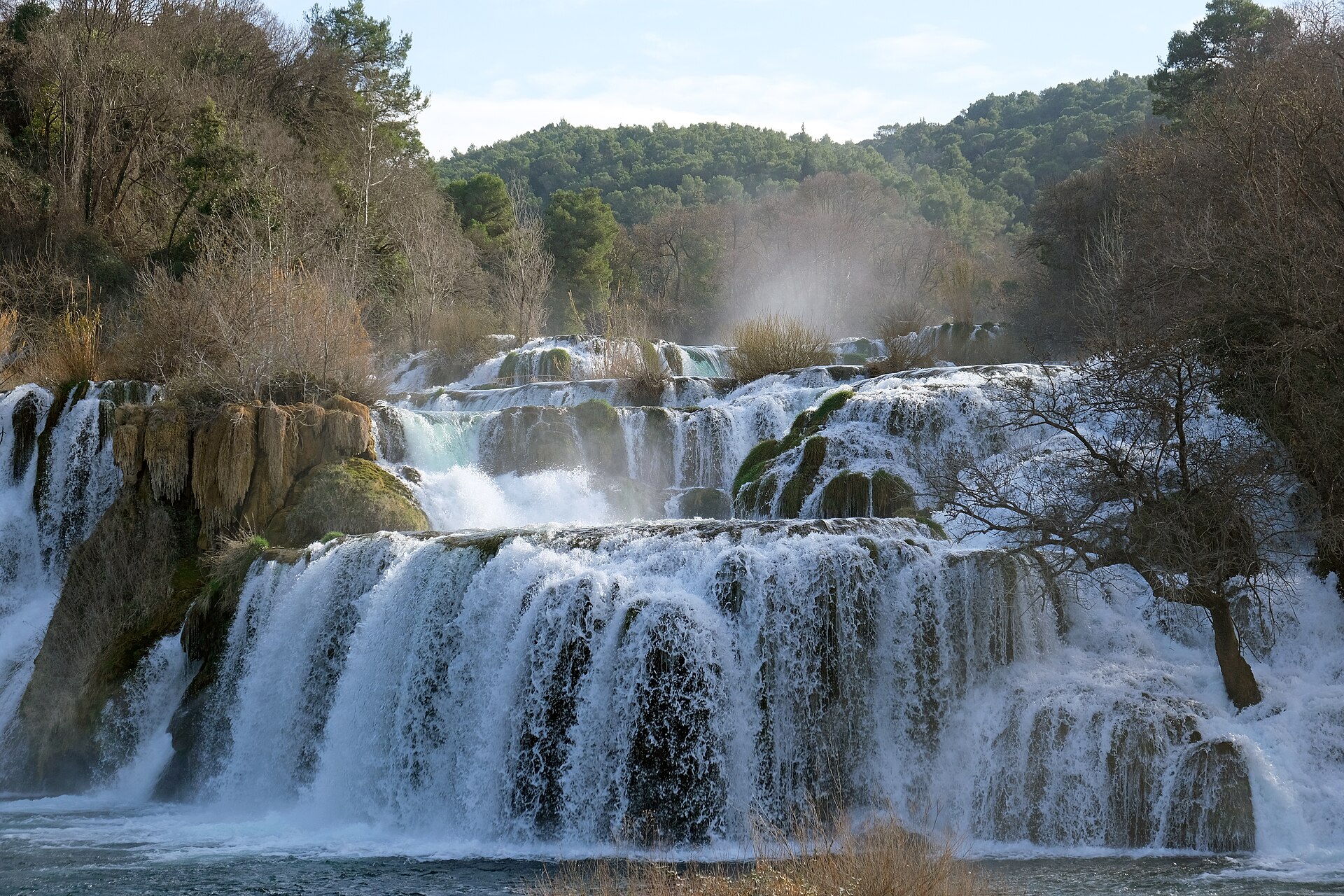
The Krka River drops 59.6 metres at Manojlovac, crashes through a dozen more cascades, and eventually spreads wide and shallow at Skradinski buk — seventeen waterfalls across a 400-metre travertine shelf where the water turns the colour of pale jade. That last fall is the one that draws the crowds, and for good reason: it is genuinely large and genuinely strange, the kind of place where the geology does the work.
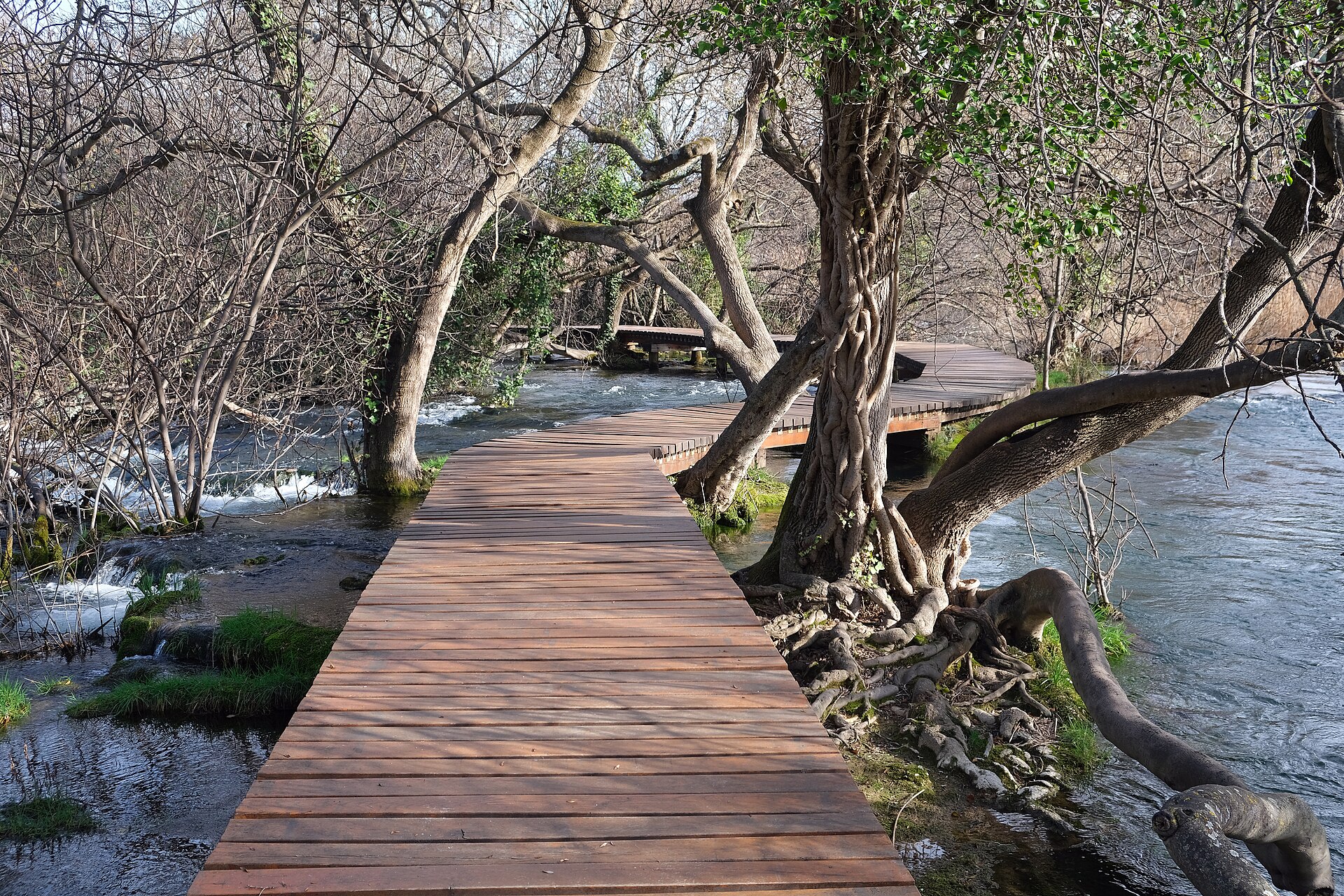
Between the falls you'll find a Franciscan monastery on a lake island, an Eastern Orthodox monastery carved into a canyon wall, the ruins of Roman fortresses, and six stone mills rebuilt on Ottoman foundations. Krka rewards slow movement — the 47 kilometres of marked trails are there for a reason.
💛 What travellers fall for
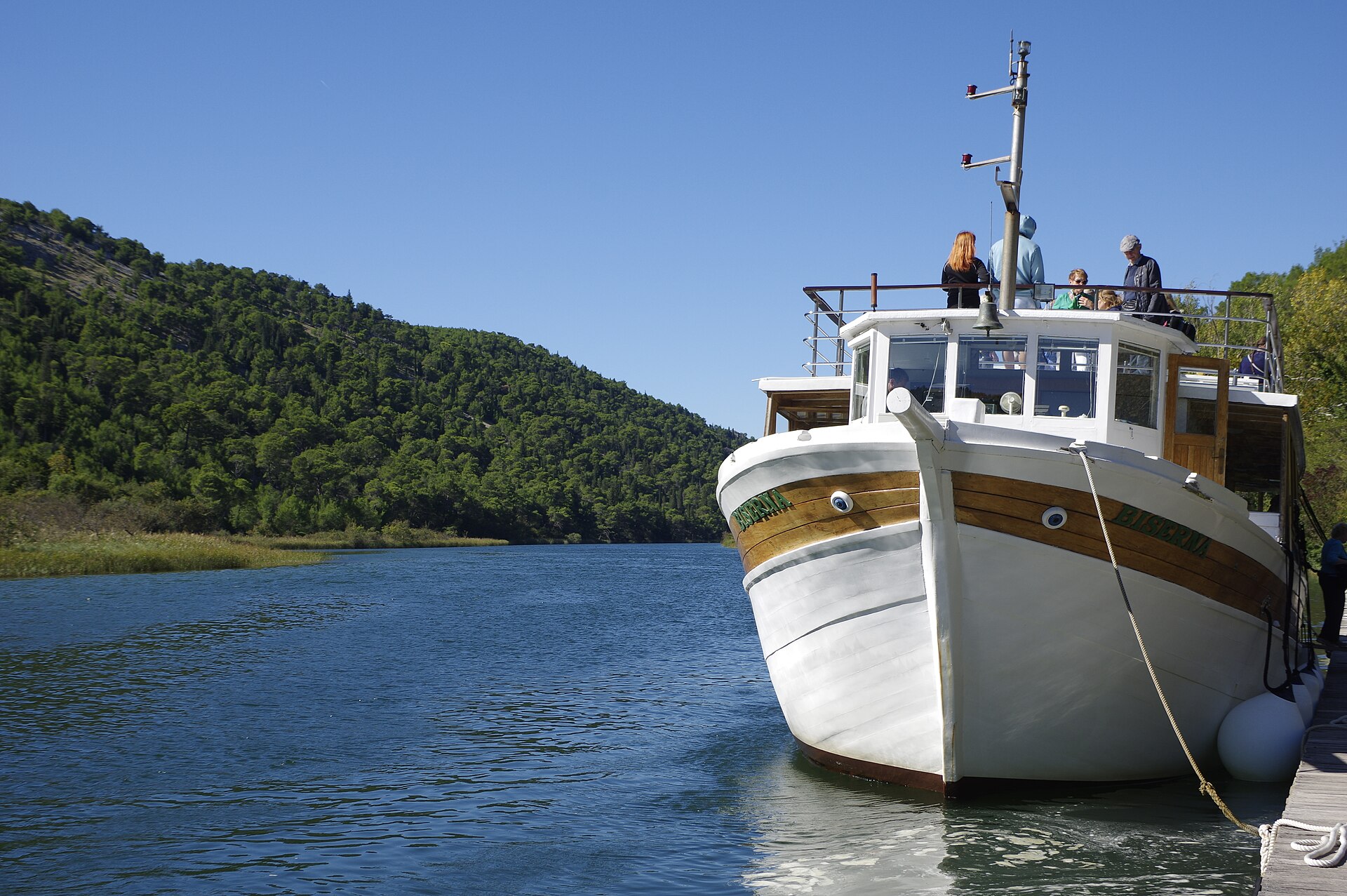
People who come back tend to take the boat to Visovac early, before the tour groups arrive, and spend the extra hour walking the upper canyon toward Roški slap rather than doubling back to Skradinski buk. The northern end of the park — Burnum, the Roman fortress — is quieter still, and worth the detour if you have a car.
How Krka National Park came to be
People have been using this canyon since at least 5000 BC — Oziđana pećina cave holds the evidence. The Romans built a string of fortresses along the river, Burnum among them. By the medieval period the Krka was a border zone between competing powers, which is why you find both a Serbian Orthodox monastery (first mentioned 1402, its church dedicated to Archangel Michael in 1422) and a Franciscan one on the island of Visovac, founded in 1445 during the reign of Louis I of Hungary.
The water mills at Skradinski buk date in recorded form to 1251. The 1895 hydroelectric plant — one of the earliest in the world — ran on Krka current. Croatia designated the whole river corridor a national park in 1985, its seventh.
Who and what shaped it
Landmark buildings
See Krka National Park in motion
Plan your visit
On the map
When to go
July and August are hot and clear, with highs around 29°C and nearly three thousand hours of annual sun in this part of Dalmatia — good for the falls, less good for the crowds. May brings cooler mornings (around 9°C at night) and greener canyon walls; March is cold enough to warrant a proper jacket, with highs barely above 11°C.
Right now
Background & history adapted from Wikipedia (CC BY-SA) · specs from Wikidata (CC0) · weather from Open-Meteo · map data © OpenStreetMap contributors · photos from Wikimedia Commons / Unsplash with per-image credit. No third-party reviews or social posts reproduced.