
Karlovy Vary
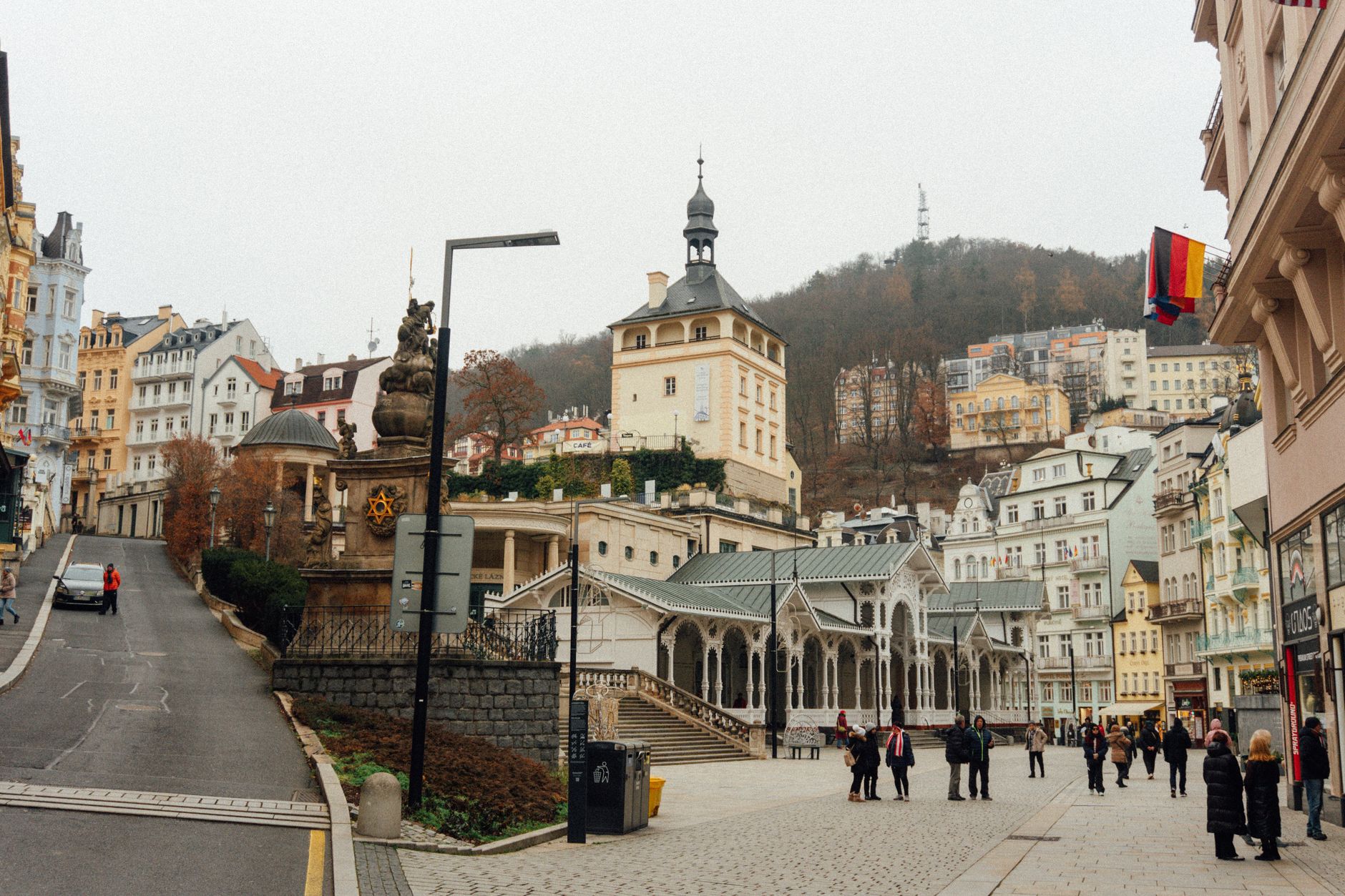
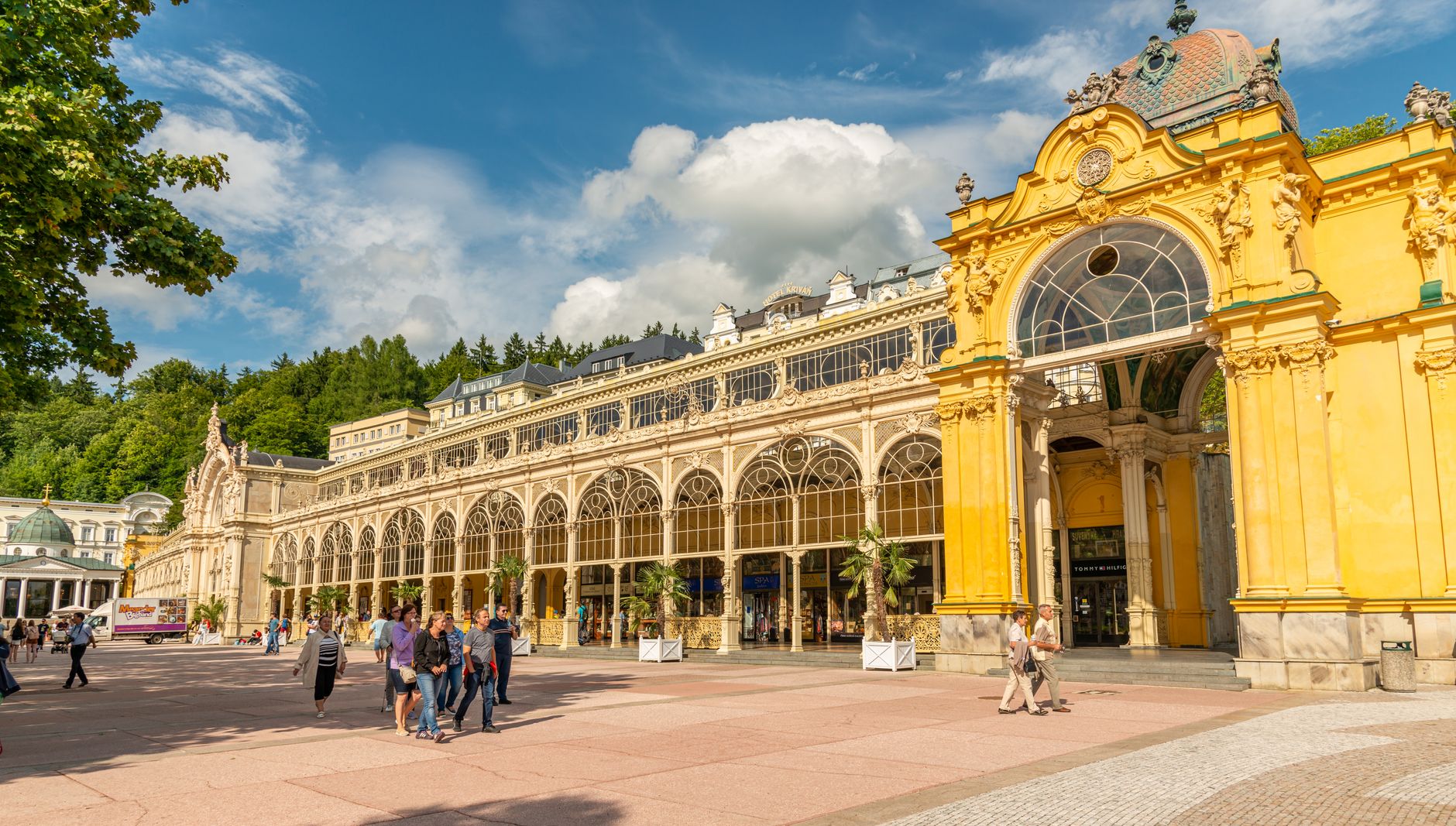
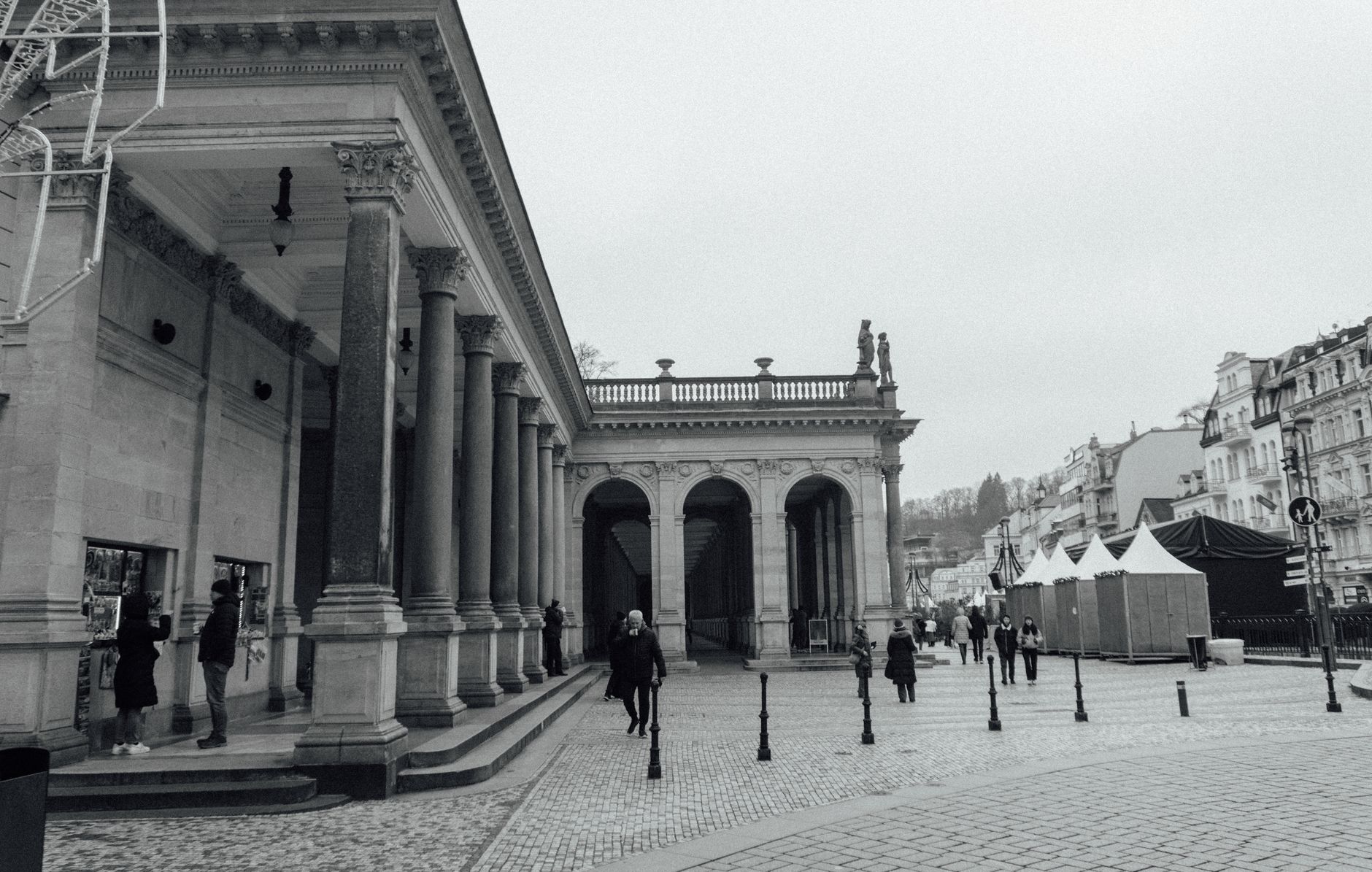
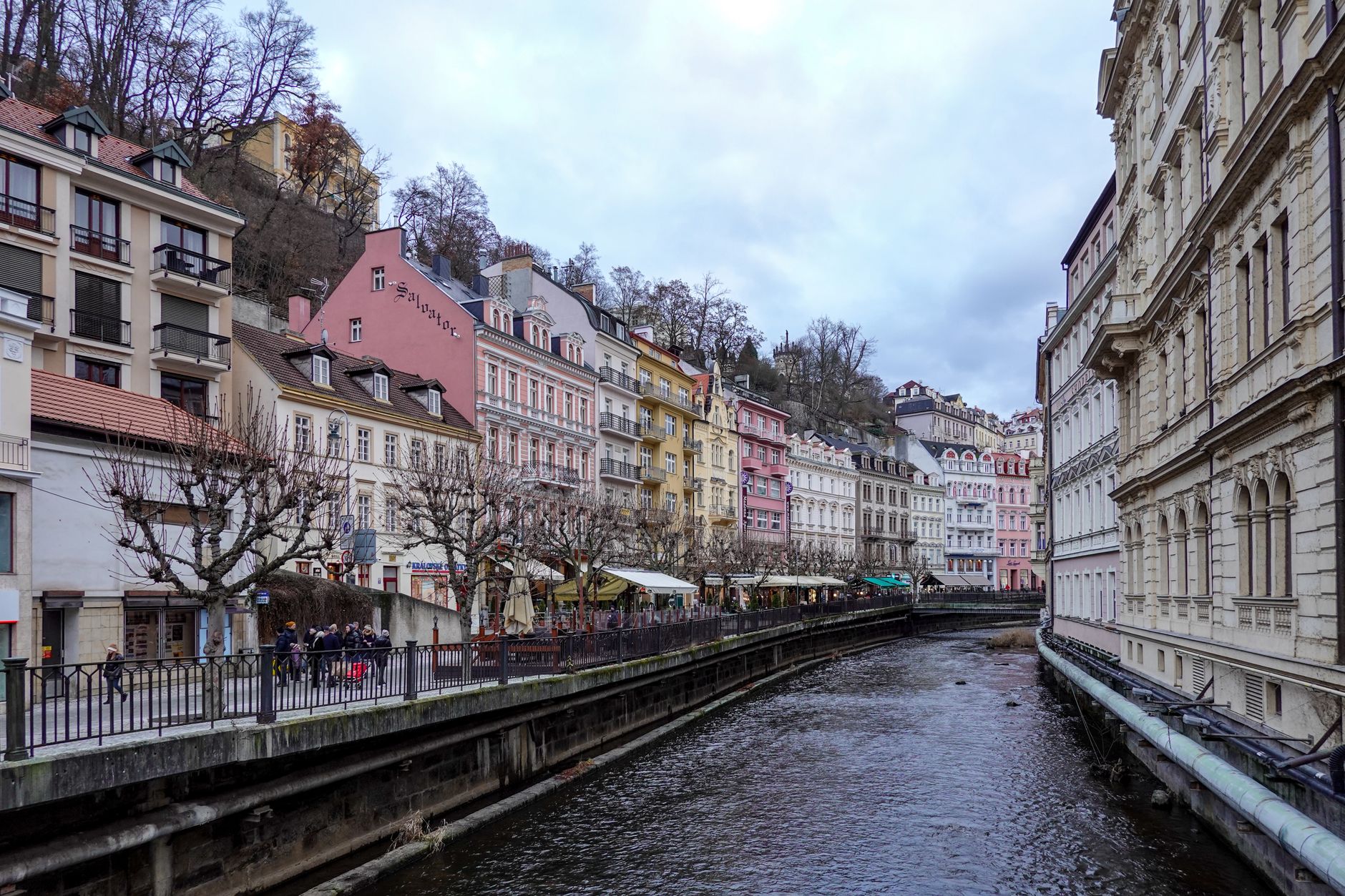
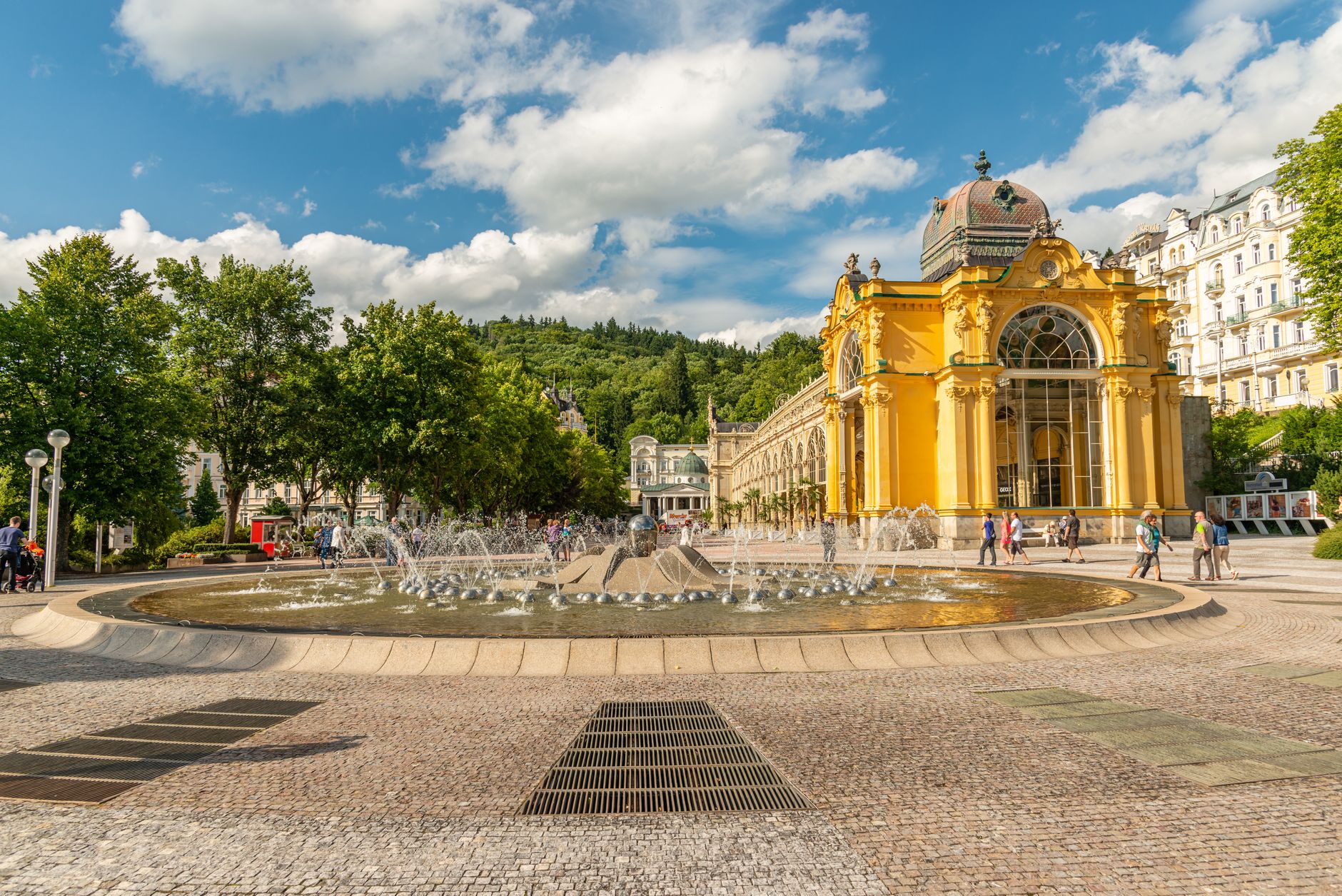
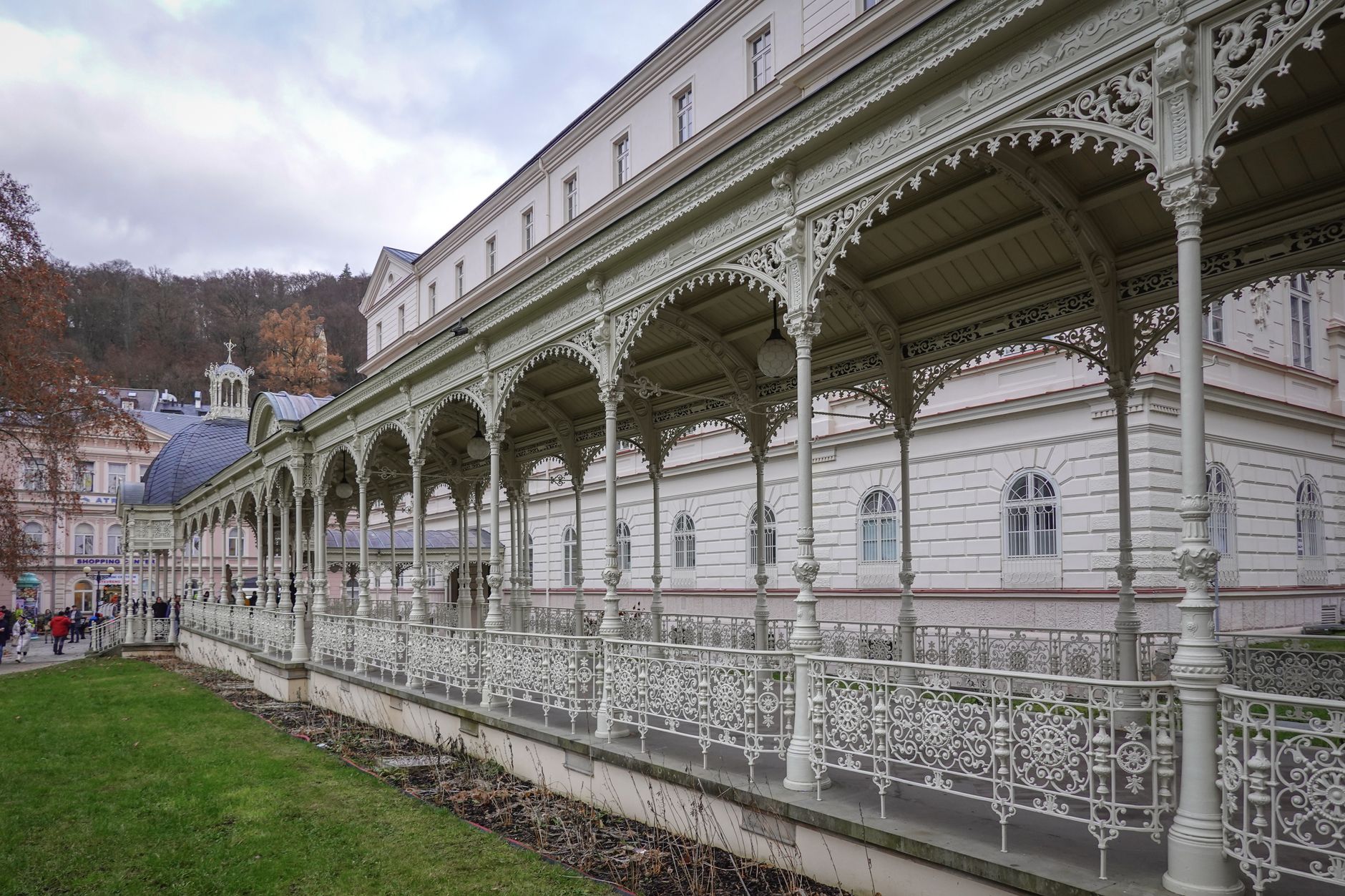
Karlovy Vary is built around hot springs — thirteen of them, rising from the earth at temperatures up to 73°C — and for six centuries people have been coming here to drink the water in small ceramic cups as they walk the colonnades. The town sits in a tight river valley in western Bohemia, its spa architecture stacked up the hillsides in layers of Belle Époque and Neo-Renaissance, punctuated by the occasional Orthodox onion dome.
The rhythm of the place is unhurried by design. You sip, you walk, you sit. The colonnades were built precisely so guests could linger by the springs in bad weather, and the hills above town are threaded with forested paths that funiculars make easy to reach.
💛 What travellers fall for
People who come back tend to bring their own lázeňský pohárek — the long-spouted drinking cup — rather than buying a new ceramic one each time. They also know to walk the Mill Colonnade early, before the tour groups arrive, when the steam rising from the Vřídlo spring catches the morning light and the place feels briefly like it belongs to no particular century.
How Karlovy Vary came to be
Charles IV founded Karlovy Vary around 1349, and in 1370 granted it royal town privileges modelled on those of nearby Loket. The Castle Tower, still standing, was erected around 1358 on his orders. For the next four centuries the town grew slowly, interrupted by fires — a particularly devastating one in 1759 — and floods, the worst of which struck in 1890.
The 18th and 19th centuries changed everything. In 1769 the town began producing thermal salt; in 1805 pharmacist Josef Vitus Becher acquired the recipe that would become Becherovka. The railway arrived in 1870, and the grand colonnades and spa palaces followed in quick succession. Peter the Great came in 1711 and 1712; Goethe visited thirteen times between 1785 and 1823. In 2021, the town was inscribed as part of the UNESCO transnational site 'Great Spa Towns of Europe.'
Who and what shaped it
People who shaped it
Landmark buildings
See Karlovy Vary in motion
Plan your visit
On the map
When to go
Summers are mild and green, which is when the town is at its liveliest — and its most crowded during the July film festival. Spring and early autumn bring cooler, quieter days well suited to walking the forested hills; winters are cold and grey, with the colonnades largely to yourself.
Right now
Background & history adapted from Wikipedia (CC BY-SA) · specs from Wikidata (CC0) · weather from Open-Meteo · map data © OpenStreetMap contributors · photos from Wikimedia Commons / Unsplash with per-image credit. No third-party reviews or social posts reproduced.