
Kampong Glam
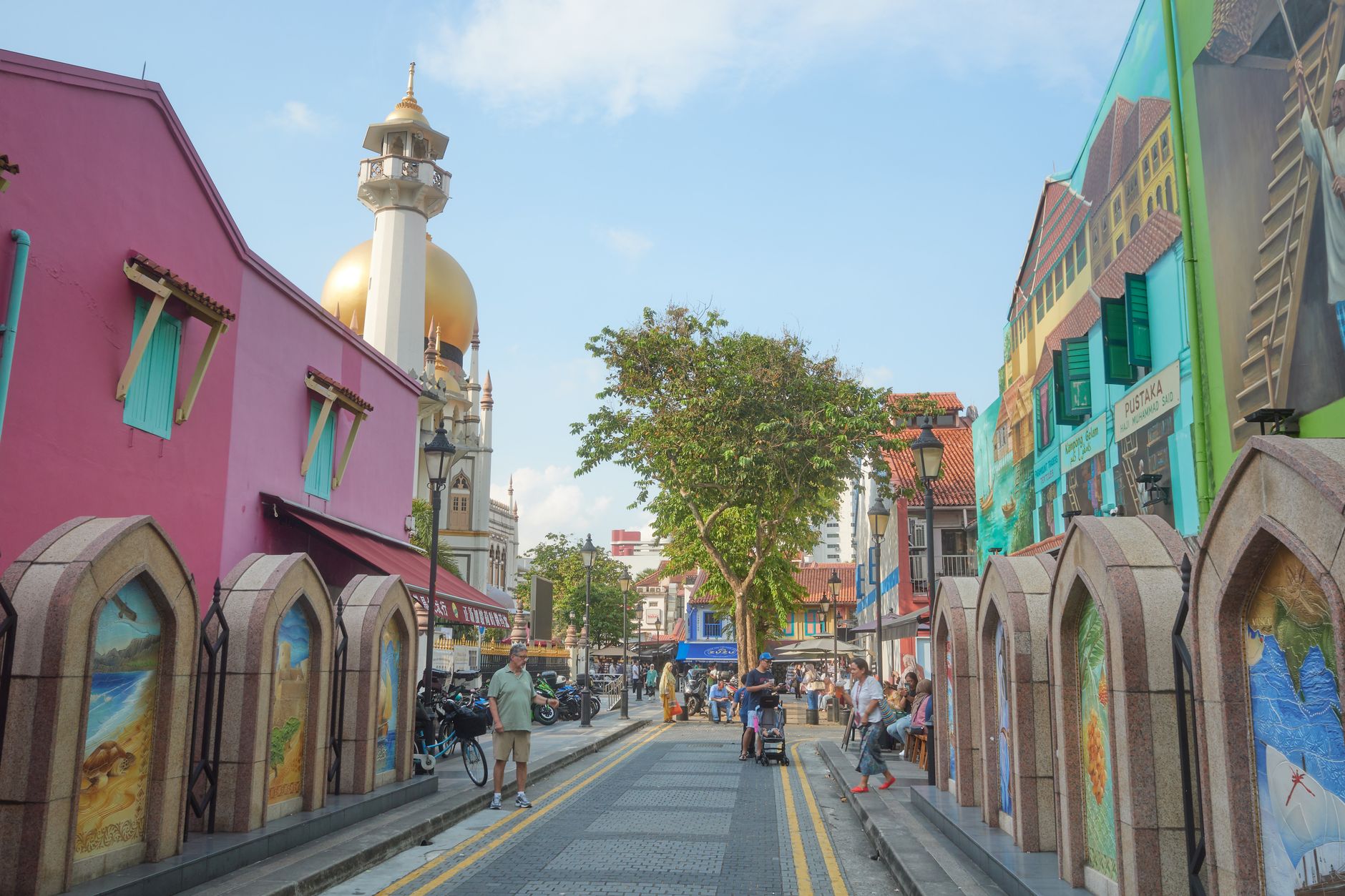
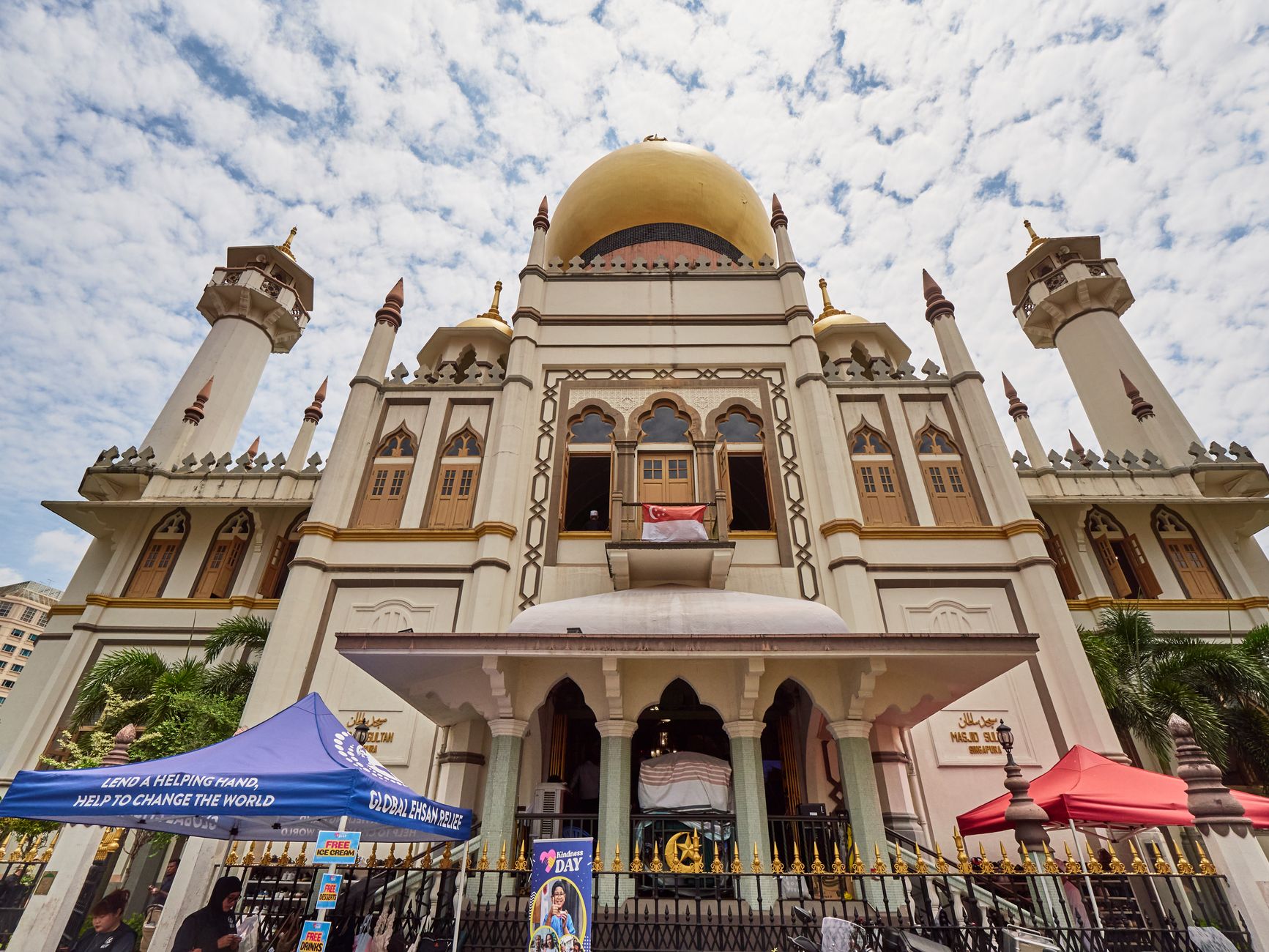
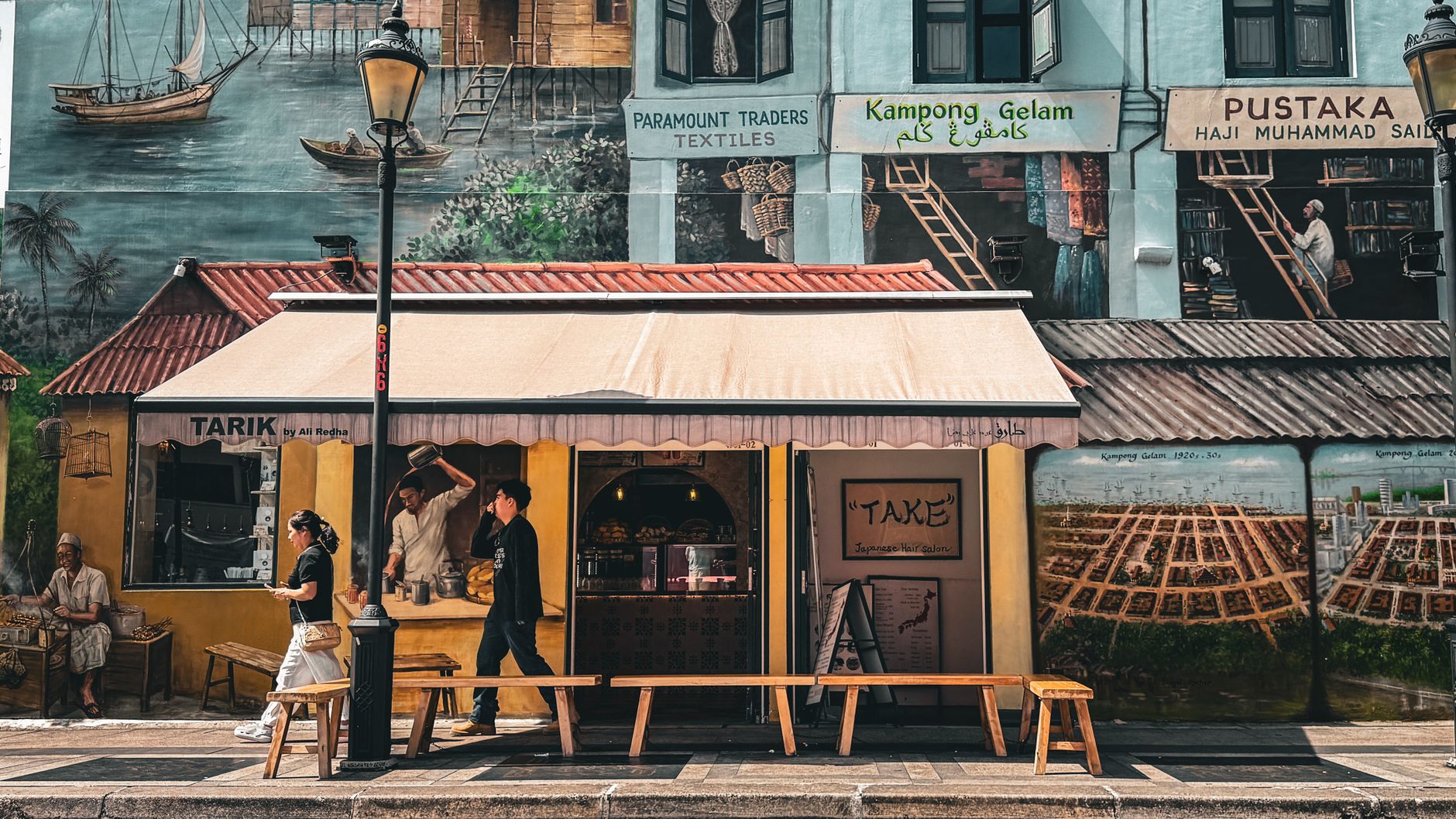
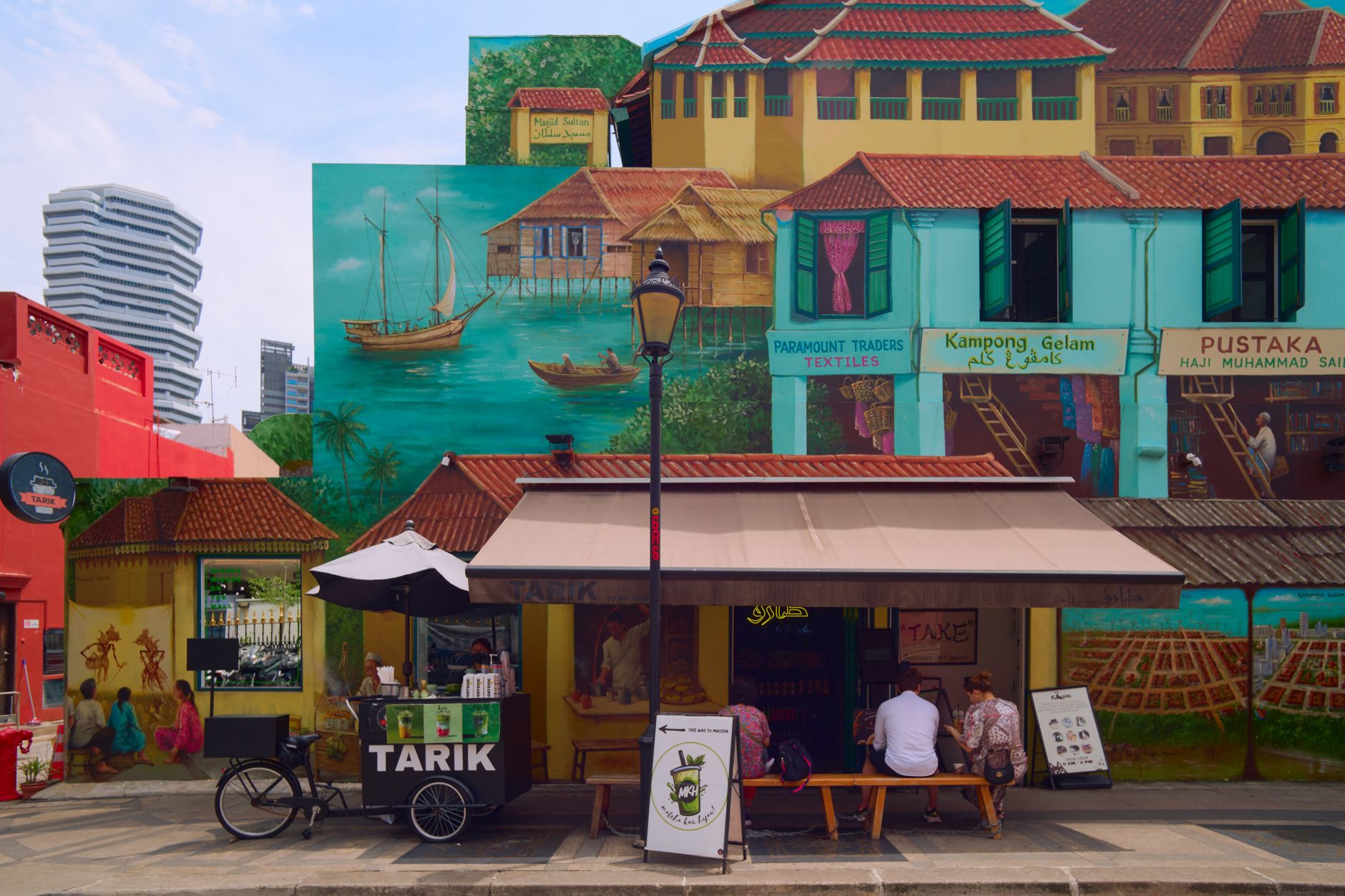
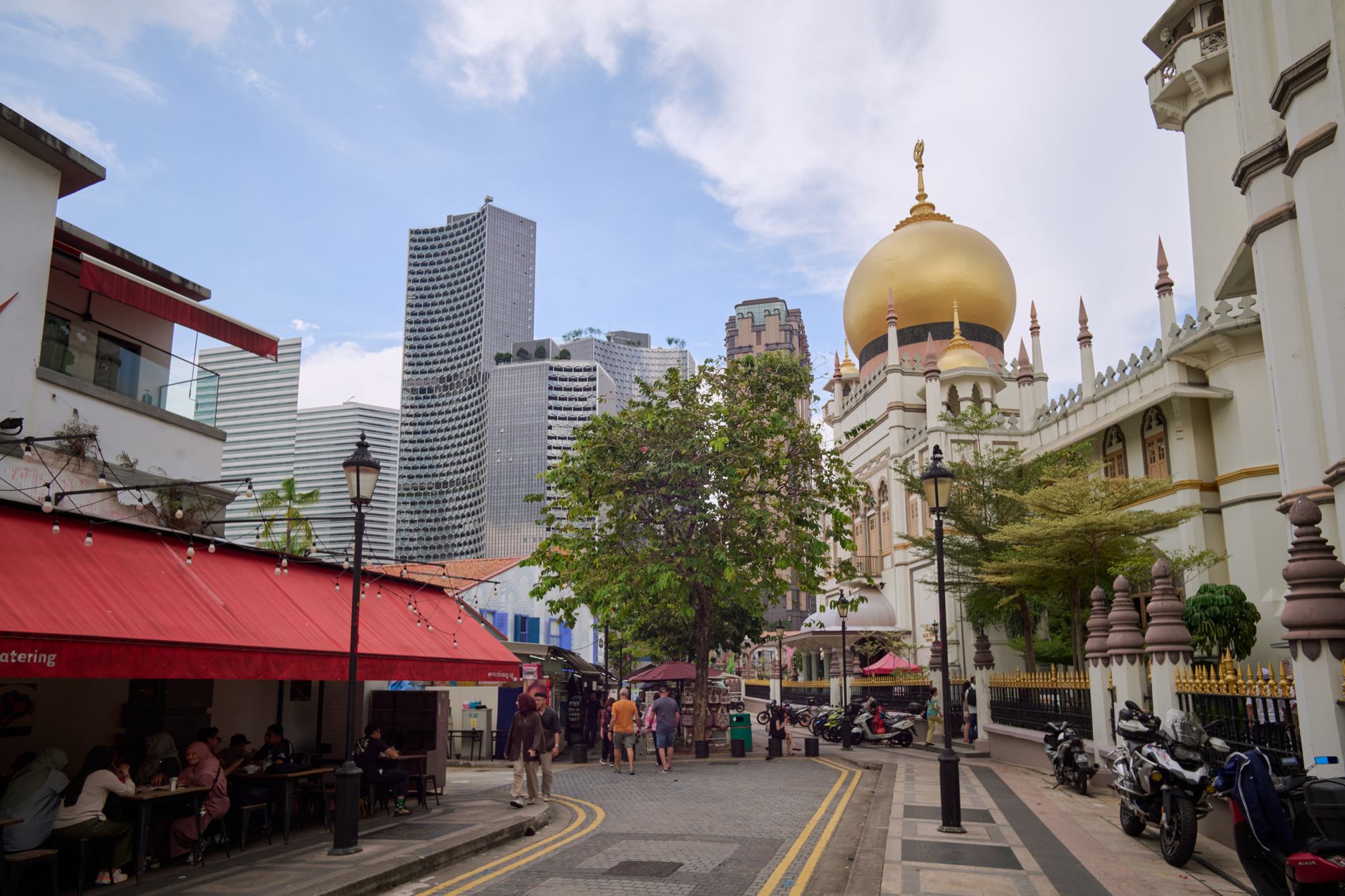
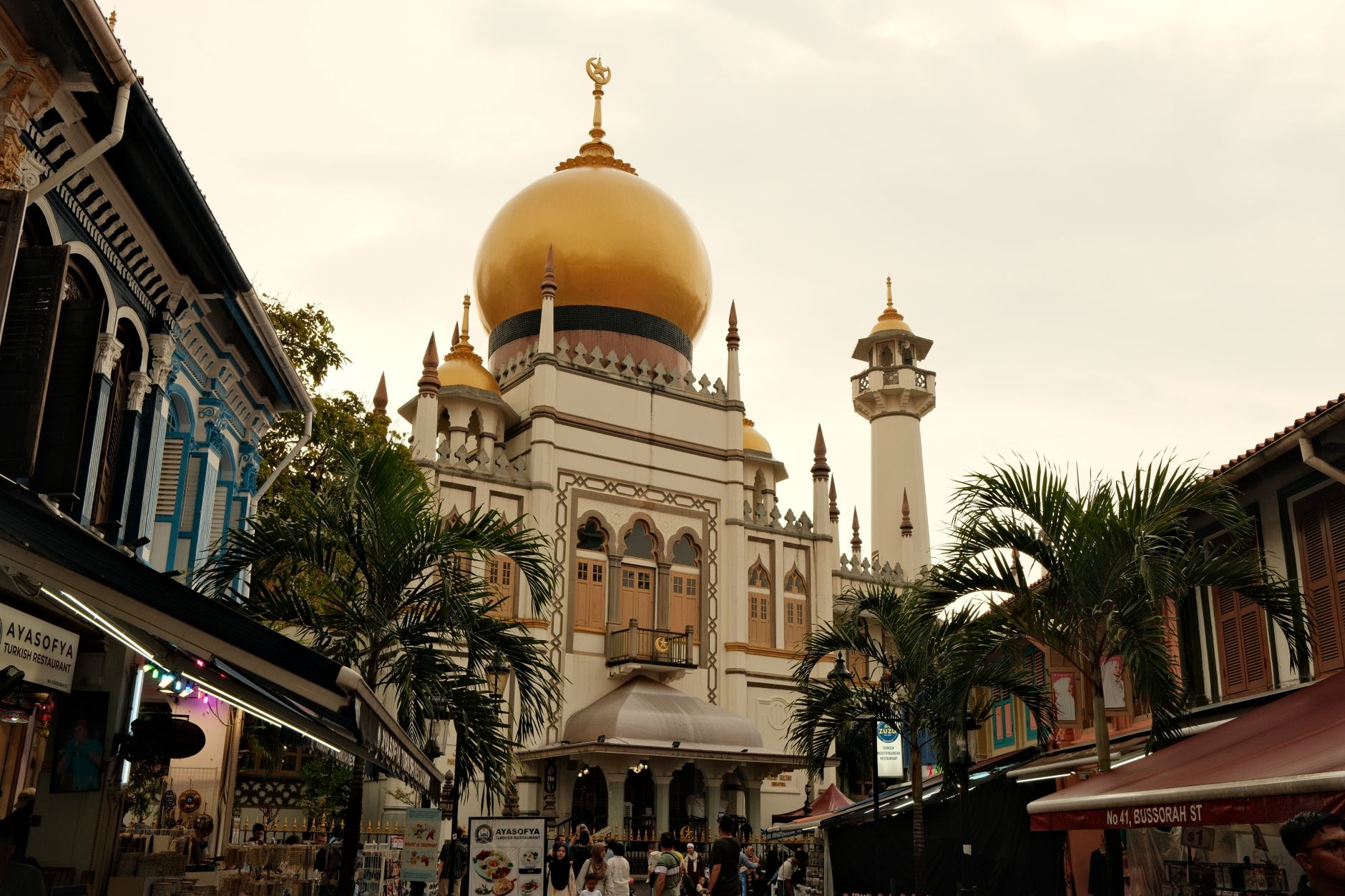
The golden domes of Sultan Mosque are your first landmark — and once you know that their surface is made from the bottoms of recycled glass bottles collected from poorer members of the community, you'll look at them differently. Kampong Glam is the old Malay and Arab quarter of Singapore, a 56-acre conservation district where the city's mercantile and Islamic heritage sits in plain sight: in the Arabic script above carpet shops, the smell of oud drifting from perfume merchants on Arab Street, and the ornate tilework of shophouses along Muscat and Baghdad Streets.
The district is compact and walkable. Haji Lane — just 100 metres long — holds independent boutiques and street art. The Istana Kampong Glam, once the Sultan's palace, is now the Malay Heritage Centre. The architecture moves between Indo-Saracenic, Chinese Baroque and colonial European, often within a single block.
How Kampong Glam came to be
The name comes from the gelam tree — the cajeput — whose bark the orang laut sea people used for boat awnings and sails before the British arrived. After the 1819 treaty between the East India Company, Sultan Hussein Shah and Temenggong Abdul Rahman established Singapore as a trading post, the Raffles Plan of 1822 carved the settlement into ethnic zones. Kampong Glam's 56 acres east of the European town were designated for the Sultan, his household and the Malay and Arab merchant communities.
Sultan Hussein never occupied the palace built in his name — he died in Malacca in 1835 — and the present Istana was constructed between 1840 and 1843 by his son. That same decade saw Hajjah Fatimah Mosque rise nearby, commissioned by a wealthy Malaccan woman and built by an unknown English architect. The Sultan Mosque, originally funded by the East India Company at the Sultan's demand, was entirely rebuilt in 1928 to architect Denis Santry's Indo-Saracenic design and declared a national monument in 1975. The district itself was gazetted a conservation area in 1989.
Who and what shaped it
People who shaped it
Landmark buildings
See Kampong Glam in motion
Plan your visit
On the map
When to go
Singapore is warm and humid year-round, with temperatures sitting around 26–32°C. Rain comes in short, heavy bursts rather than all-day grey — November through January sees the most of it, but no month is reliably dry. A light layer for air-conditioned interiors is the only real packing note.
Right now
Background & history adapted from Wikipedia (CC BY-SA) · specs from Wikidata (CC0) · weather from Open-Meteo · map data © OpenStreetMap contributors · photos from Wikimedia Commons / Unsplash with per-image credit. No third-party reviews or social posts reproduced.