
Hulhumalé
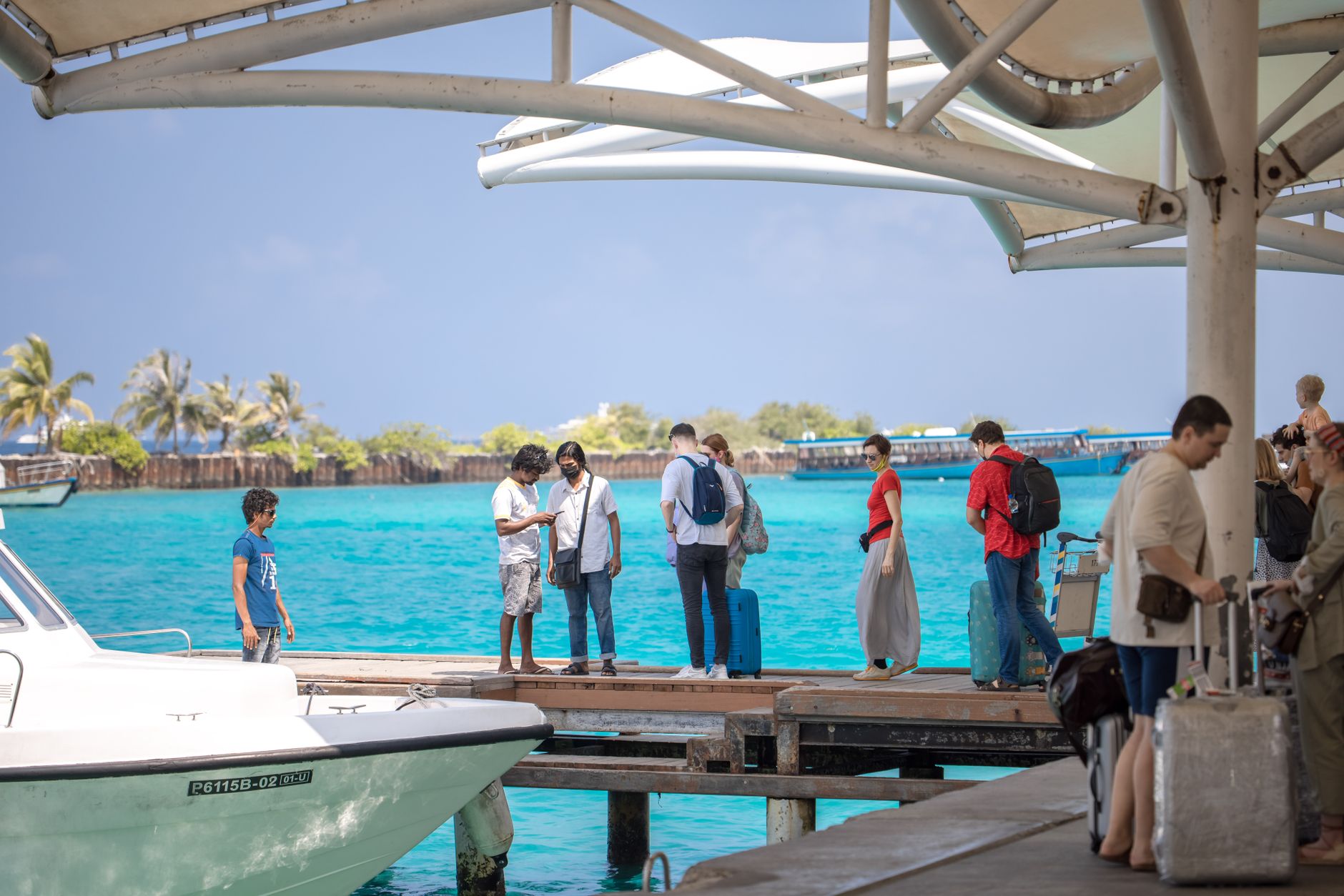
Hulhumalé is a city that didn't exist until someone decided to make it. Dredged up from a lagoon between 1997 and 2002, it sits on 188 reclaimed hectares north of Malé — flat, grid-planned, and still visibly mid-sentence. Residents have planted bananas and gingers along the alleys, and the beach at the north end has a BBQ area where families set up picnic tables as if the island has always been there.
Most people arrive as a formality — the causeway from the airport makes it an unavoidable transit point — but the place repays an afternoon of actual walking. Schools, clinics, a market, a mosque with a golden dome: the full apparatus of a city, assembled in under two decades.
💛 What travellers fall for
People who've passed through more than once tend to stop at Enzi Fish Shop for sun-dried tuna to carry onward, and end up at The Family Room on the beach longer than planned — the WiFi is reliable and the smoothies are cold. The ferry from Malé costs less than a dollar and runs every hour; take it instead of a taxi at least once.
Deals in Hulhumalé
Book directly at the provider
How Hulhumalé came to be
On October 16, 1997, reclamation work began on the Hulhulé-Farukolhufushi lagoon. Phase I — 188 hectares pulled from the water at a cost of around $11 million, later supplemented by Belgian firm Dredging International — was finished by June 2002. President Maumoon Abdul Gayoom inaugurated the settlement on May 12, 2004, and the first 1,000 residents moved in that same year. The Housing Development Corporation, incorporated March 23, 2005, took on the island's development. A master plan drawn by AMC Architects International, J Pro Consultants, and Binnie Black and Veatch Ltd. was reviewed in 2006 by academics from the National University of Singapore.
Phase II launched January 15, 2015 — another 244 hectares, again awarded to Dredging International NV, completed in 77 days at a cost of $50 million. The Sinamalé Bridge, which opened in September 2018, stitched Hulhumalé to both the airport island and Malé, turning what had been a ferry-only destination into part of a connected urban corridor. The population had reached around 100,000 by 2021, with a long-term target of 240,000.
Who and what shaped it
People who shaped it
Landmark buildings
See Hulhumalé in motion
Plan your visit
On the map
When to go
Hulhumalé sits in a full tropical climate with strong sun year-round and two monsoon seasons — the dry northeast monsoon roughly November to April brings calmer, clearer days, while the southwest monsoon from May to October brings heavier rain and humidity. Sunscreen and a light rain layer cover most eventualities.
Right now
Background & history adapted from Wikipedia (CC BY-SA) · specs from Wikidata (CC0) · weather from Open-Meteo · map data © OpenStreetMap contributors · photos from Wikimedia Commons / Unsplash with per-image credit. No third-party reviews or social posts reproduced.