
Hobart
Hobart sits at the end of the world, more or less, with Mount Wellington rising to 1,271 metres at its back and the Derwent estuary opening toward the Southern Ocean at its front. The city is compact enough to walk in an afternoon but deep enough to occupy a week — colonial sandstone warehouses along Salamanca Place, Battery Point streets where workers' cottages from the earliest years of the colony still stand intact, and MONA, the private museum that since 2011 has drawn visitors to a hillside the city once overlooked entirely.
This is Australia's second-oldest capital, founded as a penal settlement in 1804, and the layers haven't been smoothed away. You can drink a beer at a brewery older than most Australian cities, watch a play in a theatre that has been running continuously since 1837, and walk through a suburb that looks, in places, as though the nineteenth century simply paused.
💛 What travellers fall for
People who come back tend to time it around MONA FOMA or the Taste festival, then end up spending the mornings at the Salamanca Market and the afternoons climbing Battery Point's back streets. The Parliament House tours — free, twice daily on non-sitting weekdays — are quietly one of the better things to do in the city.
Deals in Hobart
Book directly at the provider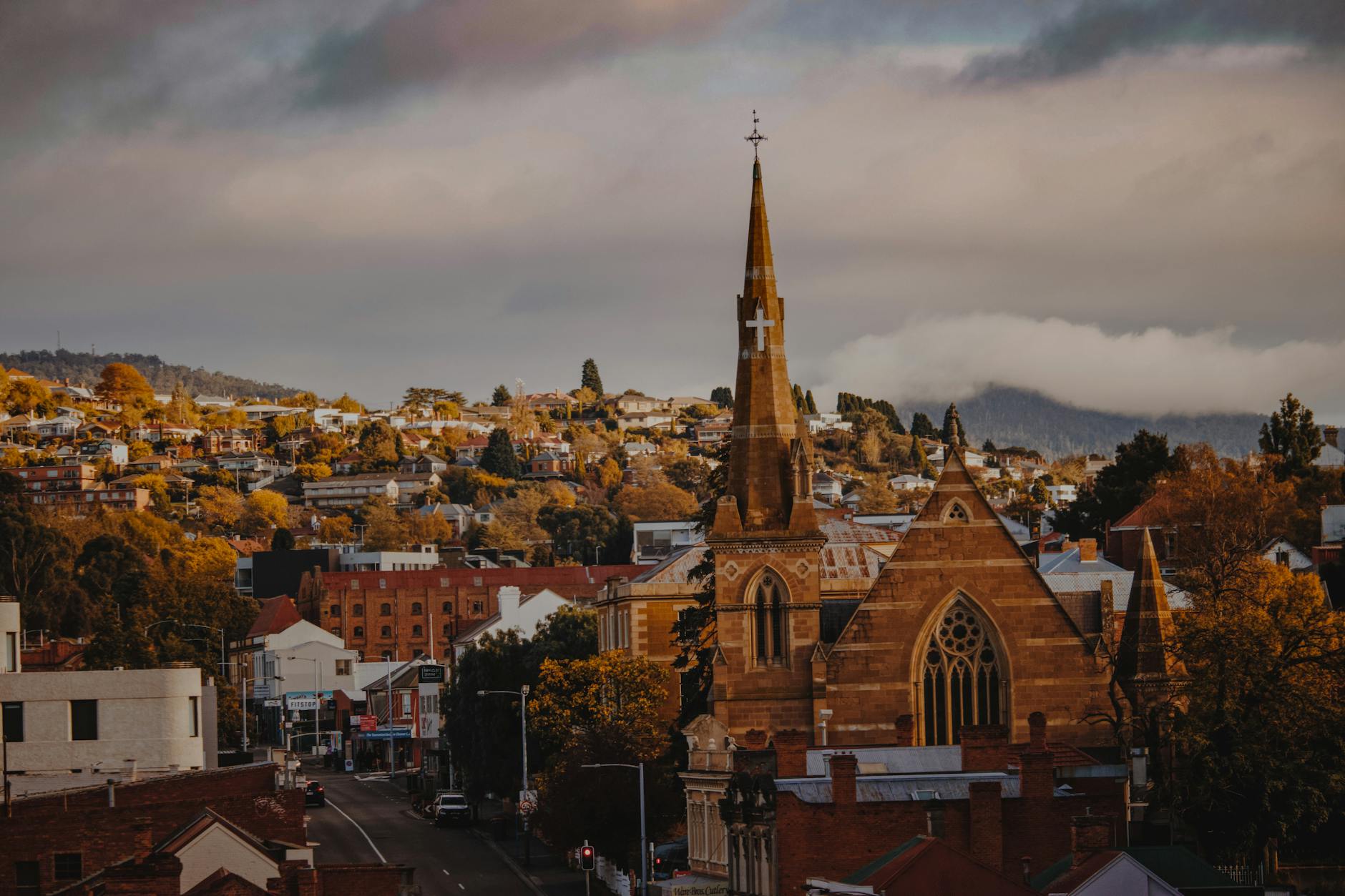


How Hobart came to be
On 21 February 1804, Lieutenant-Governor David Collins landed at Sullivans Cove and established what would become Hobart Town, named for Robert Hobart, 4th Earl of Buckinghamshire and British Colonial Secretary at the time. The colony's first chaplain, Robert Knopwood, arrived with those original settlers and spent decades recording its early life. Within years, the settlement had become the Southern Ocean's main whaling port.
Governor Lachlan Macquarie's survey of the town in the early nineteenth century set the street grid that still defines the centre. Convict labour built Parliament House in sandstone in the 1840s — the same decade, 1842, that Hobart Town was declared a city. Transportation of convicts ended in the 1850s; the city was renamed simply Hobart from 1881. Peter Degraves had already founded Cascade Brewery in 1824, which still operates today.
Who and what shaped it
People who shaped it
Landmark buildings
See Hobart in motion
Plan your visit
On the map
When to go
Summer runs from December to February, with temperatures between roughly 11 and 21°C and the driest days of the year — warm enough to swim. Winter brings Antarctic southerlies and snow on Mount Wellington; the city itself stays cool rather than cold, but pack layers regardless of season.
Right now
Background & history adapted from Wikipedia (CC BY-SA) · specs from Wikidata (CC0) · weather from Open-Meteo · map data © OpenStreetMap contributors · photos from Wikimedia Commons / Unsplash with per-image credit. No third-party reviews or social posts reproduced.