
Hermanus


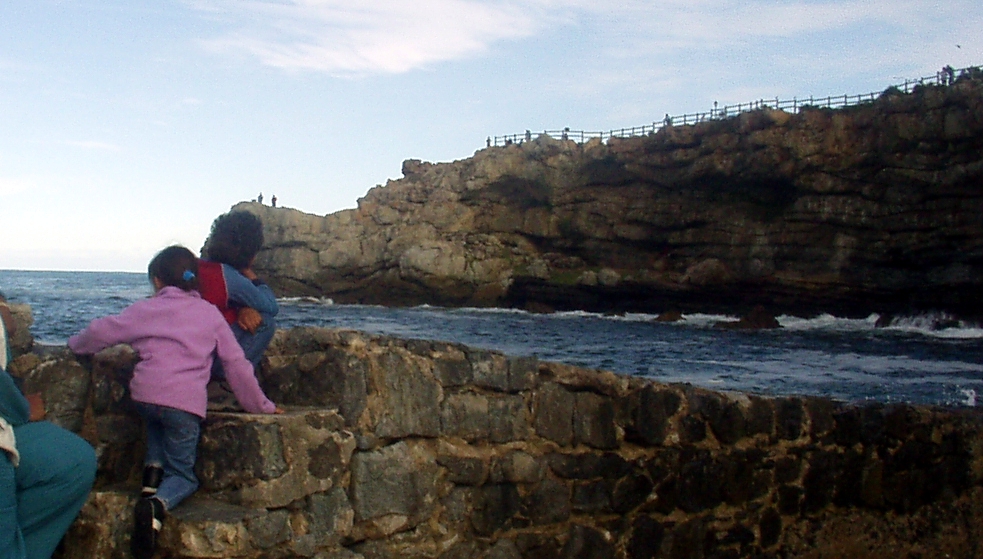
Stand on the cliff path above Walker Bay and you will understand, quickly, why people keep coming back. The Southern Right whales that move through these waters between June and December are close enough that you can hear them exhale. Hermanus built its reputation on that proximity — it is one of the few places on earth where land-based whale watching is genuinely practical — but the town holds more than one season's worth of interest.
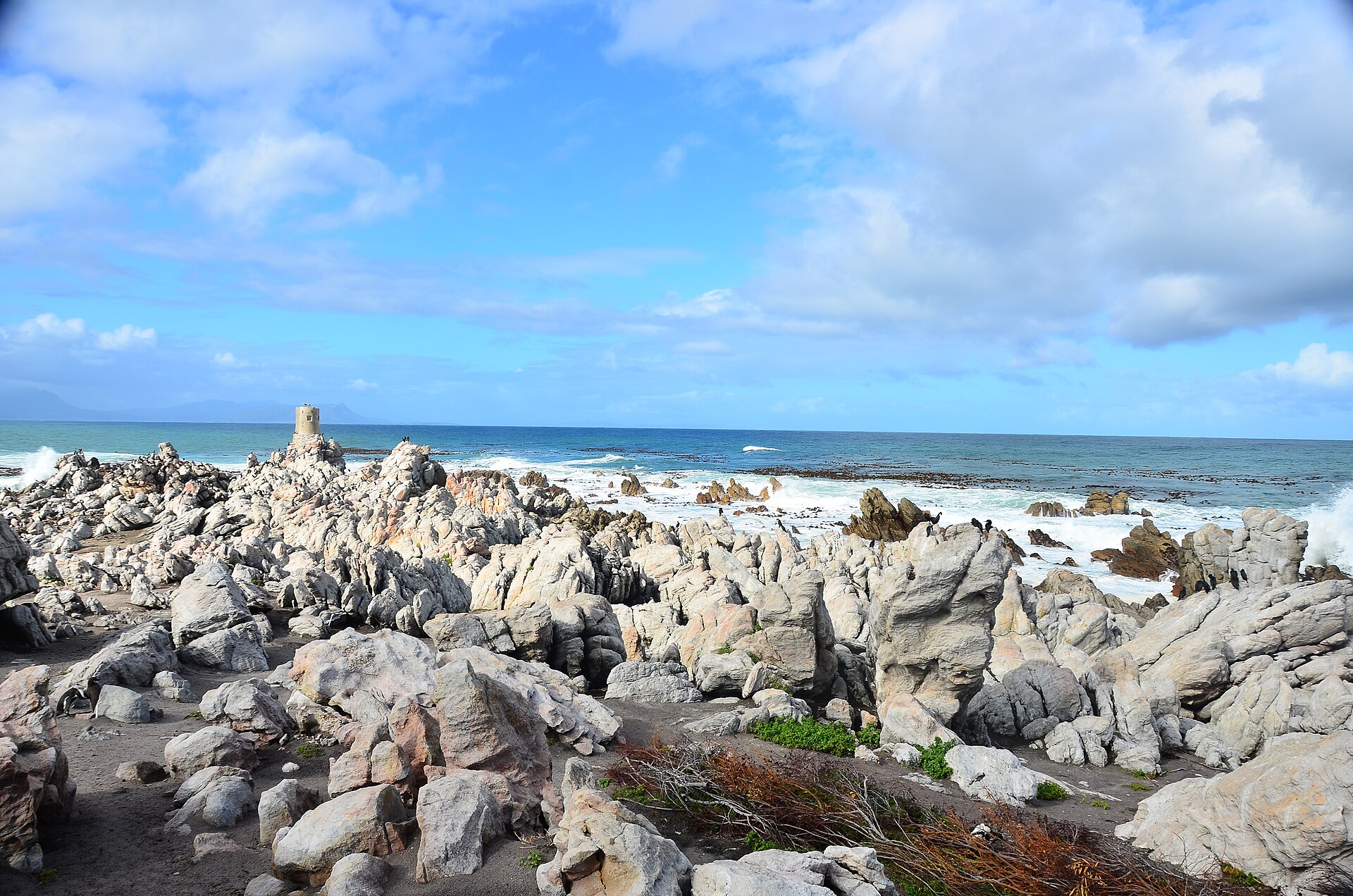
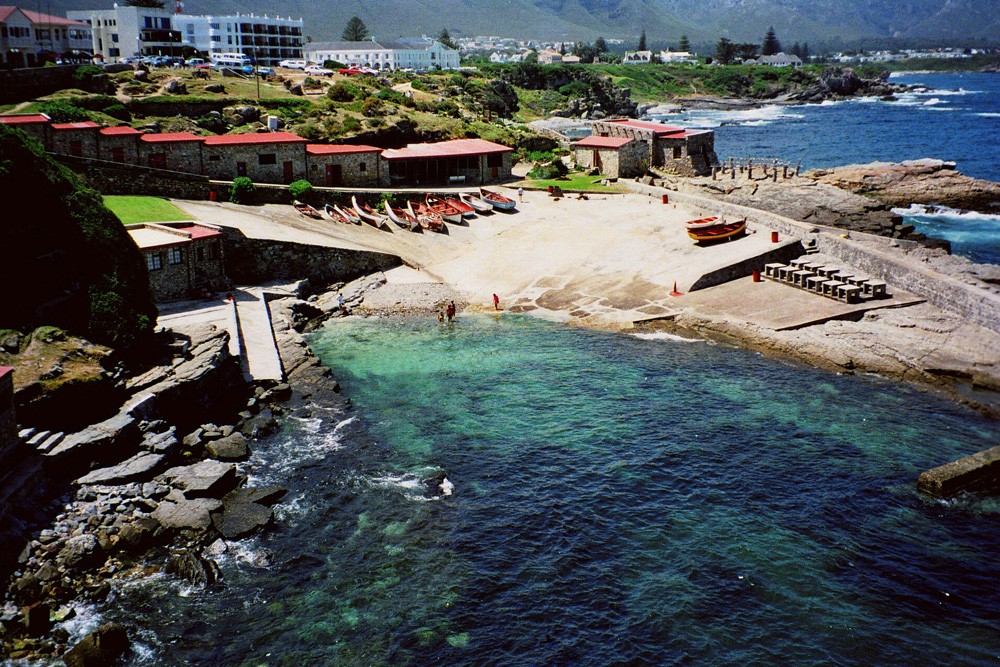
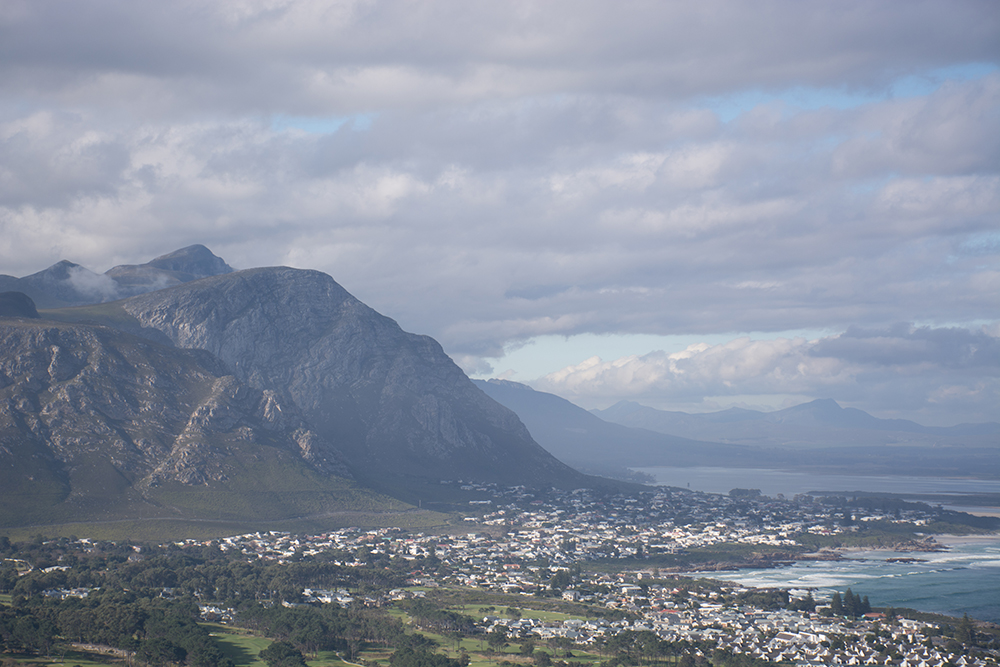
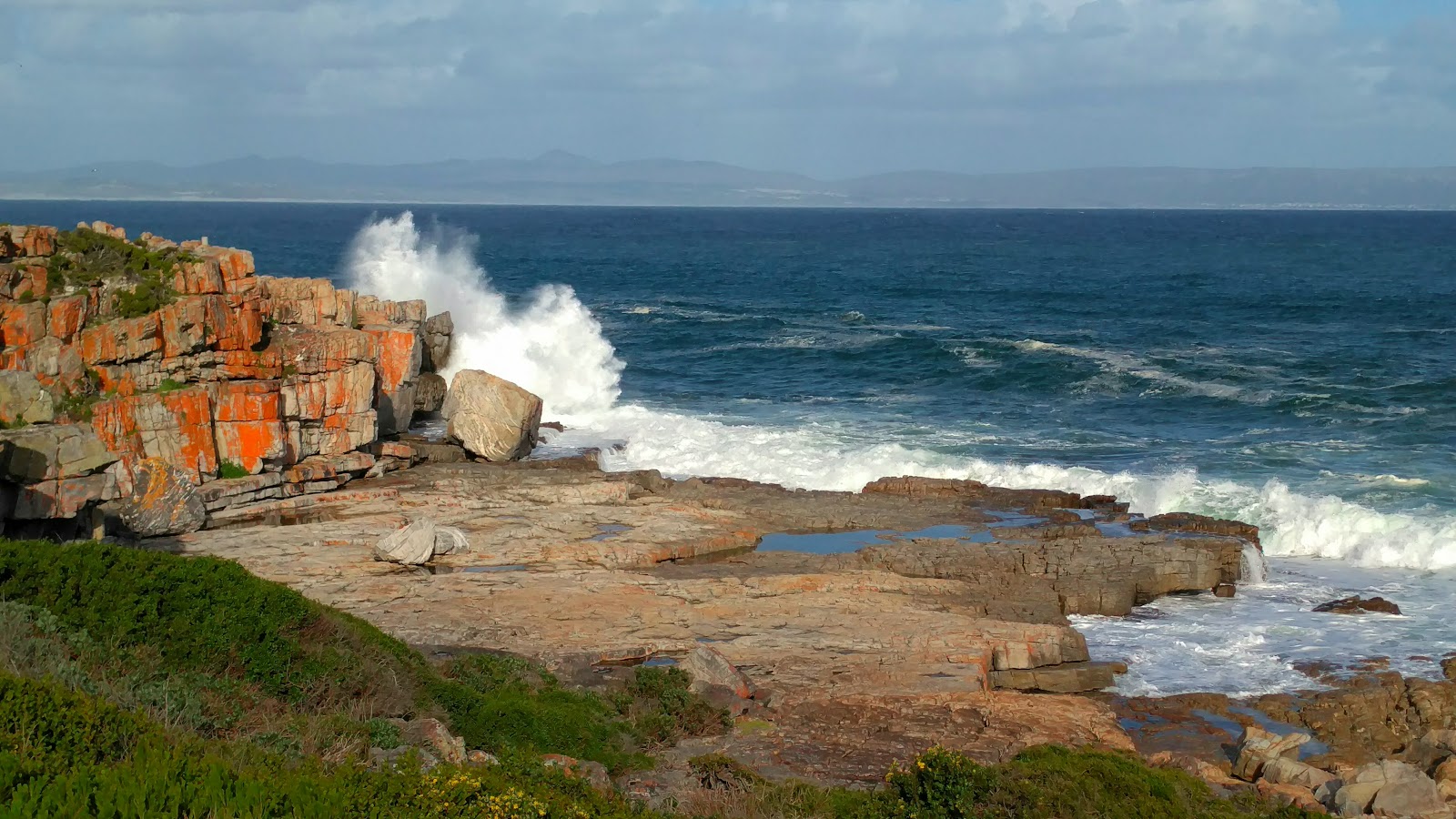
The cliff path itself threads the entire coastline, past rocky coves, small beaches and pockets of coastal fynbos. Below it, the Old Harbour still has its original fishing boats sitting in the open air. Above it, the Kleinrivier Mountains rise into Fernkloof Nature Reserve.
💛 What travellers fall for
People who return tend to time arrivals for the shoulder of whale season — late September, early October — when the bay is still active but the school holidays are over. The cliff path at dawn, before the wind picks up, is a different experience entirely from midday. Grotto Beach is the long one; the coves near the Old Harbour are better for sitting still.
How Hermanus came to be
The place was named, somewhat accidentally, for Hermanus Pieters, a Dutch schoolteacher who arrived in the Cape around 1815 and made a habit of fishing and grazing sheep at a freshwater spring in what is now the town centre. The name 'Hermanus Pieters se Fonteyn' stuck until 1902, when the postmaster — a Mr Gift — found it unwieldy and simply shortened it to Hermanus. Municipal status followed in 1904, making the new name official.
The actual settlement began in the 1850s, when fishermen moved in to work the rich waters of Walker Bay. In 1854, a fisherman named Johannes Michel Henn bought one of twelve plots of Crown land auctioned in Caledon for one pound and four shillings each. A railway line was planned but never built — Sir William Hoy, then General Manager of South African Railways and a property owner in Hermanus, quietly ensured it stayed that way. The result is a station building with no tracks, no trains and no timetables, which still stands.
Who and what shaped it
People who shaped it
Landmark buildings
See Hermanus in motion
Plan your visit
On the map
When to go
Summers run warm and occasionally humid, with temperatures reaching 28–30°C between December and February. Autumn is long and mild — daily averages around 22°C — and the winter months that coincide with whale season (June to August) are cool and sometimes wet, so a layer and a waterproof are worth packing even on clear days.
Right now
↡ Attractions
Background & history adapted from Wikipedia (CC BY-SA) · specs from Wikidata (CC0) · weather from Open-Meteo · map data © OpenStreetMap contributors · photos from Wikimedia Commons / Unsplash with per-image credit. No third-party reviews or social posts reproduced.