
Hall of Mirrors
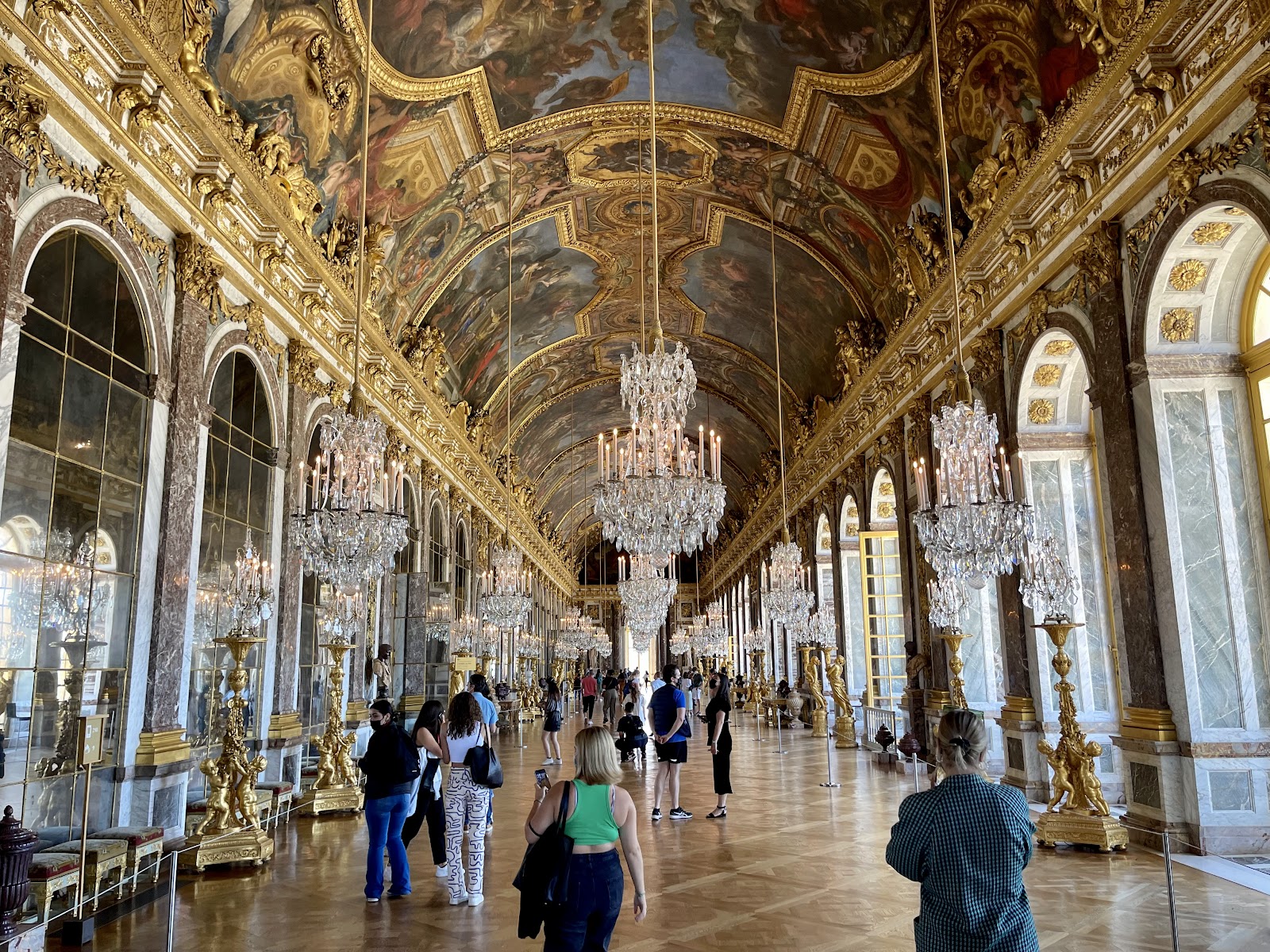
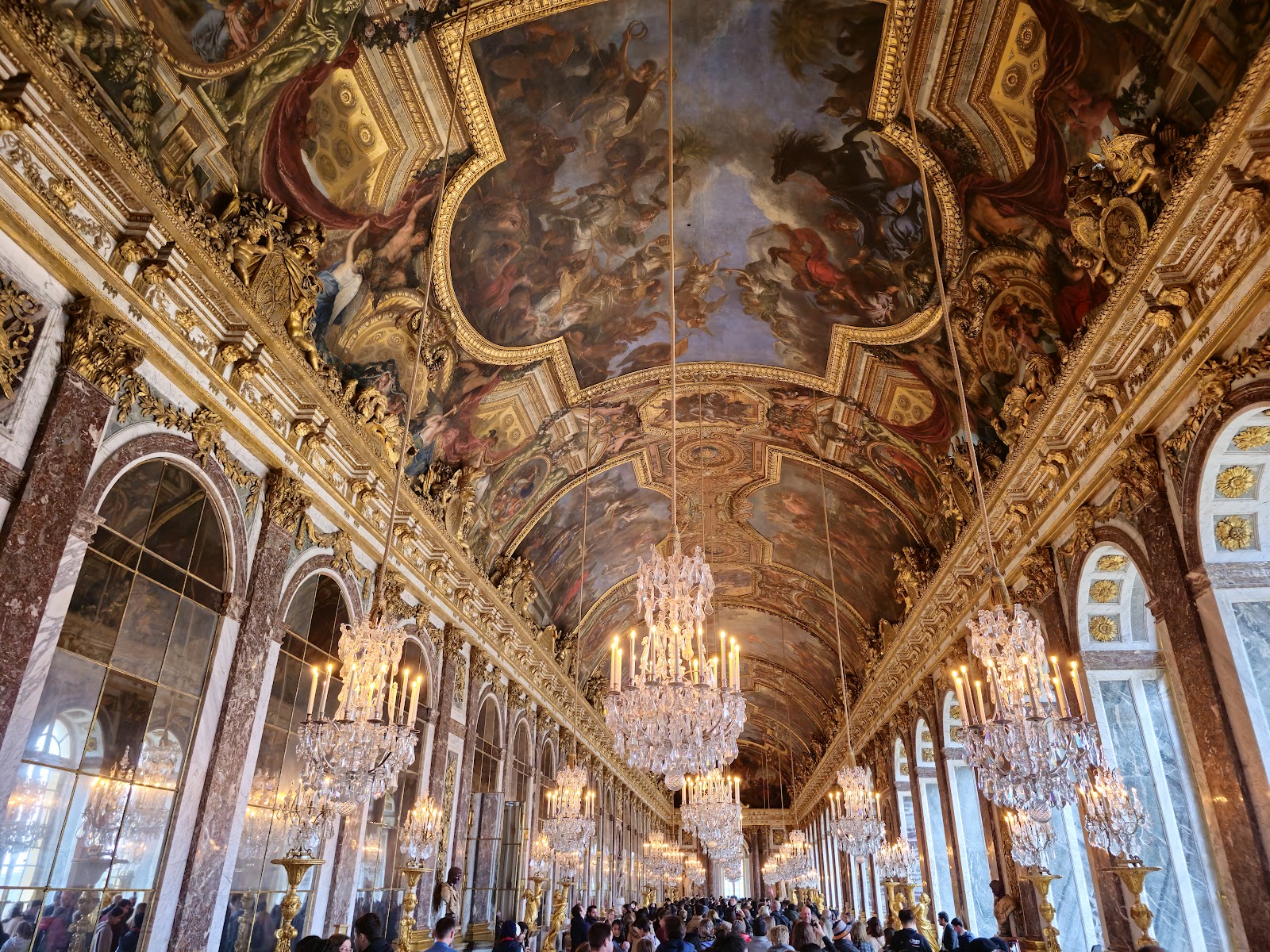
Seventy-three metres long, ten and a half wide, and lined with 357 mirrors facing seventeen arched windows — the Hall of Mirrors is a room that operates on a logic of multiplication. Every shaft of garden light doubles and redoubles across the gilded arcade, and Charles Le Brun's thirty ceiling paintings unfurl above you like a slow-motion chronicle of a king who wanted the world to know exactly how well his first eighteen years of rule had gone.
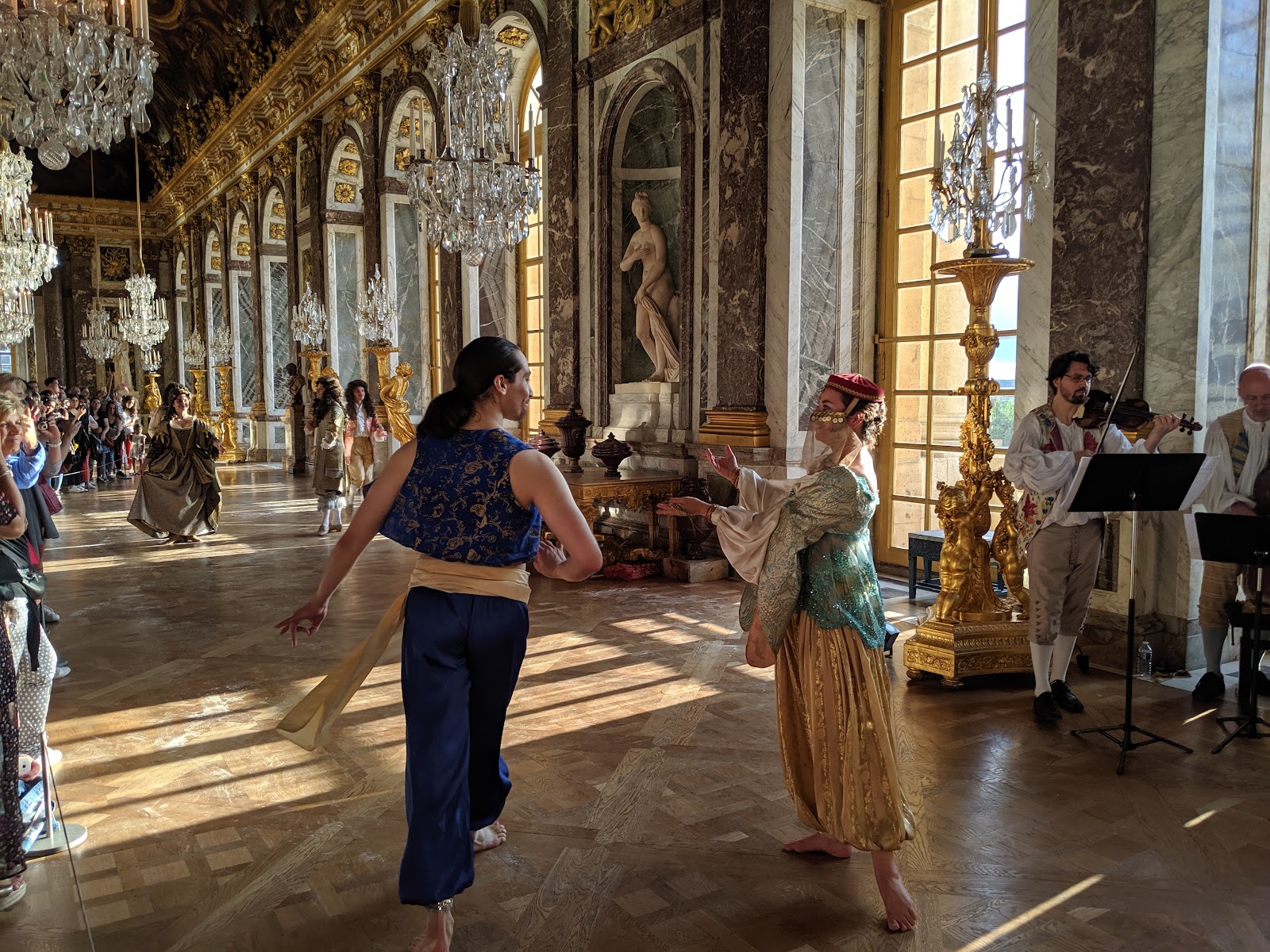
What stops you, if you let it, is the specific audacity of the thing. Ambassadors from Siam, Persia and the Ottoman Empire once walked the full length of this gallery while the French court watched from tiered seating on either side — a theatrical procession staged so that reaching Louis XIV felt like an achievement.
💛 What travellers fall for
People who come back tend to arrive at 9am on a Tuesday, when the light is still low and the tour groups haven't settled in. Stand near the War Room end and look the length of the hall rather than at individual mirrors — that's when the geometry clicks. The gilded torchères are worth a close look too; the ones you see now are reconstructions from 1980.
The story behind Hall of Mirrors
The hall was built between 1678 and 1684, replacing an open terrace designed by Louis Le Vau that connected the King's and Queen's Apartments but proved impractical in bad weather. Louis XIV commissioned architect Jules Hardouin-Mansart to close it in, and the result became the symbolic spine of the palace — the corridor through which power was performed daily.
The room has been stripped and restored more than once. In 1689 Louis XIV ordered his solid silver furniture melted down to fund the War of the League of Augsburg. Most remaining furnishings were lost during the Revolution, and today's pieces date from the nineteenth century. A thorough restoration between 2004 and 2007, undertaken with the Vinci Group, returned the ceiling paintings, gilded sculptures and mirrors to something close to their original state.
Good to know
Take RER line C to Versailles Château – Rive Gauche, a ten-minute walk from the palace. Entry to the hall is included in all palace tickets; the Full Access Ticket (€32) adds the gardens and Trianon Estate. Aim for 9–11am or after 4pm — crowds peak between 10:30 and 3pm, especially on Tuesdays and weekends. No tripods, selfie sticks or flash.
Where is Hall of Mirrors?
More tickets & tours for Hall of Mirrors
Book directly at the provider
What travellers say about Hall of Mirrors
An absolutely breathtaking masterpiece and one of the highlights of the entire Palace of Versailles. The Galerie des Glaces is even more impressive in person than in photos: the sparkling chandeliers, the endless mirrors, the gilded decorations, and the light pouring in from the gardens create a truly unforgettable atmosphere. Walking through the hall feels like stepping straight into the heart of French royal history. A bit of history & curiosities: • The Hall of Mirrors was completed in 1684 under Louis XIV, the Sun King. • It was designed by architect Jules Hardouin-Mansart and decorated by Charles Le Brun, the king’s favorite artist. • At the time, mirrors were extremely rare and expensive. Filling an entire hall with them was both a political message and a symbol of France’s economic power, proving that French craftsmanship could rival and surpass Venice, the world’s leading mirror producer. • The hall served as the main stage for royal ceremonies, diplomatic receptions, and major court events. • One of the most important events in world history took place here: the signing of the Treaty of Versailles in 1919, which ended World War I. • The hall is 73 meters long and reflects the gardens through its 17 windows, creating a unique play of light that was revolutionary for its time.
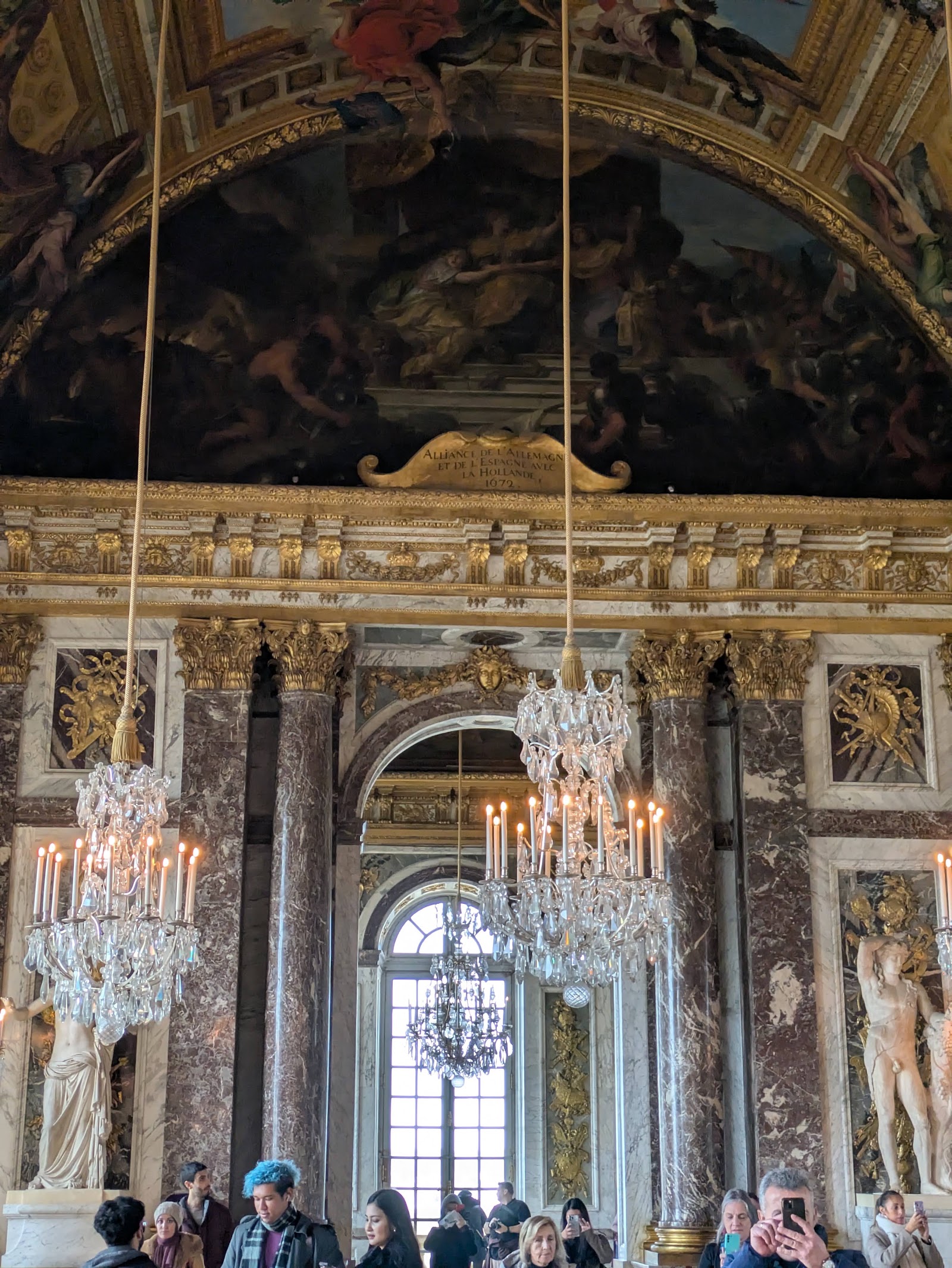
Hall of Mirrors is the most famous and beautiful room of Versailles palace. It runs along the palace main wing on the first floor overlooking the gardens. It is lavishly decorated in mirrors (as the name says), gilded statues and marvelous chandeliers. Beside its beauty the room is known as the place where the peace treaty was signed ending the WWI. We've been lucky being there on a cloudy Jan day just before the closing time with very few people, having it almost to ourselves (see the pics)
Nothing prepares you for the Hall of Mirrors. You step in and it’s pure gold, light, and grandeur — a place so over-the-top it almost feels unreal. The chandeliers catch the daylight pouring in from the arched windows, reflecting across 357 mirrors. And that ceiling? A heavenly opera of painted glory and divine ego. I had seen a million photos of it before visiting, but standing inside it hits different. It’s not just a room, it’s a statement — about wealth, power, ambition, and the sheer audacity of French Baroque.
Hall of Mirrors is the most elegant & glamorous room in the Palace of Versailles. The sight this hall creates when sunlight peeps through windows & lighten up the hall with intricate pieces of arts & mirrors is just magical. The ceilings are also covered with intricate arts.
An excellent example of art of opulence, and how it's blending of the paintings, frescoes, sculptures, and mirrors makes this a grand section of the palace. Word of advice, go to the far end of the hall to get a better photo opportunity
More of Versailles
Discover where to stay, what to do and the best deals for your trip.
Explore Versailles →More attractions in Versailles
All of Versailles →
Background adapted from Wikipedia (CC BY-SA) · map data © OpenStreetMap contributors · ratings & place photos via Google · other photos with per-image credit. Ticket links may earn us a commission at no extra cost to you.