
Guilin and Yangshuo
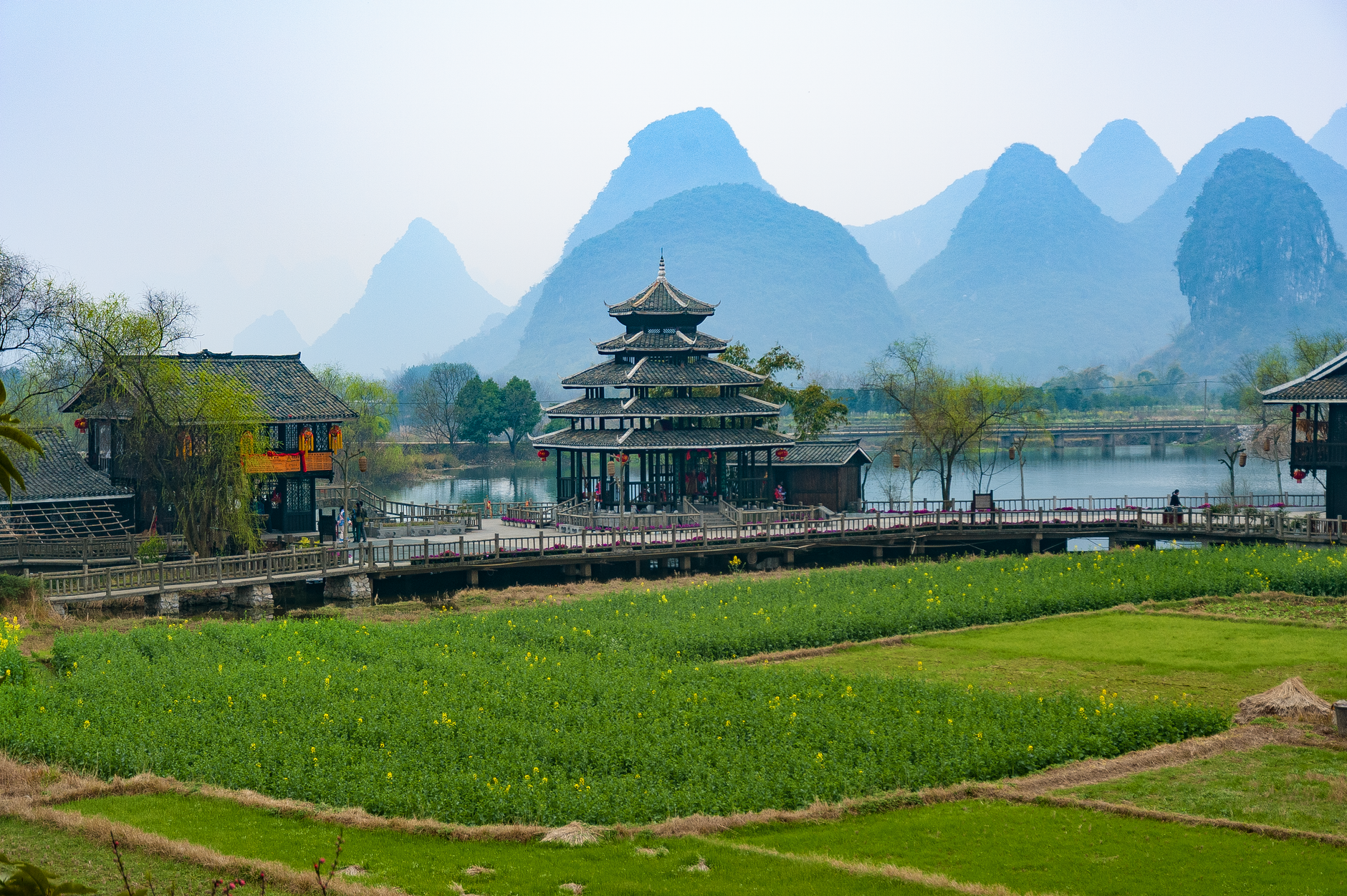
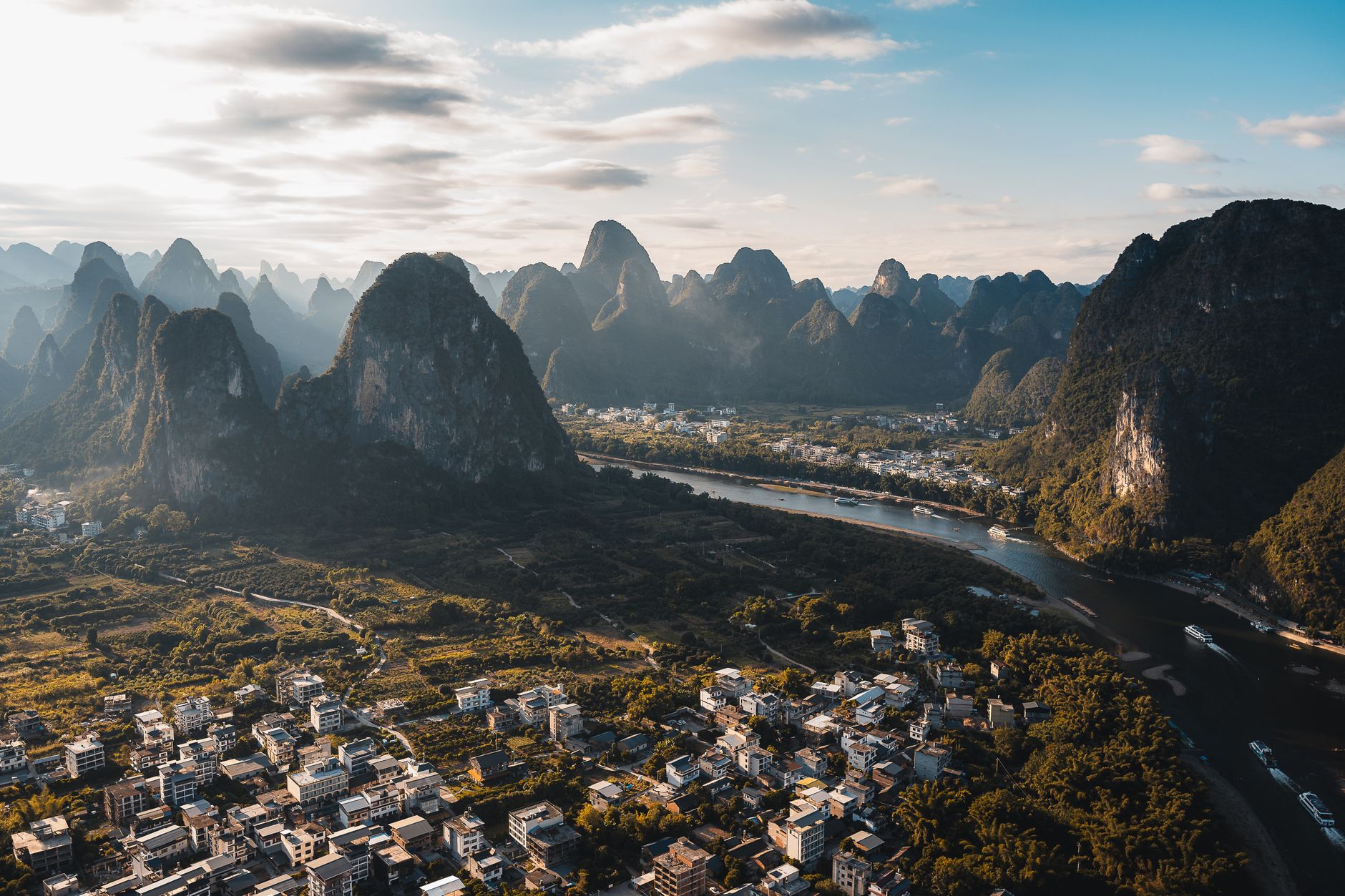
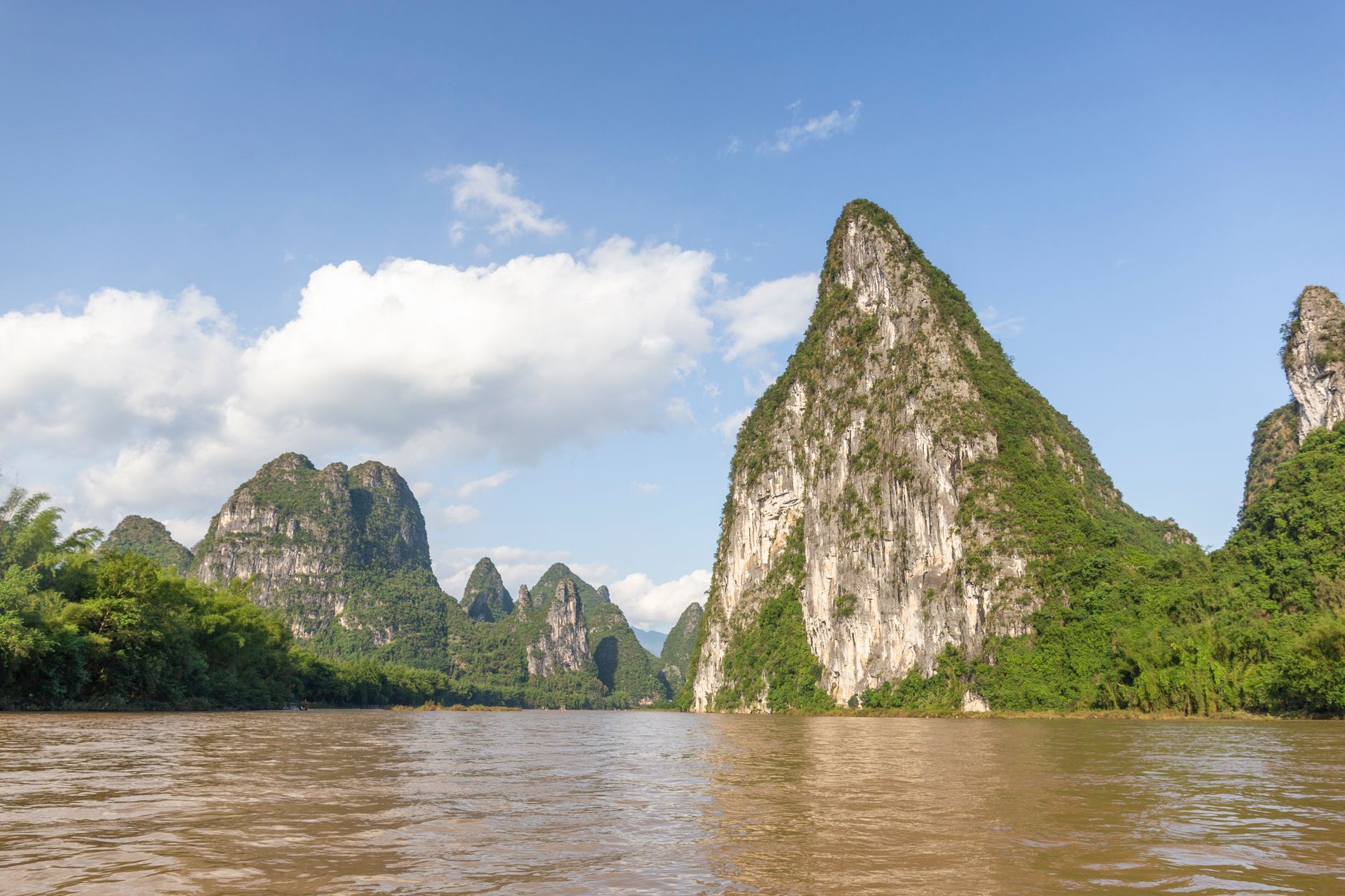
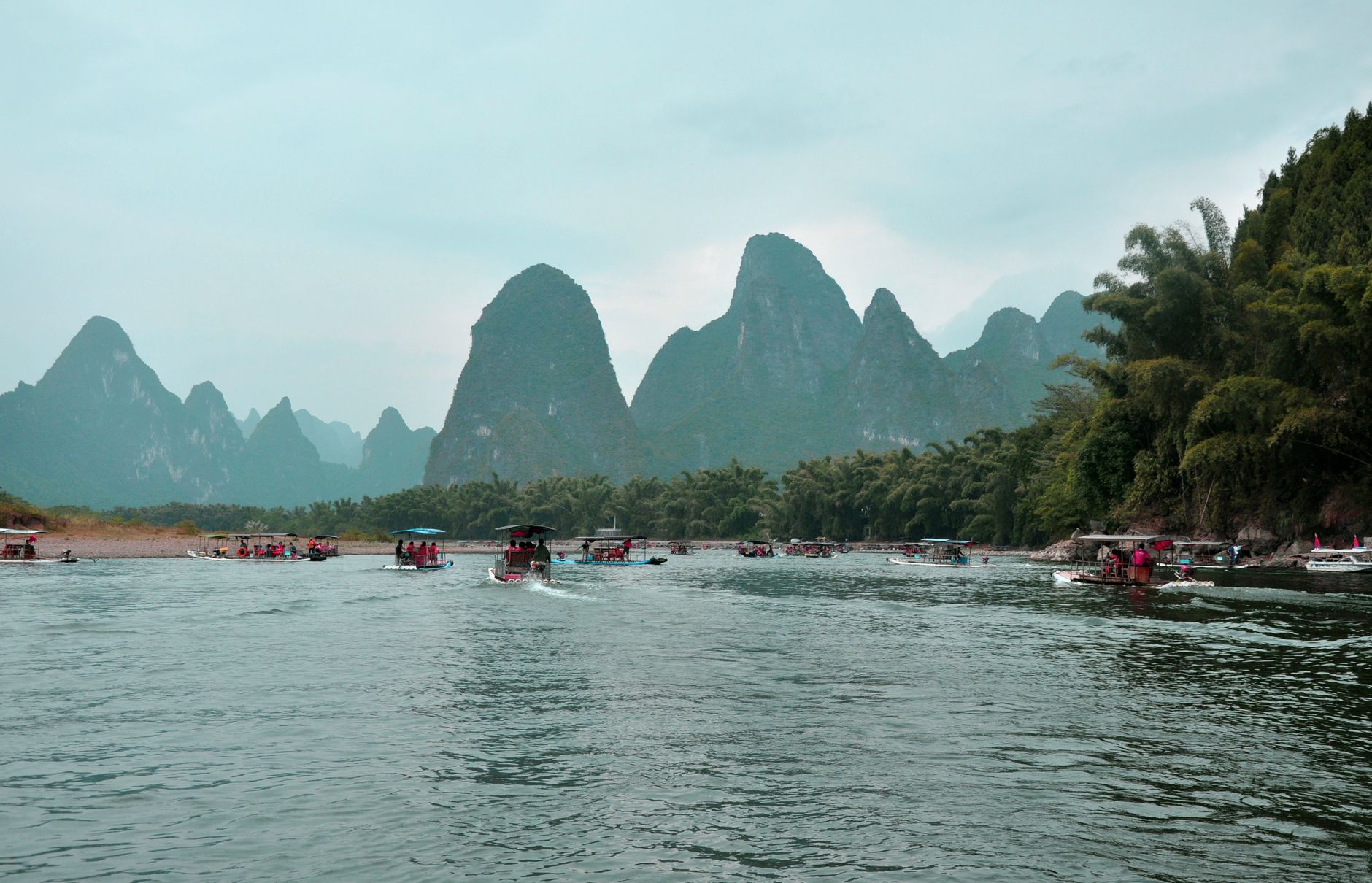
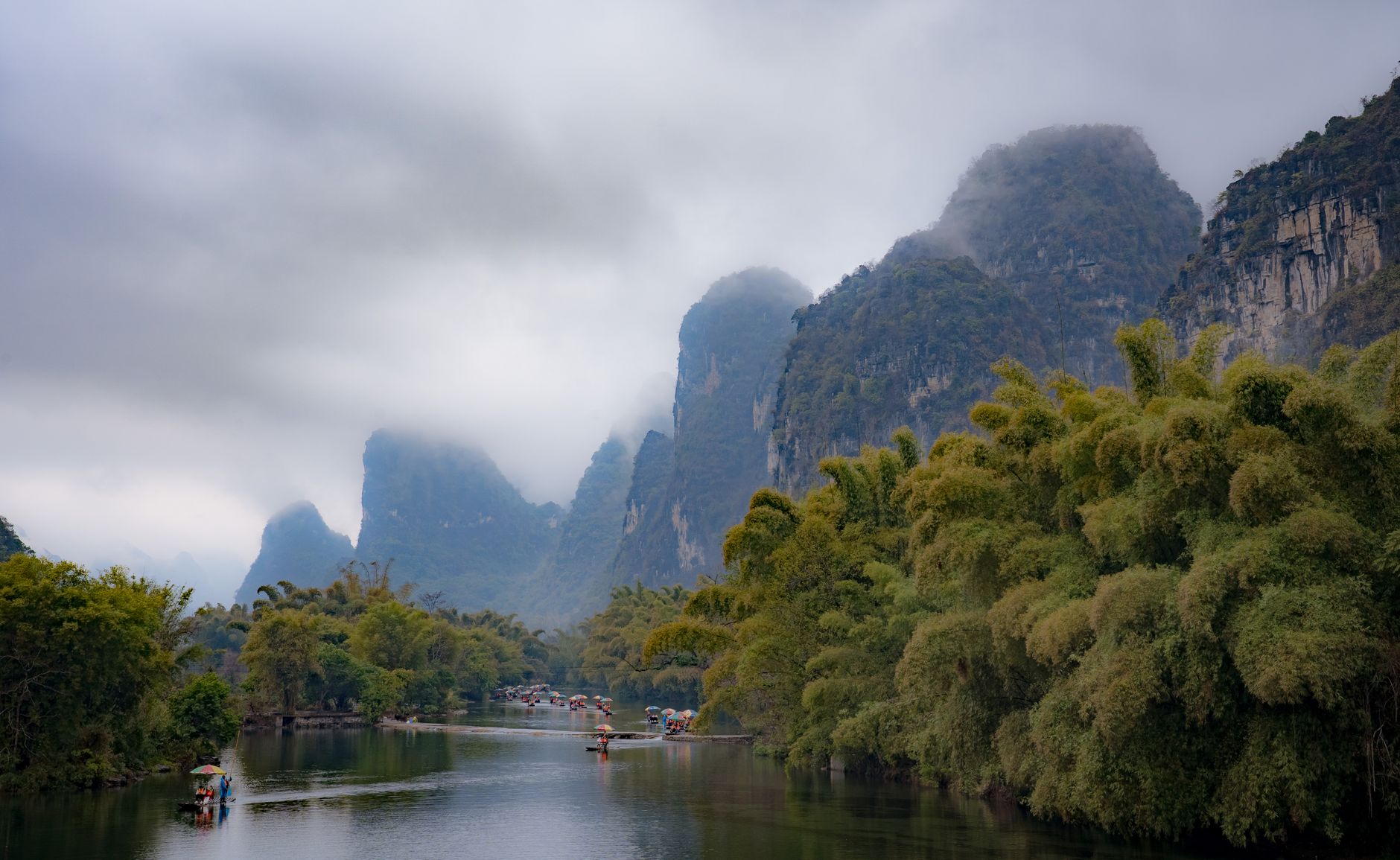
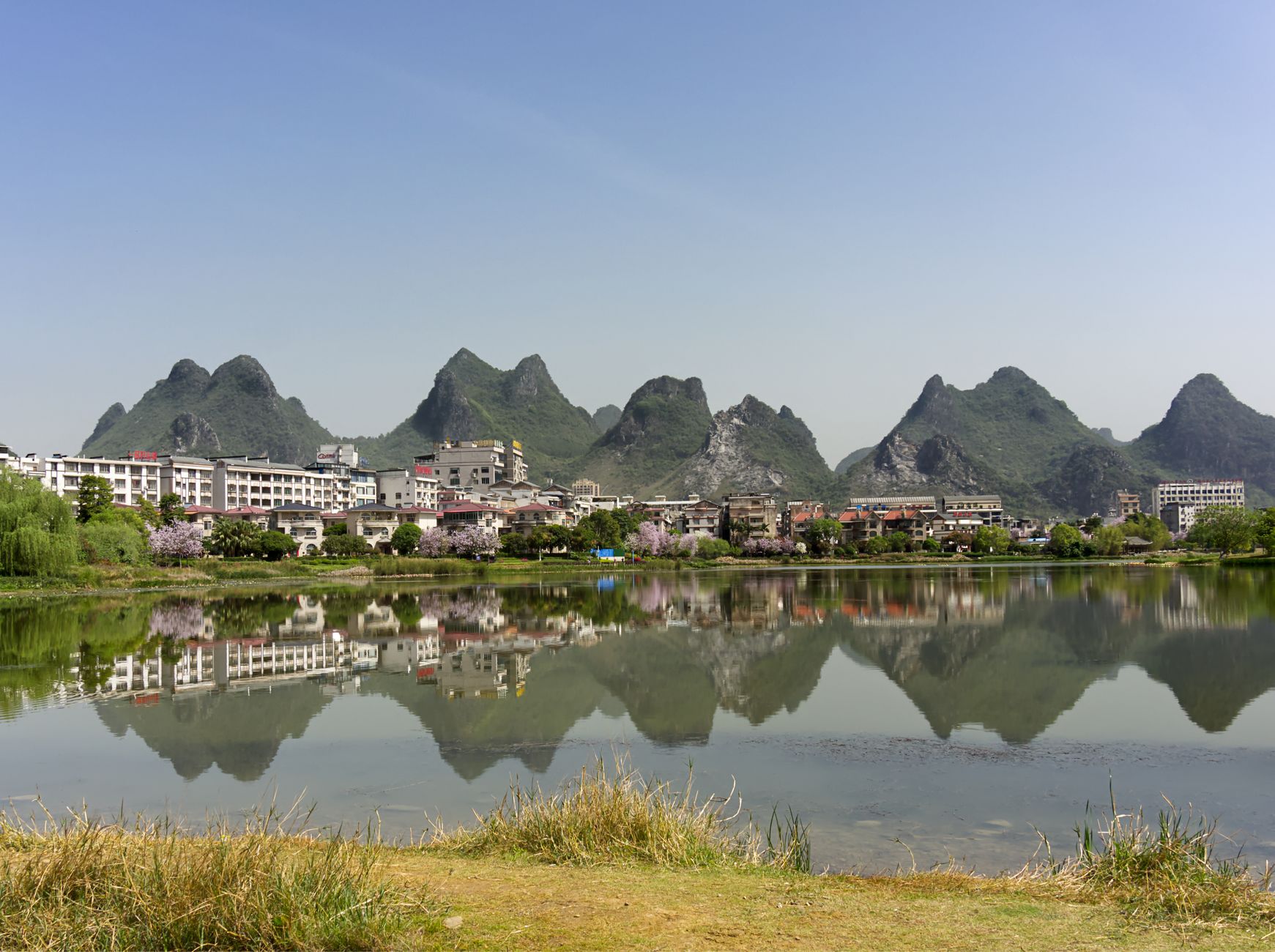
The karst peaks here are not metaphorical. They rise straight out of flat rice paddies — hundreds of them, limestone towers worn into shapes that look borrowed from a brush-painting, because Chinese brush-painting borrowed them first. The Li River runs 83 kilometres between Guilin and Yangshuo, and the classic way to travel it is by boat, watching the scenery rearrange itself around every bend for four unhurried hours.
Guilin is the city end: airports, train stations, the cave systems and the famous Elephant Trunk Hill where the river slides through a natural arch. Yangshuo, downstream, is smaller and slower — a base for cycling the Yulong River valley, climbing Moon Hill, and eating well on West Street after dark.
💛 What travellers fall for
People who come back tend to rent a bicycle in Yangshuo and ride the Yulong River route early, before the tour groups arrive. The Xianggong Mountain climb — about twenty minutes up — pays off with a ridgeline view over the Li River that no amount of boat-deck photographs quite captures. Book the Impression Sanjie Liu show at least a day ahead.
How Guilin and Yangshuo came to be
Guilin's story begins with engineering. In 214 BC, Qin dynasty forces cut the Lingqu Canal to connect the Yangtze and Pearl River basins, and the settlement on the Li River became a strategic pivot between north and south China. The Han dynasty formalised it as Shi'an County in 111 BC. Over the Tang and Song dynasties the city grew in cultural weight, and by the Ming period it was significant enough to receive a prince: Zhu Shouqian, nephew of the dynasty's founder, whose mansion — the Jingjiang Prince's Mansion — survives as the best-preserved Ming princely residence in the country. Guilin served as Guangxi's provincial capital for much of the period between 1912 and 1949.
Yangshuo has been a county since 590 AD, when Emperor Wen of Sui formalised what had already been inhabited land for roughly three thousand years. Its West Street dates to that early period — a lane five metres wide and two hundred metres long that gradually accumulated the Qing-dynasty shophouses still standing today. Foreign backpackers began arriving in the 1970s after the county opened to outside visitors, and by the 1990s the street had become an unlikely international crossroads.
Who and what shaped it
People who shaped it
Landmark buildings
See Guilin and Yangshuo in motion
Plan your visit
On the map
When to go
Spring (March to May) brings mist and soft green rice terraces but also persistent rain. Summer is hot and humid with occasional flooding on the Li River. Autumn, particularly October and November, is generally considered the most reliable season — cooler, drier, and clear enough to see the peaks sharply. Winter is cool and can be grey, but the crowds thin considerably.
Right now
Background & history adapted from Wikipedia (CC BY-SA) · specs from Wikidata (CC0) · weather from Open-Meteo · map data © OpenStreetMap contributors · photos from Wikimedia Commons / Unsplash with per-image credit. No third-party reviews or social posts reproduced.