
Great Smoky Mountains National Park


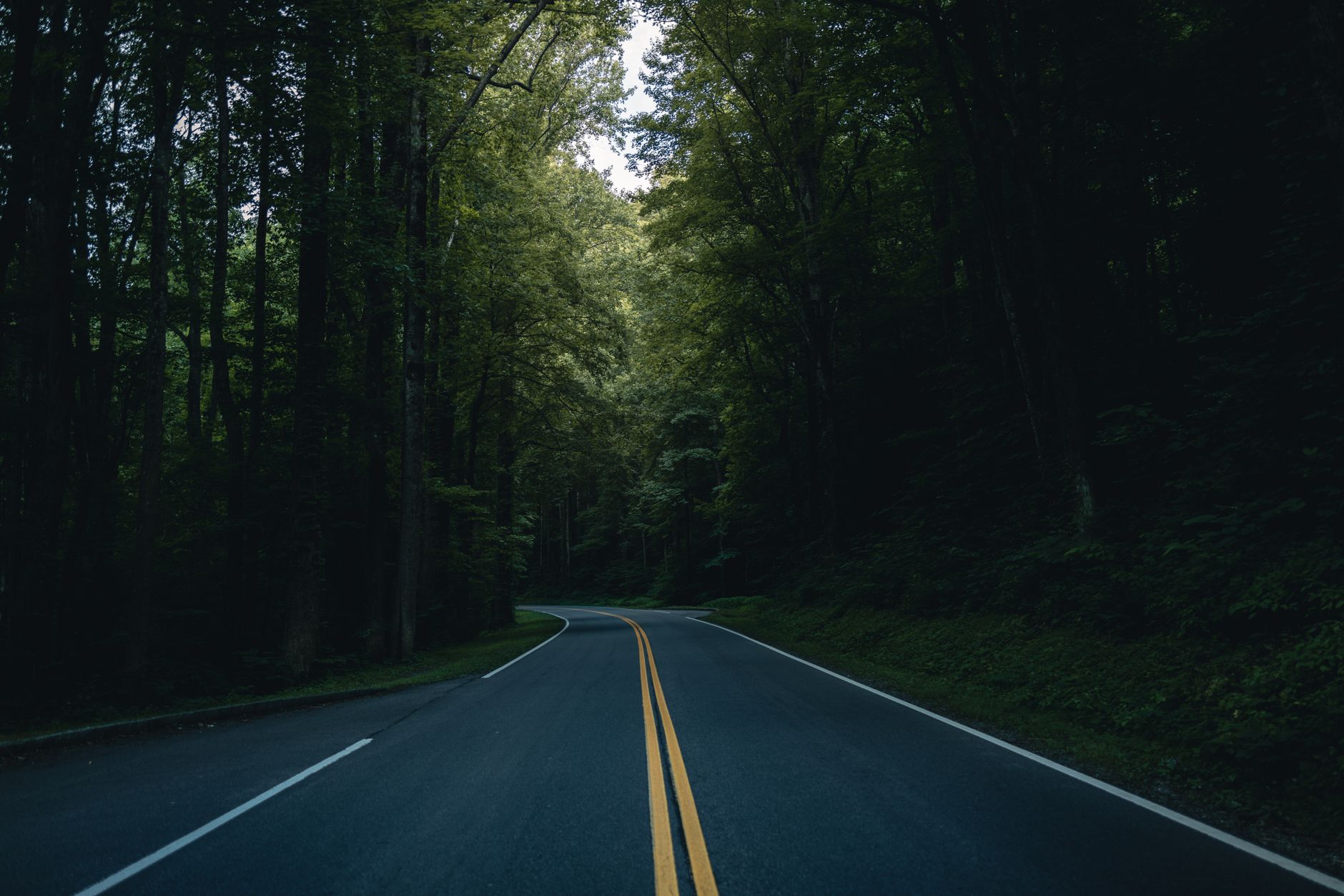
The Smokies are named for a thing you can see: a blue-grey haze that hangs over the ridgelines, produced by the trees themselves releasing organic compounds into the air. It is one of the oldest mountain ranges on earth, and it shows — rounded peaks worn smooth by time, hollows so dense with hemlock and rhododendron that mid-afternoon light barely reaches the creek beds.
At 71.6 miles, the Appalachian Trail threads through the park's spine, but most visitors never leave the valley roads. That gap between the crowds and the quiet is one of the park's defining features, and it works in your favour.
💛 What travellers fall for
People who keep coming back tend to time Cades Cove for a Tuesday or Wednesday morning, when the 11-mile loop is closed to cars and you can walk or cycle the whole circuit before the tour buses arrive. Cataloochee valley, in the far eastern corner, rewards the extra drive — elk were reintroduced there, and dawn sightings are common.
How Great Smoky Mountains National Park came to be
The idea for a national park here began in the summer of 1923, when Anne May Davis of Knoxville visited Yellowstone and returned convinced the Smokies deserved the same protection. Her husband W. P. Davis took the proposal to the Secretary of the Interior, and by year's end a coalition including Colonel David C. Chapman and the Knoxville Automobile Club had formed the Great Smoky Mountains Conservation Association.
The land presented an unusual problem: 704,000 proposed acres divided among more than 6,600 owners. Congress authorised the park in May 1926, but assembling it took years and a $5 million donation from the Laura Spellman Rockefeller Memorial Fund — the largest single gift. Congress formally established the park on June 15, 1934, and President Roosevelt dedicated it at Newfound Gap in September 1940. It was the first national park whose costs were covered partly with federal funds.
Who and what shaped it
People who shaped it
Landmark buildings
See Great Smoky Mountains National Park in motion
Plan your visit
On the map
When to go
Elevation shapes everything here — the park climbs from 875 feet to 6,643 feet, and temperatures drop roughly 3–5°F for every thousand feet you gain, so a warm day in Gatlinburg can mean a cold, wet summit at Clingmans Dome. Upper elevations can see snow as late as May and receive over 100 inches of precipitation a year; carry a layer regardless of the season.
Right now
Background & history adapted from Wikipedia (CC BY-SA) · specs from Wikidata (CC0) · weather from Open-Meteo · map data © OpenStreetMap contributors · photos from Wikimedia Commons / Unsplash with per-image credit. No third-party reviews or social posts reproduced.