
Grand Canyon, Arizona, USA

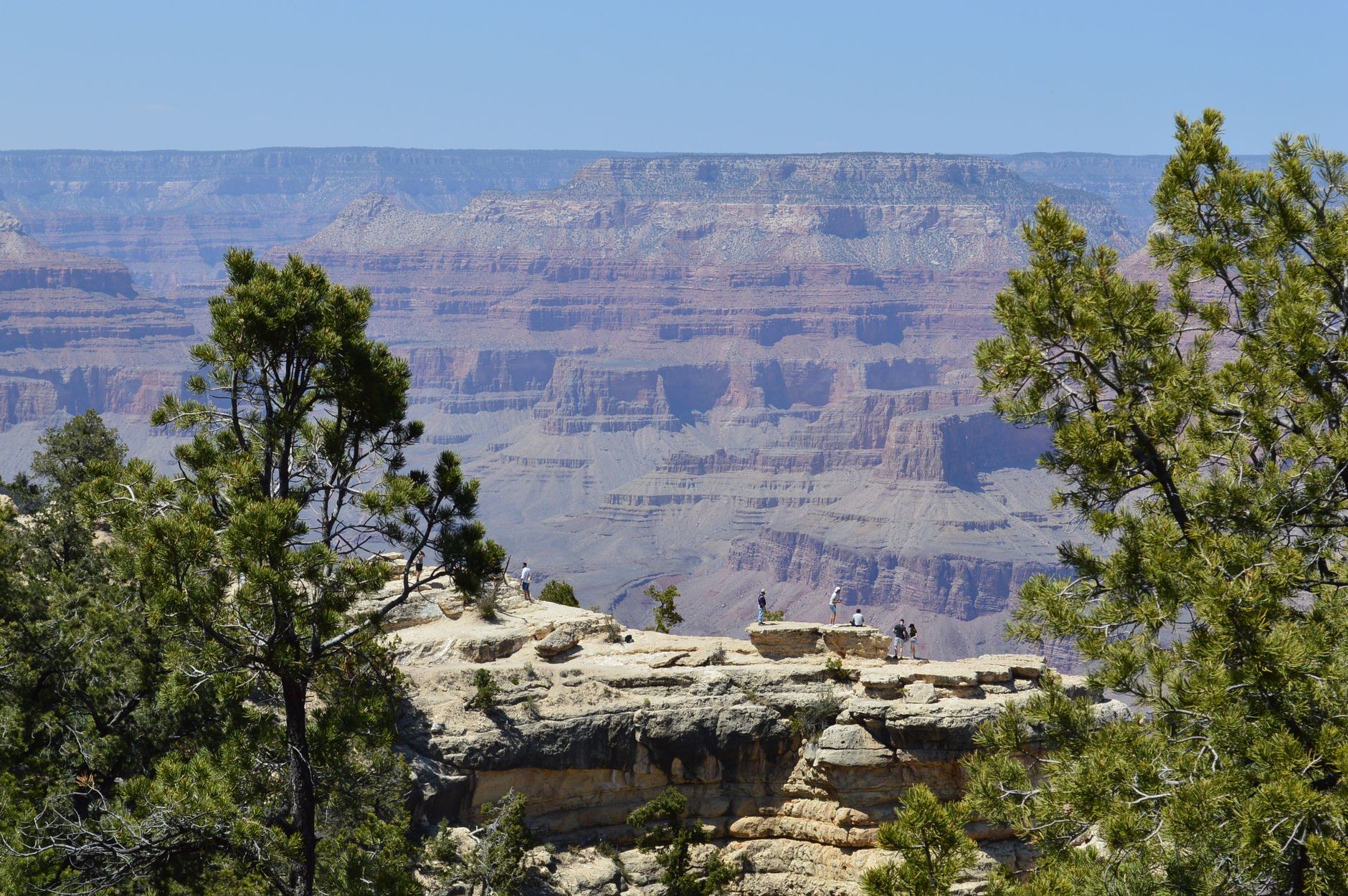


Stand at Mather Point and the ground simply stops. The canyon drops over a mile straight down, the Colorado River a thin brown thread far below, the layered walls recording two billion years of geology in stripes of red, pink, and grey. No photograph has ever fully translated this — the scale defeats the frame every time.
The South Rim runs 24 hours a day, 365 days a year, which means you can watch the light change through a full day if you stay long enough. Most people don't. The canyon rewards the ones who do.
💛 What travellers fall for
People who've been before tend to skip the crowded central viewpoints and drive the 25-mile Desert View Road east toward the Watchtower instead. Early morning on that stretch, you'll often have an overlook entirely to yourself. The free shuttle system on the western Hermit Road is genuinely useful — board it rather than fighting for parking.
How Grand Canyon, Arizona, USA came to be
People have lived at the canyon's edge for at least 4,000 years. Ancestral Pueblo peoples built here, adapted to the desert, and largely moved on during the droughts of the late 13th century. The first European to see it was García López de Cárdenas in 1540, though it would be another three centuries before John Wesley Powell ran the river through it in 1869.
Protection came in stages: a forest reserve under Benjamin Harrison in 1893, a national monument under Theodore Roosevelt in 1908 — Roosevelt visited in 1903 and came away convinced it needed federal shelter — and finally national park status in 1919. The Santa Fe Railway had already opened El Tovar hotel on the South Rim in 1905, designed by Charles Whittlesley, and architect Mary Elizabeth Jane Colter spent decades shaping the canyon's built landscape, from Hopi House to the Desert View Watchtower, in a style that took its cues from the land rather than fighting it.
Who and what shaped it
People who shaped it
Landmark buildings
See Grand Canyon, Arizona, USA in motion
Plan your visit
On the map
When to go
Summer brings intense heat at the canyon floor and afternoon thunderstorms on the rim; spring and autumn are the most comfortable seasons for hiking, with mild days and cool nights. Winter on the South Rim is cold, occasionally snowy, and noticeably quieter — the light at that time of year is exceptional.
Right now
Background & history adapted from Wikipedia (CC BY-SA) · specs from Wikidata (CC0) · weather from Open-Meteo · map data © OpenStreetMap contributors · photos from Wikimedia Commons / Unsplash with per-image credit. No third-party reviews or social posts reproduced.