
Göreme National Park

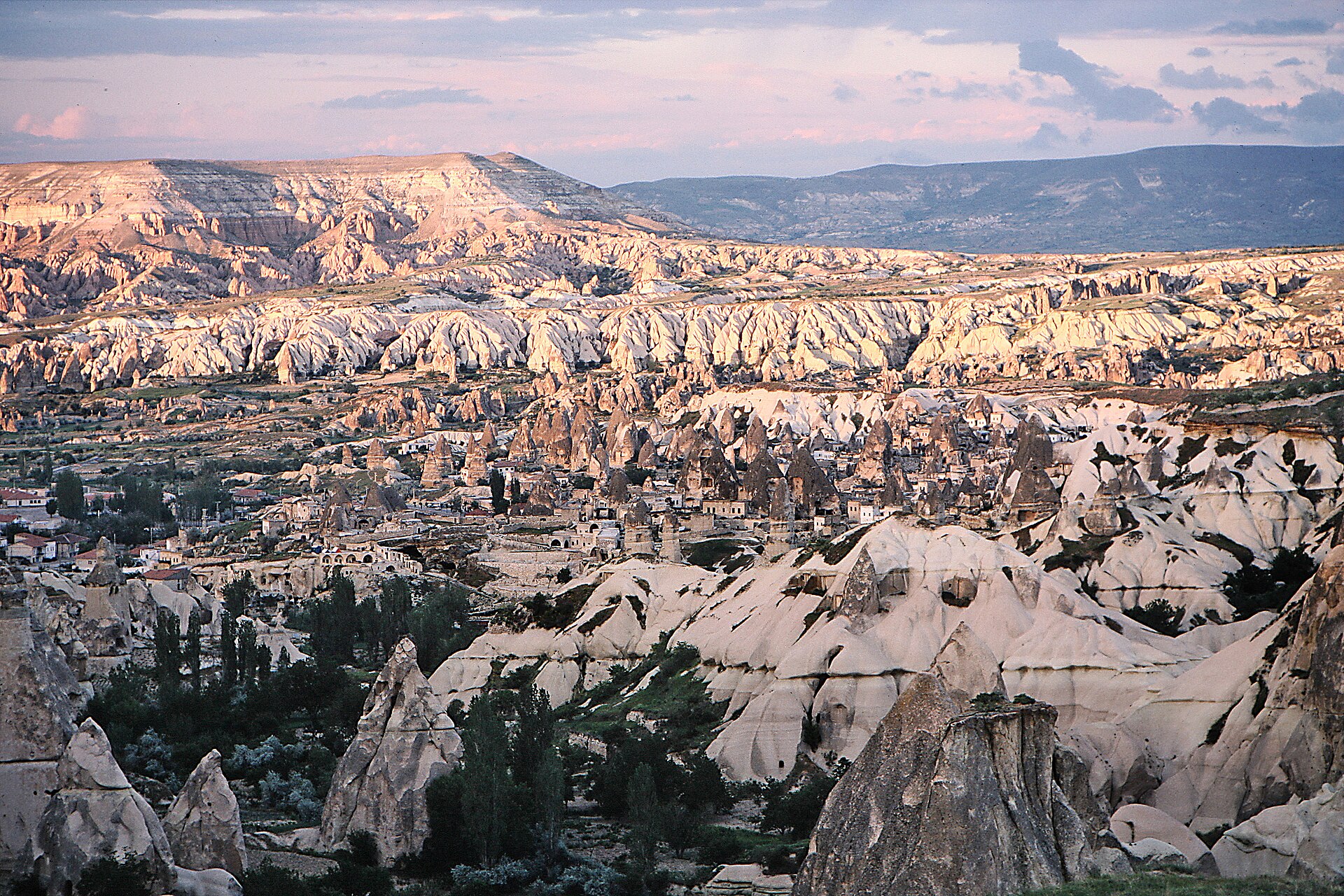
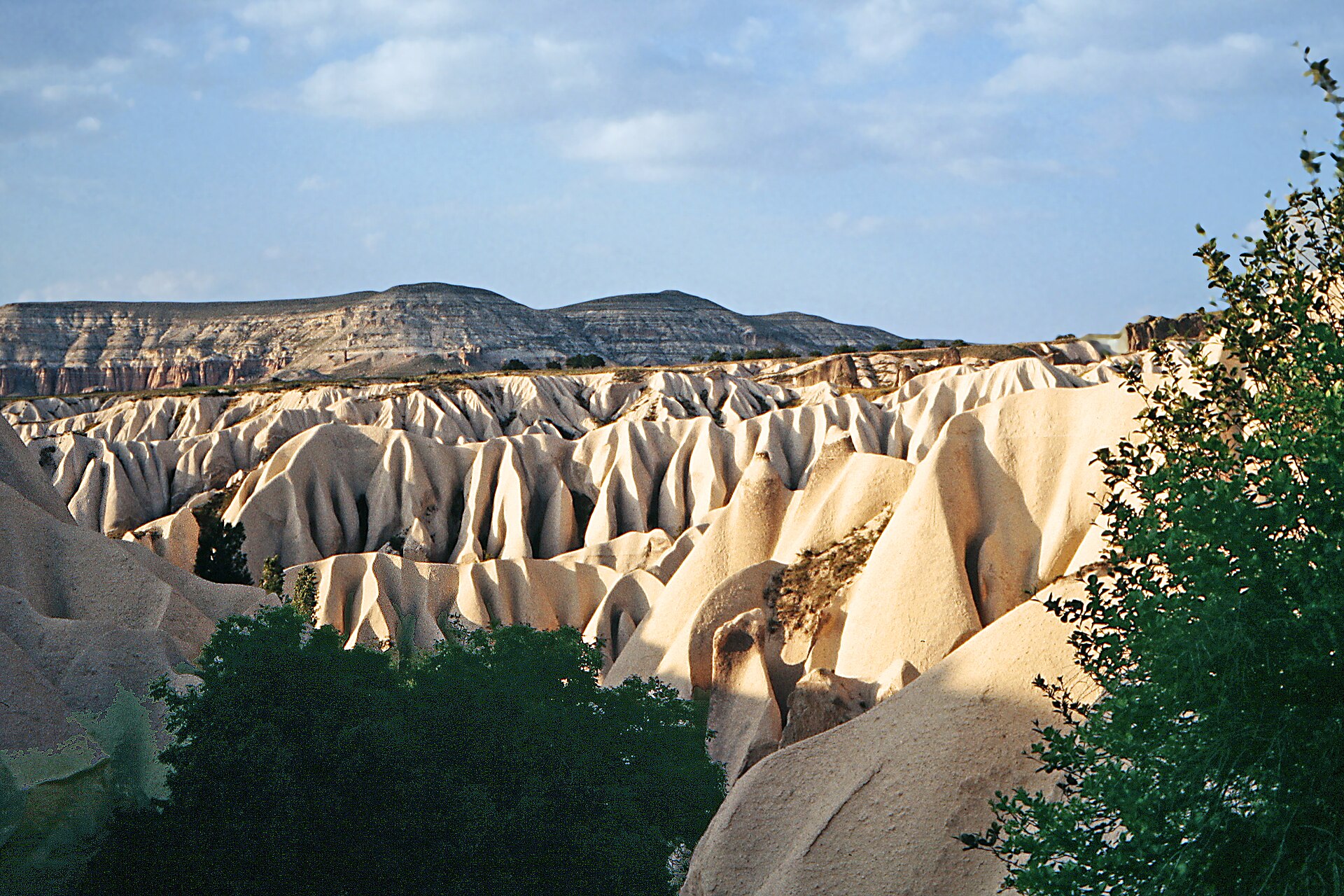
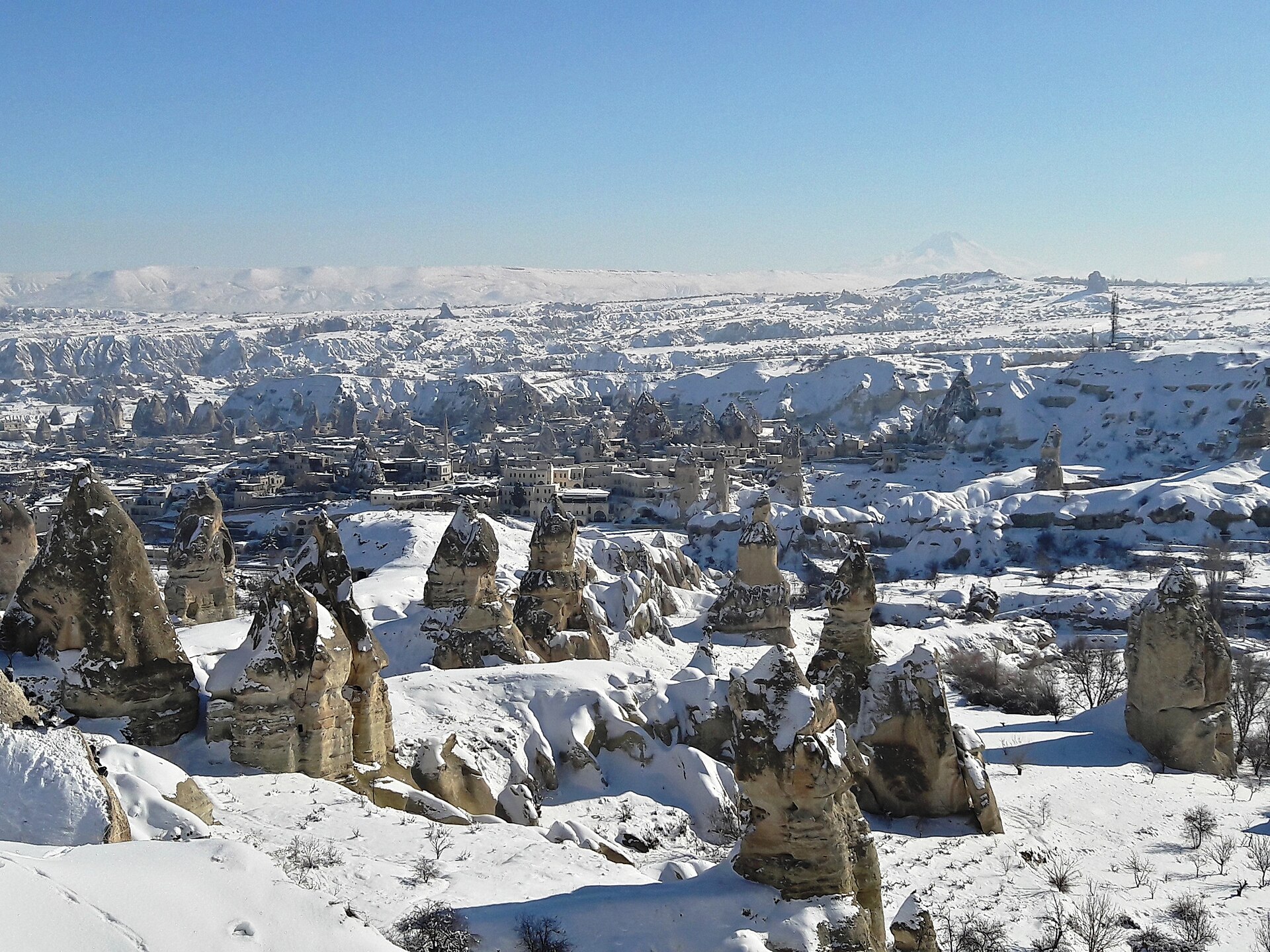

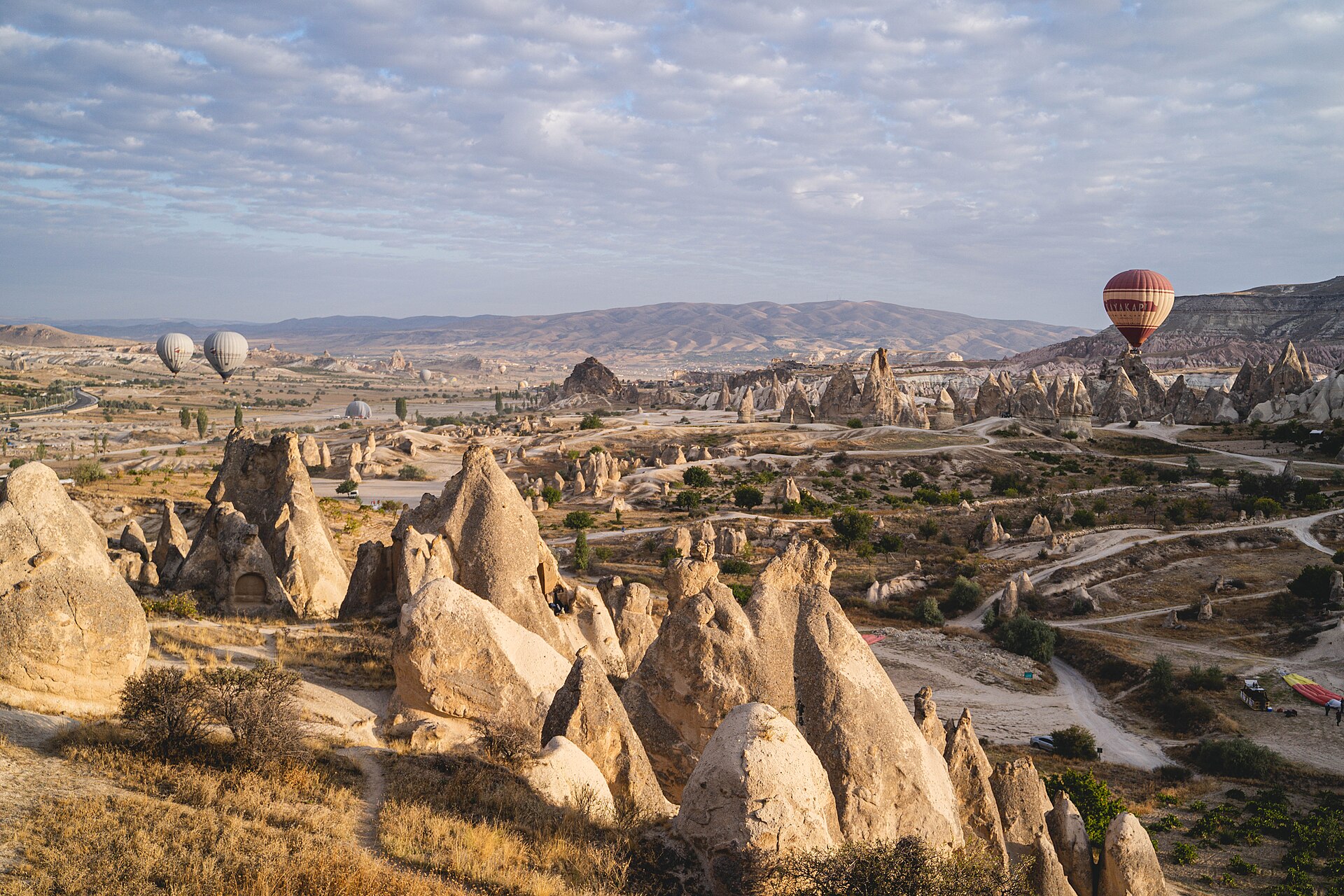
The first thing that stops you is the scale of it. Göreme National Park spreads across a high plateau in central Turkey where ancient volcanic eruptions buried the land under deep layers of ash, which hardened into soft tuff rock and then, over millions of years, eroded into the shapes you see now — cones, pillars, tent rocks, and the capped pinnacles locals call fairy chimneys. It looks like somewhere a story was set, not somewhere people actually live.
People have lived here since at least the fourth century, carving churches, homes, and entire underground cities from the stone. More than 200 rock-hewn churches survive within the park, and two subterranean towns — Kaymaklı and Derinkuyu — run several stories below the surface. The Göreme Open Air Museum pulls the greatest concentration of frescoed churches into a single walkable site, fifteen minutes on foot from Göreme town center.
💛 What travellers fall for
Return visitors tend to agree on one thing: go to the Open Air Museum early, when the 08:00 doors open, before tour groups arrive. Pay the extra €6 for the Dark Church — the Karanlık Kilise — whose frescoes are the best-preserved in the park precisely because so little light reached them over the centuries. Afternoons belong to the valleys.
How Göreme National Park came to be
About 30 million years ago, volcanic eruptions blanketed this plateau in ash that compressed into tuff — a rock soft enough to carve with hand tools but hard enough to hold a ceiling. By the fourth century, Christian communities were cutting chapels and dwellings into the cliffs; by the medieval period, monastic communities had decorated hundreds of those spaces with frescoes. The Cappadocian Greeks who maintained these villages were relocated to Greece under the 1923 population exchange, leaving the carved architecture largely intact but emptied of its original inhabitants.
The park was little visited by outsiders until the 1970s. French archaeologist Charles Texier had documented the site in the 1830s, but it took another century and a half for international tourism to arrive in force. Turkey designated it the country's fifth national park in 1986, the year after UNESCO added it to the World Heritage list. Today the cave buildings that once housed families have been converted almost entirely into hotels.
Who and what shaped it
People who shaped it
Landmark buildings
See Göreme National Park in motion
Plan your visit
On the map
When to go
Spring and autumn are the most comfortable seasons — April and May bring occasional rain but temperatures rarely exceed 25°C, while September and October stay warm without the parched heat of midsummer, when July afternoons can reach 32°C and nights cool sharply to around 15°C. January and February see intermittent snow and hard frosts, which makes the landscape look extraordinary but the underground cities feel especially appealing.
Right now
Background & history adapted from Wikipedia (CC BY-SA) · specs from Wikidata (CC0) · weather from Open-Meteo · map data © OpenStreetMap contributors · photos from Wikimedia Commons / Unsplash with per-image credit. No third-party reviews or social posts reproduced.