
Fertő-Hanság National Park

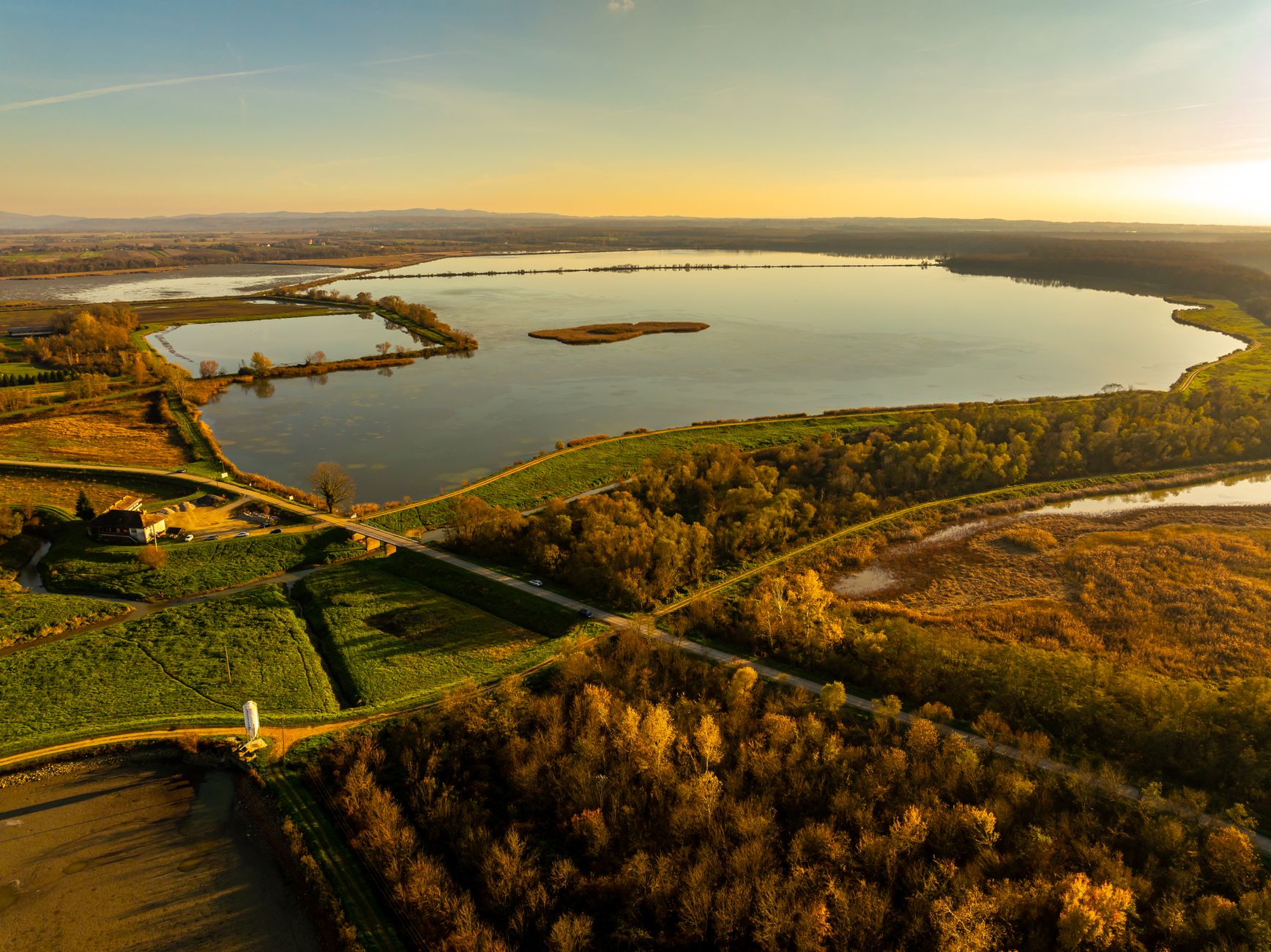

Stand at one of the wooden watchtowers along Fertő lake's reed-fringed edge on a still April morning and you may count forty or fifty bird species without moving your feet. The lake — shared with Austria, where it's called Neusiedler See — is so shallow and so wide that the sky seems to account for more of the view than the water does. Saline meadows stretch back from the shore where Racka sheep and Hungarian grey cattle graze in loose formations, and the flatness of it all means you can see weather coming from a long way off.
This is one of the few places in Central Europe where a national park crosses an international border, and that fact shapes the whole experience. You can cycle from the Hungarian visitor centre into Austria without drama, following a bike path that skirts the lake's western edge past willow groves and the kind of open, unpopulated landscape that feels increasingly rare.
💛 What travellers fall for
People who come back tend to time their visits around the light. Early morning at the watchtowers near Sarród, before other visitors arrive, is when the reed beds are loudest and the lake surface still carries mist. Pack cash — the 1,000 HUF entry fee is cash only — and pick up some of the local salami sold near the visitor centre on your way out.
How Fertő-Hanság National Park came to be
The Hungarian side of the lake had been under landscape protection since 1977 and held UNESCO Biosphere Reserve status from 1979 and Ramsar wetland designation from 1989 before the national park was formally established in 1991. The Hanság area, a separate wetland zone to the southeast, was incorporated in 1994.
That same year, on April 24th, 1994, Austria and Hungary formally joined their adjacent parks into the first transboundary national park on Hungarian soil. The broader Fertő region — both the Hungarian and Austrian sections — received UNESCO World Heritage designation in December 2001 under the Cultural Landscape category, recognising centuries of interaction between the lake, its reed beds, and the human settlements and estates built along its edges, including the Esterházy Palace at Fertőd, where Haydn premiered much of his work over a twenty-year residency, and the Széchenyi family seat at Nagycenk.
Who and what shaped it
People who shaped it
Landmark buildings
See Fertő-Hanság National Park in motion
Plan your visit
On the map
When to go
Late spring and early autumn are the most comfortable seasons — daytime temperatures typically sit between 15°C and 25°C, the trails are passable, and the light is good for long hours. Summer brings the most visitors and regularly exceeds 30°C across the exposed, treeless lakeside terrain; winter is quiet and cold, with little infrastructure running.
Right now
Background & history adapted from Wikipedia (CC BY-SA) · specs from Wikidata (CC0) · weather from Open-Meteo · map data © OpenStreetMap contributors · photos from Wikimedia Commons / Unsplash with per-image credit. No third-party reviews or social posts reproduced.