
Ella
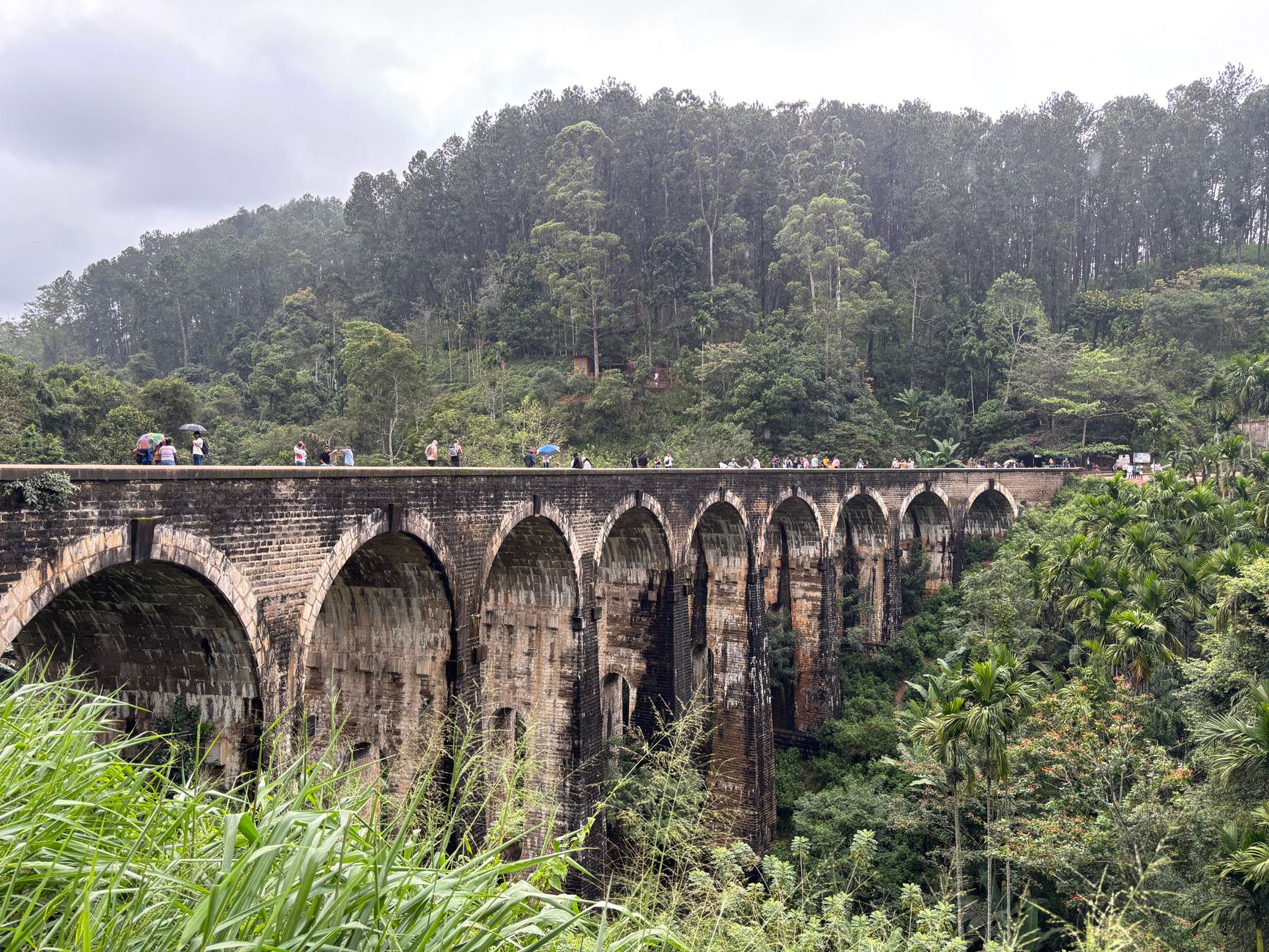
Ella sits at 1,041 metres in Sri Lanka's hill country, where the land drops away so suddenly at the Ella Gap that on a clear morning you can see all the way to the southern coast, three thousand feet below. The air is cooler than the lowlands, the tea bushes run in precise rows up every slope, and the pace of things is slower than the altitude alone can explain.
Most people come for the train ride and stay longer than planned. There are waterfalls to walk to, a rock temple that predates the colonial era by nearly two millennia, and a ridge called Little Adam's Peak that earns its view without demanding too much of your legs.
💛 What travellers fall for
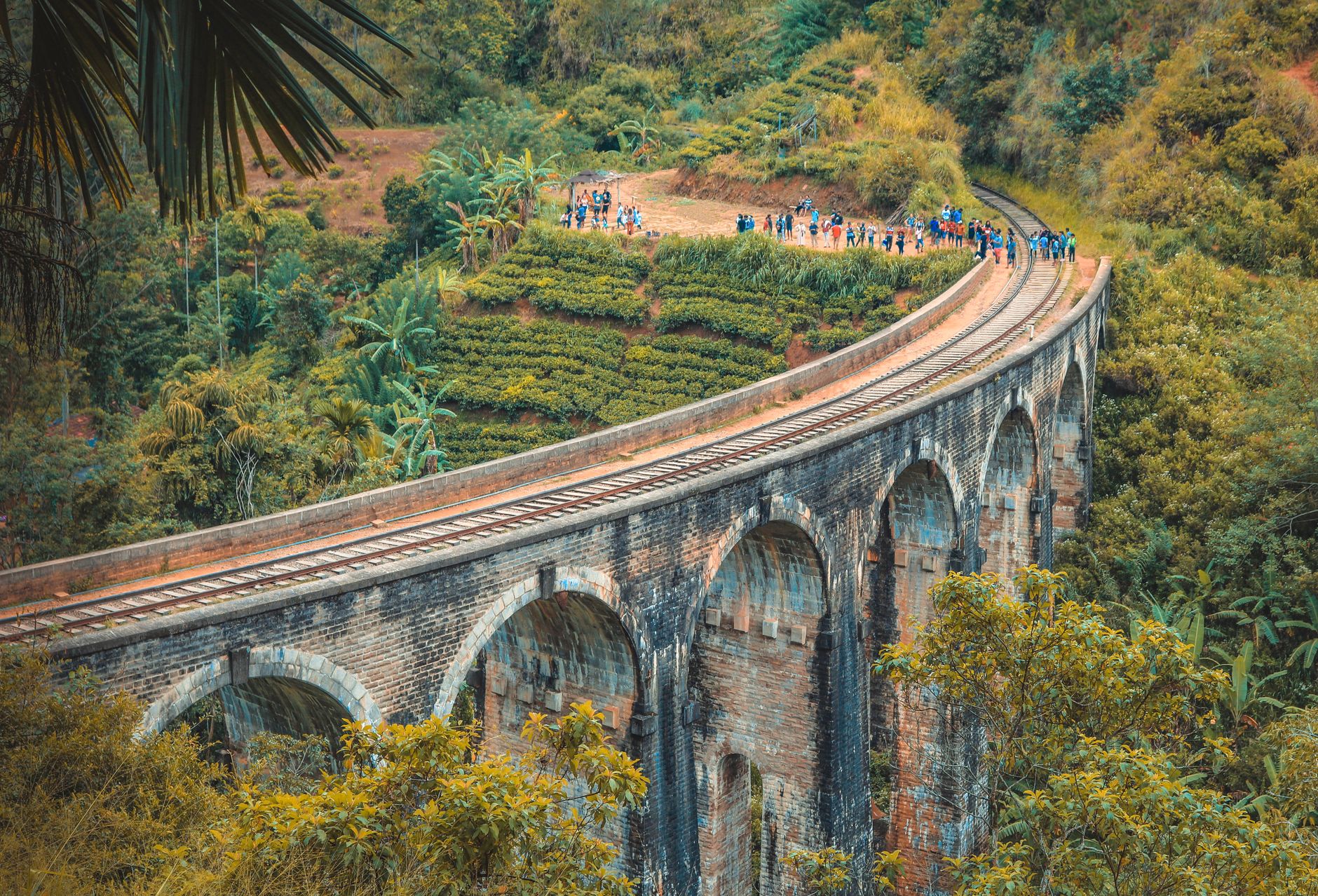
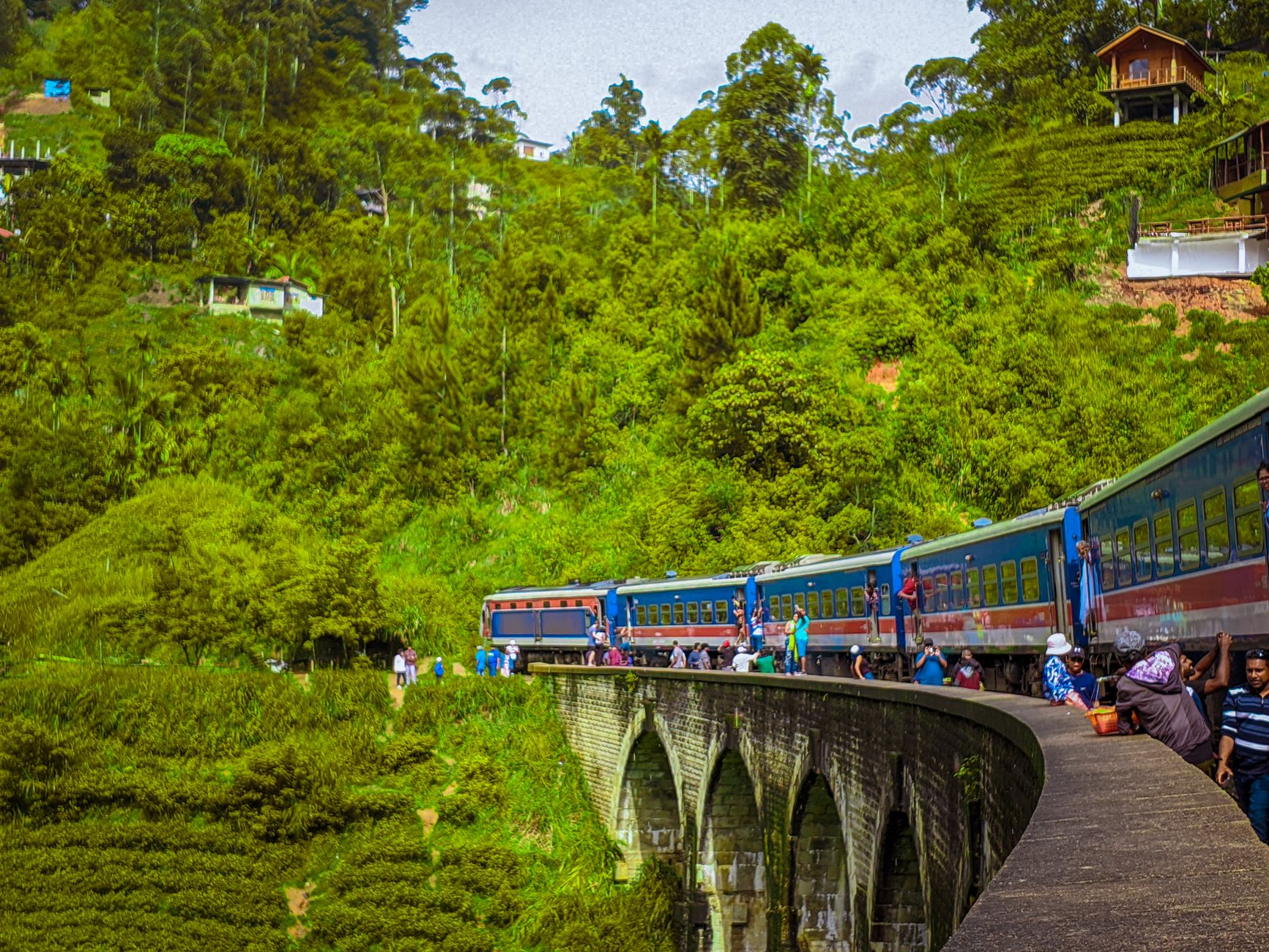
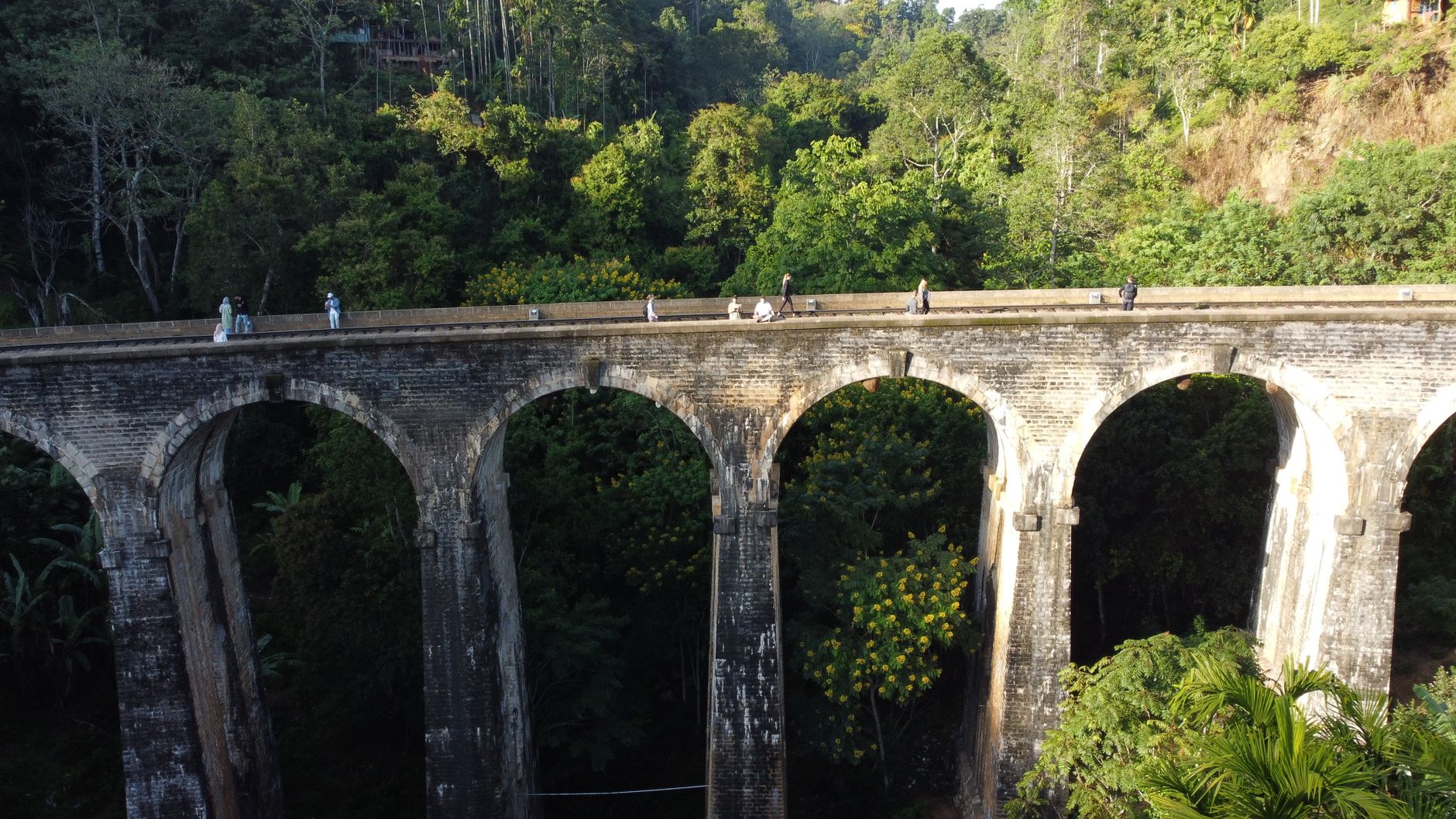
People who return tend to mention the same small ritual: arriving at Ella Station before the morning clouds build, walking the tracks toward Demodara while the mist is still low, and timing it so the Kandy express crosses the Nine Arch Bridge while they're watching from the embankment. Get there by eight if you want the light and the quiet both.
How Ella came to be
Ella's modern identity was shaped by two things: tea and the railway. British planters cleared the hill-country forest for tea estates from the mid-19th century onward, and the Colombo–Badulla line, pushed through difficult terrain over decades, brought both workers and eventually leisure travellers into the highlands.
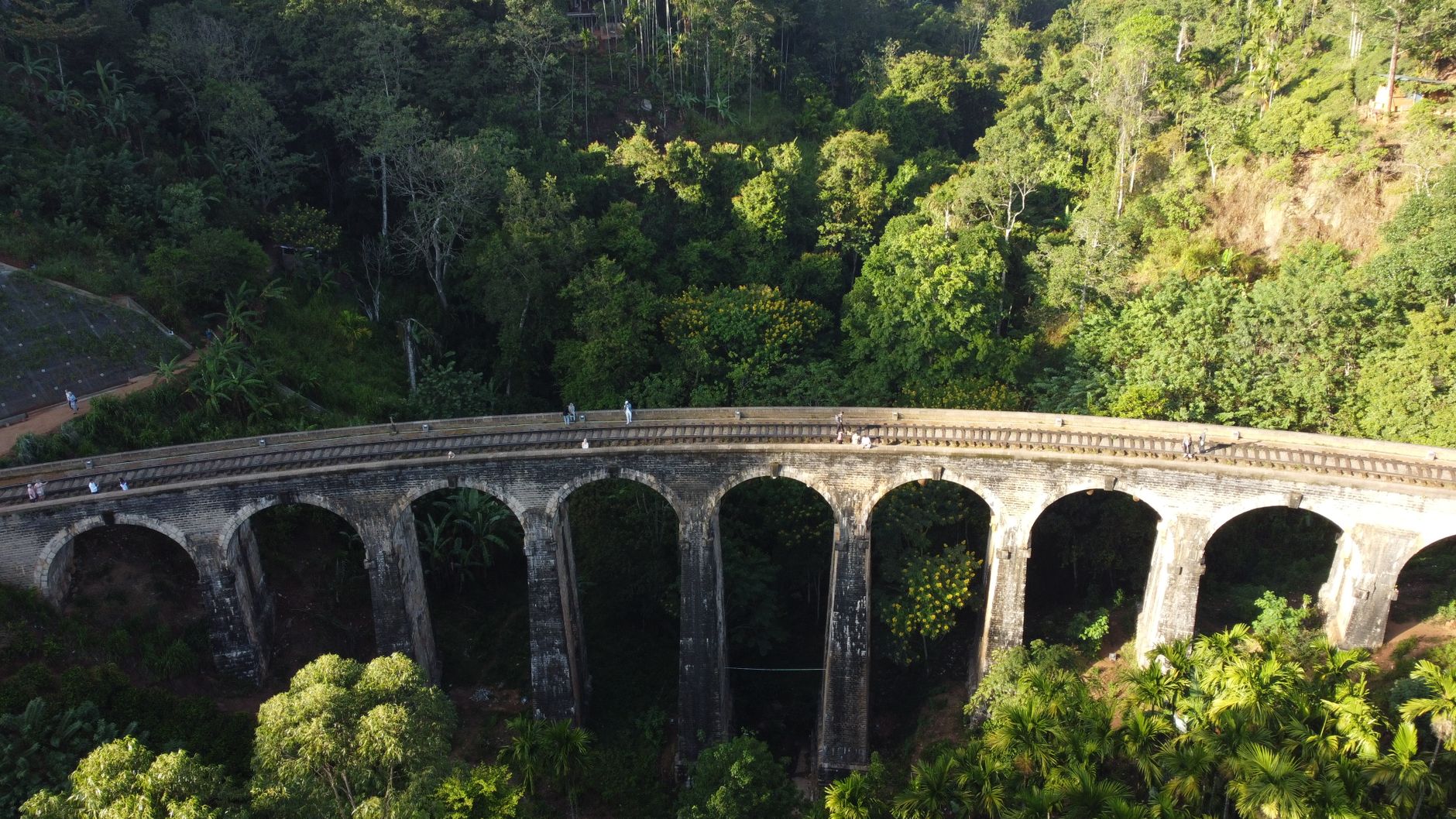
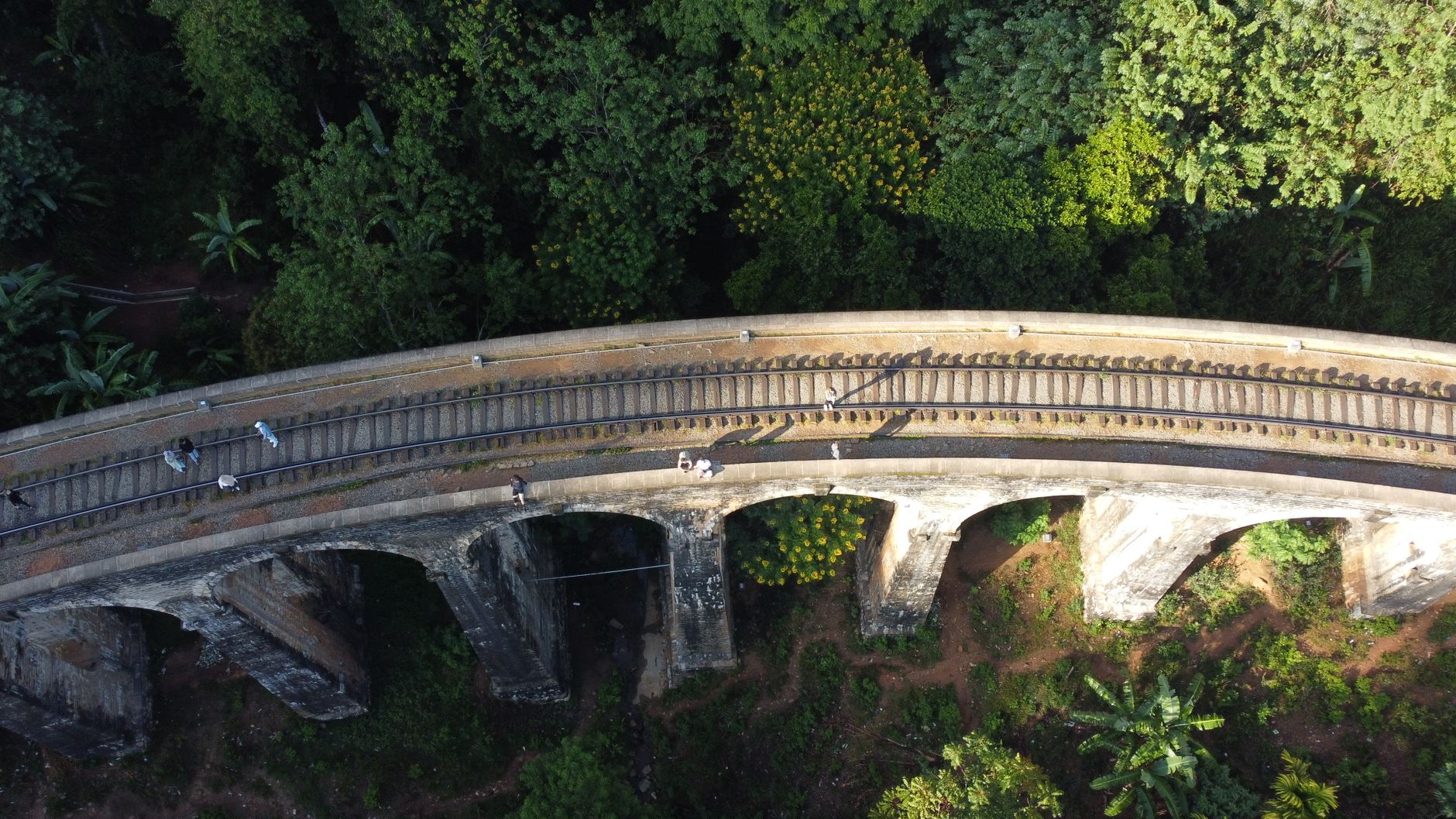
The line's most lasting structure, the Nine Arch Bridge at Demodara, was completed in 1921. Designed by Harold Cuthbert Marwood of the Ceylon Government Railway and built by local contractor P. K. Appuhami, it spans 91 metres and stands 24 metres high — constructed entirely from brick, rock, and cement, with no steel. Ella Station itself opened in 1918, cut from granite blocks, and remains the 75th stop on the Main Line. Older still is the Dhowa Rock Temple, believed to date to the 1st century and the reign of King Walagamba, its unfinished Buddha carved directly into the cliff face.
Who and what shaped it
People who shaped it
Landmark buildings
See Ella in motion
Plan your visit
On the map
When to go
Ella is mild year-round — daytime highs between 20 and 28°C, nights dropping to around 16°C — but rain can arrive at any hour, especially from October through December and again in April. January through March brings the clearest skies and the best conditions for walking; the Uva dry season from July to September is also reliable, with a characteristic wind that concentrates the flavour of the local tea.
Right now
Background & history adapted from Wikipedia (CC BY-SA) · specs from Wikidata (CC0) · weather from Open-Meteo · map data © OpenStreetMap contributors · photos from Wikimedia Commons / Unsplash with per-image credit. No third-party reviews or social posts reproduced.