
Dinant

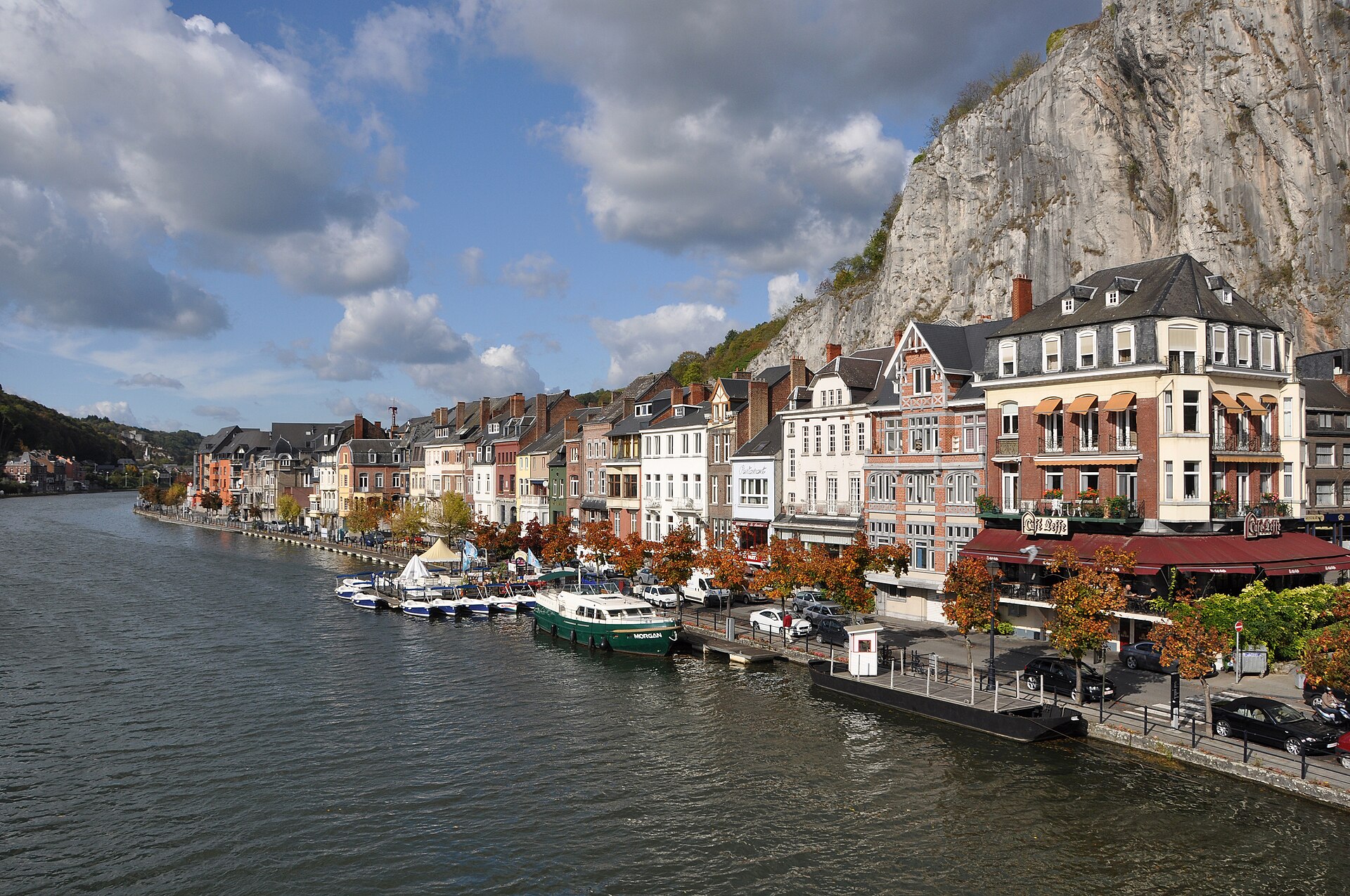
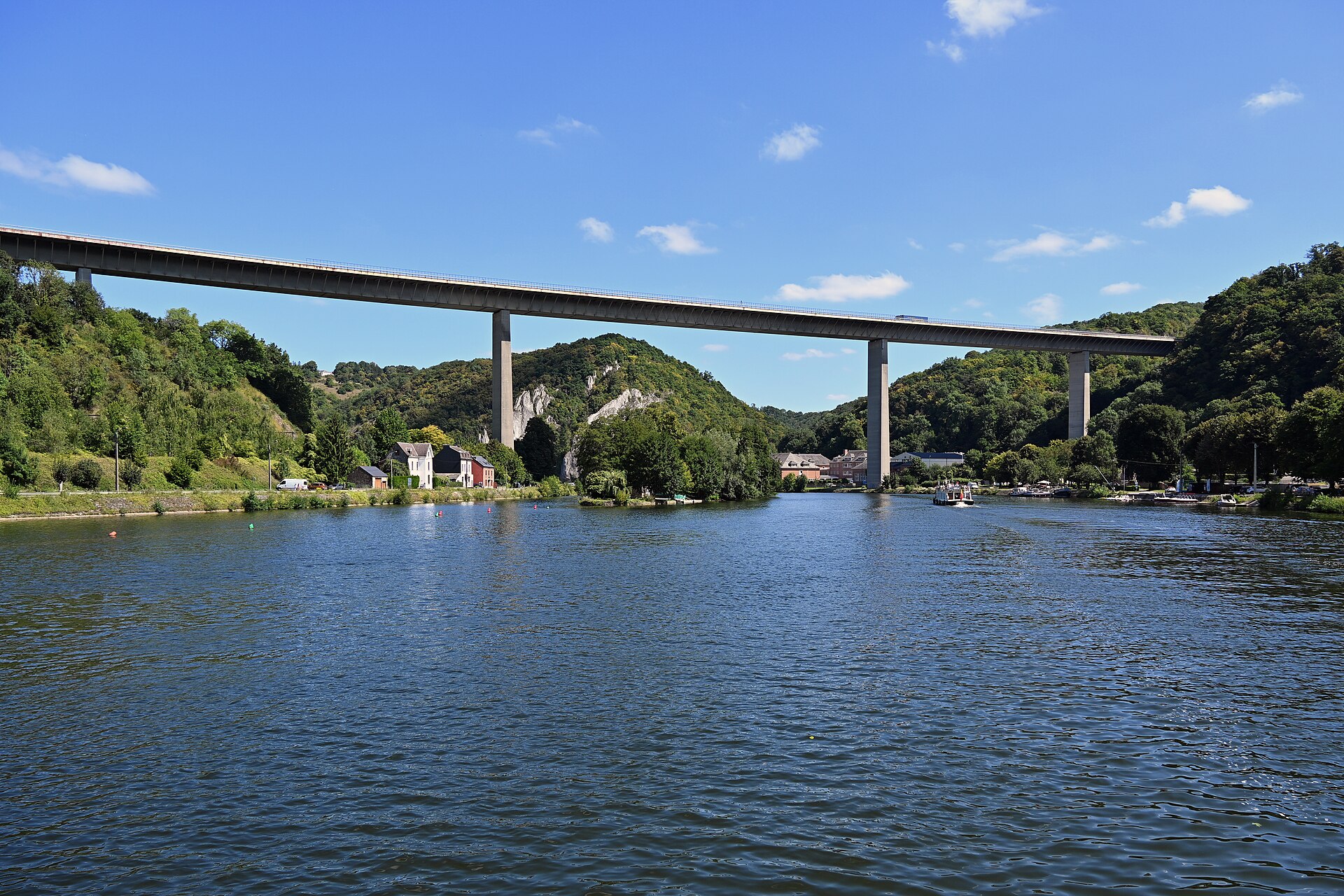
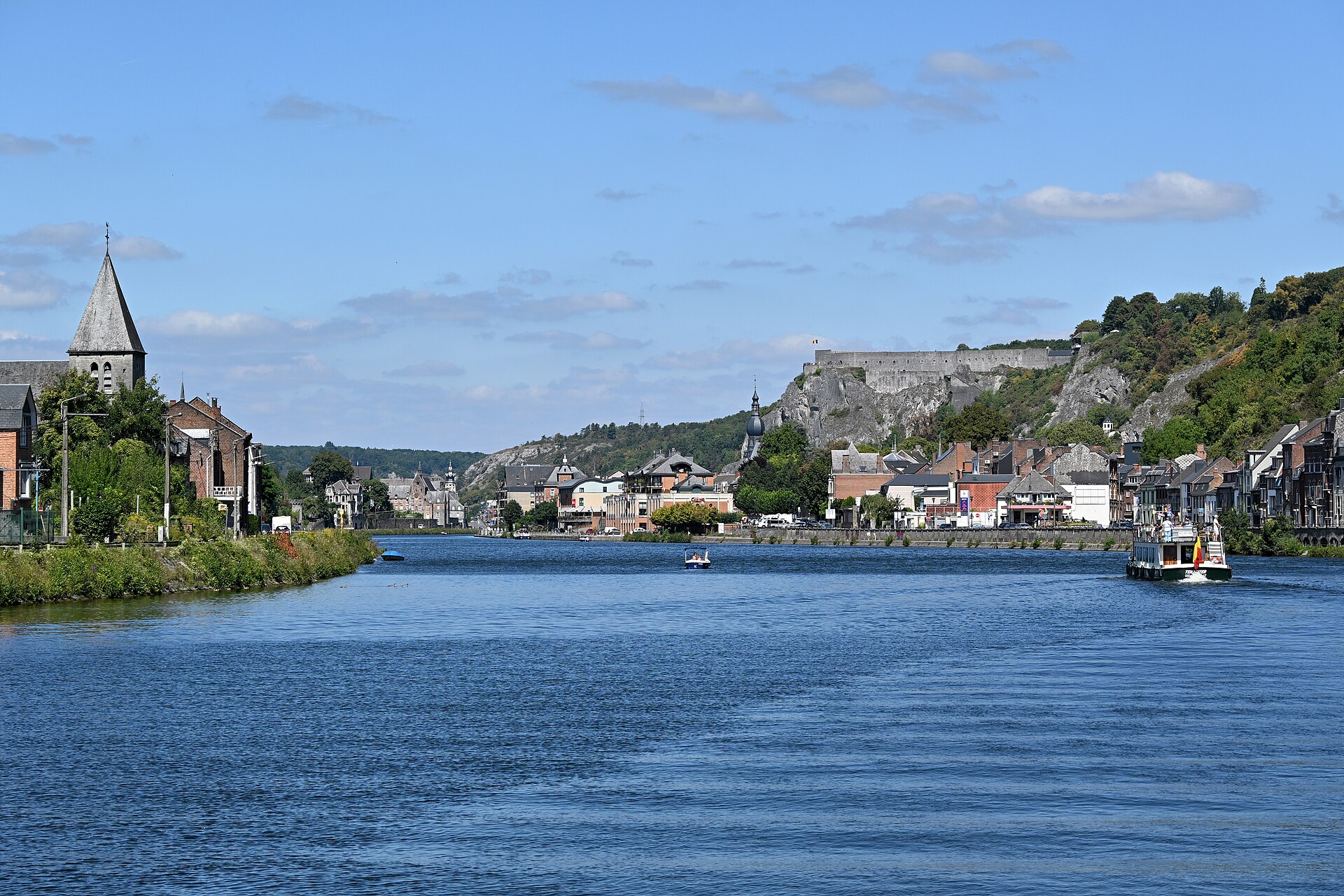
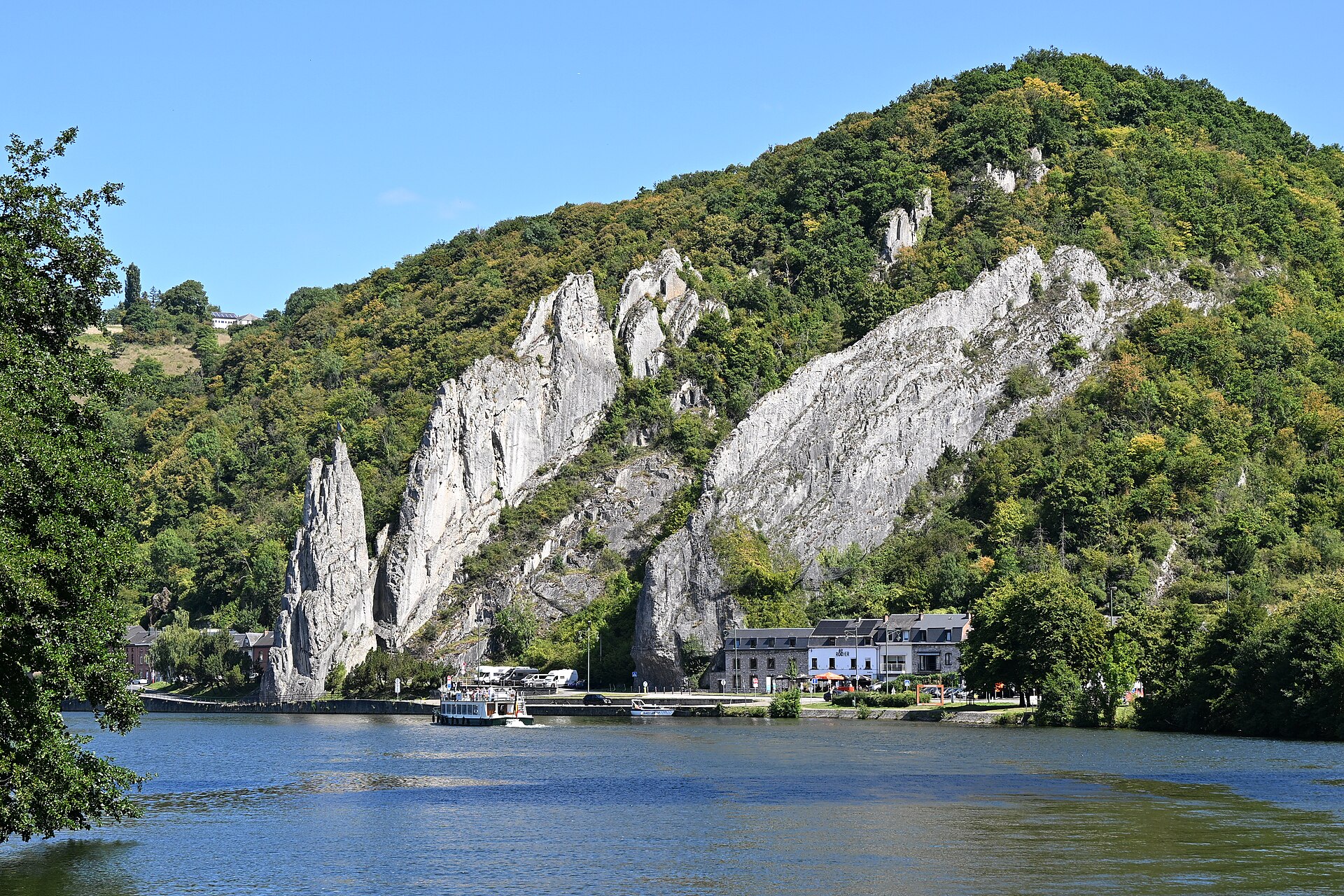
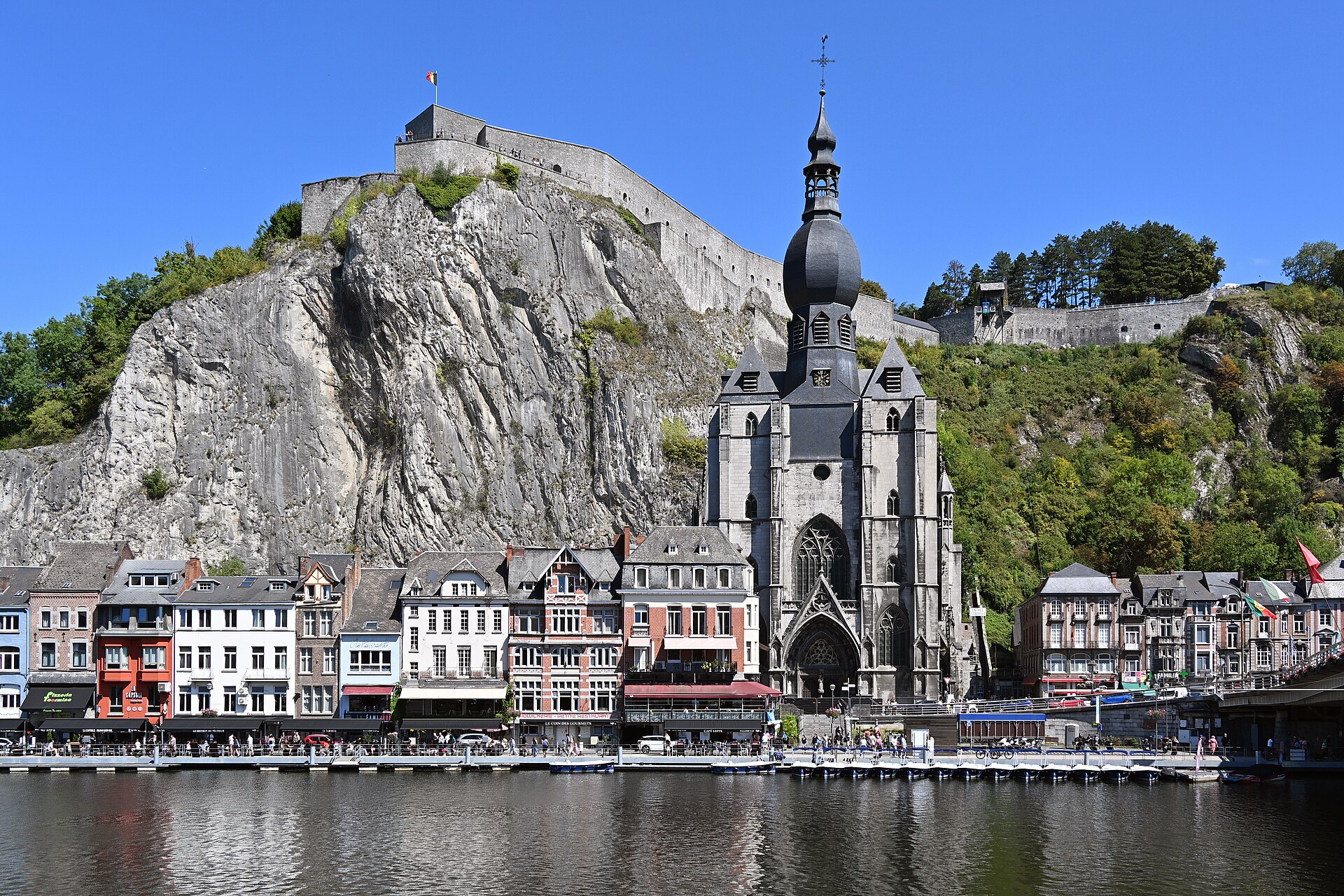
Dinant announces itself before you arrive: a Gothic church with a bulbous pear-shaped bell tower pressed against a limestone cliff, a citadel perched above it all, and the Meuse running through the middle of everything. The valley is narrow enough that the town has almost nowhere to go but up, which explains centuries of staircase-cutting and cable-car building.
This is where the saxophone was invented, where Rommel crossed the Meuse in 1940, and where monks have been brewing beer since 1240. It earns its name — the Celtic root means something close to Sacred Valley — without trying to.
How Dinant came to be
The valley was settled long before anyone wrote it down — Mesolithic remains found near Dinant in 1988 date to around 7000 BC. Recorded history begins in the 7th century, when a bishop moved his residence here and founded a church. By the medieval period, Dinant's workshops dominated European brass production, a trade that gave the continent the word 'dinanderie' for decorative metalwork.
The city paid a brutal price for its independence. In 1466, Philip the Good had 800 citizens thrown into the Meuse after an uprising. In August 1914, Saxon troops executed 674 inhabitants in a single day — the largest German massacre of that year on Belgian soil. Dinant rebuilt after each destruction; the present face of the town dates largely from the early 19th century.
Who and what shaped it
People who shaped it
Landmark buildings
See Dinant in motion
Plan your visit
On the map
When to go
The Meuse valley has a temperate continental climate: mild springs, warm summers, and cold, sometimes foggy winters. July and August bring the most visitors and the fullest opening hours at sites like the Abbey; spring and early autumn offer quieter streets and softer light on the cliffs.
Right now
Background & history adapted from Wikipedia (CC BY-SA) · specs from Wikidata (CC0) · weather from Open-Meteo · map data © OpenStreetMap contributors · photos from Wikimedia Commons / Unsplash with per-image credit. No third-party reviews or social posts reproduced.