
Clarke Quay
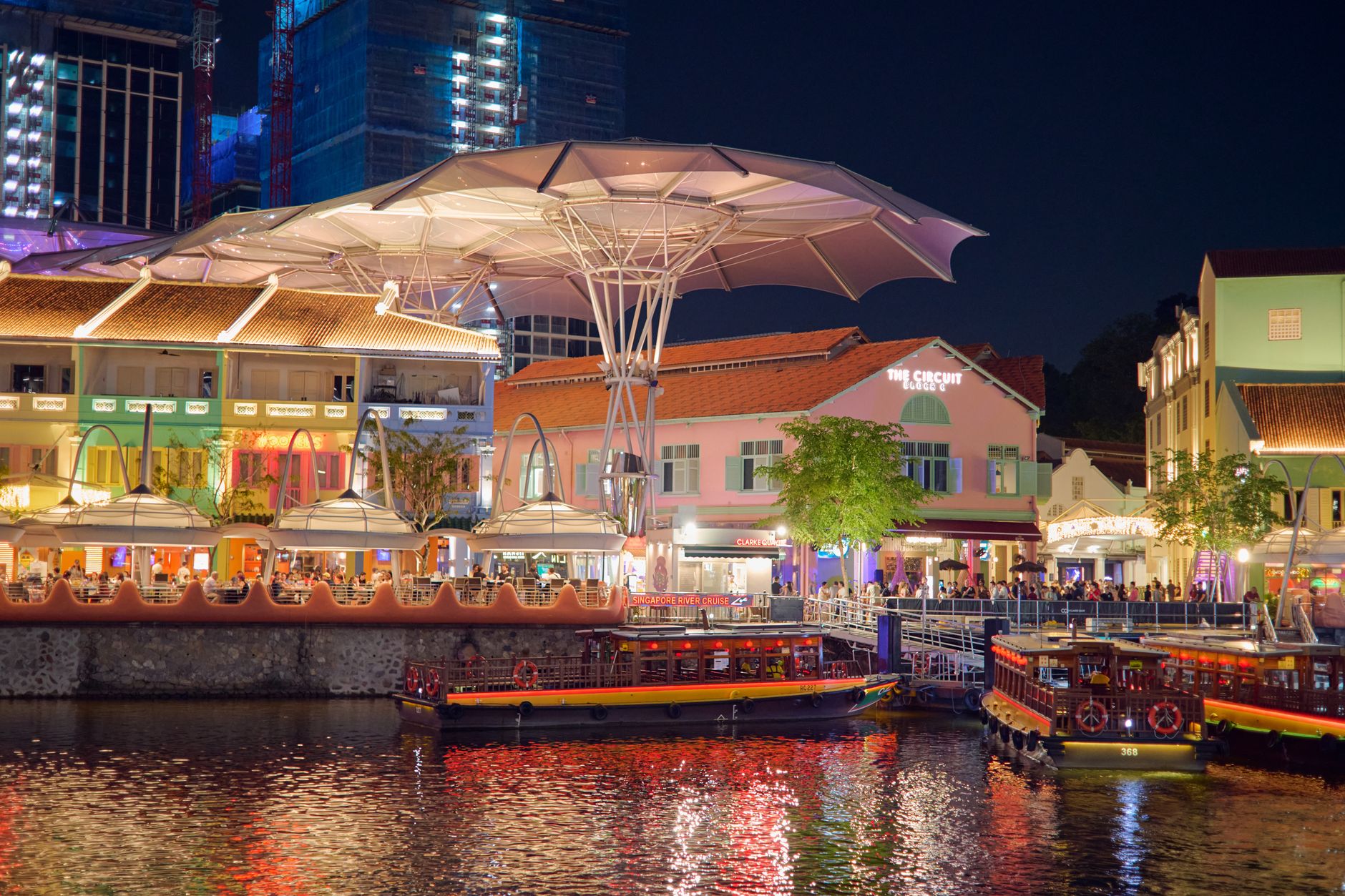
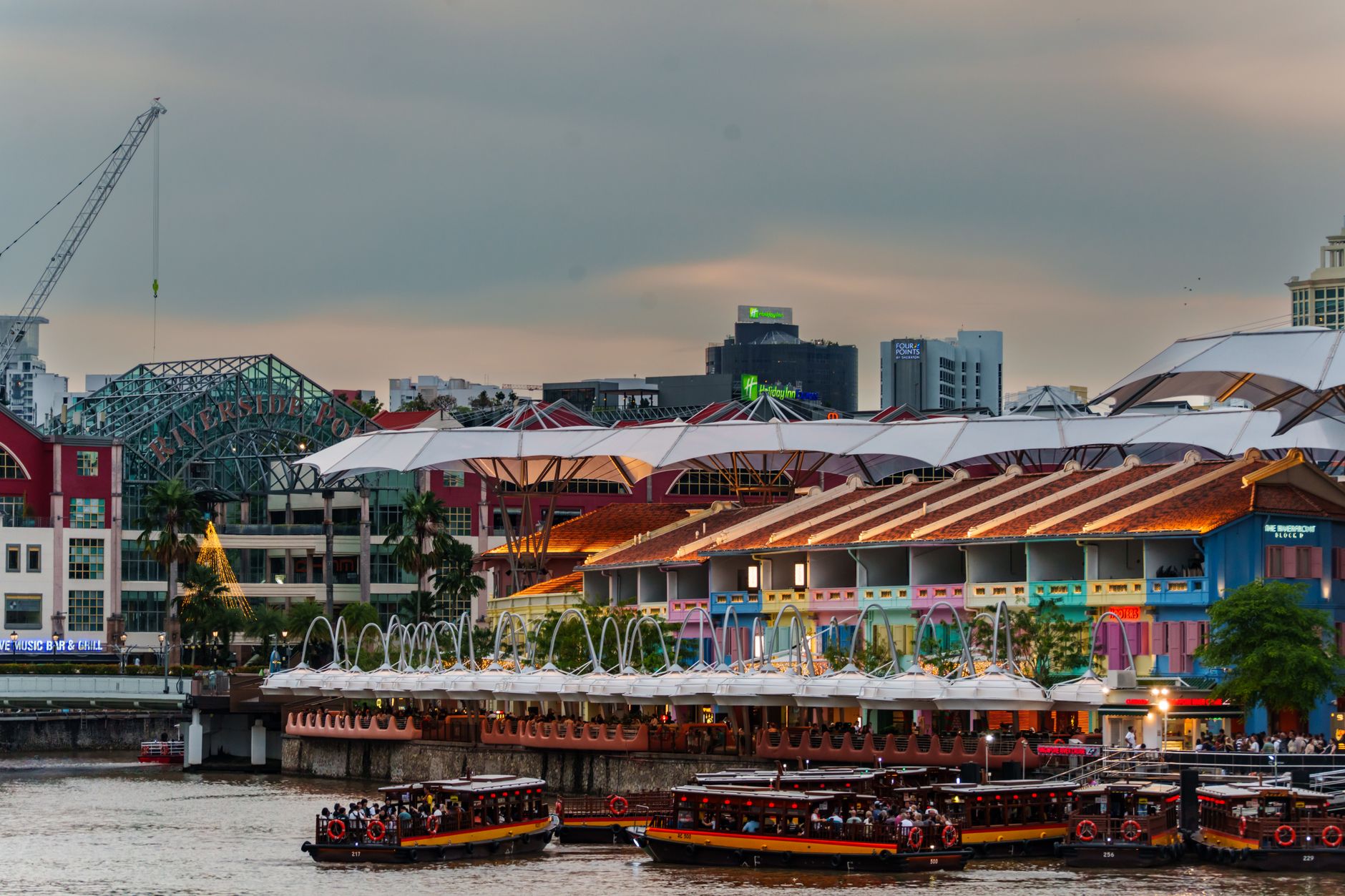
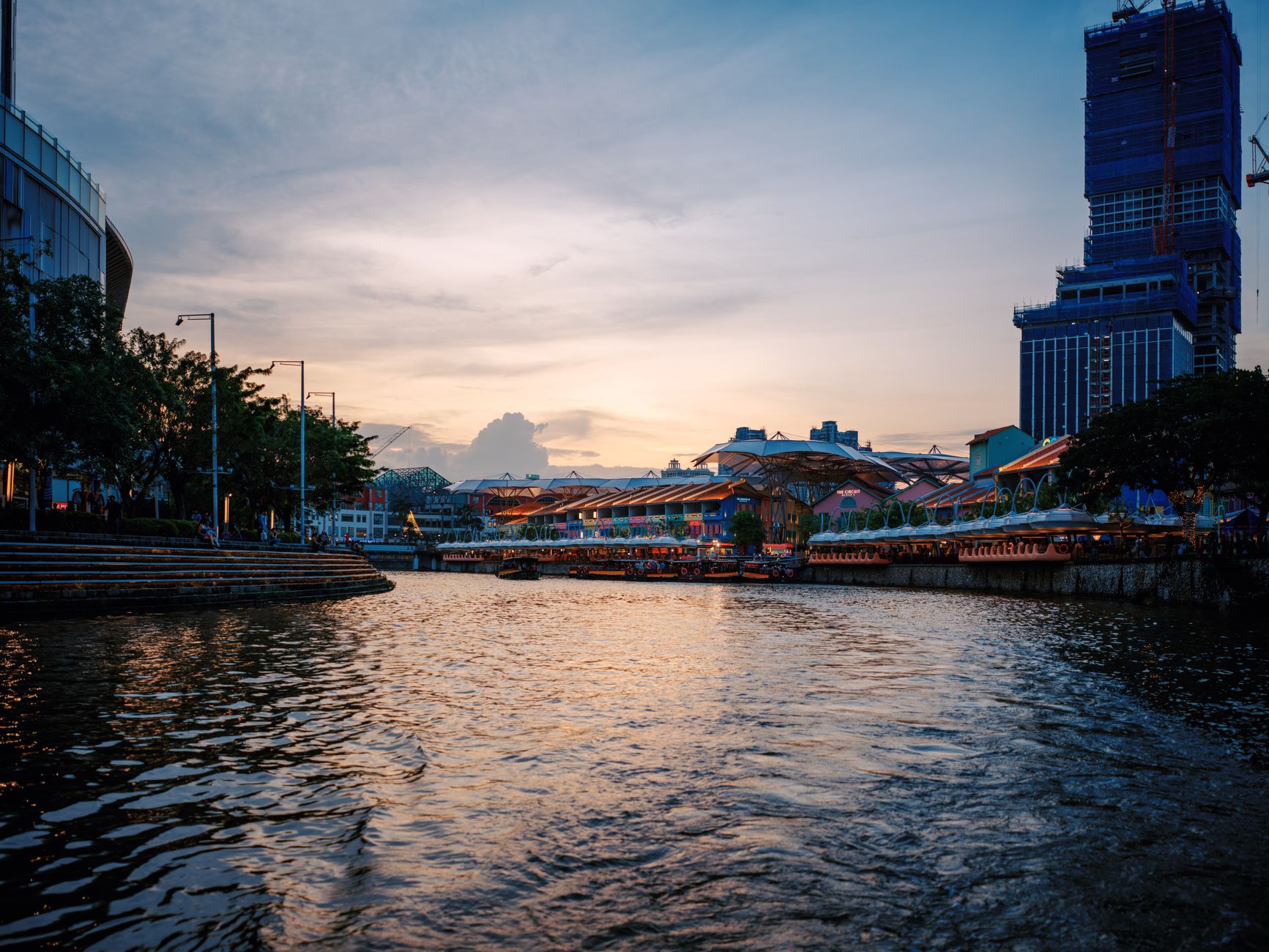
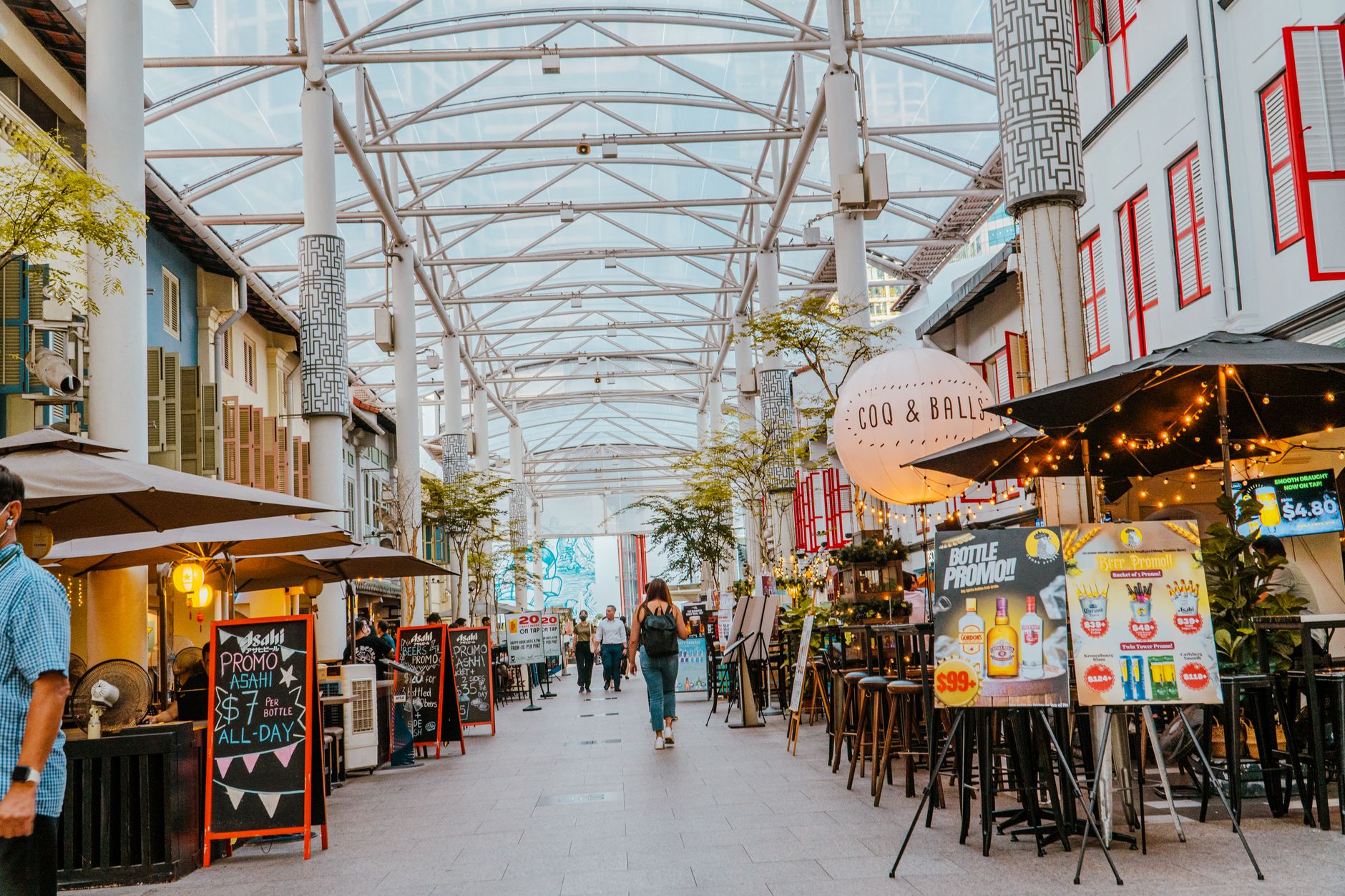
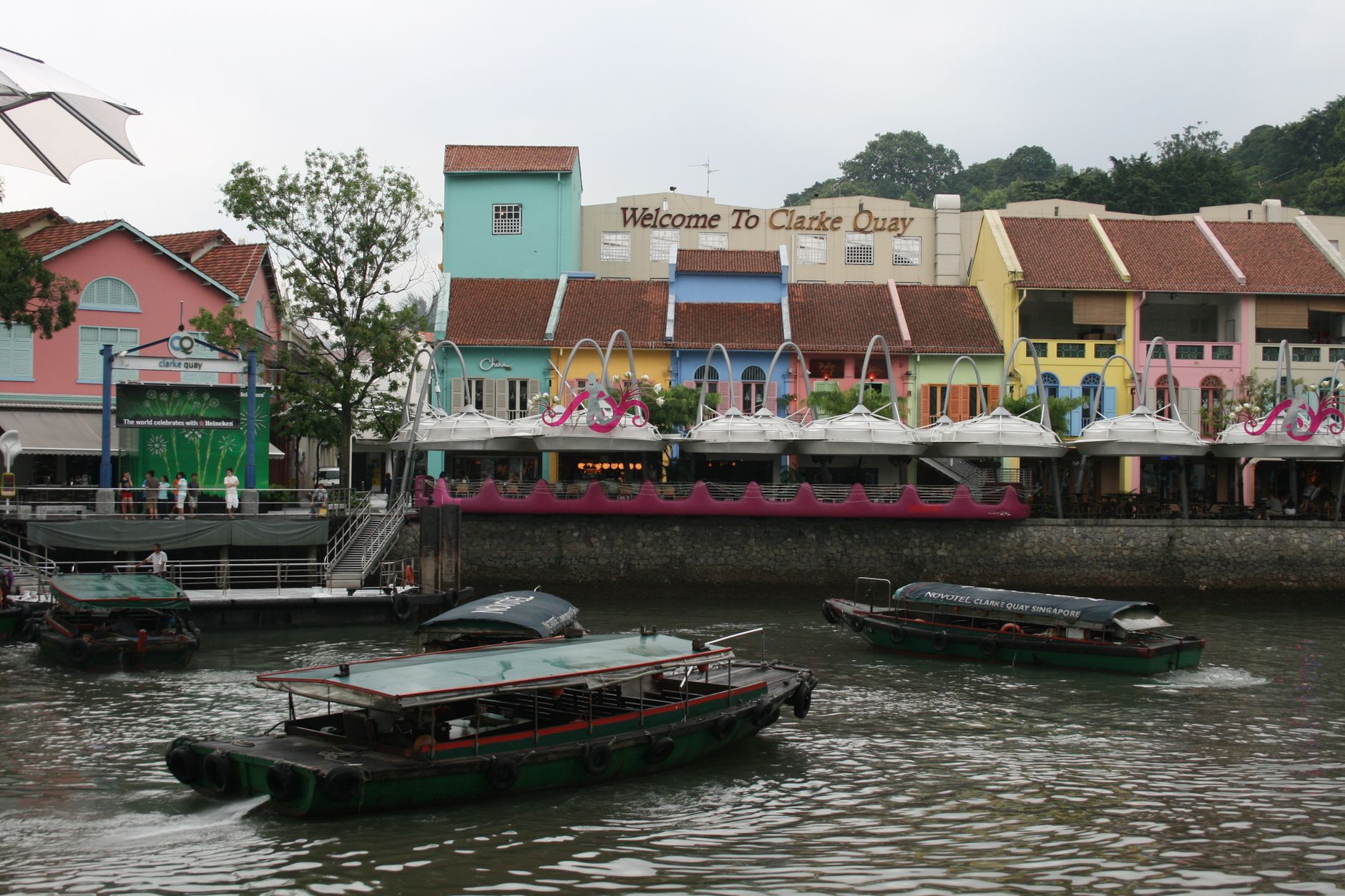
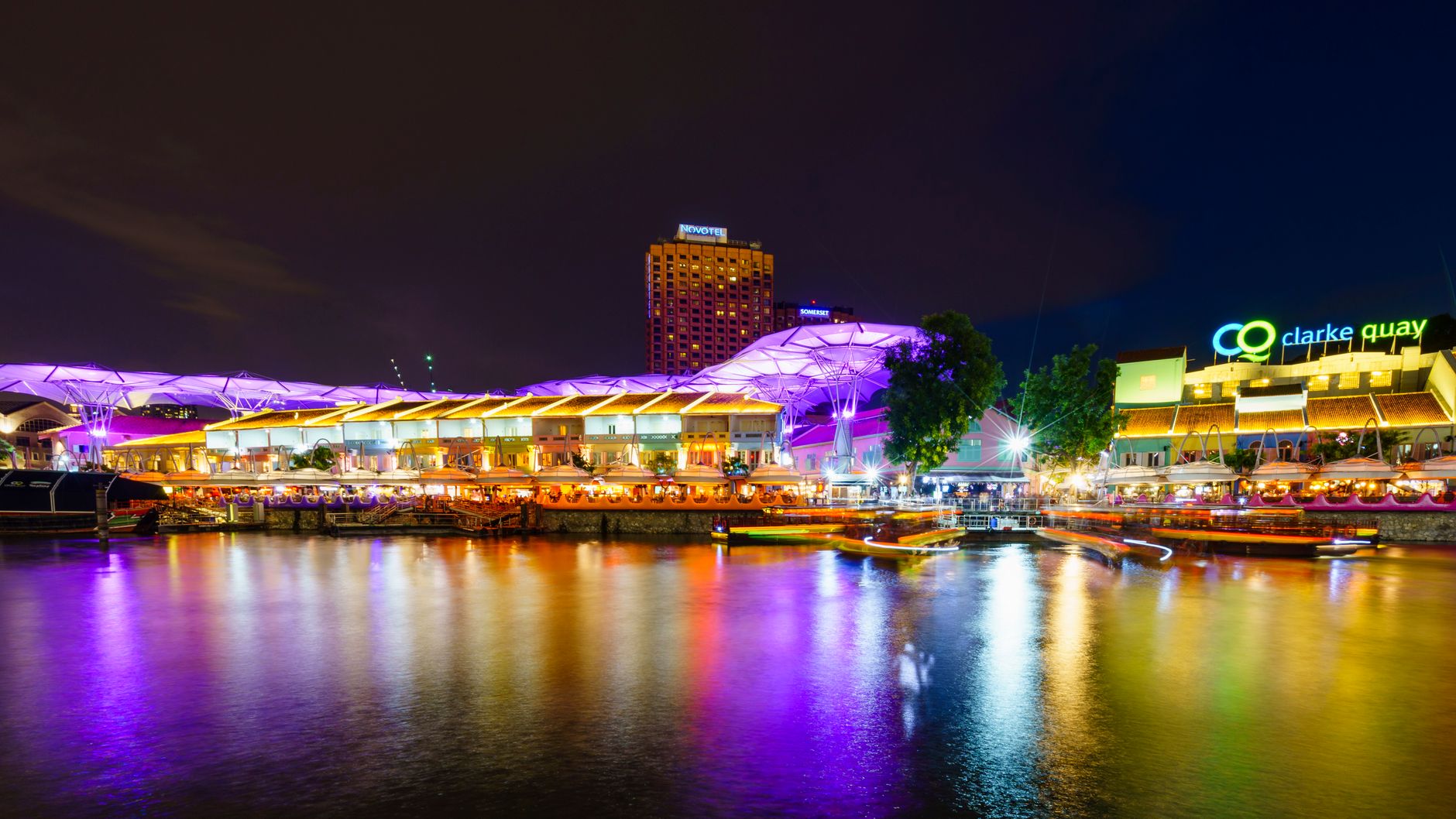
Clarke Quay is five blocks of restored colonial warehouses along a bend in the Singapore River, where the city comes out after dark to eat, drink and stay up later than it probably should. The river runs slow and brown past moored Chinese junks converted into floating bars, and a canopy system overhead — engineered to drop the ambient temperature by four degrees — gives the whole stretch a slightly theatrical glow once the sun goes down.
During the day it's quieter, worth a slow walk to take in the architecture and the oldest building on site, River House, one of only two surviving traditional Chinese mansions in Singapore. But the place earns its reputation after sunset, when the restaurants and clubs fill and river taxis cut through the water toward the bay.
💛 What travellers fall for
People who keep coming back tend to skip the main strip early and arrive closer to nine, when the heat has dropped and the canopy lights are doing their thing. The river taxi from the quay is worth taking at least once — it reframes the whole waterfront in about ten minutes and costs almost nothing.
How Clarke Quay came to be
The quay takes its name from Sir Andrew Clarke, Singapore's second Governor of the Straits Settlements, who served from 1873 to 1875 and was instrumental in drawing the Malay states of Perak, Selangor and Sungei Ujong into Singapore's commercial orbit. For decades, barge lighters carried goods upstream from Boat Quay to warehouses here, making Clarke Quay the back-end of the colony's trade machinery.
The Singapore River was cleaned up between 1977 and 1987, and in 1993 the restored warehouses reopened as Clarke Quay Festival Village, at the time the largest conservation project on the river. A decade later, CapitaLand brought in British firm Alsop Architects to redesign the facades and riverfront. The most recent chapter closed in April 2024, when the area reopened after a two-year rejuvenation as CQ @ Clarke Quay.
Who and what shaped it
People who shaped it
Landmark buildings
See Clarke Quay in motion
Plan your visit
On the map
When to go
Singapore sits close to the equator and the temperature at Clarke Quay rarely strays far from 27–29°C year-round, with humidity that makes evenings feel warmer than the numbers suggest. The northeast monsoon runs from November to March and brings the heaviest downpours; a brief afternoon storm can clear quickly, but if you're planning a riverfront evening in that window, keep an eye on the sky.
Right now
Background & history adapted from Wikipedia (CC BY-SA) · specs from Wikidata (CC0) · weather from Open-Meteo · map data © OpenStreetMap contributors · photos from Wikimedia Commons / Unsplash with per-image credit. No third-party reviews or social posts reproduced.