
Chinatown
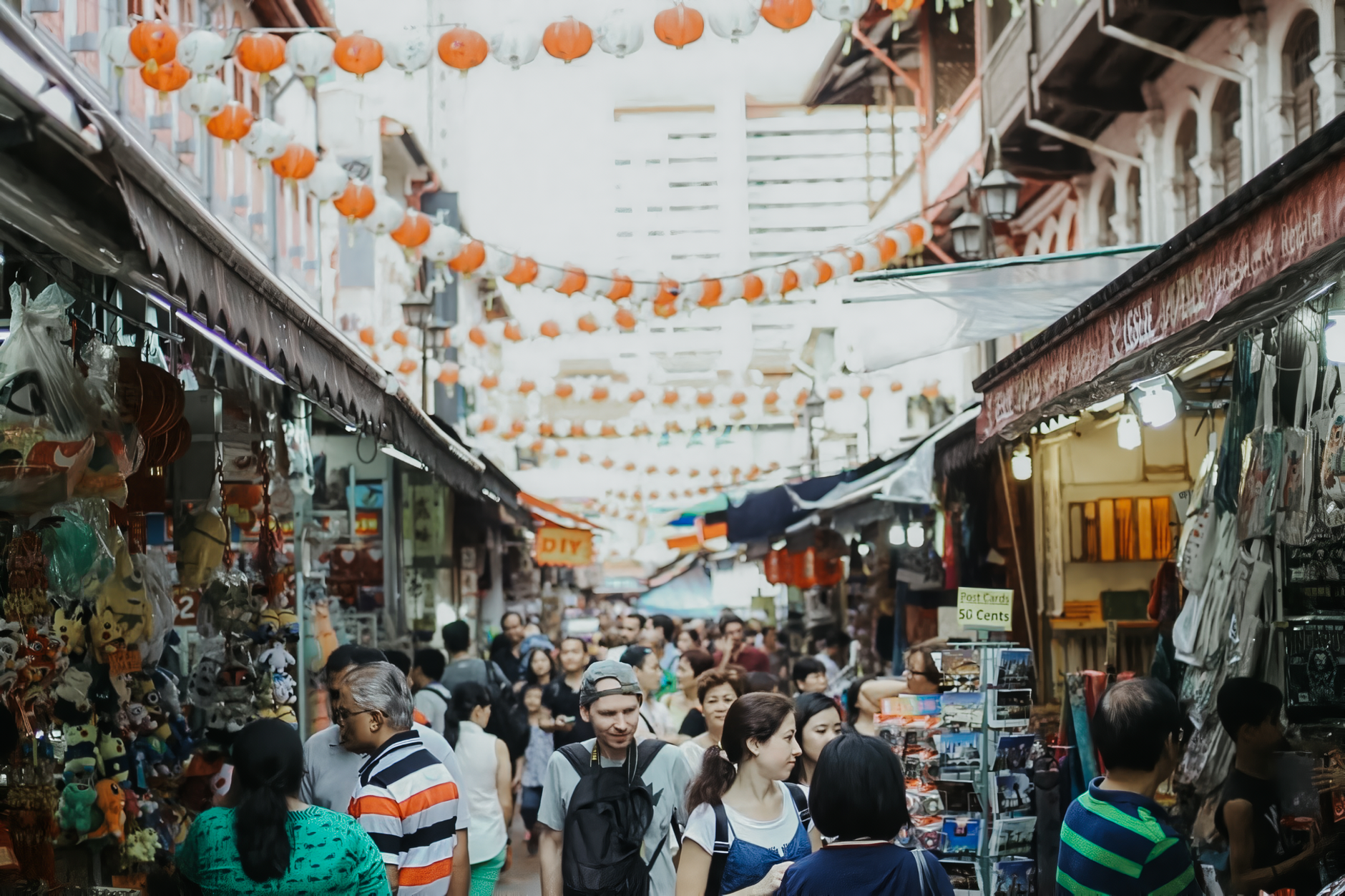
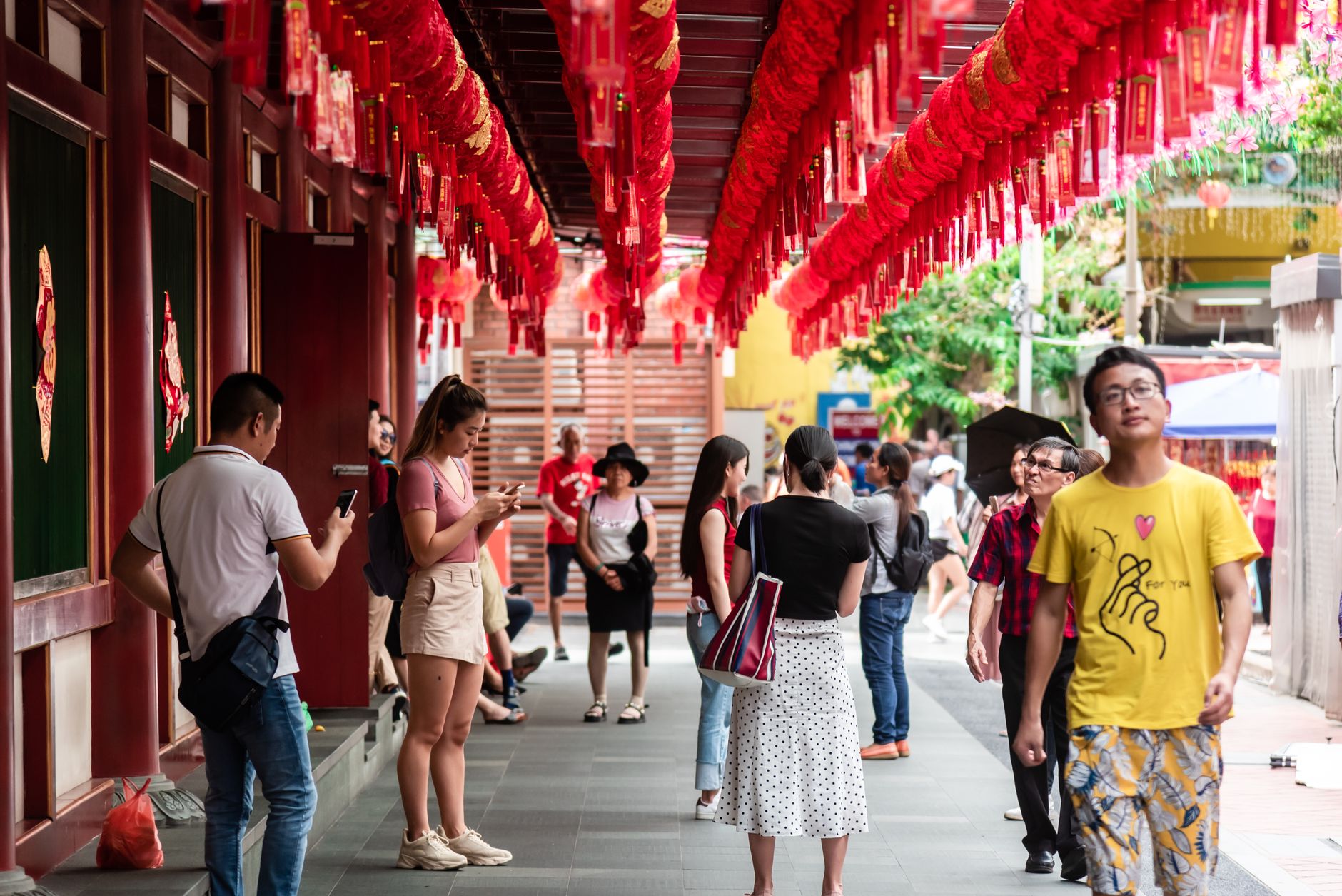
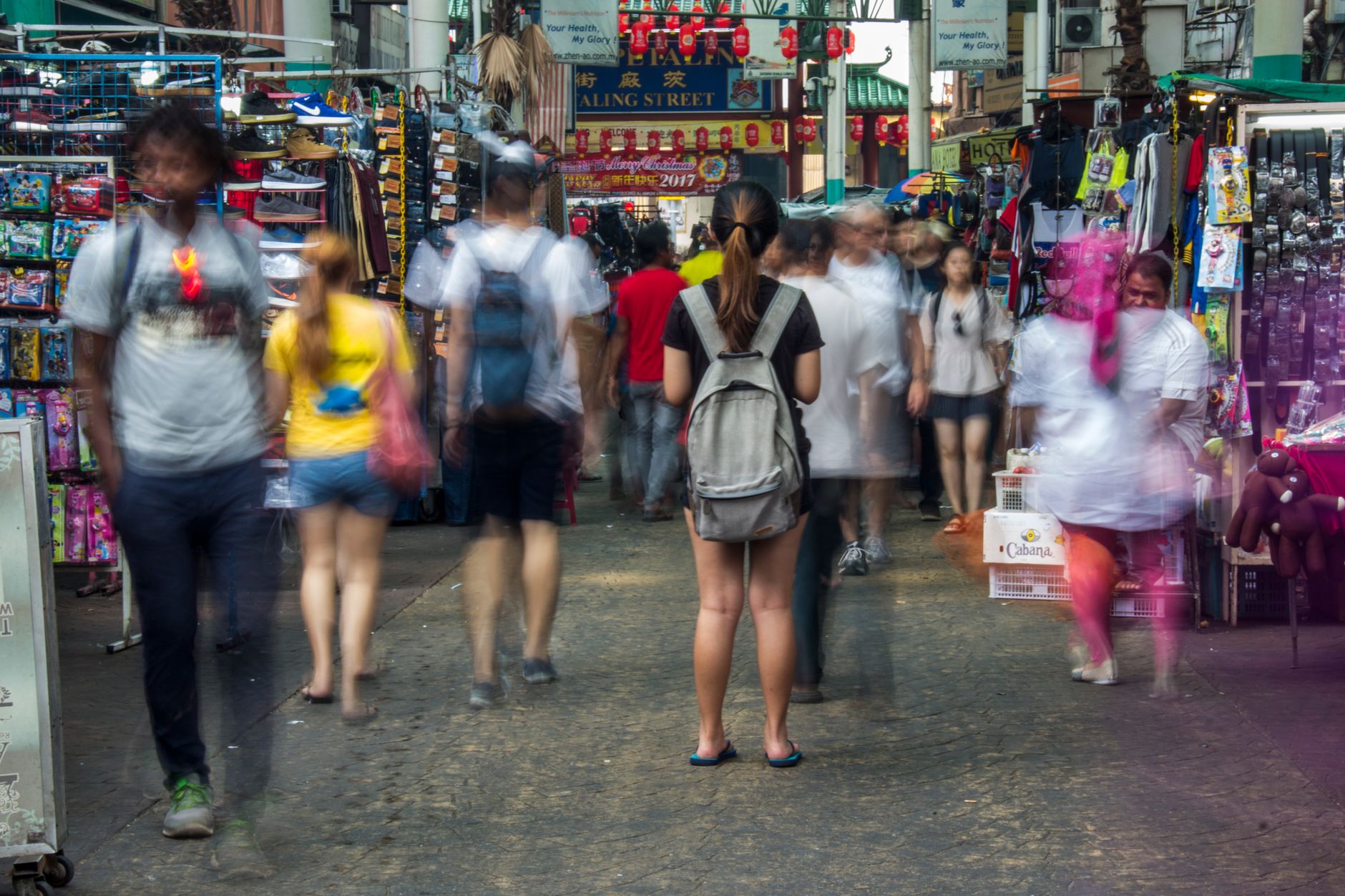
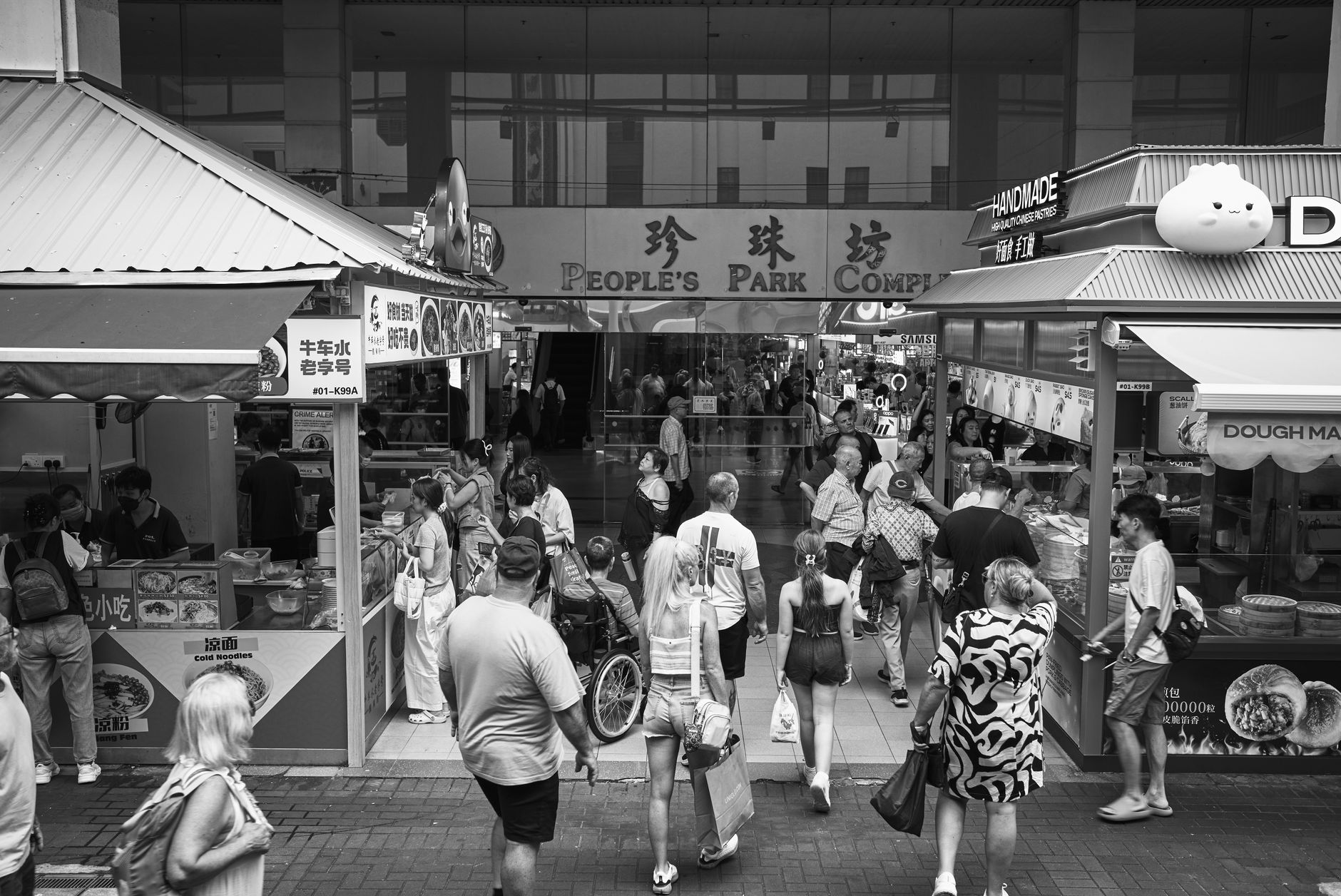
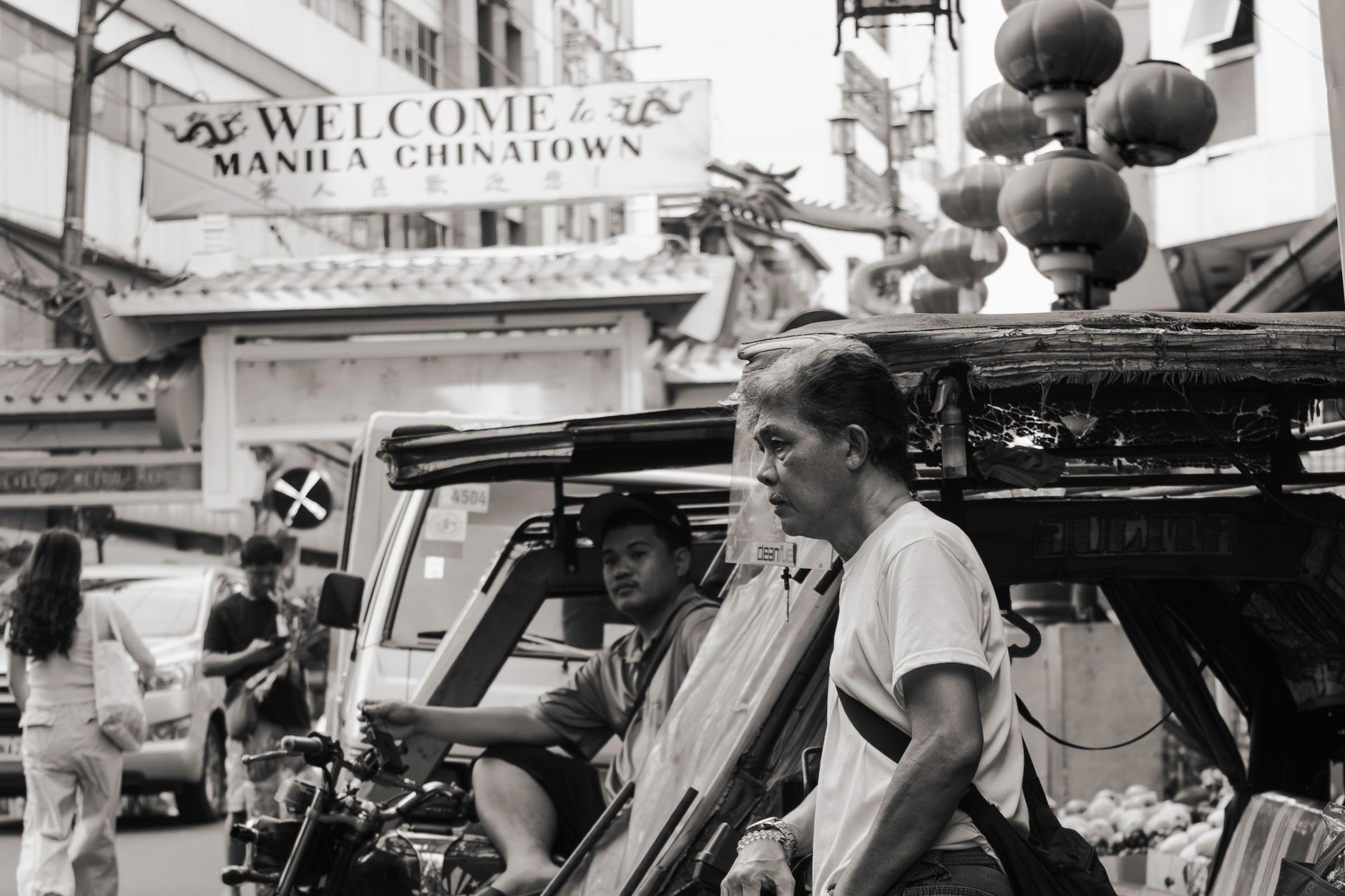
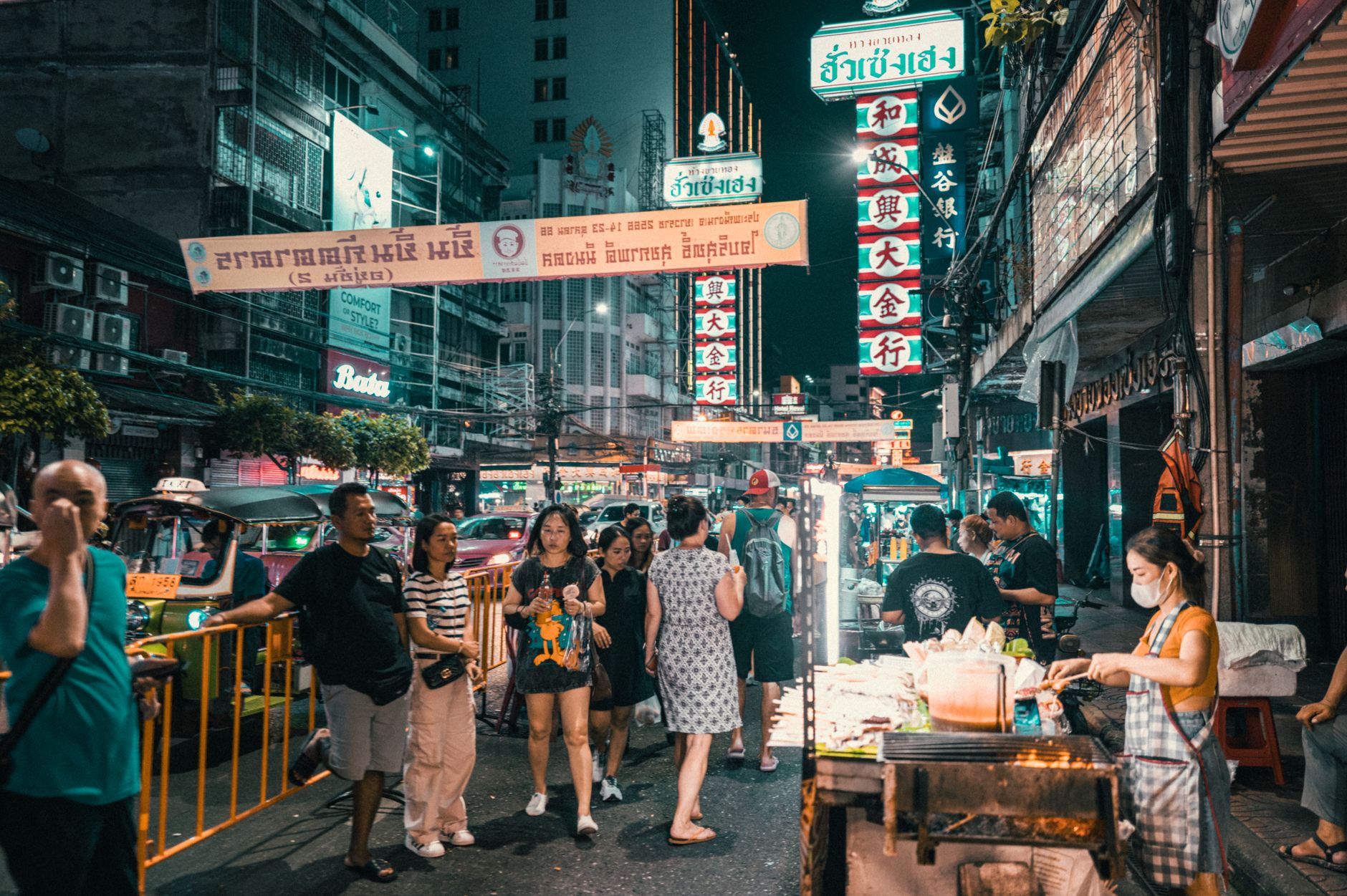
Stand at the corner of Pagoda Street on any weekday morning and you'll see three things at once: incense smoke drifting from Sri Mariamman Temple, a queue forming at a hawker stall before the lunch rush, and a row of colonial shophouses whose five-foot ways have sheltered traders, herbalists and fortune-tellers since the 1840s. This is a neighbourhood where the layers haven't been smoothed away.
Chinatown covers four sub-districts — Kreta Ayer, Bukit Pasoh, Telok Ayer and Tanjong Pagar — each with its own character. The temples are the anchors: a Hokkien sea-goddess shrine built without nails, a Hindu temple founded in 1827, a mosque raised by Tamil Muslims from the Coromandel Coast. Between them, the hawker centres do the daily work of feeding a city.
💛 What travellers fall for
Return visitors tend to migrate away from Pagoda Street toward Telok Ayer and Bukit Pasoh, where the foot traffic thins. The rooftop garden at Buddha Tooth Relic Temple is worth the climb for the stillness alone. For breakfast, Maxwell Food Centre opens early and the queues haven't formed yet by 8 am.
How Chinatown came to be
In 1822, Sir Stamford Raffles drew up a Town Plan that assigned the land west of the Singapore River to Chinese settlers. Development followed in the 1840s along streets that still carry their original names — Pagoda Street, Smith Street, Sago Lane — and by 1846 the quarter had grown enough to appear clearly on John Turnbull Thomson's map. Over the second half of the 19th century, roughly 2.5 million people left South China for work across Southeast Asia; many came through here first.
The neighbourhood absorbed wave after wave of dialect communities, each leaving a temple or association building behind. By the late 1980s, four sub-districts had been granted conservation status, protecting the shophouse rows that record a century of architectural change from the 1840s to the 1960s.
Who and what shaped it
People who shaped it
Landmark buildings
See Chinatown in motion
Plan your visit
On the map
When to go
Singapore is warm and humid year-round, with temperatures between 24°C and 33°C, climbing toward 36°C in May through July. November to February brings the most rain — December is the wettest month — though February itself sees lower rainfall and is a popular time to visit. Whenever you come, plan outdoor walking for the morning; afternoons bring reliable downpours.
Right now
Background & history adapted from Wikipedia (CC BY-SA) · specs from Wikidata (CC0) · weather from Open-Meteo · map data © OpenStreetMap contributors · photos from Wikimedia Commons / Unsplash with per-image credit. No third-party reviews or social posts reproduced.