
Český Krumlov
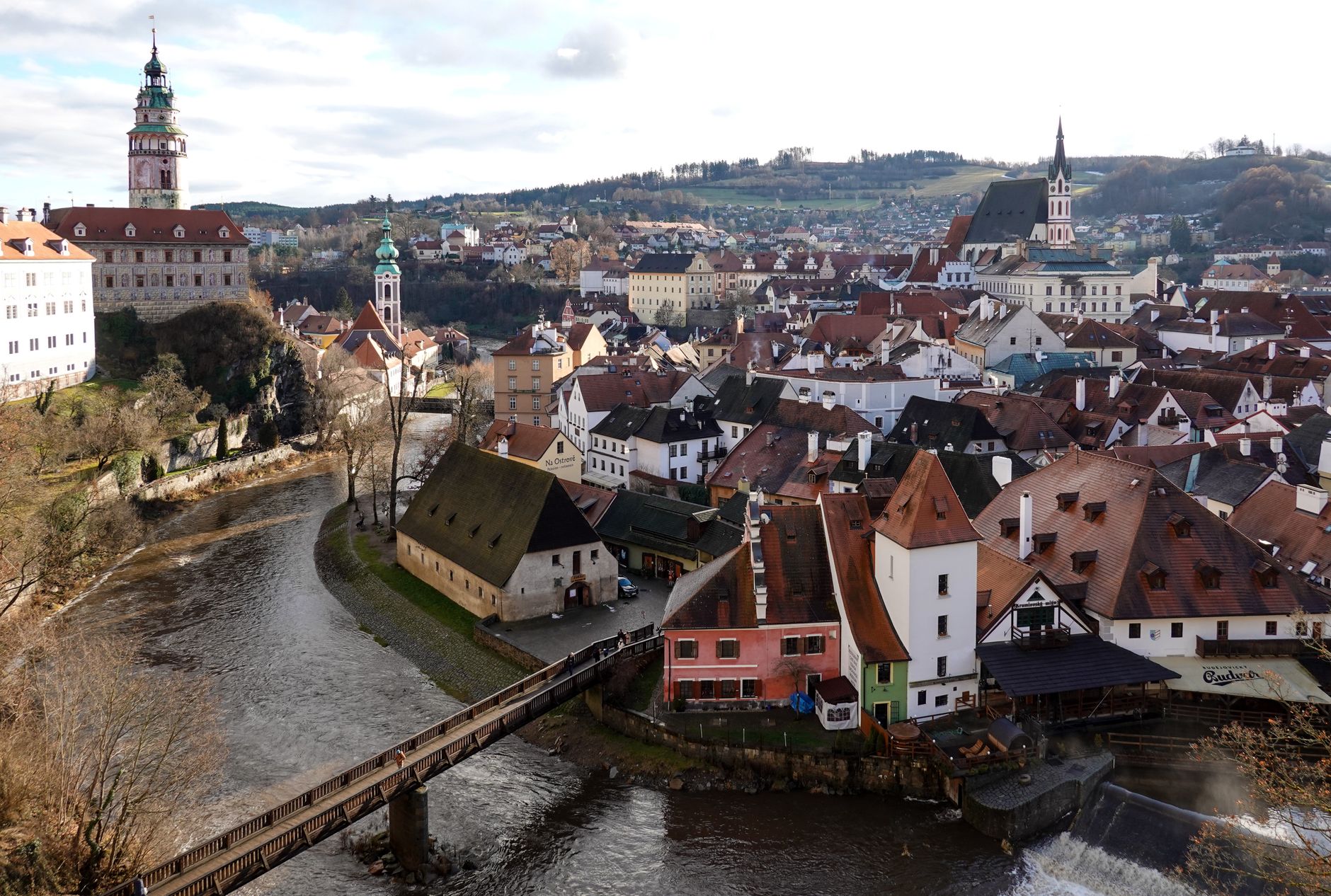
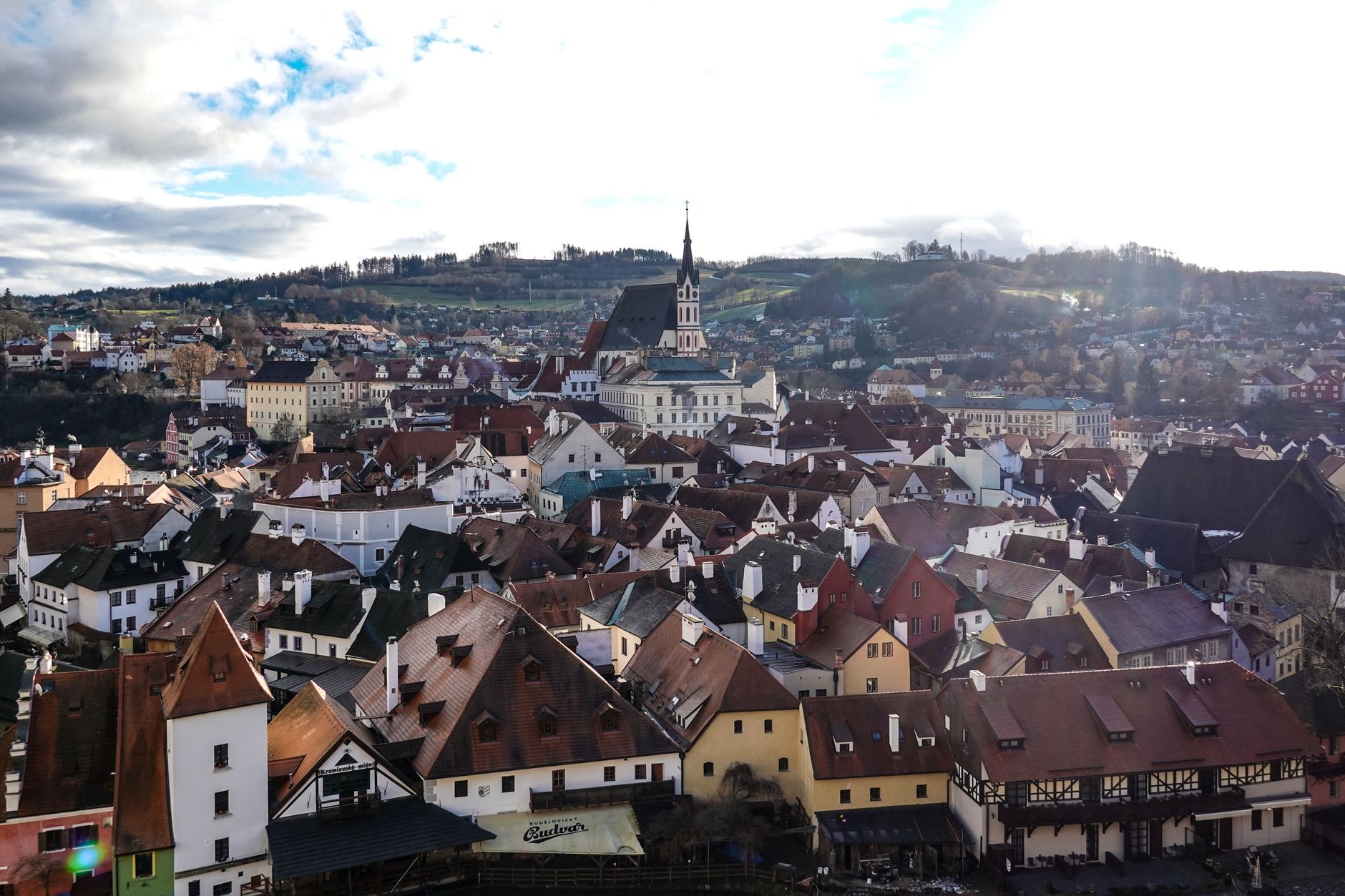
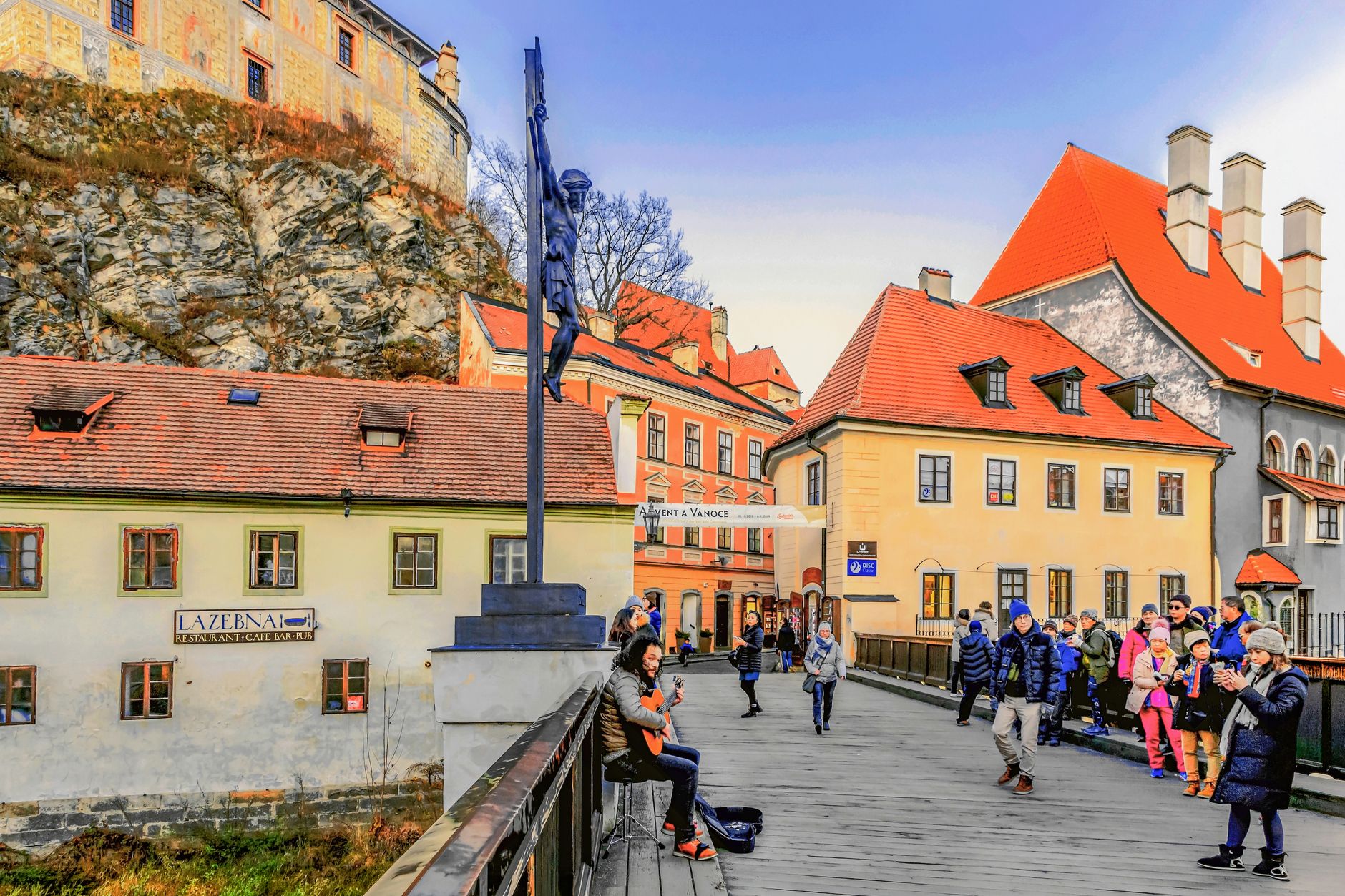
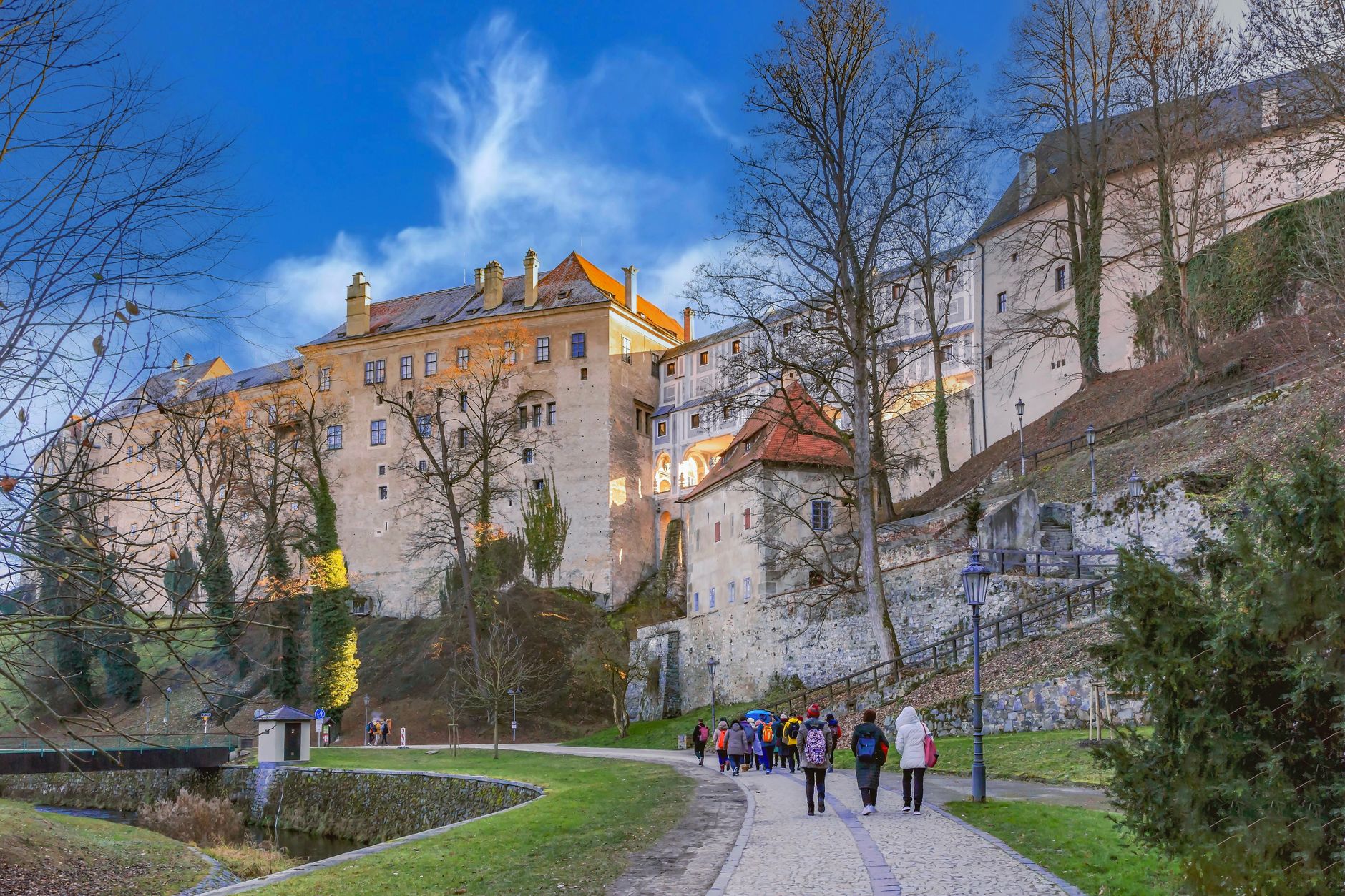
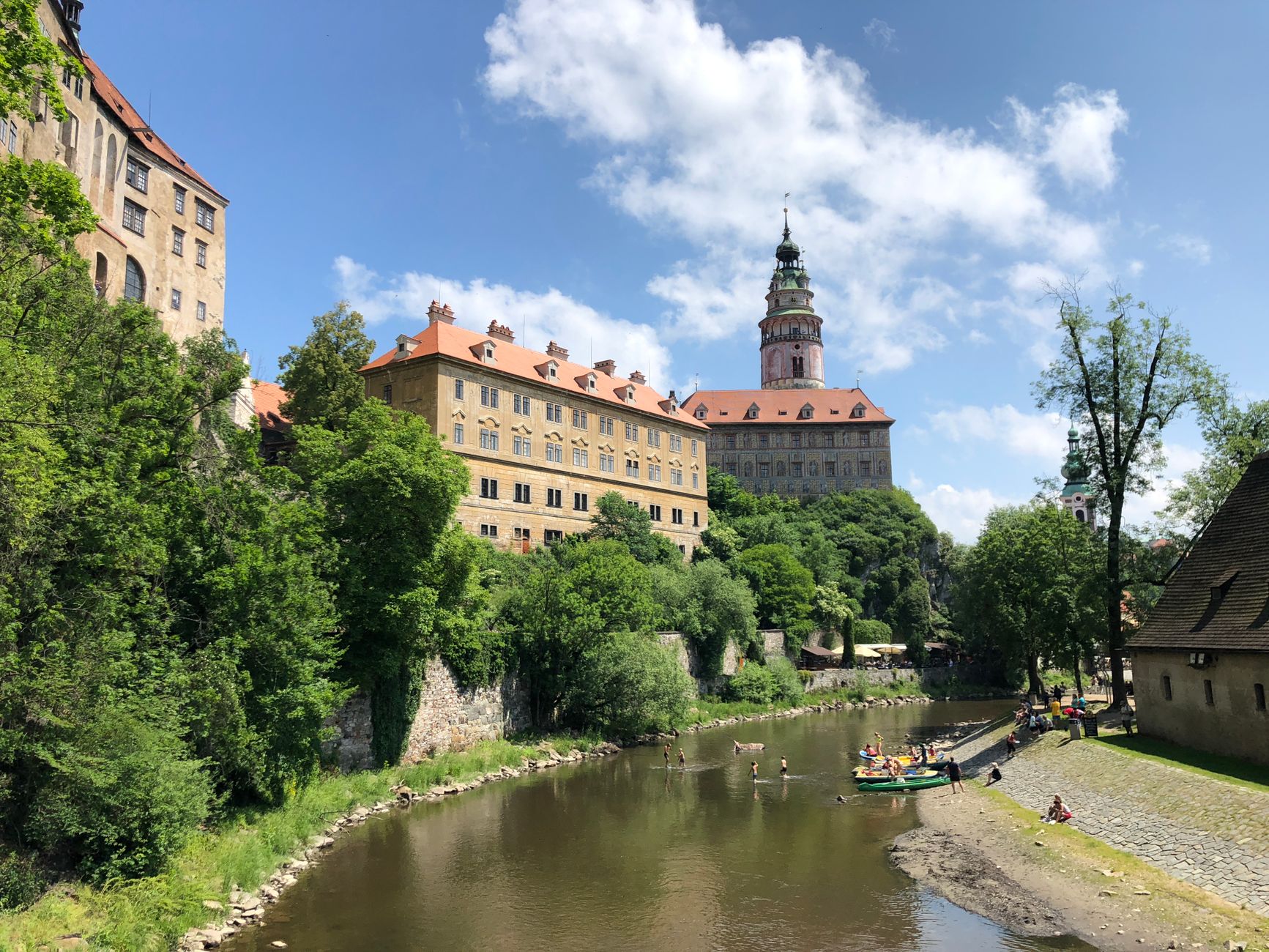
The castle appears before you like something from a dream you can't quite place — a tower striped in trompe-l'oeil stonework rising above a river bend, connected by a five-story bridge to a Baroque theatre that still has its original stage machinery intact. Český Krumlov is compact enough to walk end-to-end in an afternoon, yet it contains one of the most complete medieval-to-Baroque ensembles in Central Europe, earned its UNESCO designation in 1992, and remains genuinely lived-in rather than merely preserved.
The Vltava loops almost all the way around the old town, which keeps the scale human and the orientation forgiving. The castle complex alone runs to 40 structures across five courtyards, spanning Gothic, Renaissance, and Baroque work accumulated over four centuries.
How Český Krumlov came to be
The story starts before 1250, when a branch of the Vítkovci family built the first castle above the river bend. The town grew in two distinct layers: Latrán formed organically beneath the castle walls, while the Old Town was laid out as a planned settlement alongside it. When the Vítkovci line ended in 1302, the Rosenberg family took over and made Krumlov their primary seat — under Oldřich II in the 15th century the estate reached its greatest extent, and William of Rosenberg formally unified the two town halves in 1555 before rebuilding the castle in Renaissance style.
The Eggenbergs arrived after 1620 and added the Baroque layer that defines much of what you see today, including the theatre completed in 1767. The Schwarzenbergs held the castle from 1719 until 1947, by which point the ensemble had accumulated enough intact history to become one of the Czech Republic's first UNESCO World Heritage Sites.
Who and what shaped it
People who shaped it
Landmark buildings
See Český Krumlov in motion
Plan your visit
On the map
When to go
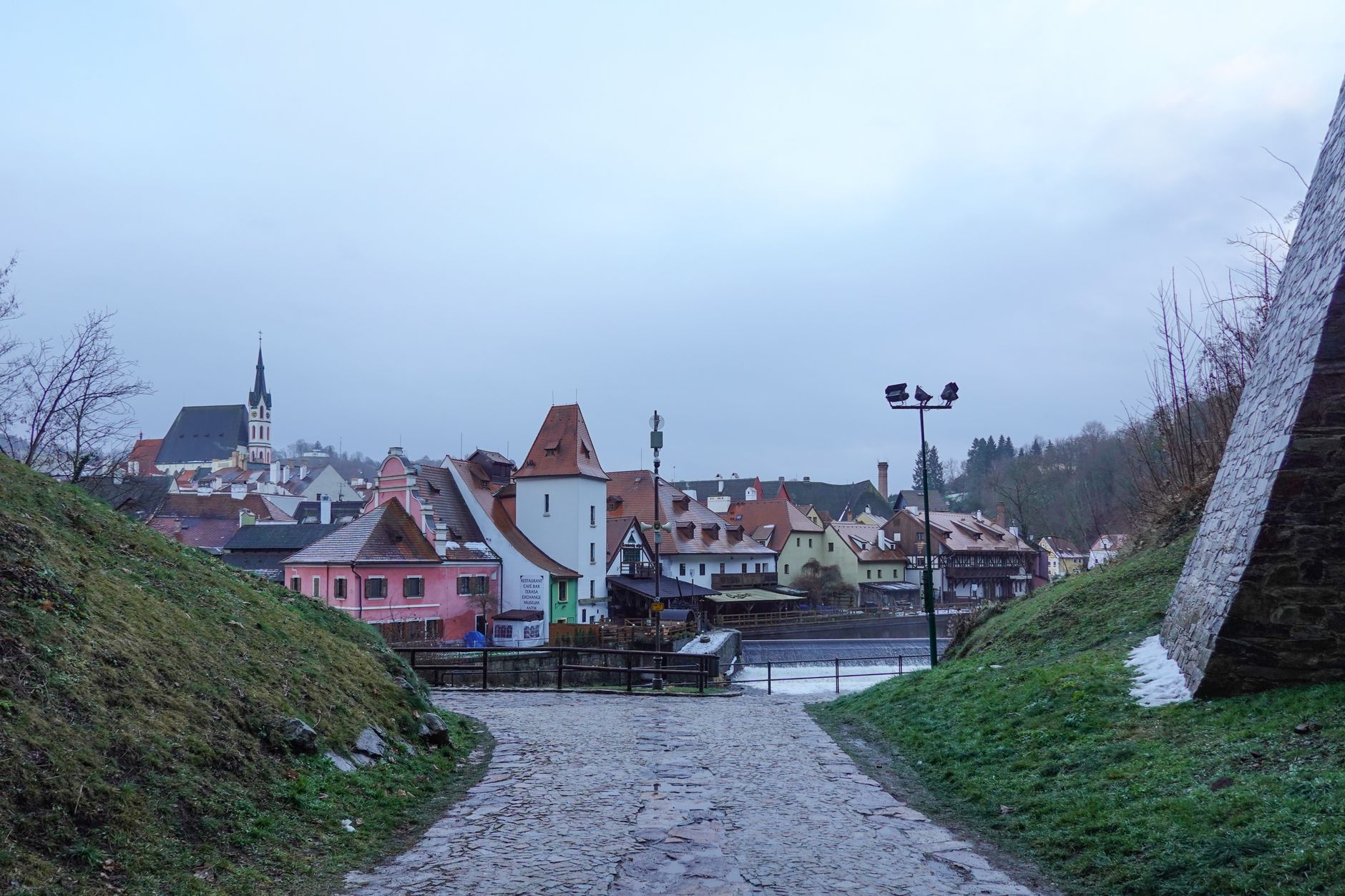
Summers are warm and draw the heaviest crowds, particularly July and August; spring and early autumn offer cooler temperatures and noticeably thinner crowds, with September often the most comfortable month for walking the town. Winters are cold and the castle interiors shut, though the snow-covered roofline has its own austere appeal.
Right now
Background & history adapted from Wikipedia (CC BY-SA) · specs from Wikidata (CC0) · weather from Open-Meteo · map data © OpenStreetMap contributors · photos from Wikimedia Commons / Unsplash with per-image credit. No third-party reviews or social posts reproduced.