
Region

Cairo

Cairo
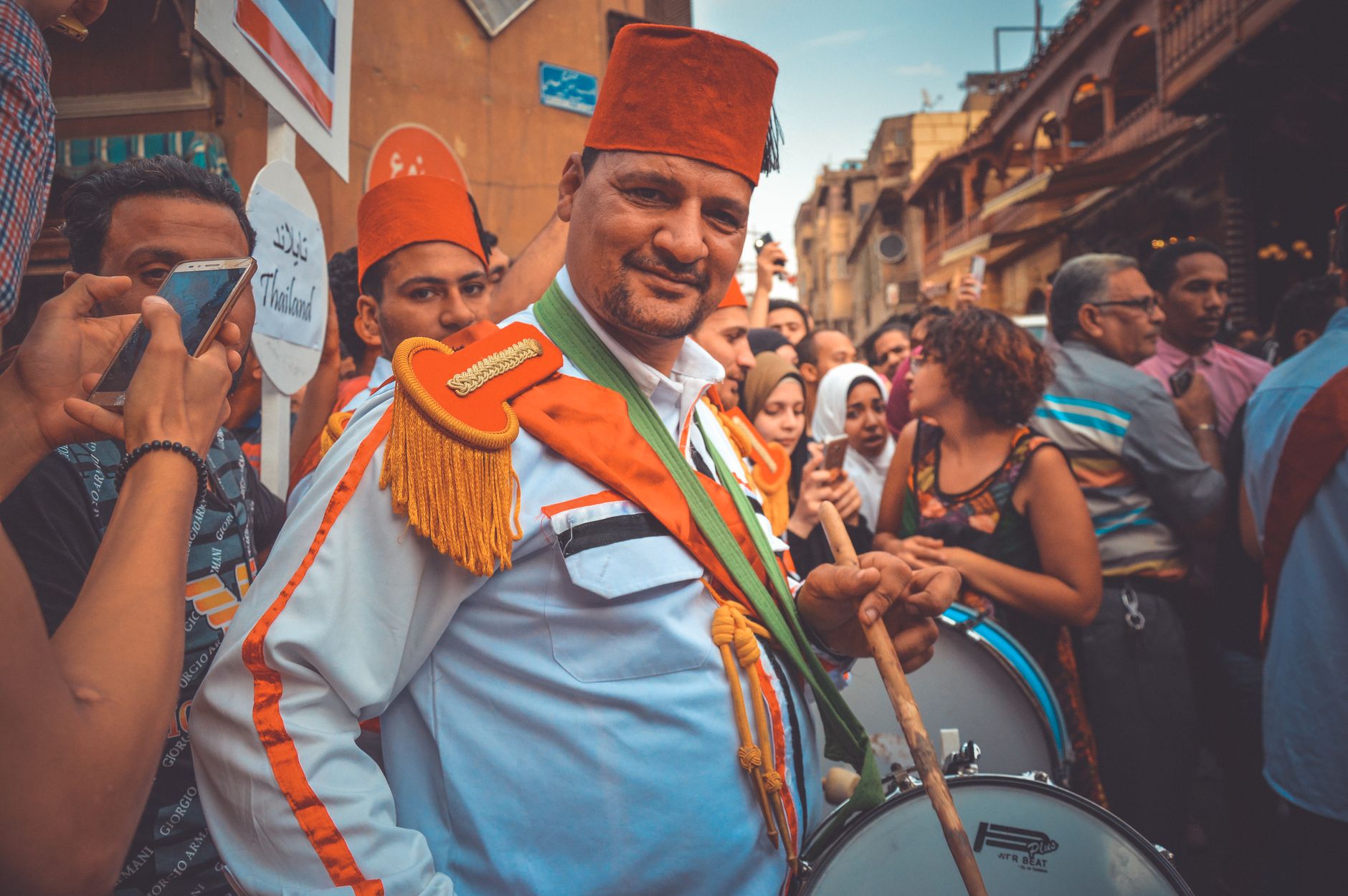
Photo by Diego F. Parra on Pexels
Cairo
Photo by Diego F. Parra on Pexels
Cairo
Photo by Thais Cordeiro on Pexels
Cairo
Photo by Tito Zzzz on Pexels
Cairo
Photo by Bishoy Milad on Pexels
Cairo
Photo by Meenakshi Vinay Rai on Pexels
City break Culture & history Food & drink

Cairo is a city where a thousand years of stone are stacked so close together you can pass a Fatimid gate, a Mamluk madrasa, and a Coptic church within a single afternoon's walk. The Arabic name — Al-Qahira, the Victorious — was given by its Fatimid founders in 969, and the city has been accumulating history on top of history ever since.

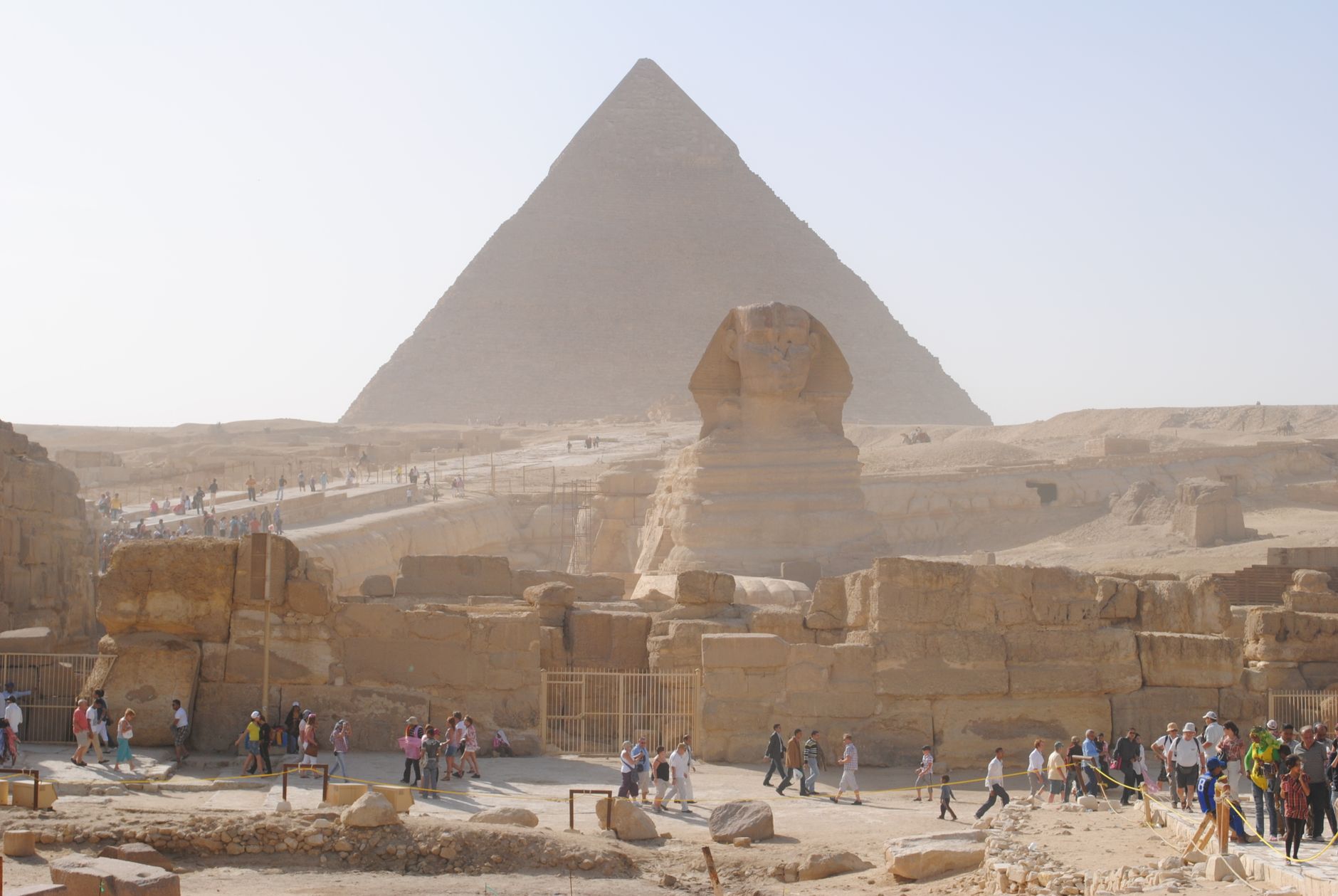
At its core you'll find one of the world's great concentrations of Islamic architecture along Qasabat Al-Mu'izz, a north-south spine through the old city. Nearby Giza holds the Pyramids; Cairo itself holds everything else — the Egyptian Museum's 120,000 artefacts, the Citadel on its limestone hill, the layered neighbourhoods of Coptic Cairo.

💛 What travellers fall for

People who come back tend to pick a neighbourhood and slow down. Coptic Cairo rewards a morning on foot — the Church of Saints Sergius and Bacchus, the Ben Ezra Synagogue, the Coptic Museum all sit within the old fortress walls. The metro, opened in 1987, makes crossing the city far less daunting than the traffic suggests.

Good to know
Cairo International Airport sits roughly 15 km northeast of the city centre, near Heliopolis. Metro Line 1 connects outlying areas to the centre. Avoid July and August if heat is a concern. Giza, Luxor, and Aswan each have their own Yeppa entries — Cairo works best as a base, not a rush-through.
The story

How Cairo came to be

Before Cairo existed, there was Fustat — a garrison town founded in 641 by the Arab general Amr ibn al-As after the Muslim conquest of Byzantine Egypt, built beside the old Babylon Fortress. Cairo proper was established in 969 by the Fatimid dynasty, who named it Al-Qahira and immediately founded Al-Azhar mosque and its university, making the city a centre of Islamic scholarship.

Saladin seized power in 1171, began the hilltop Citadel six years later, and the Mamluk sultans who followed him raised the city's most extraordinary monuments — among them the Mosque-Madrasa of Sultan Hassan, built between 1356 and 1363. The bubonic plague of 1348 had already begun a long decline; the Ottomans took a weakened city in 1517. Modern Cairo largely takes its shape from Muhammad Ali Pasha, who ruled from 1805 until 1848 and is considered the founder of modern Egypt. The historic centre received UNESCO World Heritage status in 1979.

People & landmarks

Who and what shaped it

People who shaped it

Fatimid dynasty
Founded Cairo in 969 C.E., naming it Al-Qahira ('the Victorious').
Amr ibn al-As
Led the Muslim conquest of Byzantine Egypt (639–642) and founded Fustat in 641, Cairo's predecessor settlement.
Saladin (Salah al-Din)
Established Ayyubid rule in 1171 and began construction of the Citadel in 1176.
Muhammad Ali Pasha
Viceroy of Egypt (1805–1848); instituted reforms that earned him the title of founder of modern Egypt.
Gamal Abdel Nasser
Egyptian President (1954–1970) who motivated construction of the Cairo Tower in 1961.
Édouard Louis Joseph, 1st Baron Empain
Belgian industrialist who designed the Heliopolis neighbourhood as a 'garden city' for Cairo's colonial elites.

Landmark buildings

Mosque of ʿAmr
Built in the 7th century by Amr ibn al-As; the first mosque in Africa.
Al-Azhar Mosque and University
Founded in 969 alongside Cairo's establishment; made the city a centre of Islamic learning and philosophy.
Citadel of Cairo
Hilltop fortress begun by Saladin in 1176 during the 12th century.
Mosque-Madrasa of Sultan Hassan
Built 1356–1363 during the Mamluk period; one of the city's most extraordinary monuments.
Al-Aqmar Mosque
Built in 1125 C.E. during the Fatimid era.
Mohamed Ali Mosque (Alabaster Mosque)
Founded in 1830; located within the Citadel complex.
Ar-Rifai Mosque
Built 1869–1912; houses tombs of Egyptian royals and the last shah of Iran.
Bāb al-Futūḥ, Bāb al-Naṣr, and Bāb Zuwaylah
Three 11th-century gates still standing in the old city.
Cairo Tower
614 feet tall, composed of 8 million mosaic pieces; construction began in 1961.
Baron Empain's Palace
Completed in 1911; reopened to the public in 2020 after extensive renovations.
Qasabat Al-Mu'izz
Historic north-south street through the old city; one of the world's great concentrations of Islamic architecture.
Coptic Cairo
Historic district containing the Church of Saint Barbara and Church of Saints Sergius and Bacchus (late 7th or early 8th century).
Egyptian Museum
Houses over 120,000 artefacts documenting ancient Egypt.
Coptic Museum
Showcases Coptic art from Greco-Roman to Islamic times.
Ben Ezra Synagogue
The oldest and best-known synagogue in Cairo, located in Coptic Cairo.
Watch

See Cairo in motion

Practical

Plan your visit

On the map

When to go

October through April is the window most visitors choose — days are warm and clear, nights can be cool, and the light in the old city is particularly good in winter. Summer brings intense heat, often above 35°C, with little relief after dark.

Right now

☀️
26°C
Clear
Sat
37°
24°
Sun
39°
24°
Mon
🌫️
39°
24°
Tue
40°
24°
Weather data: Open-Meteo

Background & history adapted from Wikipedia (CC BY-SA) · specs from Wikidata (CC0) · weather from Open-Meteo · map data © OpenStreetMap contributors · photos from Wikimedia Commons / Unsplash with per-image credit. No third-party reviews or social posts reproduced.

Top