
Bugis
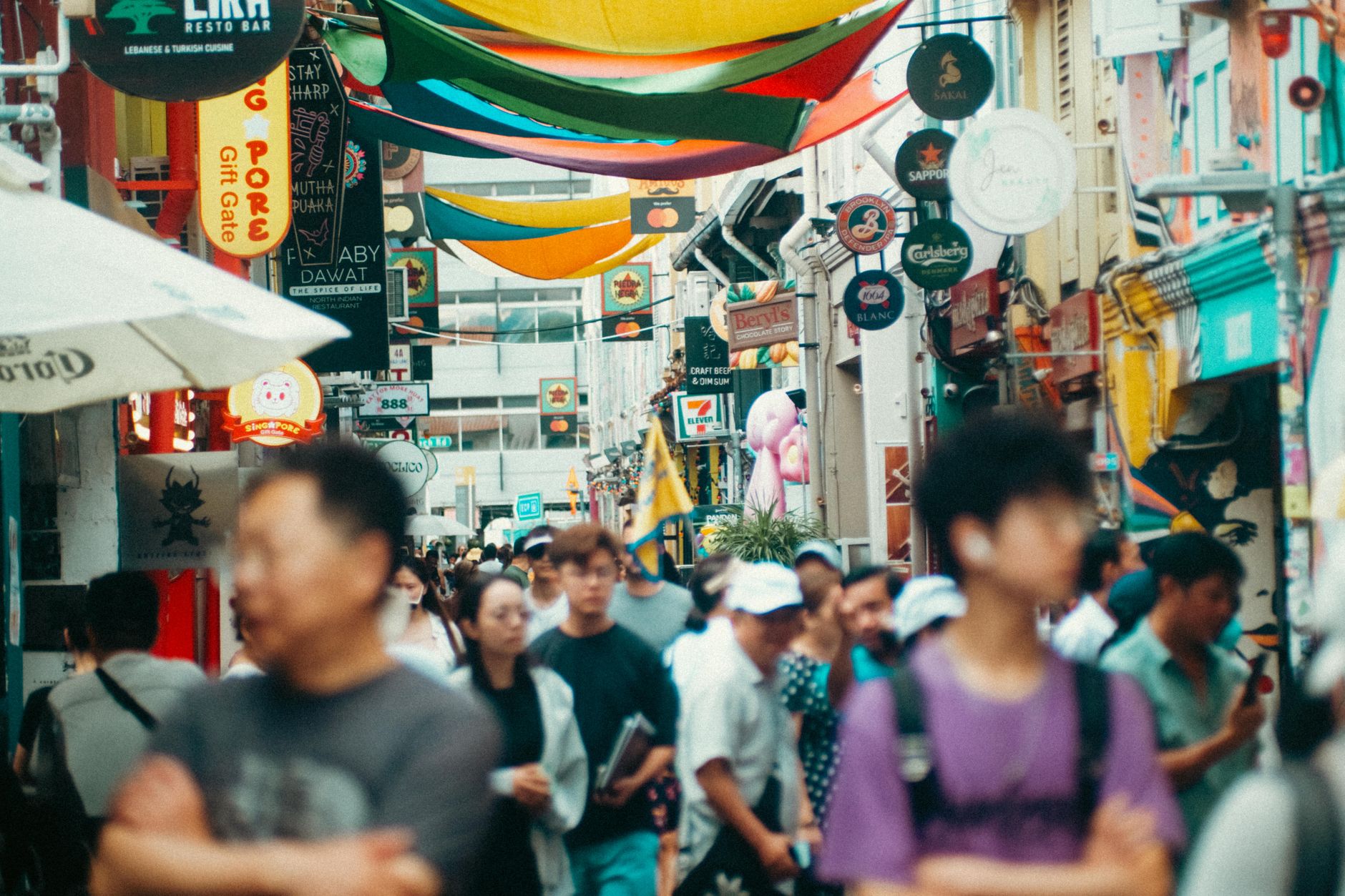
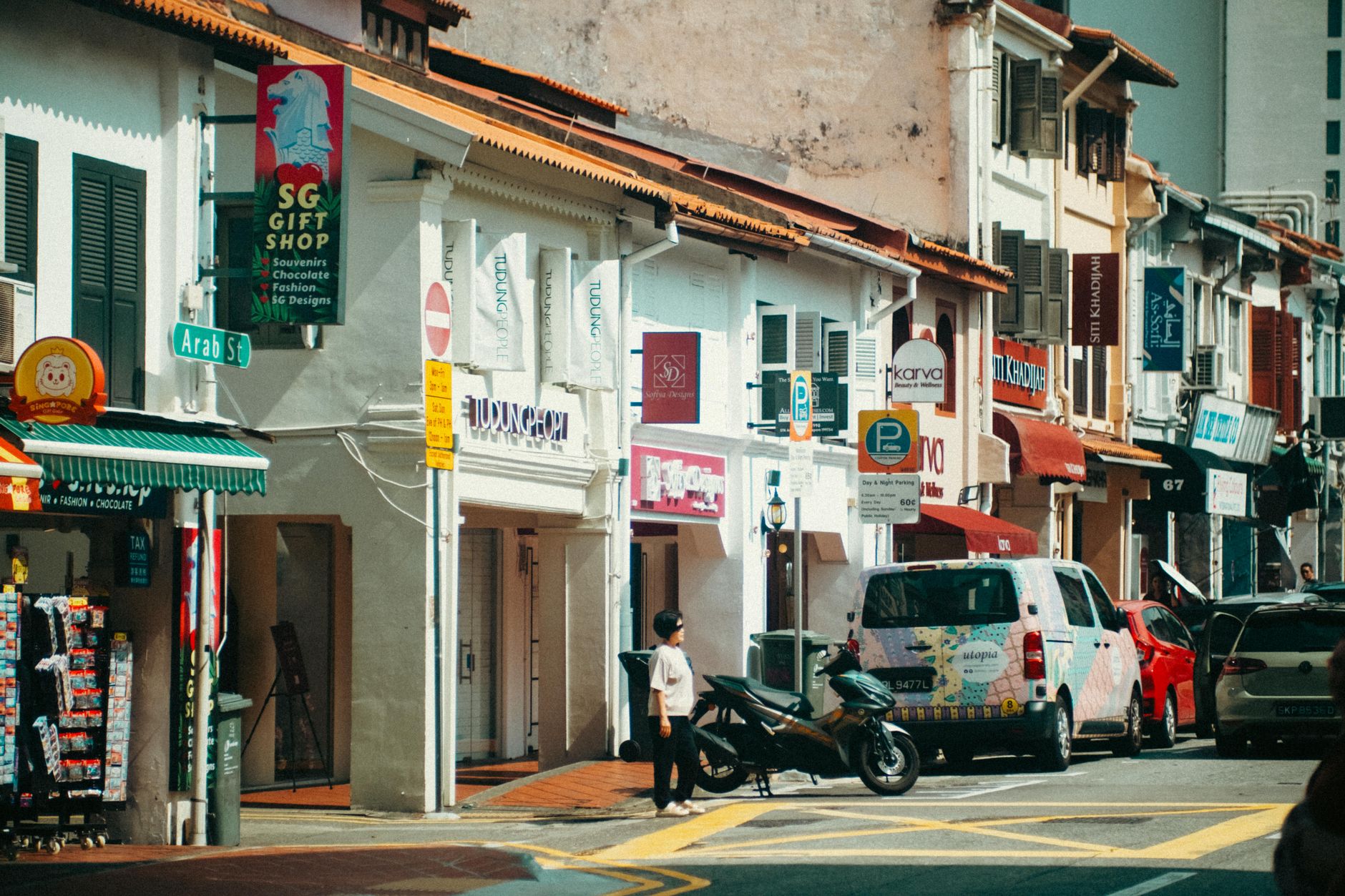
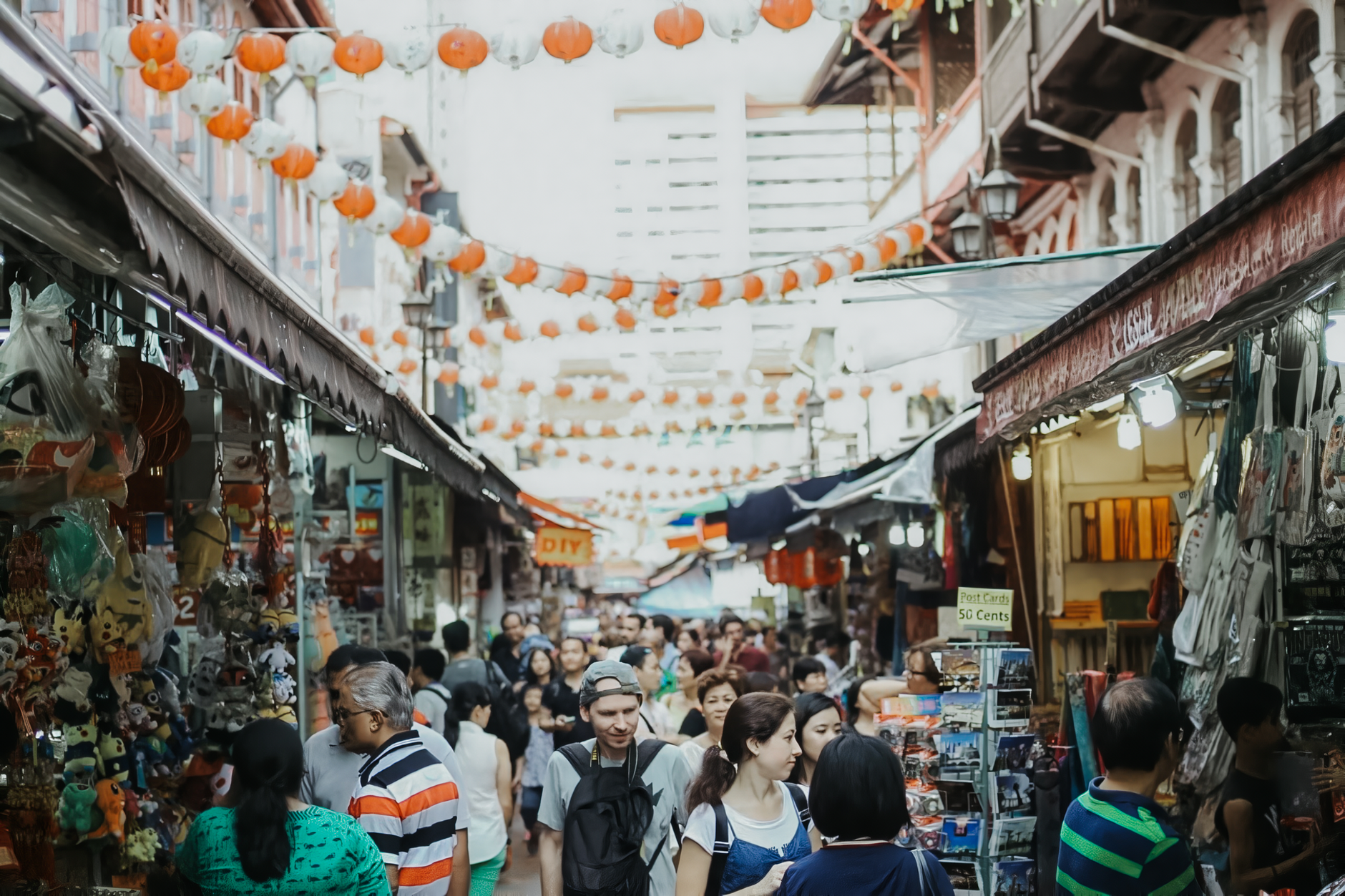
Bugis is where Singapore's layers show most plainly. Walk one block and you pass a gold-domed mosque that is the largest in the country, a temple dedicated to the Goddess of Mercy, a complex that houses most of the city's independent booksellers, and a covered market where jeans go for fifteen Singapore dollars. The neighbourhood carries its contradictions lightly.
The name itself comes from a people — the Bugis of Sulawesi — who arrived here in force in 1822 and within a decade controlled much of the trade across the eastern Malay Archipelago. That mercantile instinct never really left the streets.
💛 What travellers fall for
People who keep coming back tend to make straight for Bras Basah Complex before anything else — the kind of place where you can spend an hour in a single art-supply shop. Then Parkview Square for a look at its art-deco facade and the philosophers standing watch along the roofline. Save Bugis Street Market for a weekday morning, when the corridors are navigable.
Deals in Bugis
Book directly at the providerHow Bugis came to be
In 1822, Stamford Raffles' town plan set aside this stretch of shoreline for an Arab kampong alongside the sultan's compound, with a Bugis settlement further east. That same year, around 500 Bugis — led by their chief Arong Bilawa — arrived from Macassar and put down roots. By the 1830s they effectively ran trade between Singapore and the eastern islands of the Malay Archipelago. George Coleman's 1829 survey was the first to record 'Jalan Bugus' on a map.
The area's later reputation was earthier. From the 1950s through the early 1980s, Bugis Street was known across Southeast Asia for its nightlife. It was demolished in 1985 and eventually rebuilt as a retail precinct; Bugis Street now exists inside the Bugis Junction mall, opened in 1995.
Who and what shaped it
People who shaped it
Landmark buildings
Plan your visit
On the map
When to go
Singapore sits close to the equator, so expect heat and humidity year-round — temperatures run roughly 23–33°C at any time. December through February brings the Northeast Monsoon and the year's coolest, slightly wetter days; if you're sensitive to downpours, carry a compact umbrella whenever you're out.
Right now
Background & history adapted from Wikipedia (CC BY-SA) · specs from Wikidata (CC0) · weather from Open-Meteo · map data © OpenStreetMap contributors · photos from Wikimedia Commons / Unsplash with per-image credit. No third-party reviews or social posts reproduced.