
Borobudur
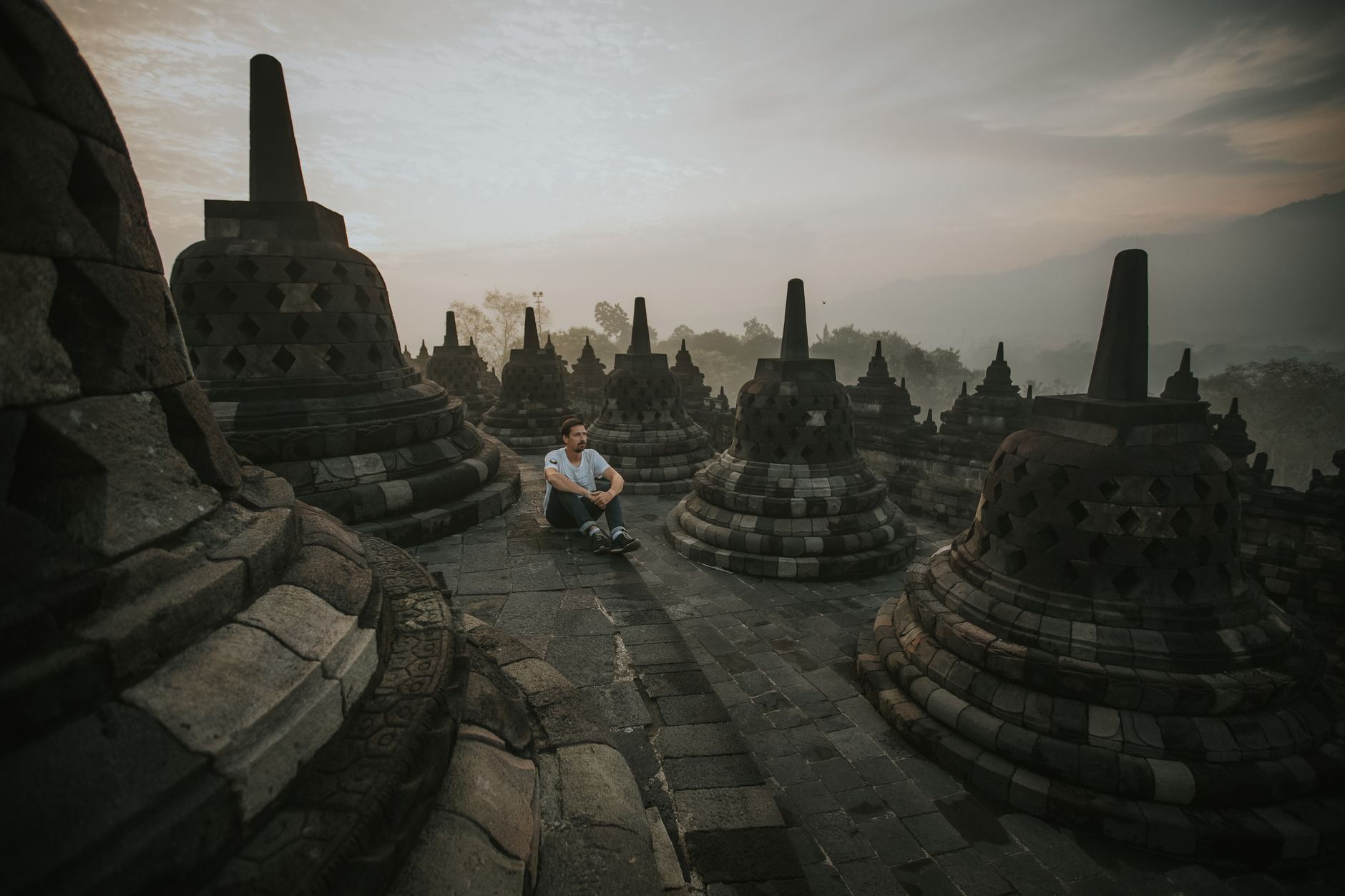
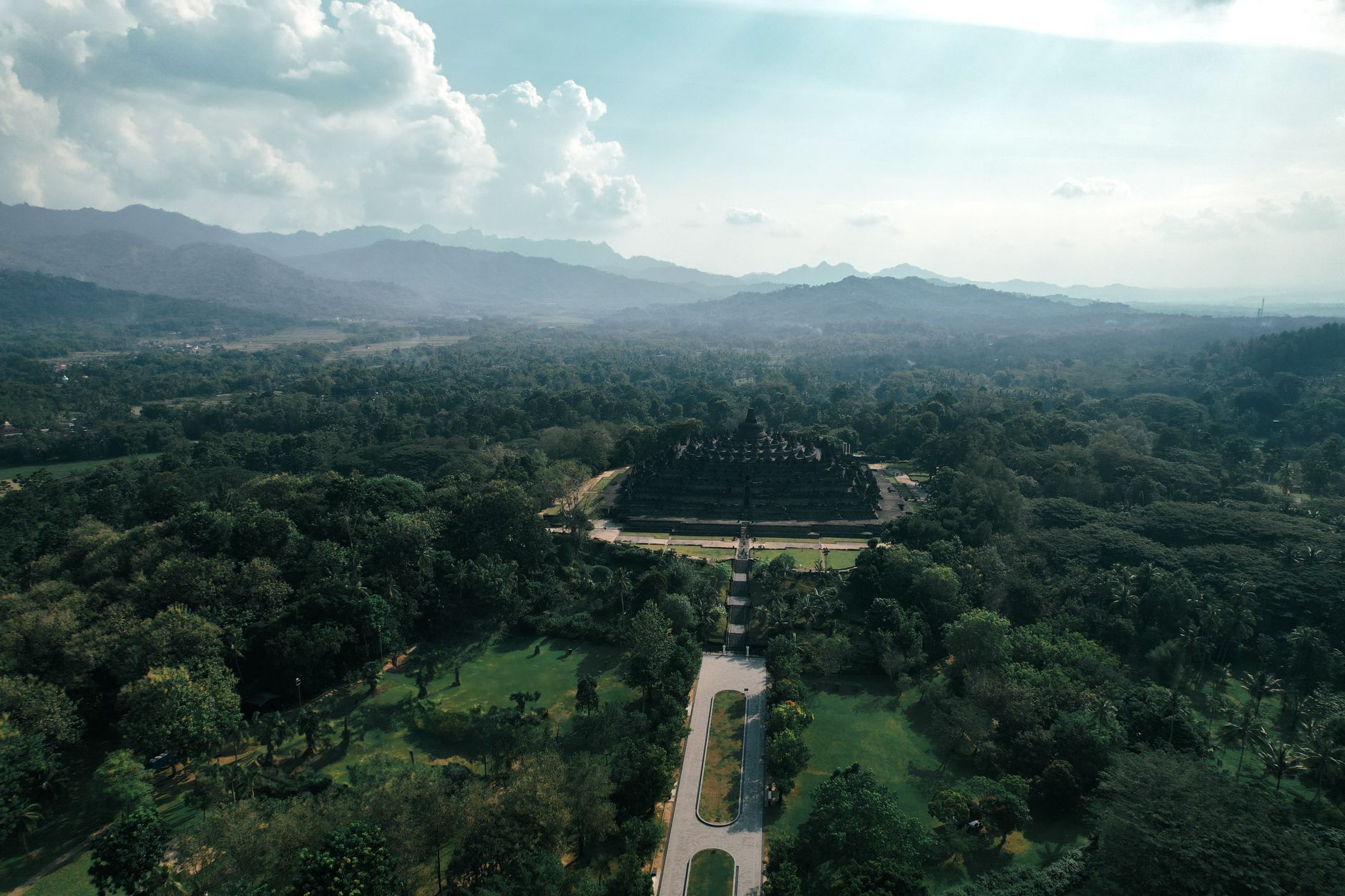
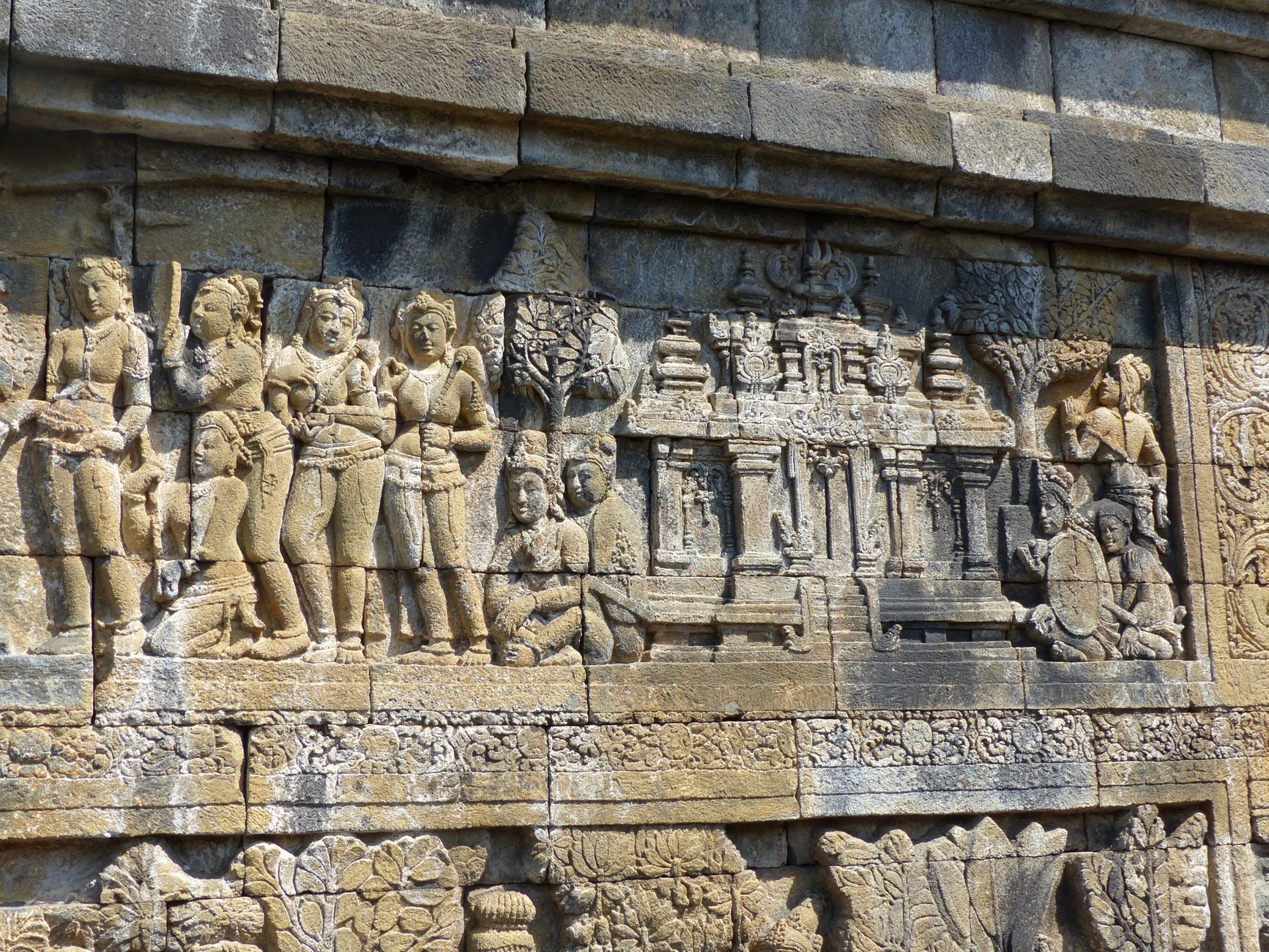
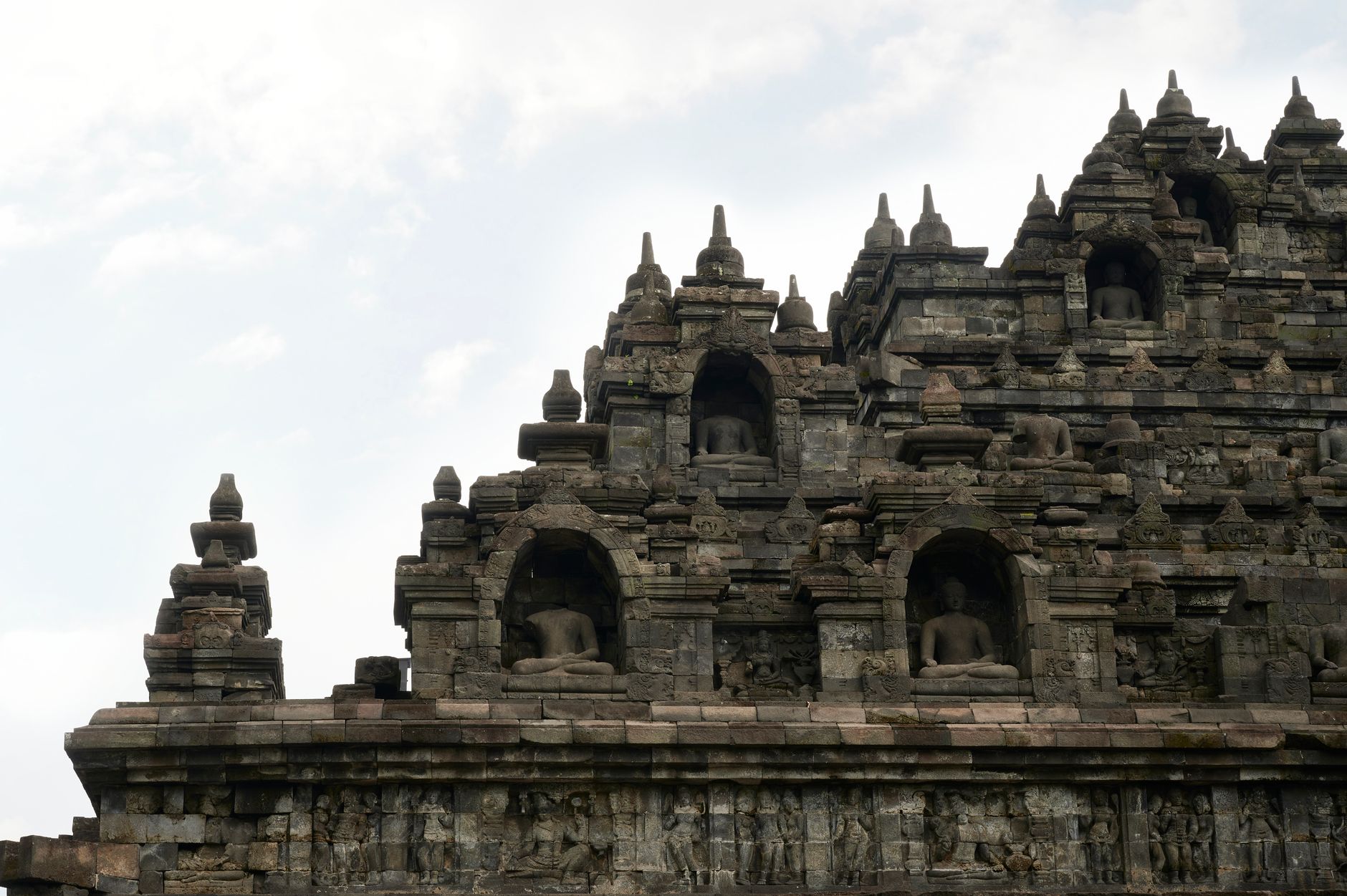
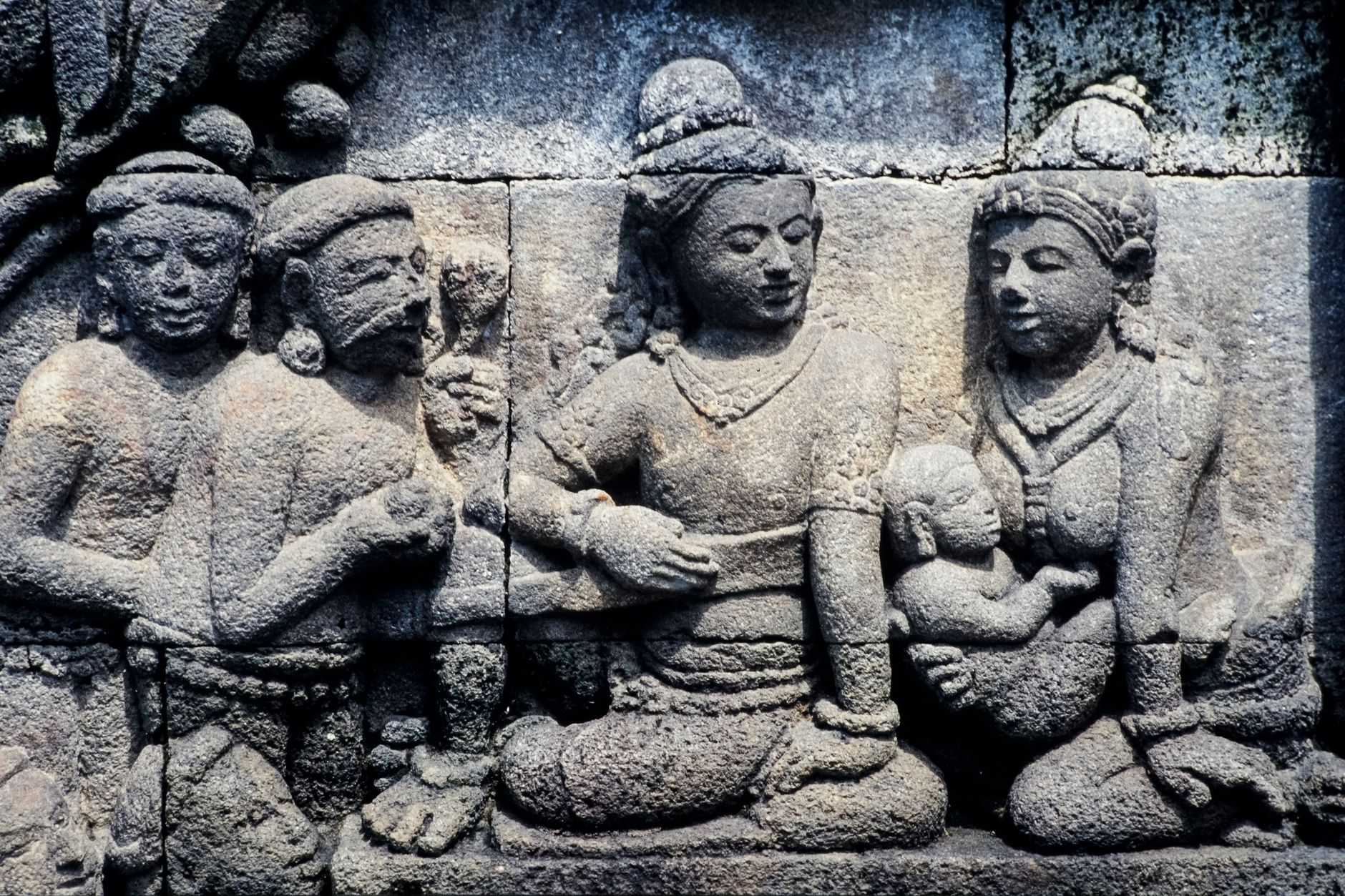
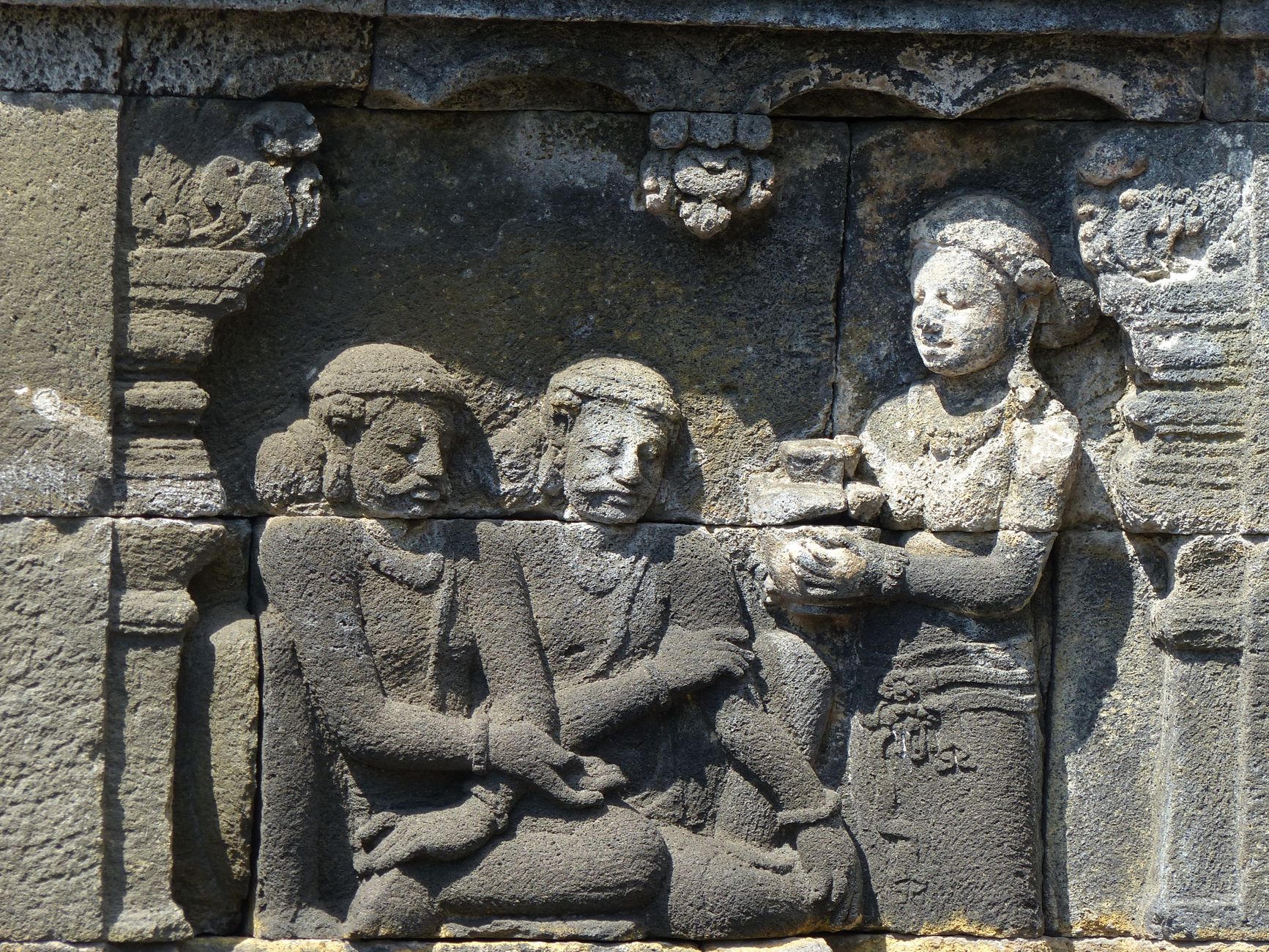
The first thing you notice, climbing toward the upper terraces, is the stone itself — grey andesite worn smooth by a thousand years of rain and, more recently, the hands of guides who have traced these reliefs ten thousand times. Borobudur is the largest Buddhist monument on earth, a nine-tiered structure rising from the rice plains of Central Java with 2,672 carved panels and 72 latticed stupas, each sheltering a seated Buddha.
Book your climbing slot weeks in advance — daily access is capped at 1,200 visitors across eight timed sessions, and the guided hour-and-a-half on the structure is the only way up. At the entrance, staff fit you with Upanat woven sandals you take home afterward.
💛 What travellers fall for
People who return tend to skip the midday session entirely and book the first slot after 08:30, when the stone is still cool and the light comes in low from the east. The companion temples — Pawon a kilometre down the road, Mendut three kilometres further — are almost always quiet, and Mendut still functions as a working monastery.
How Borobudur came to be
Construction began around 778 CE under the Shailendra dynasty and took the better part of a century, finishing near 825 CE. No written records of its purpose survive, and the name of its architect — Gunadharma — comes from Javanese folk tradition rather than any inscription. The temple functioned as a Mahayana Buddhist site until somewhere between the 10th and 15th centuries, when it was abandoned and slowly buried under volcanic ash and jungle.
Thomas Stamford Raffles, then the English lieutenant governor of Java, had the site cleared in 1814. Dutch archaeologists undertook the first major restoration between 1907 and 1911; a second, more comprehensive effort wrapped in 1983. UNESCO designated the compound a World Heritage Site in 1991.
Who and what shaped it
People who shaped it
Landmark buildings
See Borobudur in motion
Plan your visit
On the map
When to go
May through September brings dry steps and, on clear mornings, unobstructed views of the surrounding volcanoes. From November to March, sudden downpours can drive visitors off the exposed terraces mid-session, and the hundred-odd steep stairs turn genuinely treacherous when wet.
Right now
Background & history adapted from Wikipedia (CC BY-SA) · specs from Wikidata (CC0) · weather from Open-Meteo · map data © OpenStreetMap contributors · photos from Wikimedia Commons / Unsplash with per-image credit. No third-party reviews or social posts reproduced.