
City

Bellver Castle

Bellver Castle
Photo by David Vives on Pexels
Bellver Castle
Photo by David Vives on Pexels
Bellver Castle
Photo by David Vives on Pexels
Bellver Castle
Photo by David Vives on Pexels
Bellver Castle
Photo by Bianca Beltrán on Pexels
Bellver Castle
Photo by Mozzapics . on Pexels

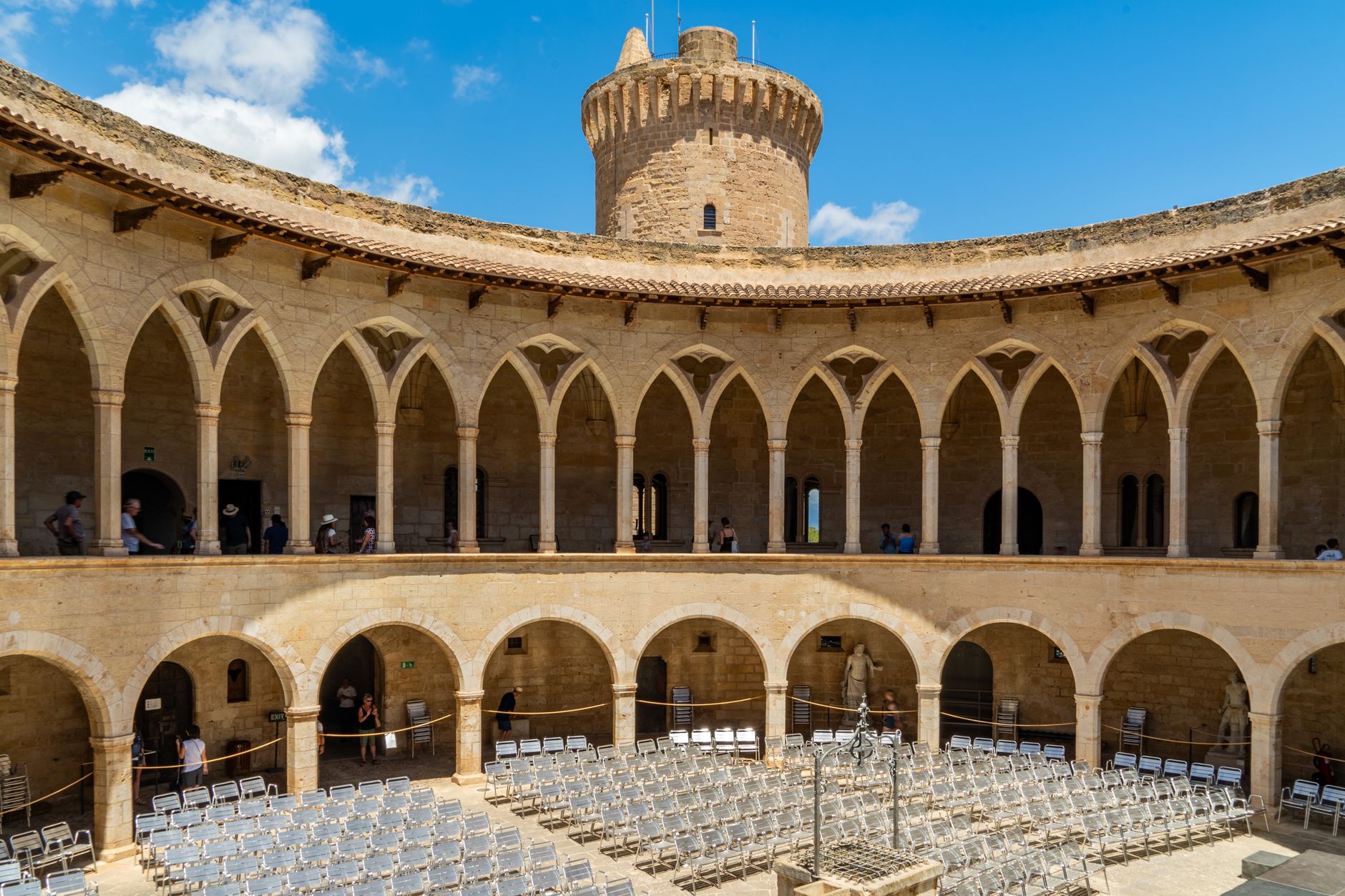
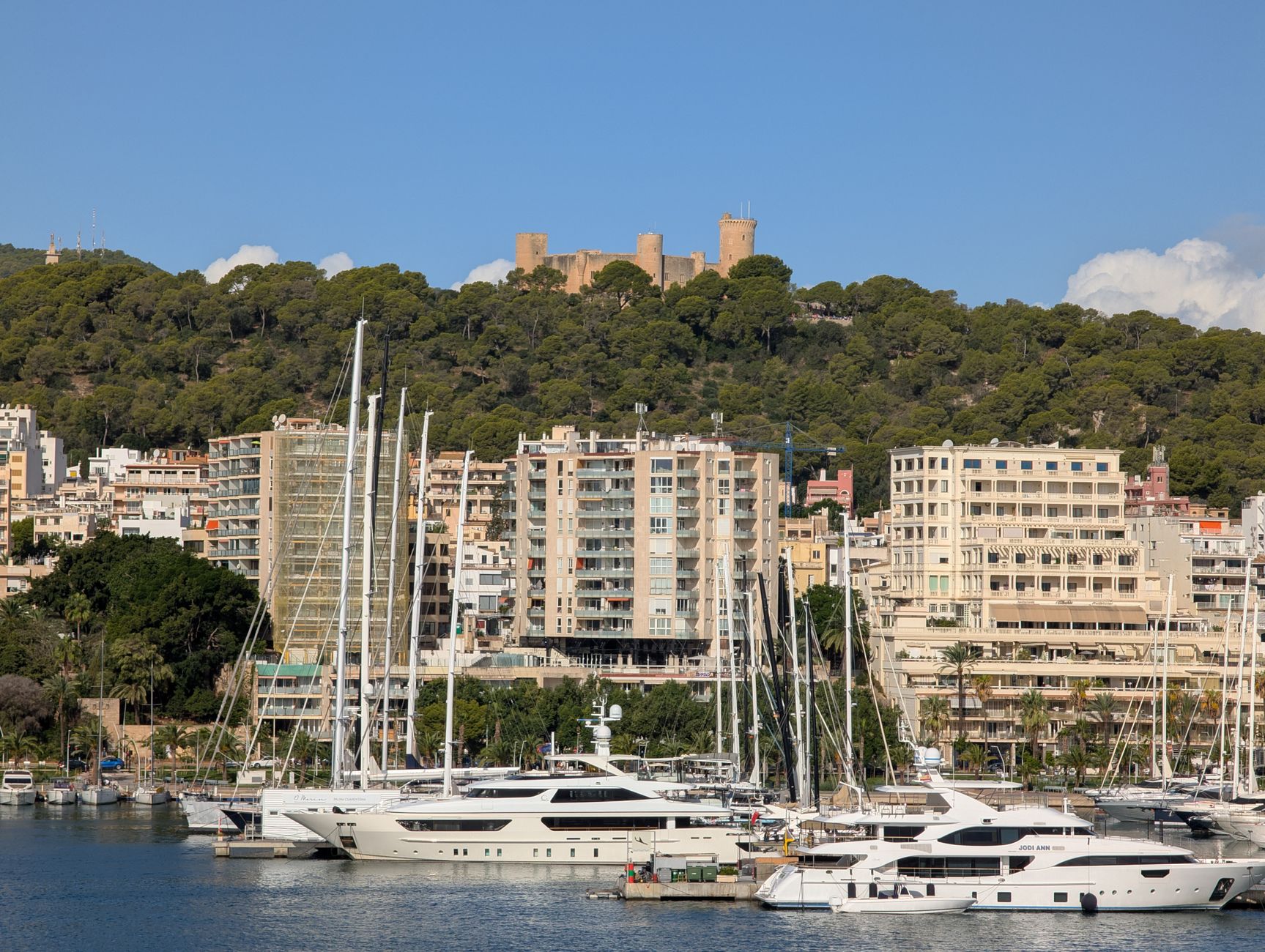
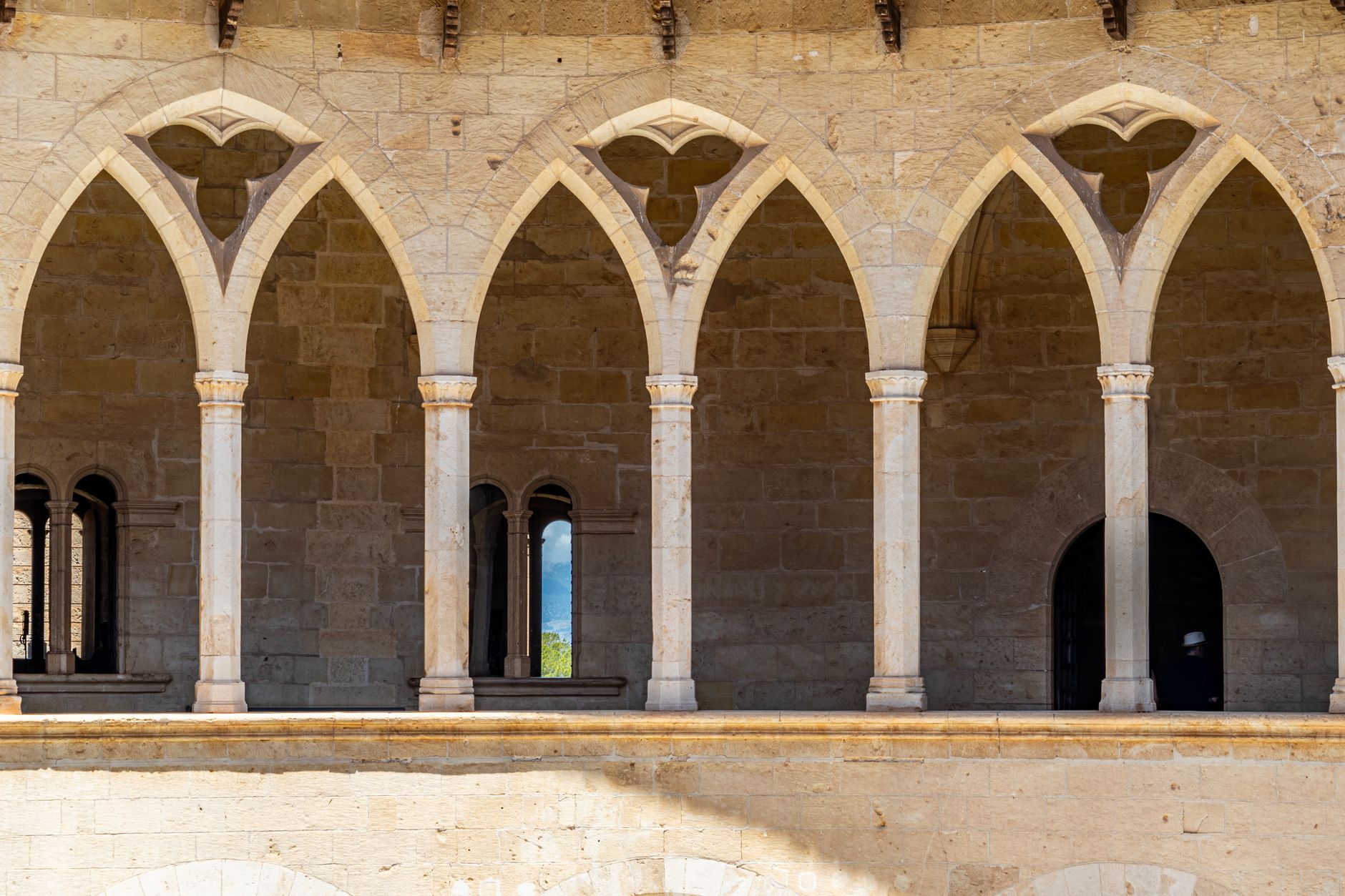
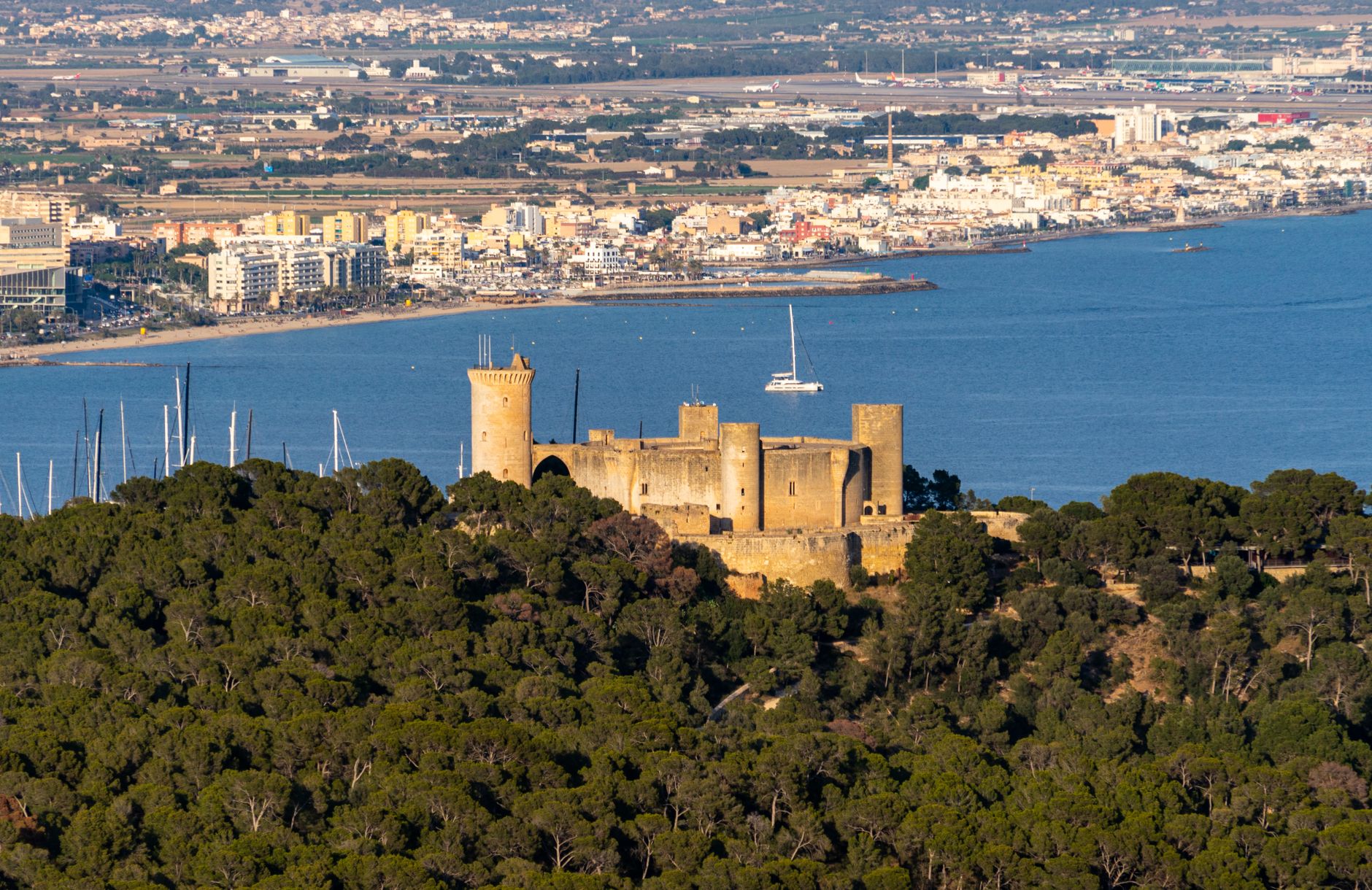
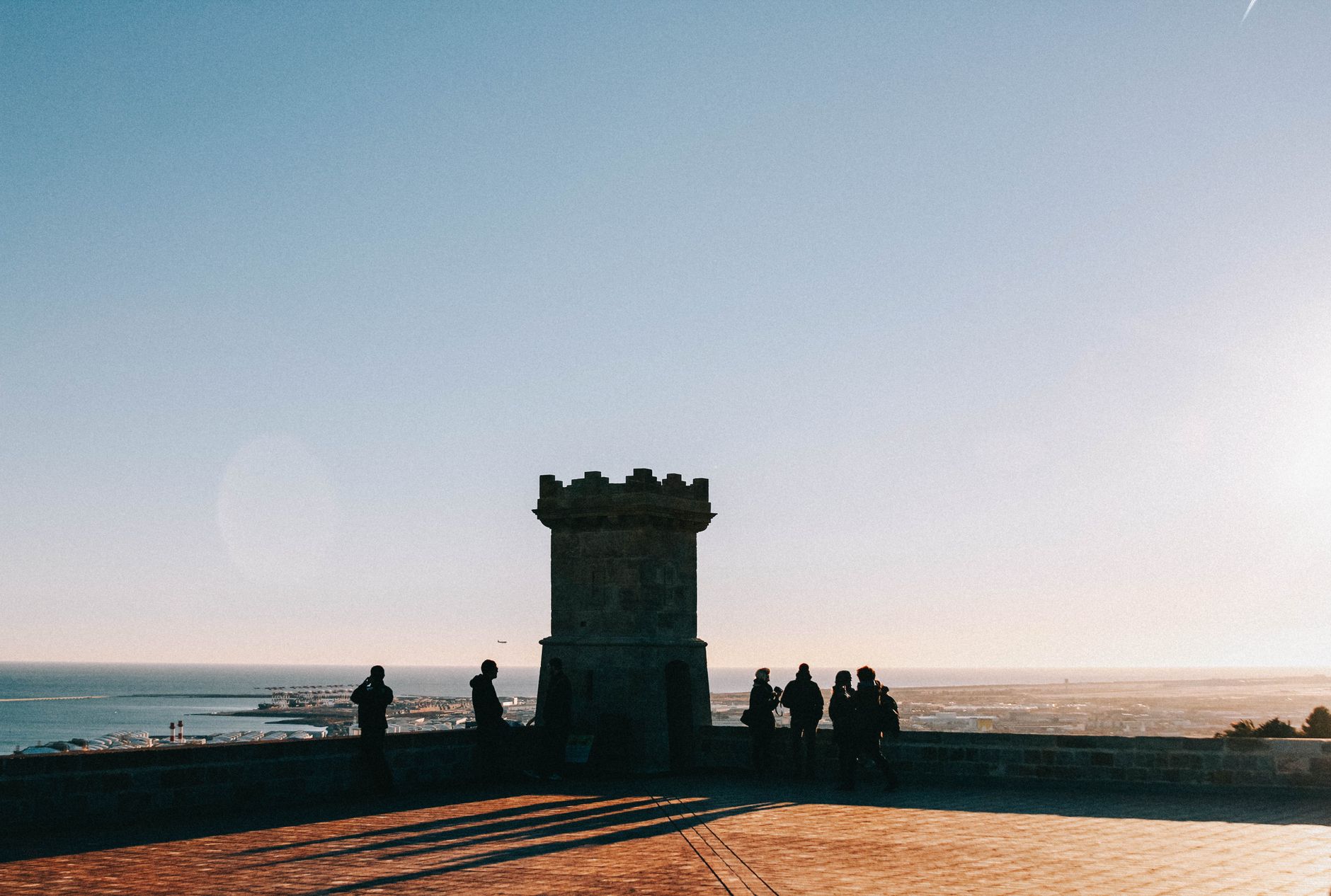
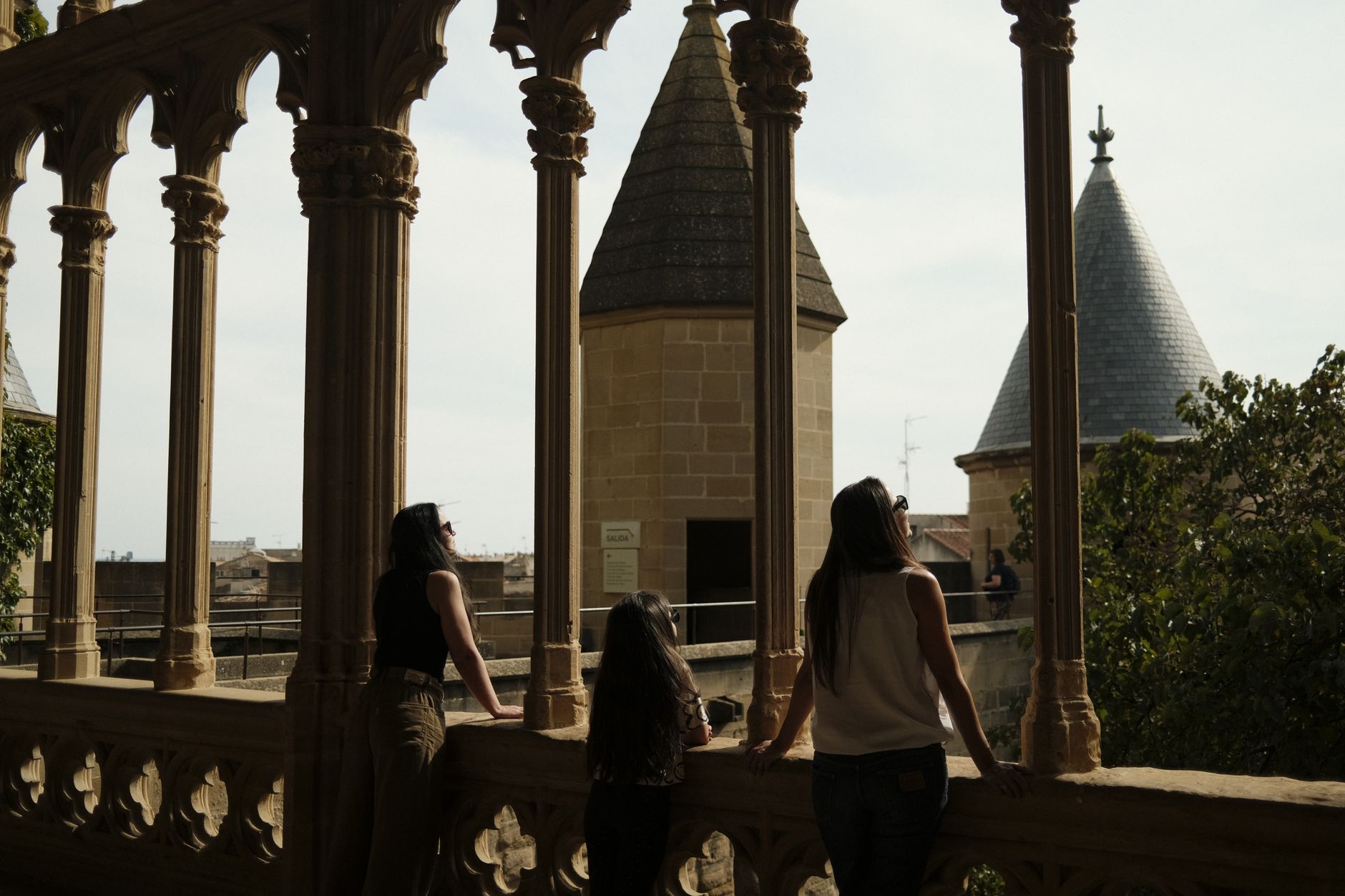
Three kilometres from Palma's old centre, on a hill 113 metres above the bay, stands one of the few circular castles in Europe. Bellver — the name means 'lovely view' in Catalan — was built between 1300 and 1311 by Pere Salva, the same architect behind the Almudaina Palace, on the orders of Jaume II of Mallorca. The stone courtyard rises on two levels: semicircular arches below, Gothic arches with rib-vaulting above, and a free-standing keep connected by a single arch.

The castle has been a royal residence, a medieval fortress that held off two sieges, and a prison whose most famous occupant, the Spanish minister Gaspar Melchor de Jovellanos, spent six years here and used the time to write the first systematic description of the building. Since 1932 it has been Palma's City History Museum, and the surrounding forest is the only wooded area in the Balearic capital.

💛 What travellers fall for

People who come back tend to time it for a Sunday — entry is free, and the rooftop terrace in the morning light, before the tour groups arrive, is worth the trip alone. The dungeon inside the Homage Tower, known locally as the Olla (the pot), is easy to miss if you follow the museum route without doubling back.

Good to know
Bus 50, the touristic line, stops directly at the castle entrance; Line 4 from central Palma takes about 21 minutes and costs around €2–3. Free parking at the gate if you drive. Skip Mondays — it's closed. Budget 60–90 minutes. The approach involves steep terrain; ground level has partial ramps but no lift to the upper tower.

Deals in Bellver Castle

Book directly at the provider
The story

How Bellver Castle came to be

Jaume II commissioned Bellver in 1300, and Pere Salva finished it in eleven years — fast work for a Gothic castle of this scale. Its circular plan was unusual then and remains rare now. As a royal seat of the Kings of Mallorca it was prestigious, but its career as a prison began almost immediately after the dynasty fell. When James III of Mallorca died at the Battle of Llucmajor in 1349, his queen, Violante of Vilaragut, and her stepchildren were held within these walls. The castle resisted siege in 1343 and again in 1391, though it fell once, briefly, during the Revolt of the Brotherhoods in 1521.

Its most documented prisoner arrived in 1802: Gaspar Melchor de Jovellanos, the minister of justice, who spent six years confined here and commissioned the first architectural blueprints of the building. The Spanish Second Republic transferred the castle to the city of Palma in 1931, along with the surrounding forest, and it opened as a museum the following year.

People & landmarks

Who and what shaped it

People who shaped it

Jaume II of Mallorca
Commissioned the castle in 1300 as a royal residence for the Kings of Mallorca.
Pere Salva
Architect who built Bellver Castle between 1300 and 1311; also architect of the Almudaina Palace.
Gaspar Melchor de Jovellanos
Spanish minister of justice imprisoned here 1802–1808; wrote the first systematic description of the castle.
Queen Violante of Vilaragut
Held prisoner at Bellver after her husband James III of Mallorca died in 1349.

Landmark buildings

Bellver Castle
Gothic circular castle built 1300–1311 on a 113-metre hill; one of Europe's few circular castles; served as royal residence, fortress, and prison before becoming Palma's City History Museum in 1932.
Torre de l'Homeage (Homage Tower)
Contains the 'Olla' dungeon where prisoners were confined in extreme temperatures.
Chapel of Saint Alphonsus Rodriguez
Built within the castle between 1879 and 1885.
Bellver Forest
Surrounding woodland transferred to Palma in 1931; the only wooded area in the Balearic capital.
Watch

See Bellver Castle in motion

Practical

Plan your visit

On the map

When to go

Mallorca runs warm and dry through summer — the hilltop position catches a breeze, but the stone terrace is fully exposed. Spring and autumn offer the most comfortable visiting conditions; winter days are mild and the castle is rarely crowded.

Right now

28°C
Partly cloudy
Sat
32°
27°
Sun
33°
27°
Mon
33°
26°
Tue
32°
27°
Weather data: Open-Meteo

Background & history adapted from Wikipedia (CC BY-SA) · specs from Wikidata (CC0) · weather from Open-Meteo · map data © OpenStreetMap contributors · photos from Wikimedia Commons / Unsplash with per-image credit. No third-party reviews or social posts reproduced.

Top