
Bayreuth
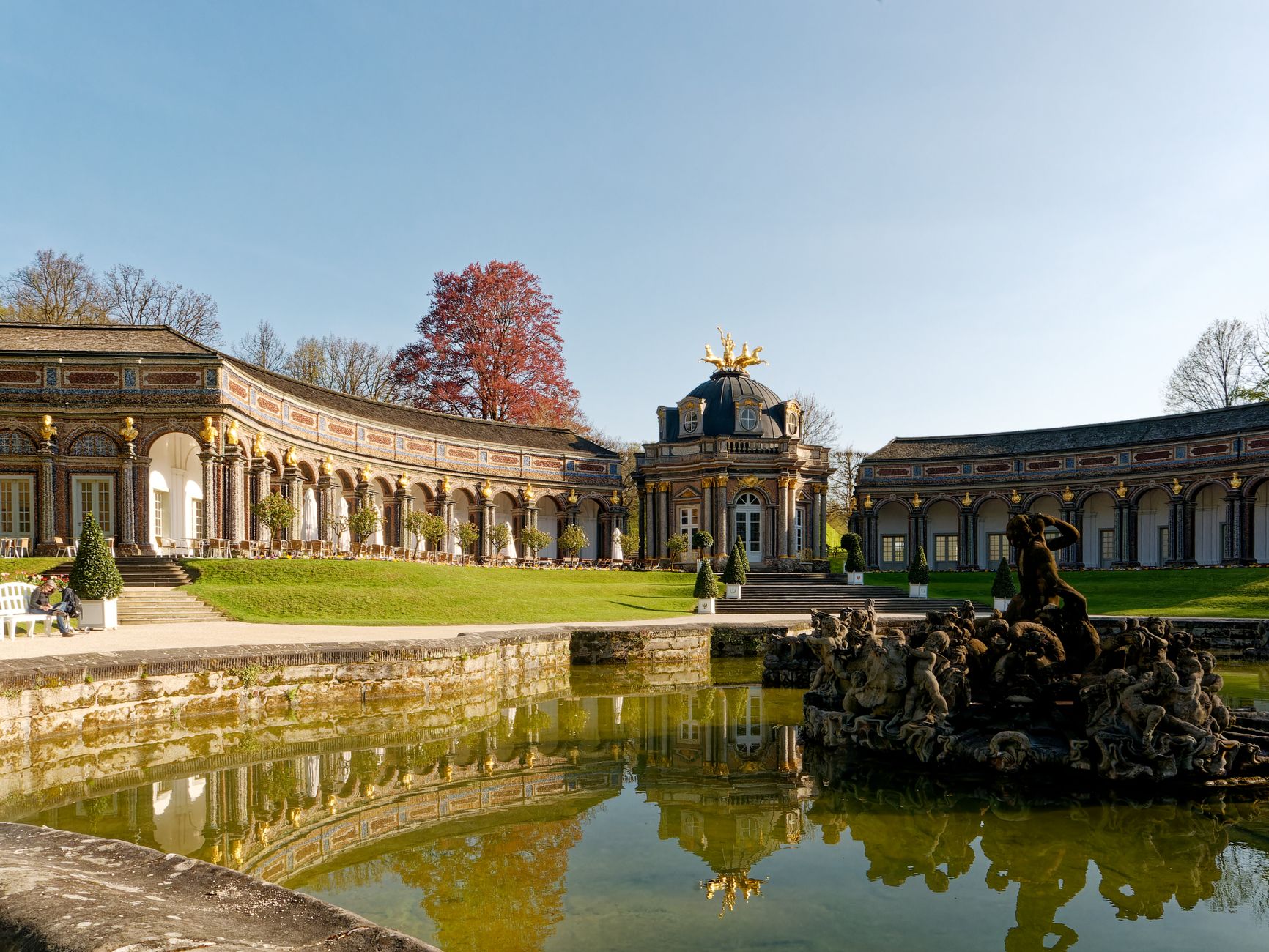


Bayreuth is, on the surface, a Wagner town — the Festival Theatre on the hill, the pilgrims with their programmes, the annual summer lottery for tickets that people enter for years before they win. But come outside July and August and you find a city that earned its character long before any composer arrived. The Margravial Opera House, a UNESCO-listed Baroque theatre of gilded tiers and painted sky ceilings, was built in 1748 for a Prussian princess who happened to be one of the most culturally ambitious rulers in 18th-century Germany.
Wilhelmina of Bayreuth — sister of Frederick the Great — left her mark on almost every significant building in the city centre. Wagner came a century later, saw the Opera House, and decided the town had the right spirit for his project. He wasn't wrong.
💛 What travellers fall for
People who come back tend to time a morning at the Hermitage when the fountains run on the hour and the Sun Temple catches the light before the tour groups arrive. The Villa Wahnfried museum rewards a second visit once you've actually heard the operas — the letters and set models mean more then. Jean Paul's grave in the town cemetery is quiet and almost always empty.
Experiences you don't want to miss





Deals in Bayreuth
Book directly at the provider


How Bayreuth came to be
The settlement first appears in documents in 1194, founded by the counts of Andechs-Merania as a fortified outpost. After that dynasty died out in 1260, the Hohenzollern burgraves of Nuremberg took control — a connection that would last centuries. The city suffered badly: Hussite forces burned it in 1430, plague took more than a thousand lives in 1602, and fires in 1605 and 1621 destroyed large portions of the town.
The real transformation came in 1603, when Margrave Christian moved his residence here from Kulmbach's hilltop Plassenburg, shifting Bayreuth's identity from market town to court city. The golden decades followed under Margrave Frederick and Margravine Wilhelmina (1735–1763), who built the Opera House, the New Palace, and redesigned the Hermitage. Bayreuth passed to Prussia in 1791 and Bavaria in 1810. Richard Wagner arrived in 1872, laid the foundation stone of his Festival Theatre the same year, and opened it in 1876 with the complete Ring of the Nibelungen.
Who and what shaped it
People who shaped it
Landmark buildings
See Bayreuth in motion
Plan your visit
On the map
When to go
Summers are warm and occasionally humid, with July and August the busiest and hottest months. Spring and early autumn offer milder temperatures and far fewer visitors — September in particular can be clear and golden, ideal for the gardens at the Hermitage.
Right now
Background & history adapted from Wikipedia (CC BY-SA) · specs from Wikidata (CC0) · weather from Open-Meteo · map data © OpenStreetMap contributors · photos from Wikimedia Commons / Unsplash with per-image credit. No third-party reviews or social posts reproduced.