City

Bayon

Bayon
Photo by Tiago Cardoso on Pexels
Bayon
Photo by Guide Pailin Cambodia on Pexels
Bayon
Photo by Alex Borghi on Pexels
Bayon
Photo by MINEIA MARTINS on Pexels
Bayon
Photo by Serg Alesenko on Pexels
Bayon
Photo by allPhoto Bangkok on Pexels

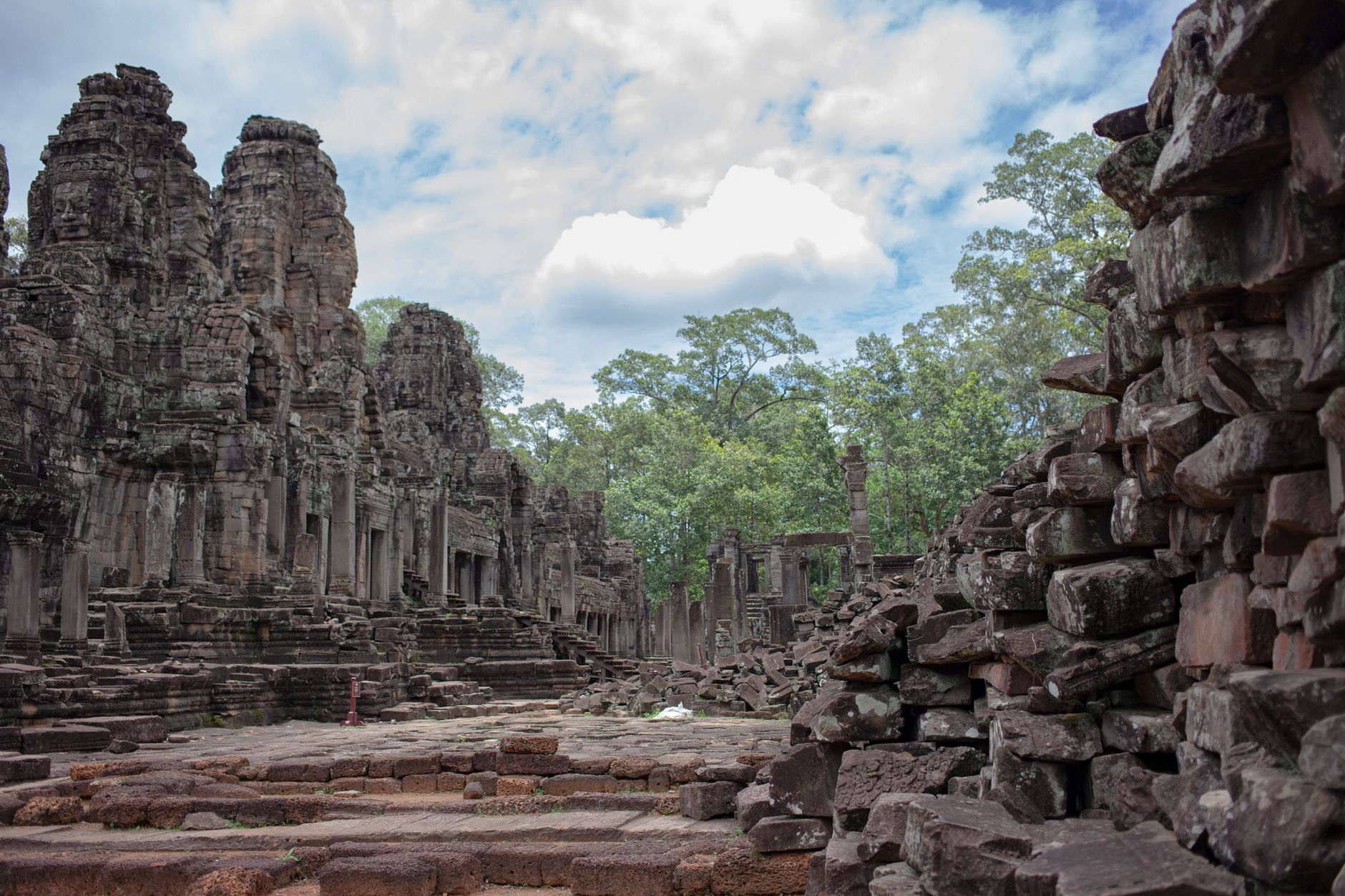
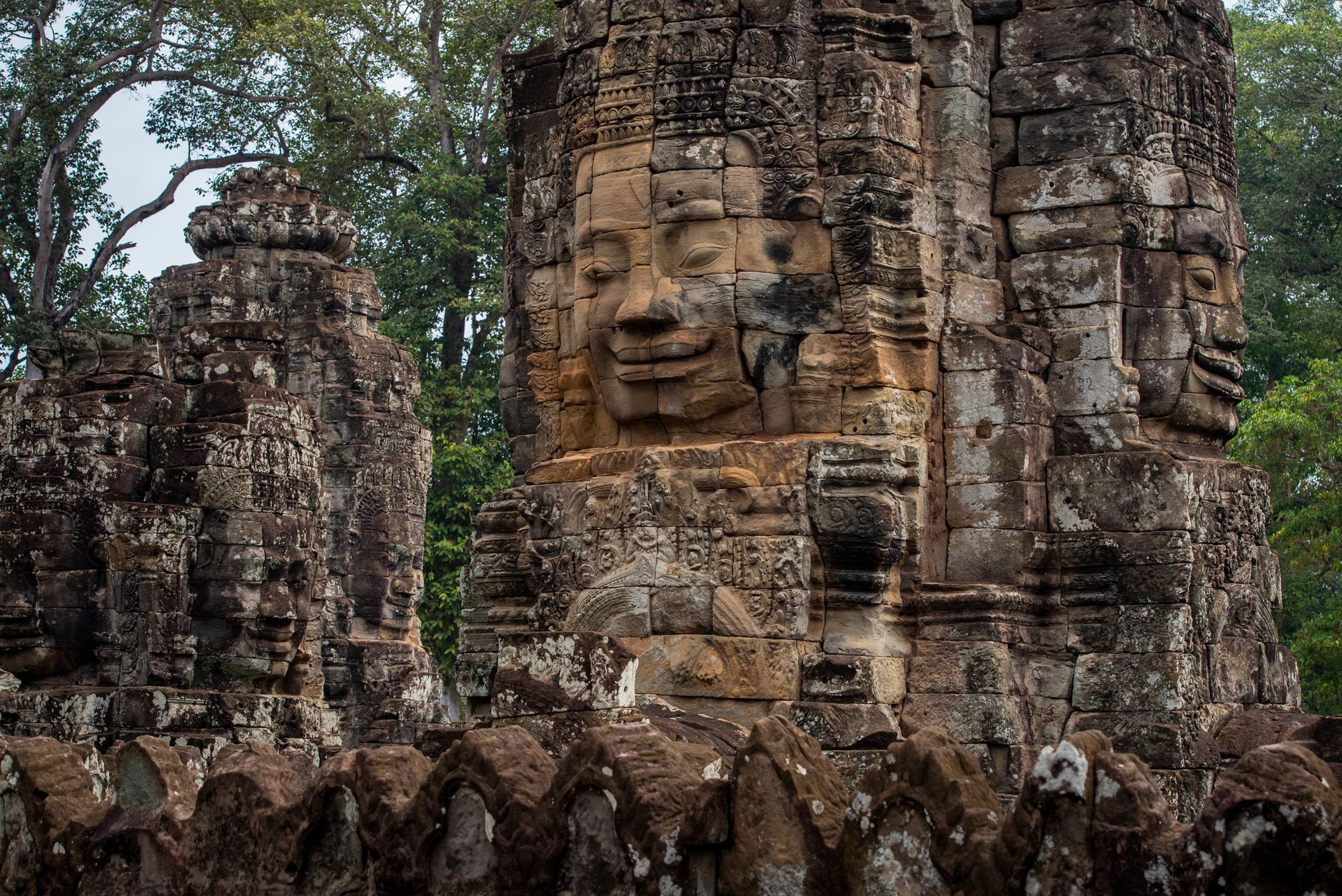
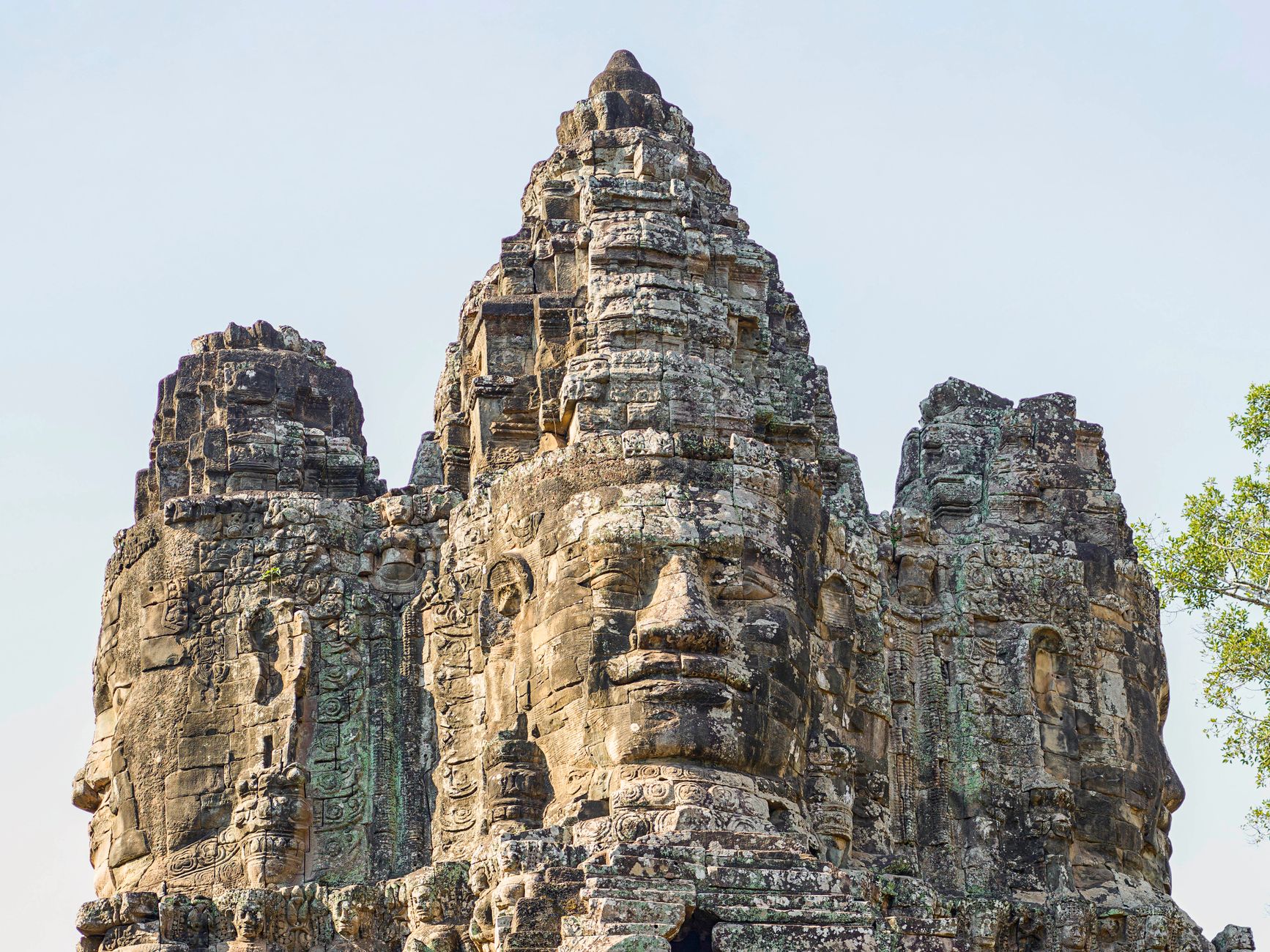
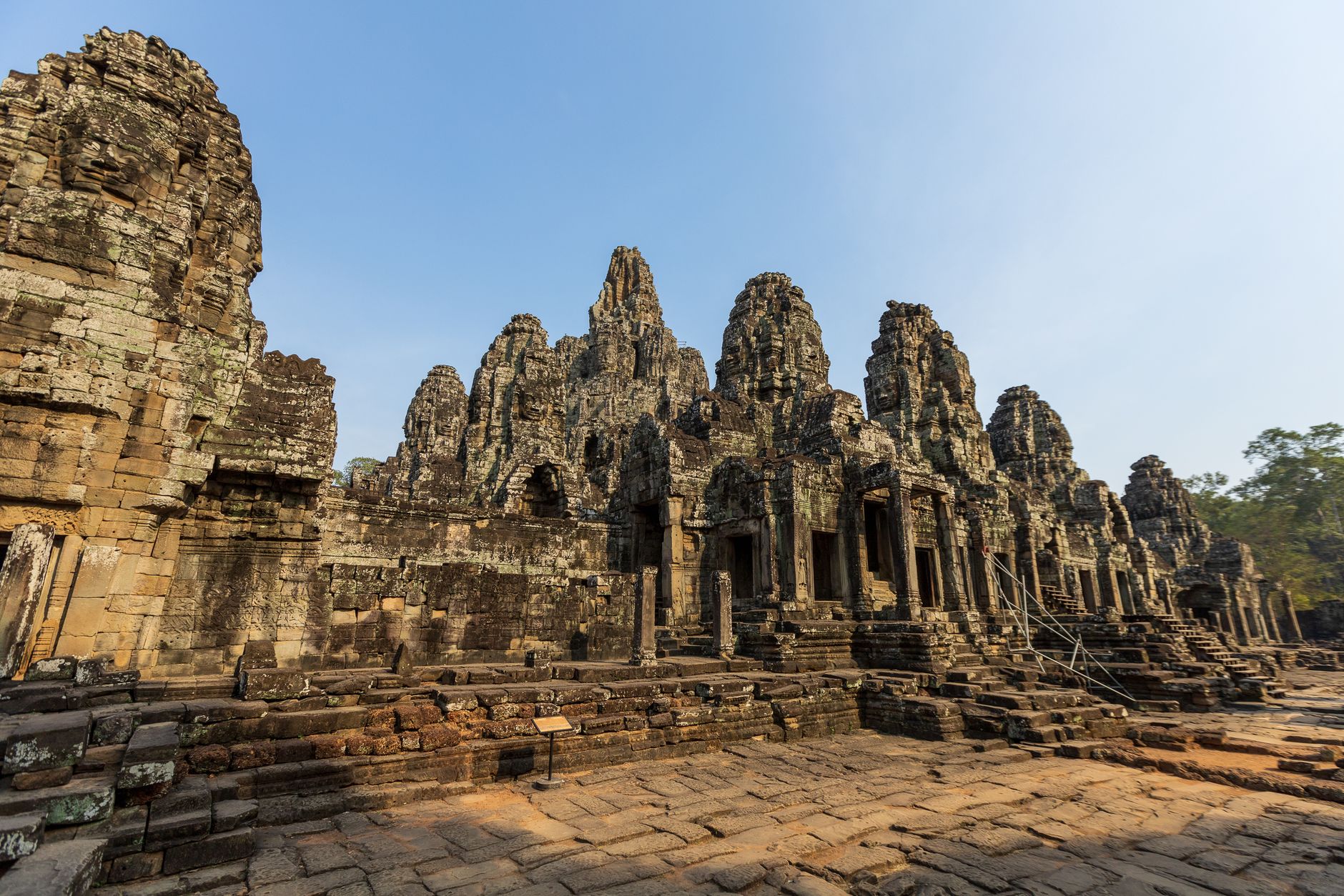
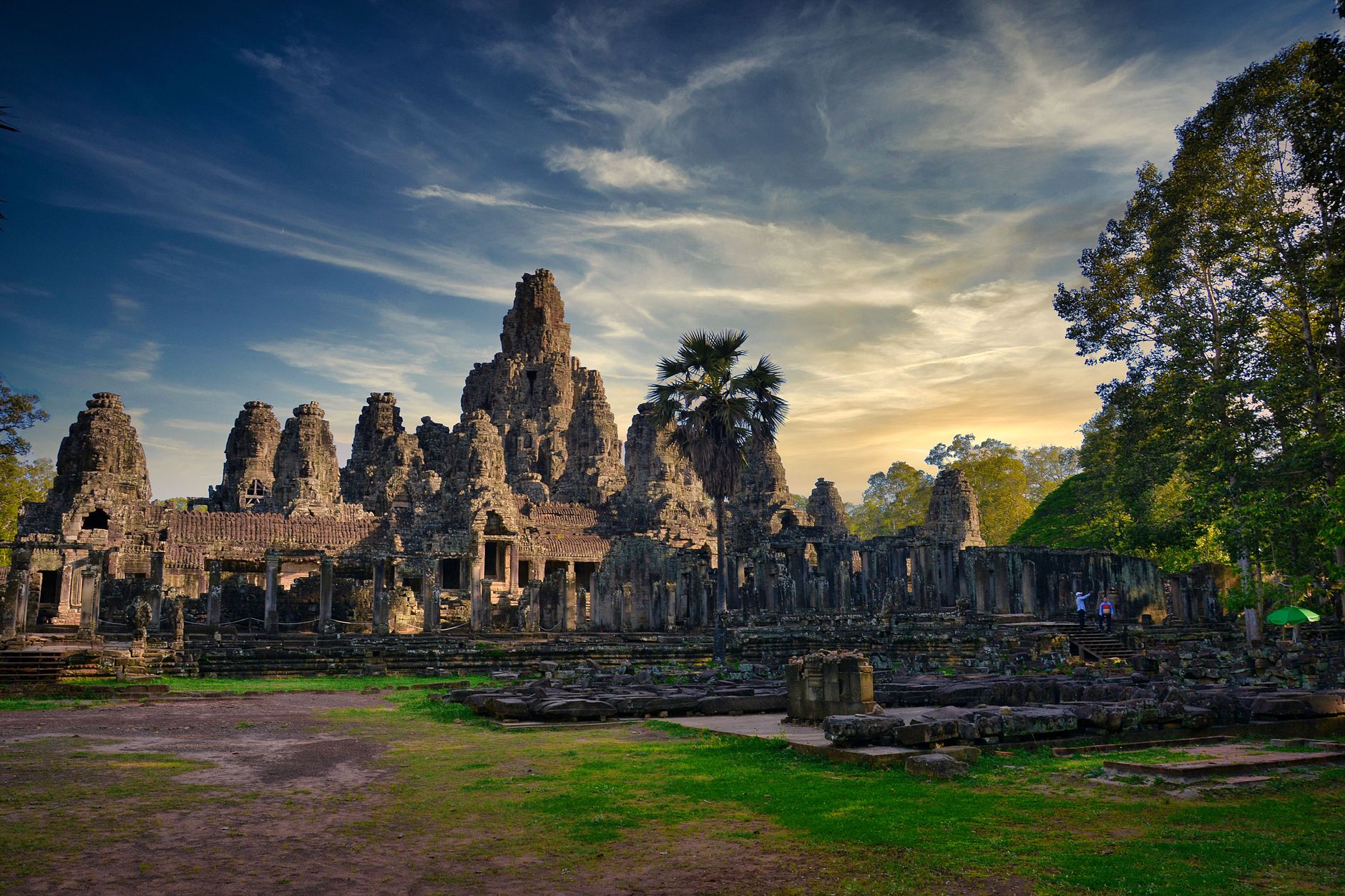
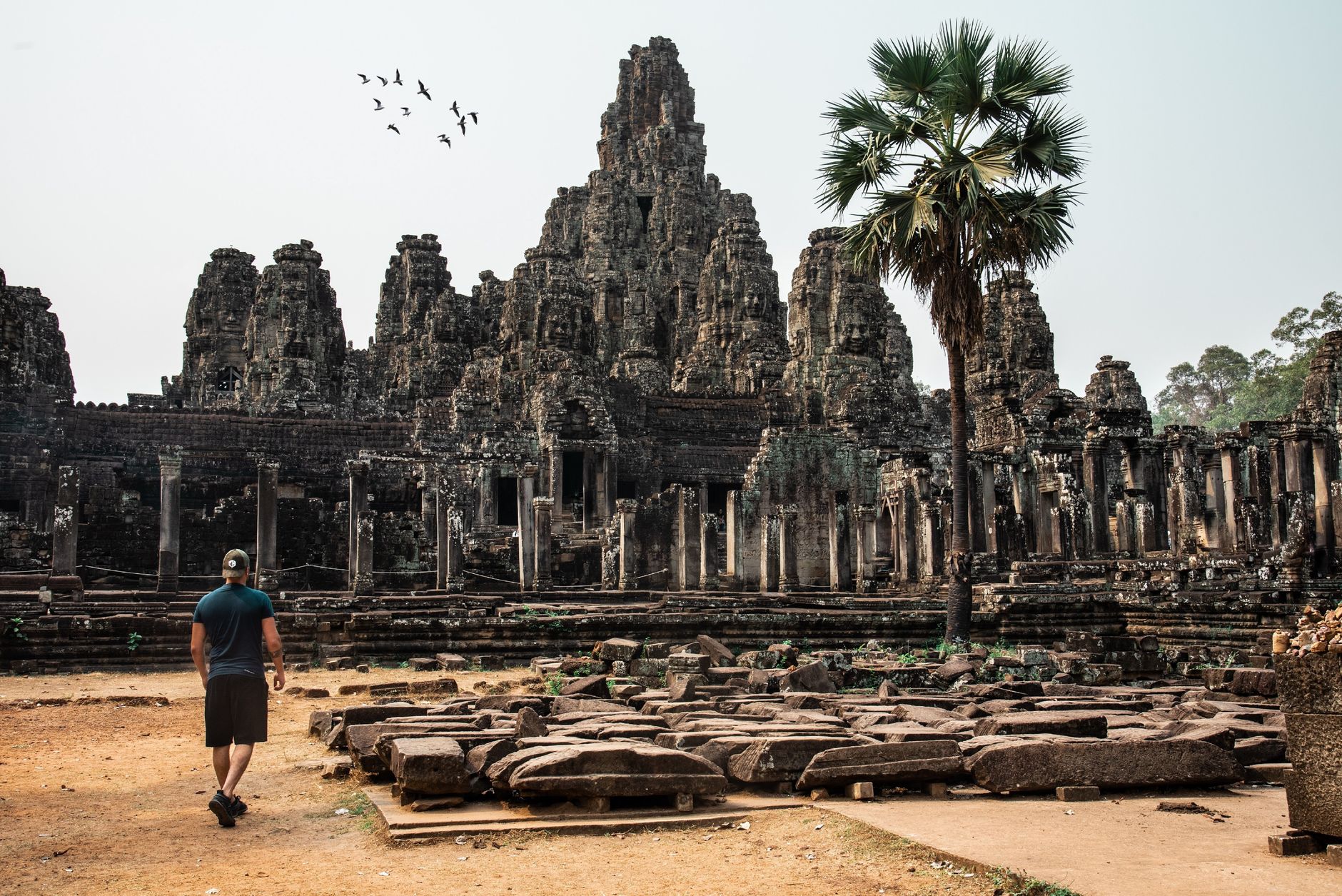
Stand at the base of the Bayon and look up: 216 stone faces gaze back at you, each wearing the same slow, composed expression — not quite a smile, not quite serenity, something harder to name. They belong to Avalokiteshvara, the Bodhisattva of Compassion, carved across 54 towers (37 still standing) at the exact geographic centre of Angkor Thom. The temple covers 22,500 square metres, arranged on three pyramid levels, and its galleries hold over 11,000 bas-relief figures spread across more than 1,200 metres of carved stone — soldiers, fishermen, market traders, a king at war.

Unlike the wide courtyards of Angkor Wat, the Bayon presses in close. Its passages are narrow, its stairways steep, and the towers crowd each other in a way that feels almost deliberate — a compression that keeps revealing new faces at unexpected angles as you move through it.

💛 What travellers fall for

People who return tend to do so at different hours. The east-facing towers catch the light between 7:30 and 9:30 in the morning; the west-facing ones open up in the late afternoon, roughly 3:30 to 5:30. Come twice in a day if you can — the same stone reads entirely differently depending on where the sun sits.

Good to know
Bayon is open 5:00 am to 5:30 pm. Entry requires an Angkor pass: one day costs US $37, three days US $62, seven days US $72. From Siem Reap International Airport, allow 15–20 minutes by car. Budget at least two hours inside.

Deals in Bayon

Book directly at the provider
The story

How Bayon came to be

Jayavarman VII commissioned the Bayon around 1200 as the state temple of his new capital, Angkor Thom — and as his personal mausoleum. He was the first Khmer king to make Buddhism the state religion, and the Bayon was the only Angkorian state temple built primarily to honour Buddhist deities. Historians generally regard him as the most powerful ruler the Khmer Empire produced.

After his death, his successor Jayavarman VIII reversed course, converting the temple back to Hindu use in the mid-13th century. Later, Theravada Buddhism reshaped it again. When the Khmer court moved to Phnom Penh around the 15th century, the Bayon was left to the jungle. It was cleared in modern times around 1910, with the central sanctuary and towers restored around 1940 using the anastylosis method. Today the Japanese Government Team for Safeguarding Angkor manages its ongoing conservation.

People & landmarks

Who and what shaped it

People who shaped it

Jayavarman VII
Khmer king (c. 1122–1218) who commissioned the Bayon around 1200 as state temple and personal mausoleum; first Khmer ruler to establish Buddhism as state religion.

Landmark buildings

Central Tower
Originally cruciform, later modified to circular form; rises 43 metres above ground at the temple's core.
Face Towers
54 towers total (37 remaining on third level) carved with 216 faces of Avalokiteshvara; each face individually carved with subtle variations in proportion and expression.
Gallery Bas-reliefs
Over 1,200 metres of carved stone facades depicting Jayavarman VII's military victories and 13th-century Khmer daily life; approximately 11,000 sculptural figures in total.
Watch

See Bayon in motion

Practical

Plan your visit

On the map

When to go

November through April is the dry season — mornings settle around 25°C and afternoons can reach 35°C, which is warm but manageable if you move early. May through October brings heavier rain and humidity; the temple grounds go lush and the crowds thin, though afternoon downpours are common and the heat feels heavier.

Right now

26°C
Partly cloudy
Sat
🌧️
35°
26°
Sun
35°
26°
Mon
36°
26°
Tue
🌧️
35°
26°
Weather data: Open-Meteo

Background & history adapted from Wikipedia (CC BY-SA) · specs from Wikidata (CC0) · weather from Open-Meteo · map data © OpenStreetMap contributors · photos from Wikimedia Commons / Unsplash with per-image credit. No third-party reviews or social posts reproduced.

Top