
Basel
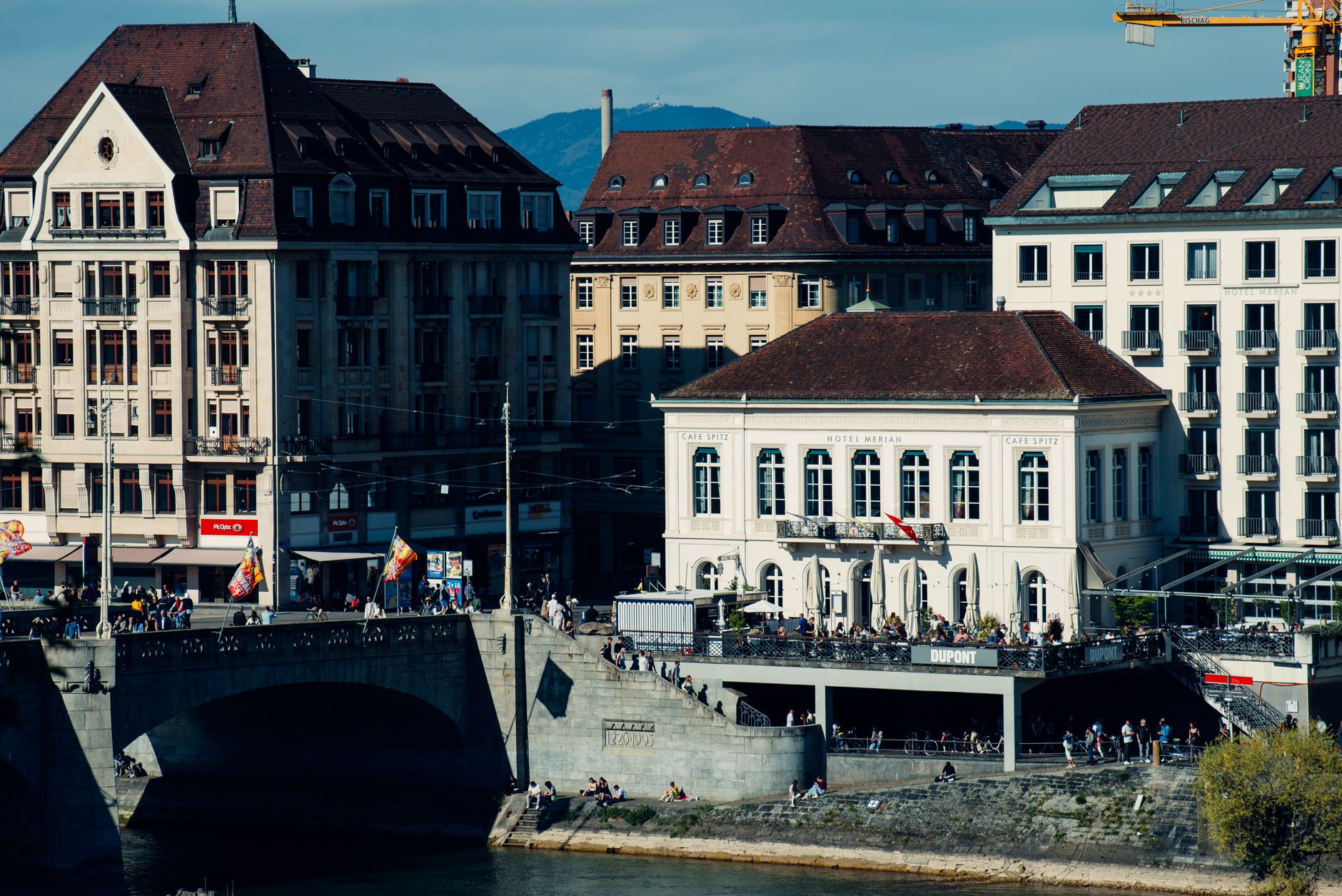
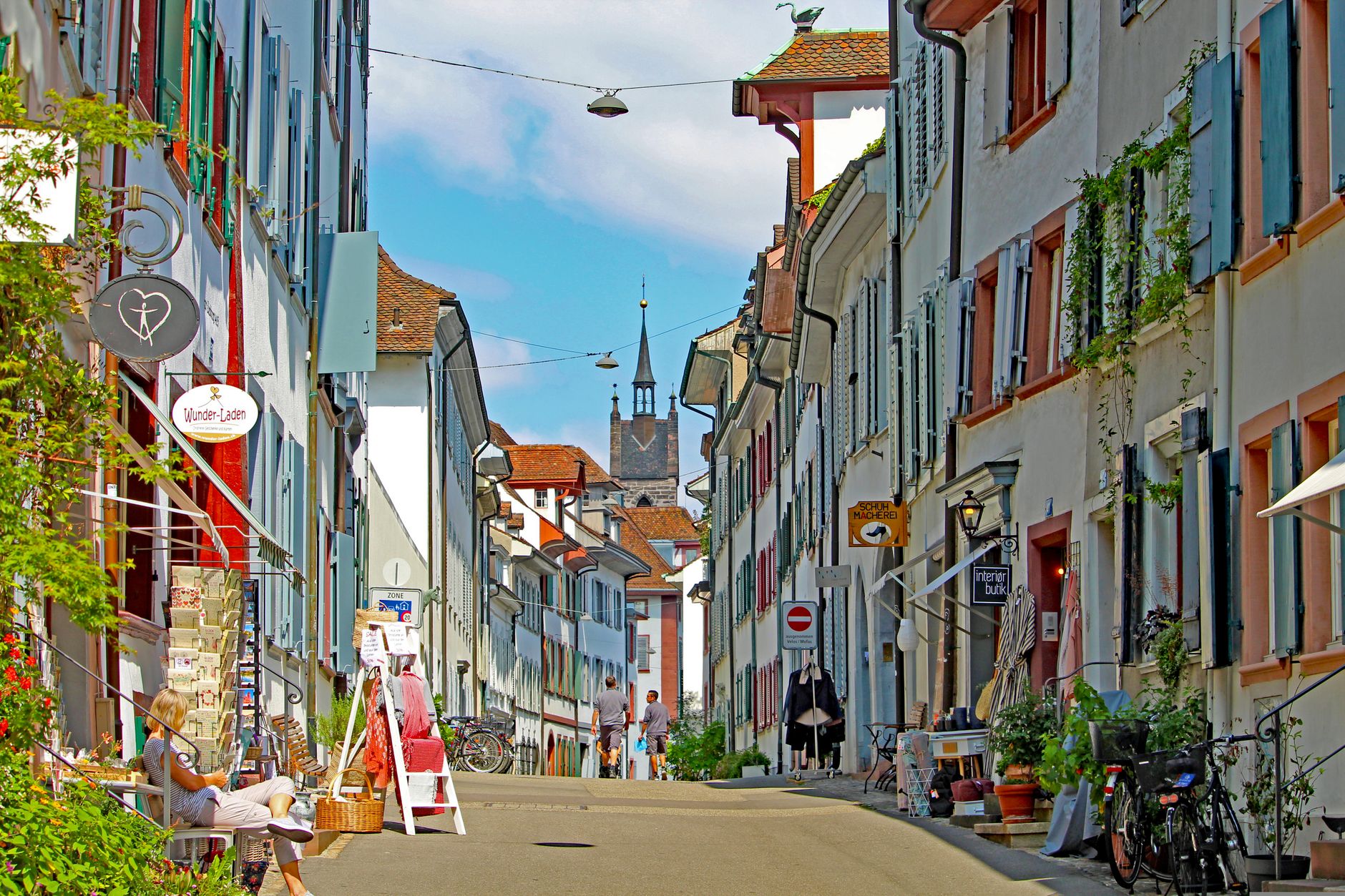
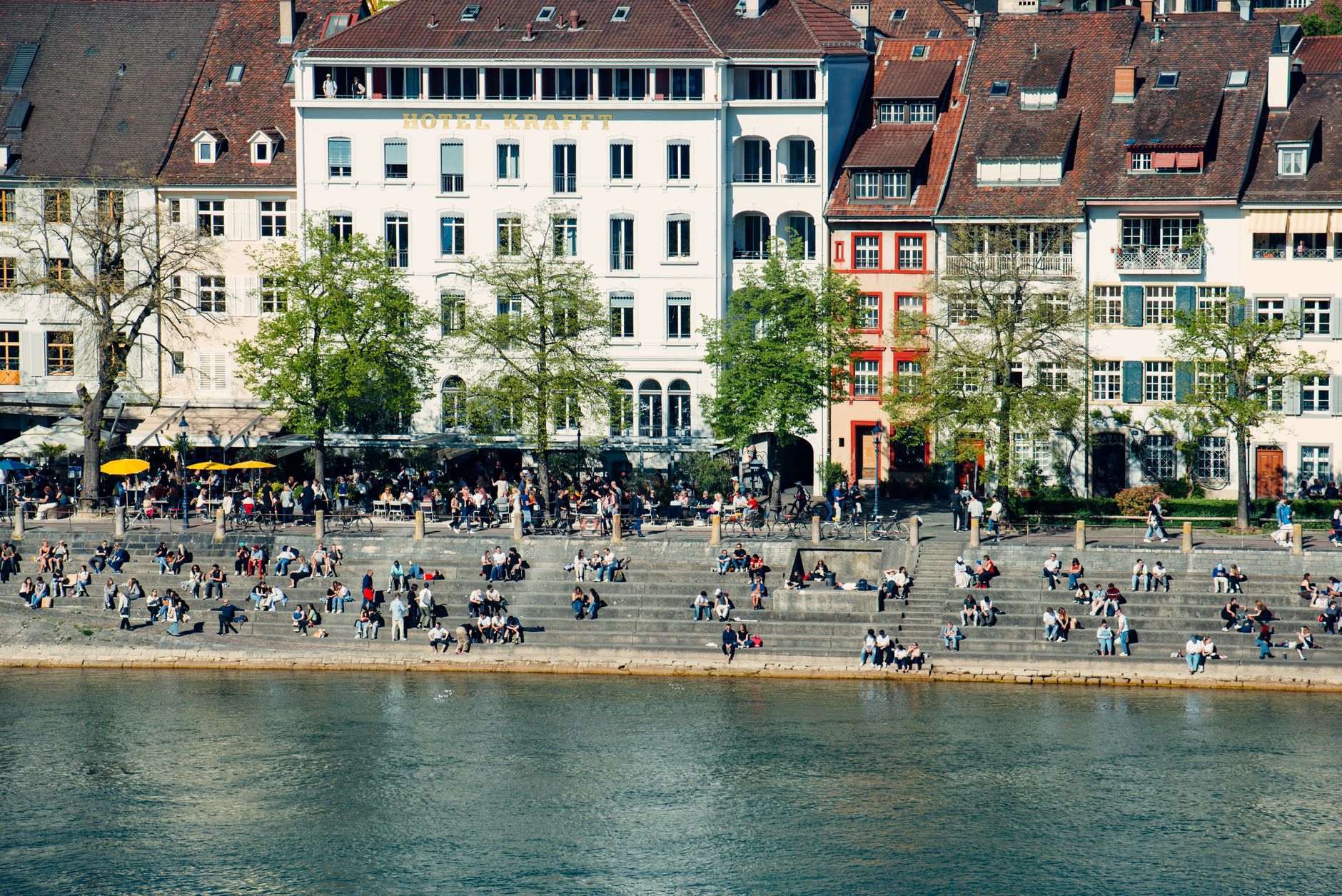
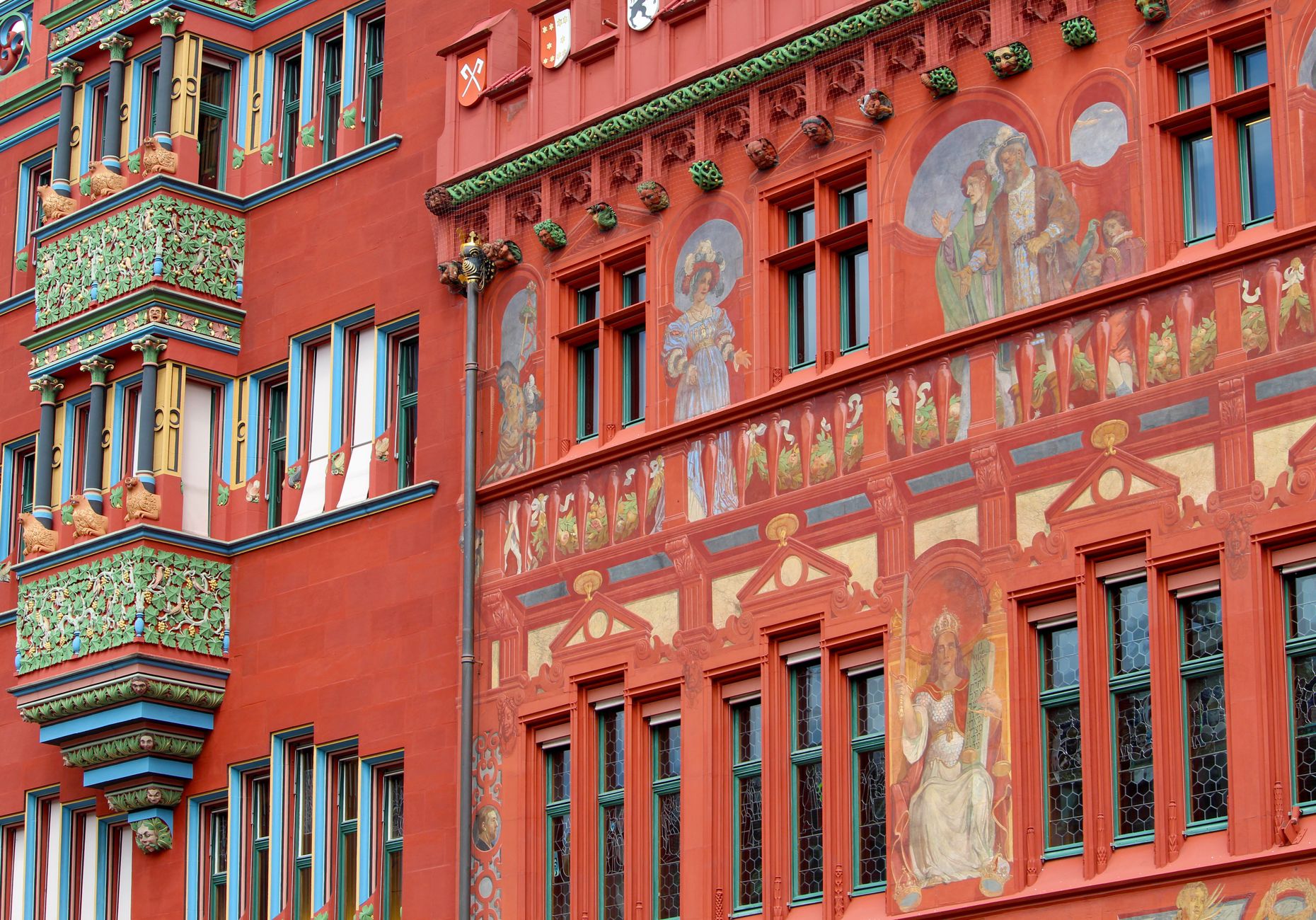
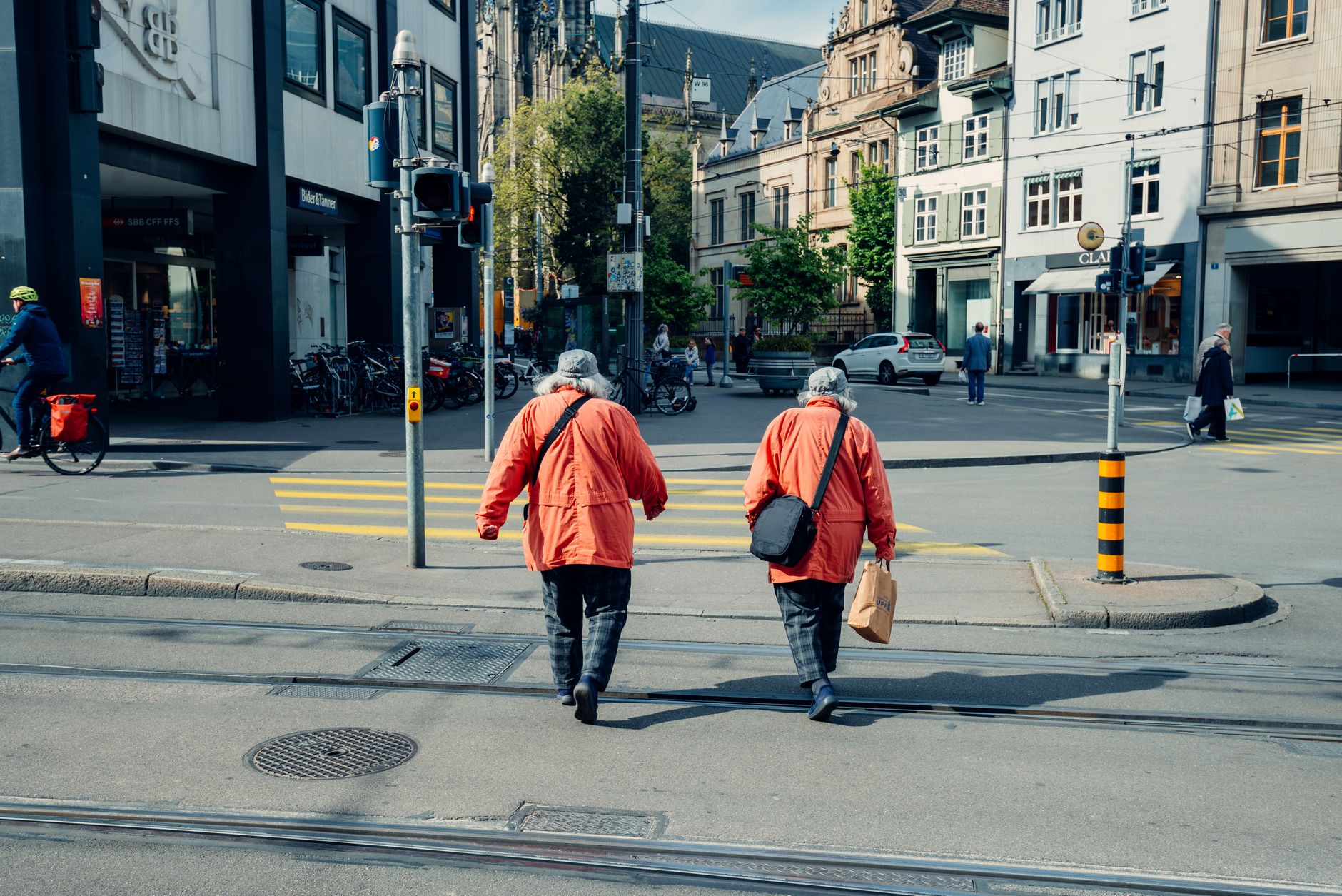
Basel sits at the point where Switzerland, France and Germany meet, and the Rhine does the obvious thing: it curves sharply north and carries the city with it. On one bank, Gross Basel climbs toward the red sandstone Münster; on the other, Klein Basel stays lower, quieter, a little more working-class. Four small cable-operated ferries cross between them, each one taking about five minutes and costing less than two francs.
The city runs on an unlikely combination of medieval scholarship, pharmaceutical money and contemporary art — Art Basel alone fills every hotel for a week each June. The tram network reaches across national borders, your hotel key card doubles as a transit pass, and the oldest publishing house in the world has been printing here since 1488.
How Basel came to be
Celtic Rauraci fortified Cathedral Hill before the Romans arrived, and the name Basilia appears in a Roman document as early as 374 CE. The earthquake of 1356 — still one of the most destructive in central European history, killing around 1,000 people — forced a rebuilding that shaped much of the medieval city still visible today, including St. Johanns-Tor gate. Pope Pius II founded the University of Basel in 1460, drawing Erasmus, who taught here from 1521 and is buried in the Münster alongside mathematician Jacob Bernoulli.
The city joined the Swiss Confederation in 1501 and became a hub of printing, humanism and the Reformation. Johann Froben's press and Schwabe's publishing house — founded 1488 — made Basel a centre of European ideas. In 1897, Theodor Herzl convened the First Zionist World Congress here. The canton split into Basel-Stadt and Basel-Landschaft in 1833, a division that still stands.
Who and what shaped it
People who shaped it
Landmark buildings
See Basel in motion
Plan your visit
On the map
When to go
Winters are cold and often grey, with January temperatures sometimes dropping below -10°C; spring arrives slowly, and summers are warm enough to sit along the Rhine in the evenings. The most reliably pleasant months for walking the city are May, June and September.
Right now
Background & history adapted from Wikipedia (CC BY-SA) · specs from Wikidata (CC0) · weather from Open-Meteo · map data © OpenStreetMap contributors · photos from Wikimedia Commons / Unsplash with per-image credit. No third-party reviews or social posts reproduced.