
Banteay Srei
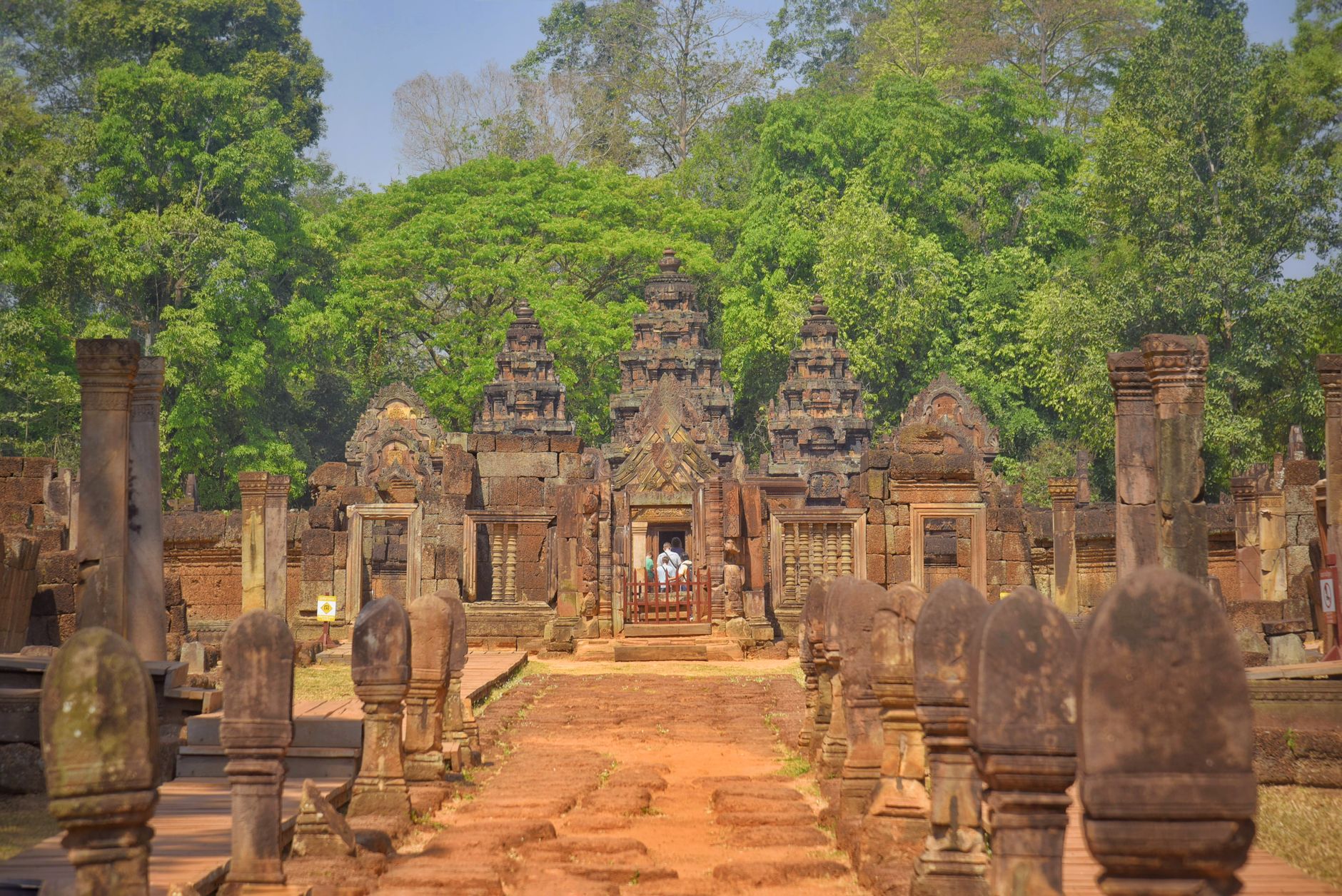
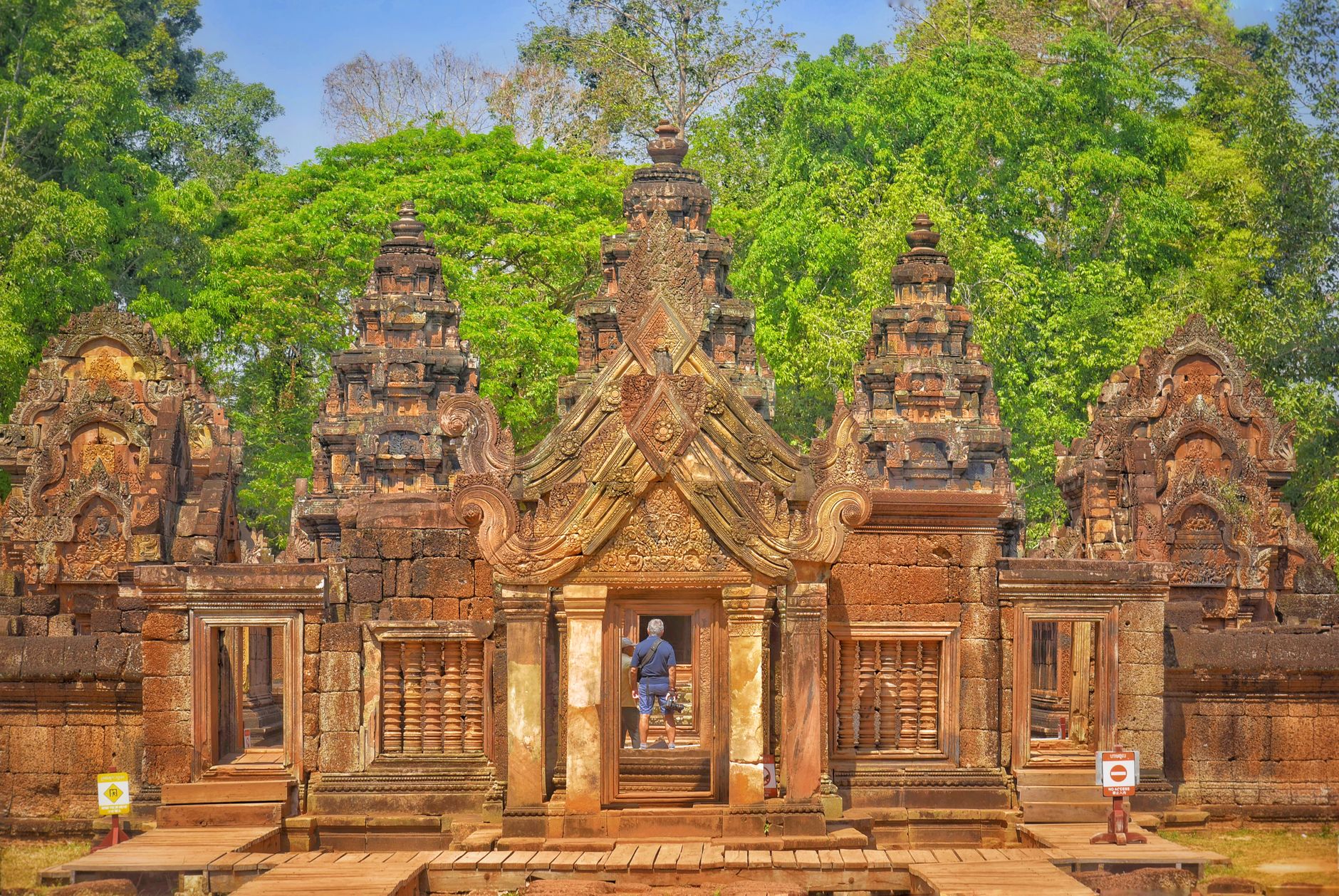
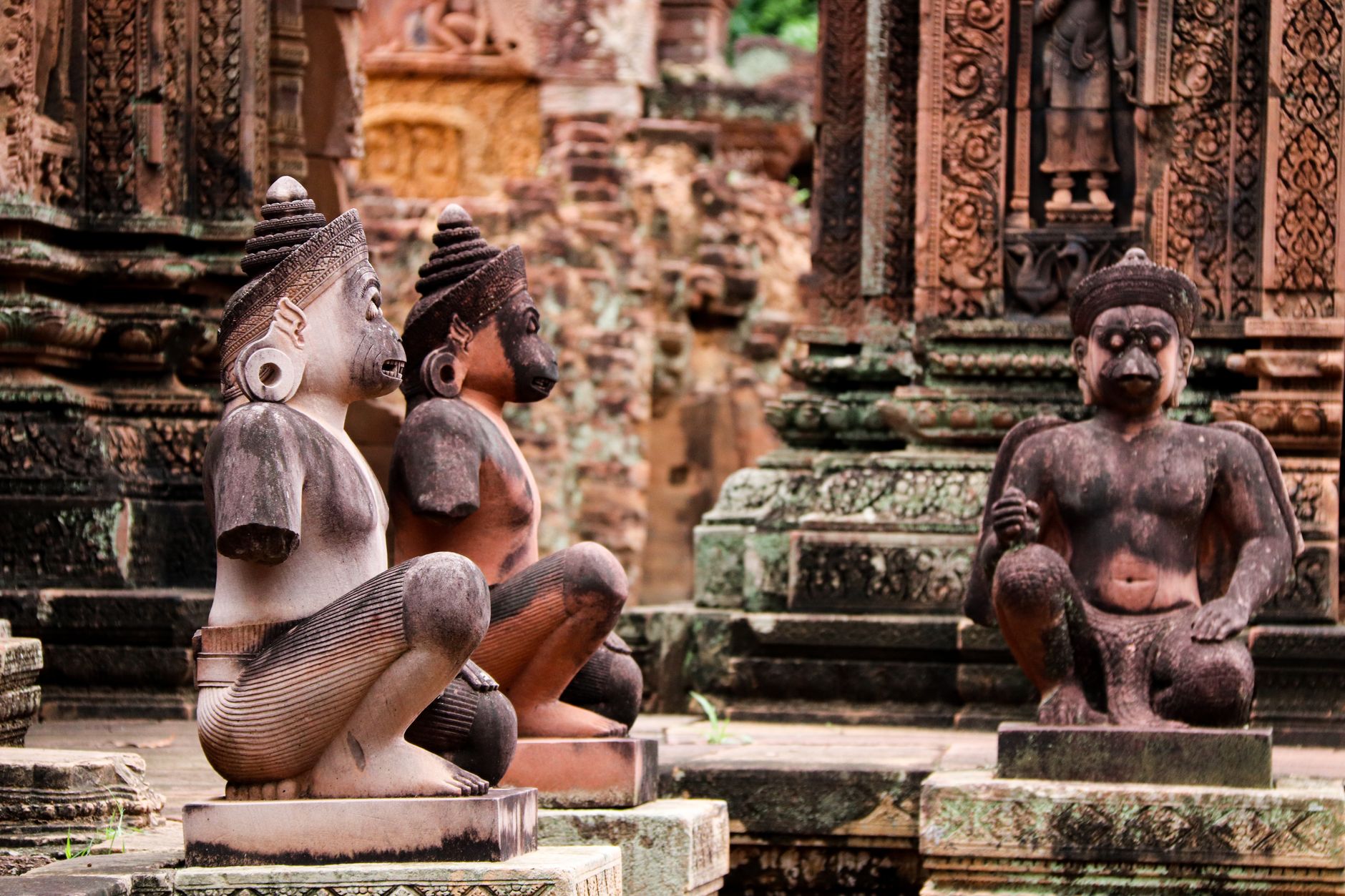
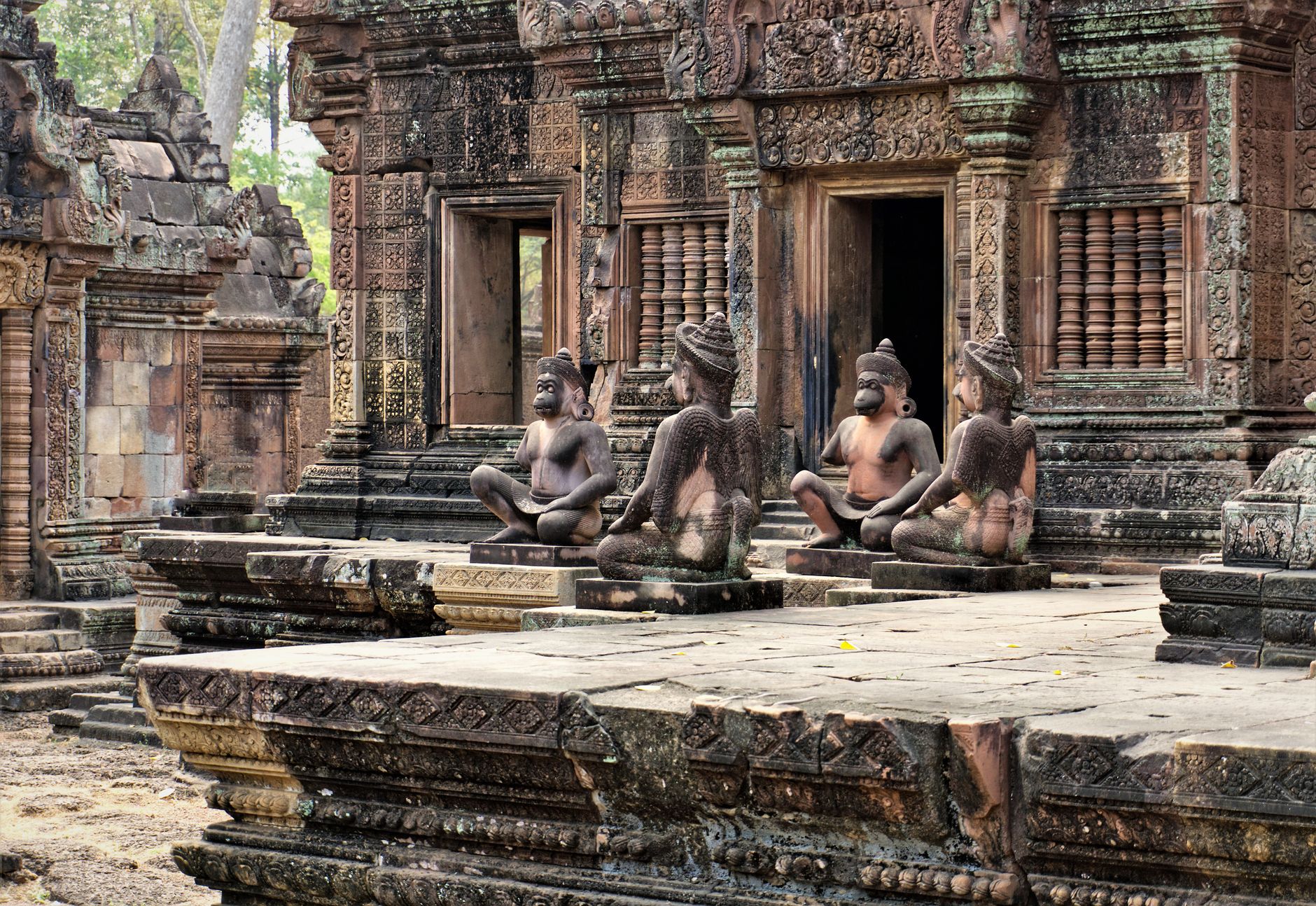
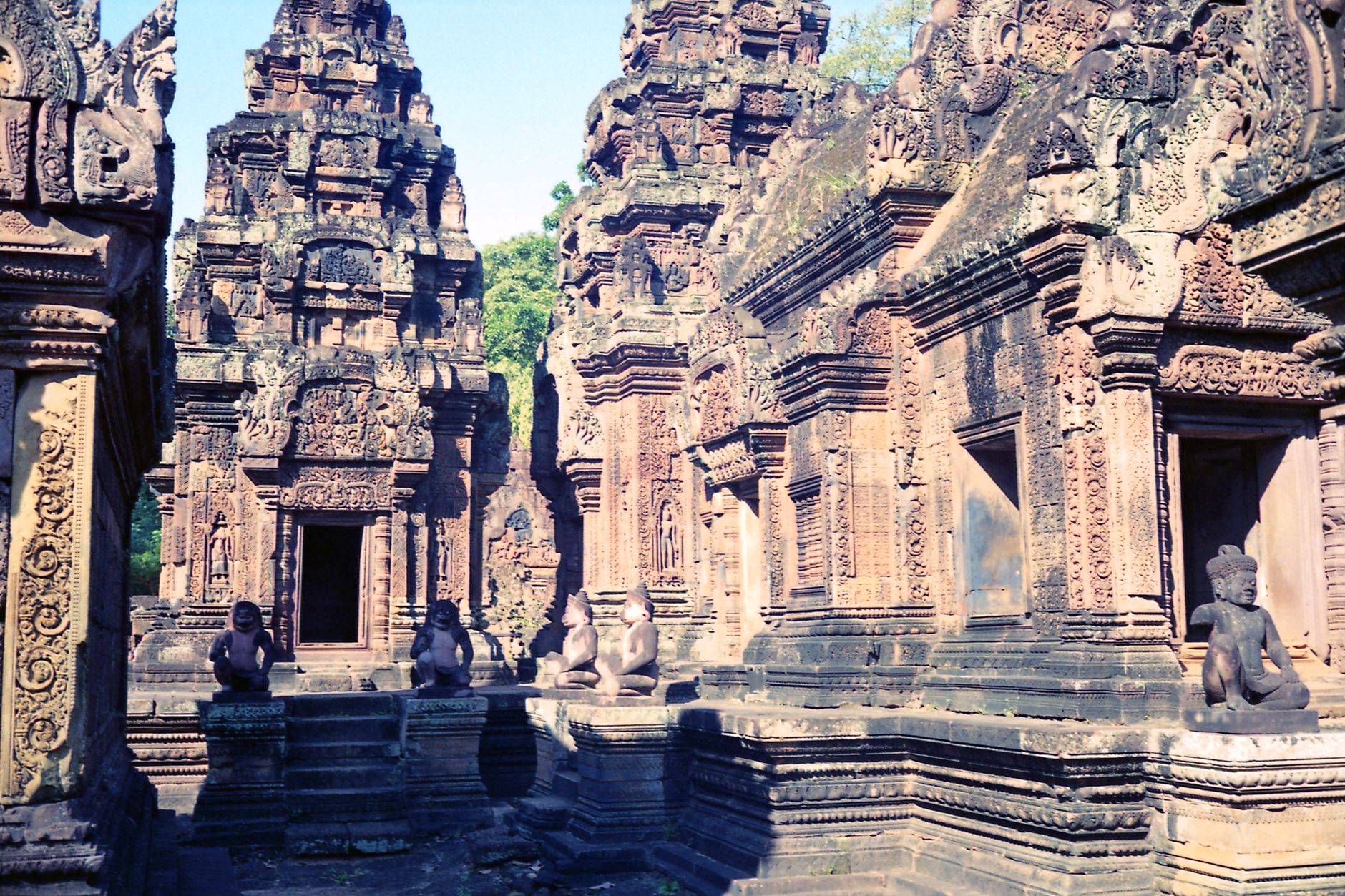
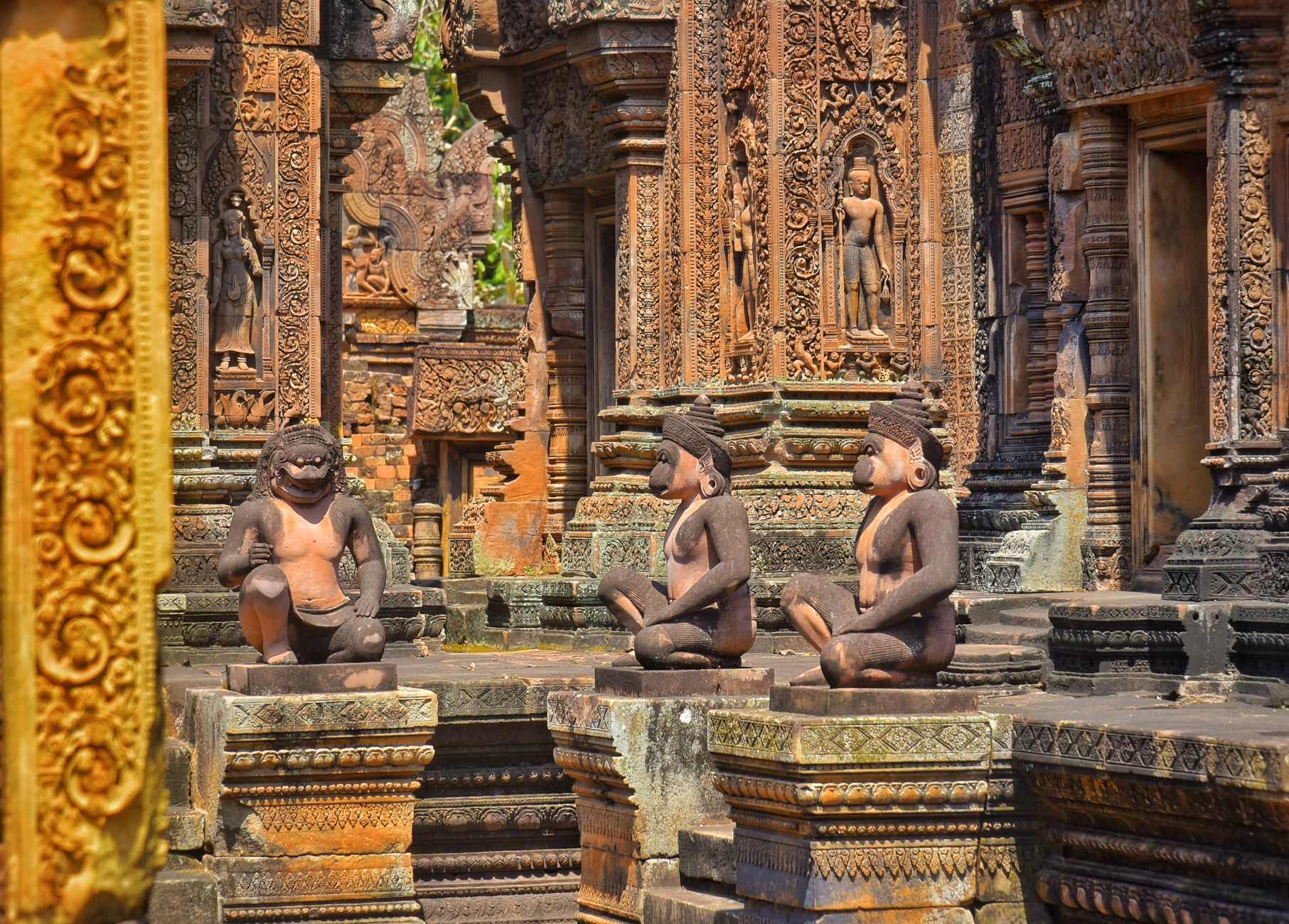
The first thing you notice is the colour. Banteay Srei is built from a hard pink-red sandstone that turns almost amber in the morning light, and the carvings cut into it are so dense and precise — lotus scrolls, mythological battle scenes, armed guardians standing in every doorway — that the stone barely seems like stone anymore. It reads more like textile.
Built in 967 CE and consecrated on 22 April of that year, Banteay Srei sits 35 kilometres north of Siem Reap, well outside the main Angkor complex. Its modern name translates roughly as 'citadel of the women' or 'citadel of beauty' — a name earned, most likely, by the extraordinary intricacy of its bas-reliefs and the unusually small scale of its buildings.
💛 What travellers fall for
People who come back tend to say the same thing: go early, before the tour groups arrive, and stand in front of the pediments rather than walking past them. Each one tells a full mythological scene — Indra summoning rain, the abduction of Sita — and the sweep of the gabled stonework rewards the time you give it.
Experiences you don't want to miss




Deals in Banteay Srei
Book directly at the providerHow Banteay Srei came to be
Banteay Srei is unusual in the Angkor canon for one central reason: it was not built by a king. Two courtiers — Yajnavaraha and Vishnukumara, both counsellors to King Rajendravarman II — were responsible for its construction. Yajnavaraha was a grandson of King Harshavarman I and a scholar of some standing; among his pupils was the future King Jayavarman V, who would reign from 968 until around 1001. The temple was originally called Tribhuvanamaheshvara — 'great lord of the threefold world' — and dedicated to Shiva.
The temple remained in active use for centuries. An 1119 CE inscription records a rededication to Shiva under the priest Divakarapandita, and the last known inscription dates to 8 August 1303. After that, silence — until 1914, when the site was rediscovered. In 1923, the French writer André Malraux removed four devata figures; he was arrested and the carvings returned. Restoration using anastylosis — reassembling original elements — followed in the 1930s, and a Cambodian-Swiss conservation project installed proper drainage between 2000 and 2003.
Who and what shaped it
People who shaped it
Landmark buildings
See Banteay Srei in motion
Plan your visit
On the map
When to go
November through April is the reliable window: dry, with temperatures between 20 and 34°C and light that suits the pink sandstone especially well in the early morning hours. The wet season, May through October, brings daily rain and higher humidity, though the surrounding rice paddies along the road from Siem Reap turn a deep, saturated green.
Right now
Background & history adapted from Wikipedia (CC BY-SA) · specs from Wikidata (CC0) · weather from Open-Meteo · map data © OpenStreetMap contributors · photos from Wikimedia Commons / Unsplash with per-image credit. No third-party reviews or social posts reproduced.