
Arrowtown

Arrowtown sits in a river valley about twenty minutes from Queenstown, and the first thing you notice is the scale — or the lack of it. The main street, Buckingham Street, is lined with stone and timber buildings from the 1870s and 1880s that nobody has bothered to knock down, which means the proportions are still those of a gold-rush town rather than a tourist precinct. More than seventy historic structures remain in the centre alone.
At the edge of town, along the Arrow River, the Chinese Settlement tells a quieter part of the same story: Cantonese miners brought in by the Otago Provincial Government in 1865, after European miners had moved on to West Coast fields. Several of the low stone and mud-brick huts have been restored, including Ah Lum's Store.
💛 What travellers fall for
People who come back tend to time it for autumn, when the poplars along Buckingham Street turn amber and the crowds thin out after the Queenstown rush. The Lakes District Museum is worth more than a glance — the former Bank of New Zealand building alone rewards a slow look. Free parking makes an afternoon visit easy to extend.
Experiences you don't want to miss


Deals in Arrowtown
Book directly at the provider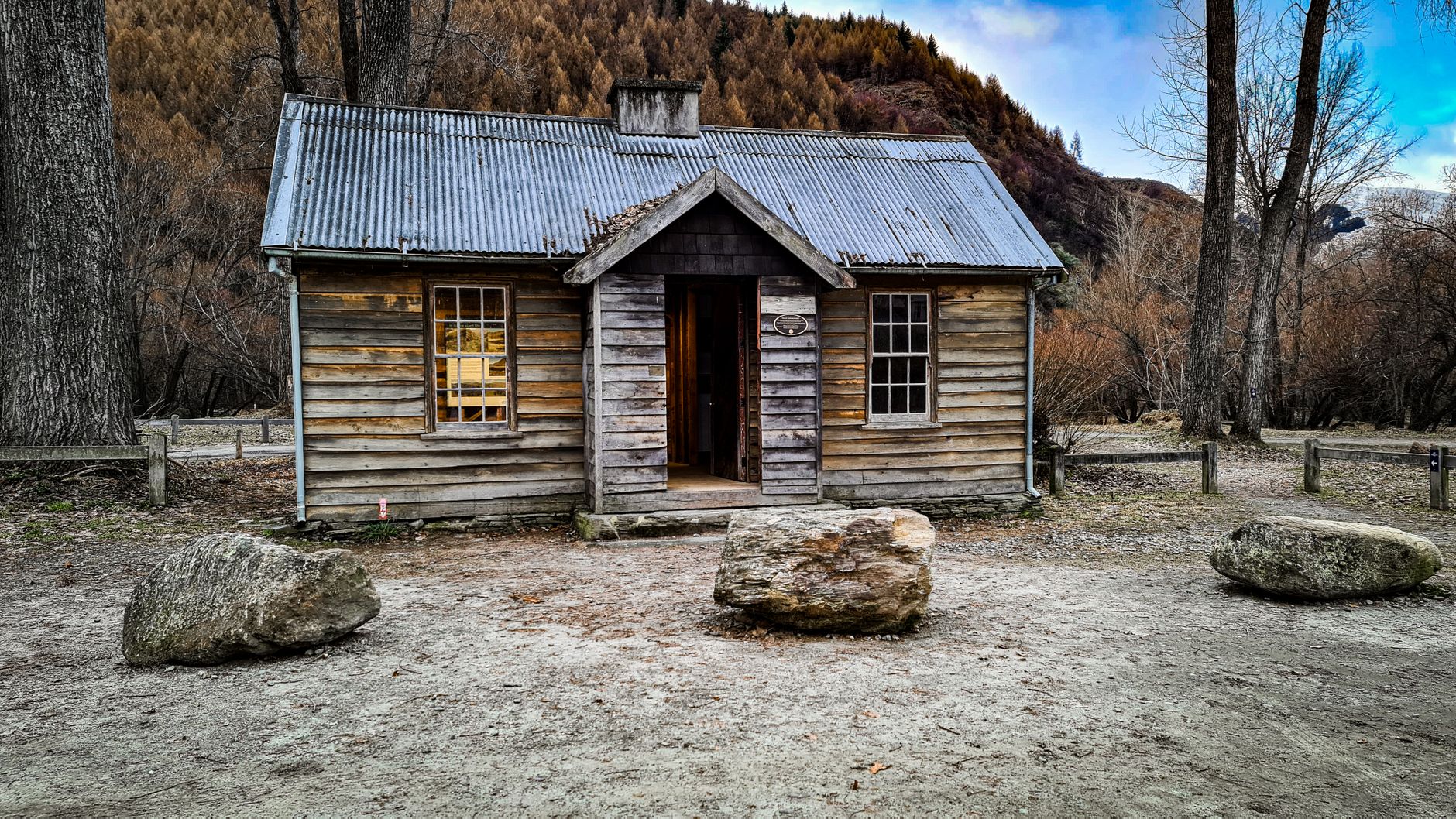
How Arrowtown came to be
In August 1862 a Māori shearer named Jack Tewa found gold in the Arrow River. Within a short time around 800 miners had gathered, and a township took shape — named Fox's initially, after William Fox's competing claim to the discovery, then renamed Arrowtown. On 14 January 1874 it was proclaimed a borough, with Samuel Goldston elected as its first mayor.
When European miners chased new strikes to the West Coast, the Otago Provincial Government invited Chinese workers to continue working the Arrow River fields. From 1867–68 a Chinese Settlement grew at the edge of town, home mostly to Cantonese speakers, and it persisted until the mid-1930s. The settlement was archaeologically studied in the early 1980s, and several structures — including Ah Lum's Store — have since been restored. In 1989 Arrowtown was absorbed into the Queenstown-Lakes District.
Who and what shaped it
People who shaped it
Landmark buildings
See Arrowtown in motion
Plan your visit
On the map
When to go
Summers are warm and dry, with February days averaging around 17°C, though nights can be cool. Winters are sharp — July nights regularly drop to -4°C — and the valley frosts hard, which is exactly what makes the autumn colour, typically April into May, so reliable and striking.
Right now
Background & history adapted from Wikipedia (CC BY-SA) · specs from Wikidata (CC0) · weather from Open-Meteo · map data © OpenStreetMap contributors · photos from Wikimedia Commons / Unsplash with per-image credit. No third-party reviews or social posts reproduced.